 Pin it
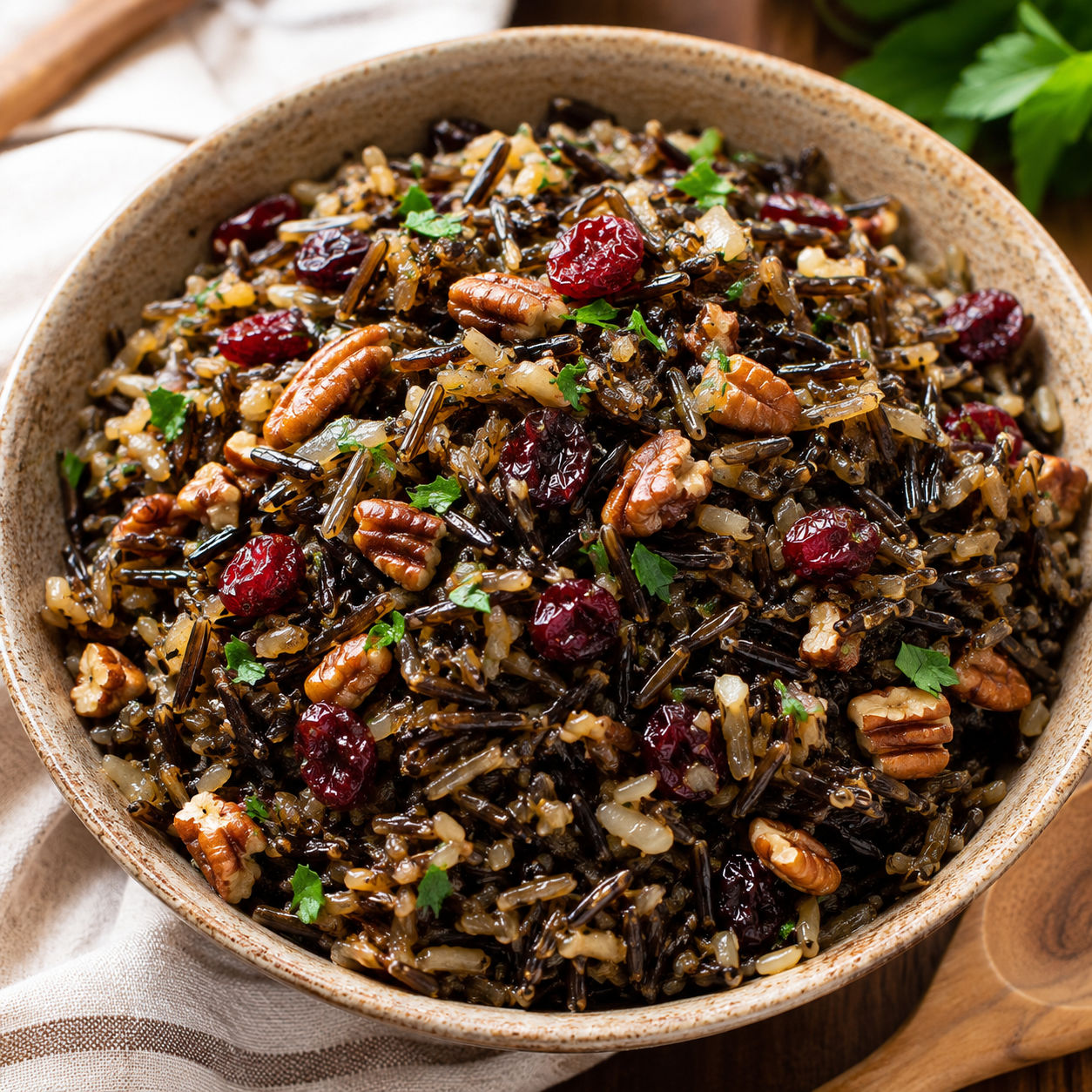
This is the side dish I bring when I want something that feels like Thanksgiving without fighting for oven space. The wild rice stays chewy and nutty, the pecans add a warm crunch, and the dried cranberries give just enough sweet-tart contrast to keep every bite interesting. It comes together on the stovetop and actually improves as it sits, which makes it a holiday workhorse.
I started making this pilaf after years of dry stuffing and too-creamy casseroles. It holds its shape on a buffet, reheats without turning mushy, and pairs with turkey as naturally as gravy. The only real requirement is patience while the rice simmers.
What fills the pot
The ingredient list is short but each piece matters. Buy a good wild rice blend that includes some long-grain brown rice. It cooks more evenly than pure wild rice and costs less. Toast the pecans yourself rather than buying pre-toasted nuts. The flavor is noticeably better.
- Wild rice blend. A mix of wild and brown rice gives the best texture, chewy without being tough.
- Low-sodium chicken broth. Simmering the grains in broth instead of water builds a deep savory base you cannot get from seasoning alone.
- Butter and olive oil. Butter carries flavor, olive oil keeps the butter from burning while you soften the vegetables.
- Onion and celery. The classic aromatic pair that quietly makes the whole kitchen smell like the holidays.
- Dried cranberries. Their bright tartness cuts through the richness of the nuts and butter.
- Toasted pecans. Warm, crunchy, and slightly bitter in the best way. Walnuts work too.
- Fresh thyme, sage, and parsley. Earthy thyme and sage say Thanksgiving. Parsley freshens the finish.
How it comes together
- Toast the pecans. Warm a dry skillet over medium heat. Add the pecans and stir often until they smell nutty and darken slightly, 3 to 4 minutes. Let them cool, then chop roughly.
- Saute the aromatics. Melt butter with olive oil in a medium saucepan over medium heat. Add onion and celery with a pinch of salt and cook until soft, 6 to 7 minutes. Stir in garlic, thyme, and sage and cook 30 seconds until fragrant.
- Simmer the rice. Add the wild rice blend and stir to coat in the fat. Pour in the broth, bring to a boil, then reduce heat to low, cover, and simmer until tender, 40 to 45 minutes. Try not to lift the lid.
- Steam and fluff. Remove the pot from heat and let it stand covered for 10 minutes. Fluff with a fork so the grains separate.
- Fold and serve. Stir in cranberries, pecans, and parsley. Taste for salt and pepper, then serve warm.
The toast-and-fold method
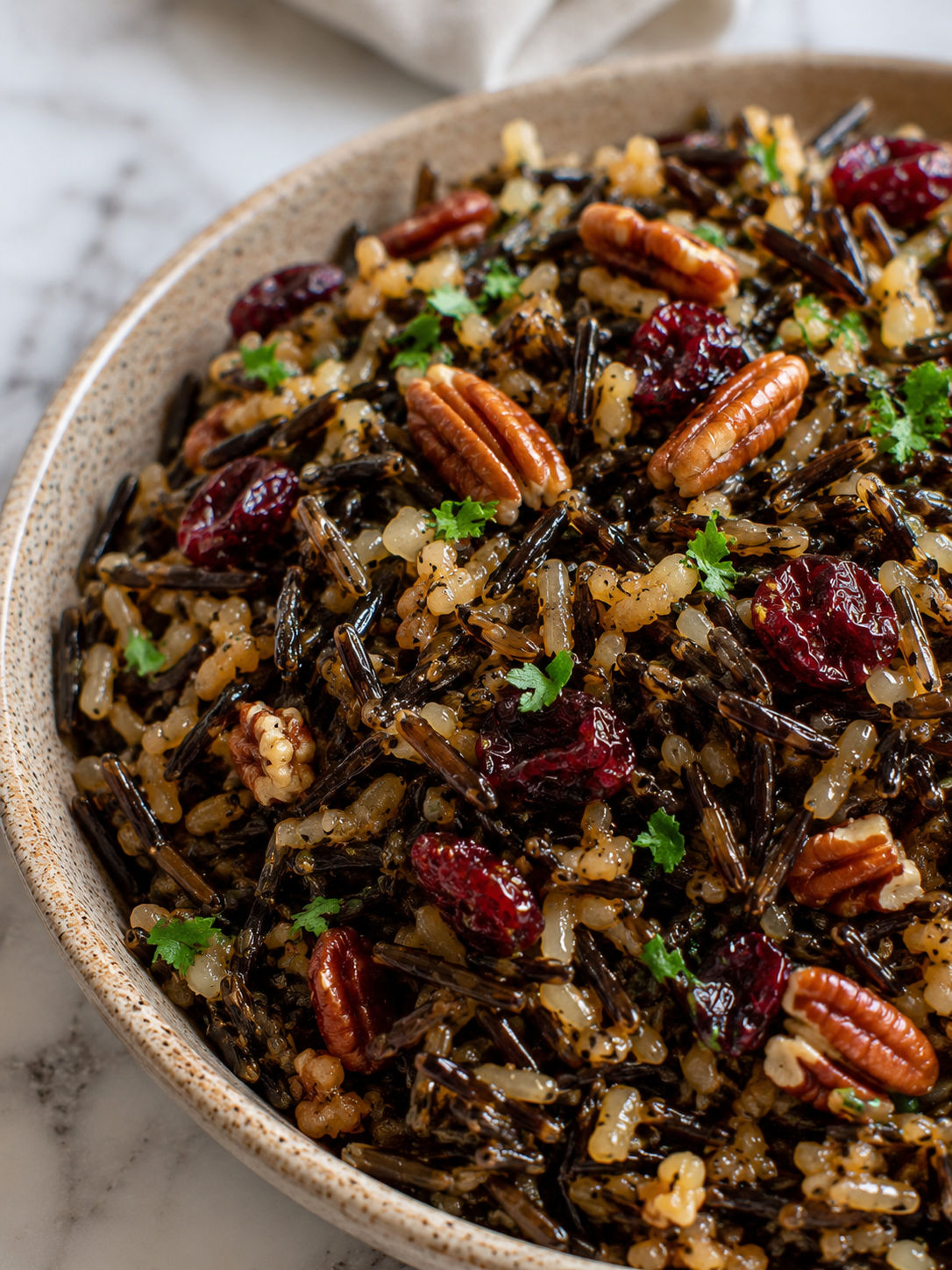
Toasting the nuts in a dry skillet before they go into the pilaf is the kind of small step that pays off. Heat brings the oils to the surface and deepens the flavor so the pecans stay crisp even after folding into warm rice. I do this first so they have time to cool. Warm nuts turn soft and greasy when chopped hot.
The same logic applies to the rice itself. When you stir the raw grains into the butter and aromatics for a minute before adding liquid, each kernel gets coated in fat. That light toast creates a barrier that keeps the grains distinct instead of sticky. If you enjoy this technique, you will also like the approach in our ultimate savory mushroom rice.
Why wild rice needs time
Wild rice is technically an aquatic grass, not true rice, and it takes longer to soften than white or even brown rice. A blend helps because the different grains cook at slightly different rates, giving you a range of textures from tender to chewy in the same bite. Expect 40 to 50 minutes of gentle simmering, and do not rush it with higher heat or you will end up with burst hulls and underdone centers.
The liquid ratio matters too. I use two and a half cups of broth for every cup of wild rice blend. If you prefer a softer pilaf, add another quarter cup of broth and extend the simmer by five minutes. For more background on the grain itself, Wikipedia has a solid overview of wild rice.
Swaps for the holiday table
No pecans? Walnuts or toasted pumpkin seeds work beautifully. You can also add a diced apple with the onion for extra sweetness, or fold in sauteed mushrooms at the end for an earthier direction. If you want a heartier main-dish version, the same wild rice base works in our chicken wild rice casserole.
For a vegan version, use olive oil instead of butter and swap the chicken broth for a good vegetable broth. The pilaf will still taste rich and festive. If you are looking for a soup to start the meal, our creamy autumn wild rice vegetable soup uses a similar flavor profile.
Make-ahead and reheat
This pilaf is one of the best sides you can prep entirely ahead of Thanksgiving morning. Cook it through, cool to room temperature, and refrigerate in an airtight container for up to two days. The flavors meld and deepen overnight, especially the herbs and alliums.
To reheat, spread the pilaf in a shallow baking dish, dot with a tablespoon of butter, cover with foil, and warm in a 325 degree F oven for 20 to 25 minutes. You can also reheat gently in a skillet with a splash of broth to loosen the grains. Microwave works in a pinch but the pecans lose their crunch. Pair the warm pilaf with our non alcoholic Thanksgiving punch for a complete holiday spread.
Storage and leftovers
Leftovers keep airtight in the refrigerator for up to four days. The pilaf also freezes well for up to two months, though the pecans will soften slightly after thawing. Thaw overnight in the fridge and reheat with a little extra broth to restore moisture.

FAQs
- Can I make this pilaf ahead of time?
Yes. Cook it fully, cool, and refrigerate up to two days ahead. Reheat covered in a 325 degree F oven for 20 to 25 minutes or in a skillet with a splash of broth.
- Can I use pure wild rice instead of a blend?
You can, but pure wild rice takes longer to cook and stays very chewy. A blend with brown rice gives a more tender result and is usually more affordable.
- What can I use instead of pecans?
Walnuts, toasted almonds, or even pumpkin seeds are great substitutes. Toast any nut you choose for the best flavor and crunch.
- How do I keep the pilaf from getting mushy?
Rinse the rice first, use the correct broth ratio, and let it steam off the heat for 10 minutes before fluffing. Avoid stirring too much while it simmers.
- Can I make this recipe vegan?
Yes. Replace the butter with olive oil and use vegetable broth instead of chicken broth. The flavor will still be rich and savory.
- How long do leftovers last?
Refrigerate in an airtight container for up to four days, or freeze for up to two months. Add a splash of broth when reheating to refresh the texture.
- What pairs well with this pilaf?
It is built for roast turkey, baked ham, or herb-crusted chicken. It also works alongside vegetarian mains like stuffed squash or lentil loaf.
