 Pin it
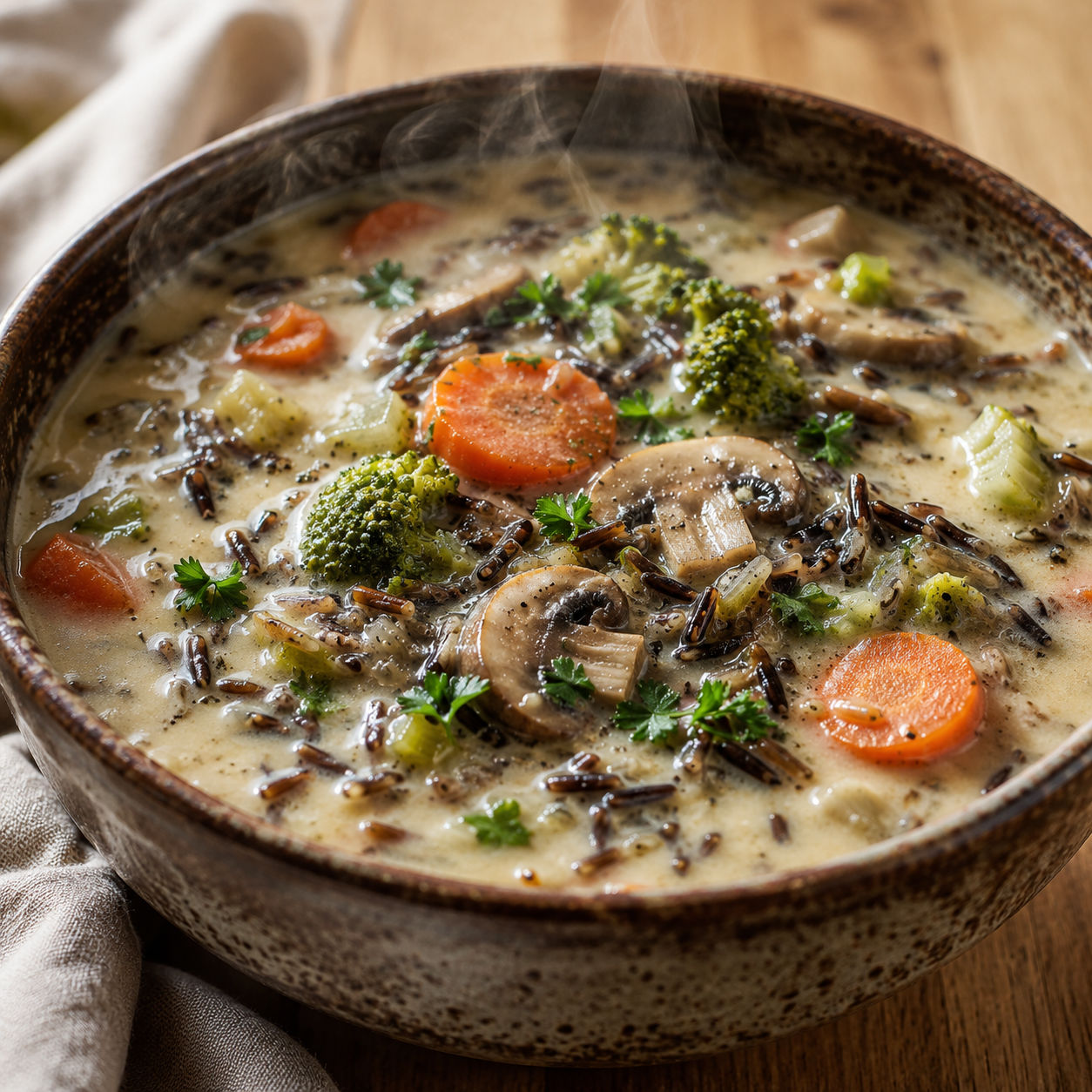
This is the soup I make when the air turns crisp and I want the house to smell like fall before dinner is even ready. Wild rice gives it a nutty chew that holds up to a long simmer, and a mix of sturdy vegetables turns the broth creamy without any need for heavy cream.
It is a one-pot meal that feeds a crowd and tastes even better the next day. You can keep it vegan with almond milk or add a splash of half-and-half if you want extra richness. Either way, it is the kind of bowl that earns a second helping.
What goes into the pot
The ingredient list is short and flexible. Wild rice is the backbone, so buy a good blend if you can. The rest is just a mix of sturdy autumn vegetables and aromatics that simmer into a velvety broth. Fresh thyme and a bay leaf add depth without complicating the shopping list.
- Wild rice blend. Chewy, nutty grains that stay intact through a long simmer and give the soup its signature texture.
- Broccoli and carrots. Classic autumn vegetables that soften just enough while still adding color and sweetness.
- Potatoes. They break down slightly and help thicken the broth naturally without flour or cream.
- Mushrooms. Earthy umami that deepens the broth and makes the soup taste like it simmered all day.
- Onion and garlic. The aromatic base. Cook them until soft and fragrant before adding liquid.
- Vegetable broth. Use a good-quality broth or stock for the best flavor. Chicken broth works if you are not keeping it vegetarian.
- Almond milk or cream. A splash at the end adds body. Almond milk keeps it light and dairy-free.
- Thyme and bay leaf. Woody herbs that infuse the broth with subtle autumn flavor.
How it comes together
- Saute the aromatics. Heat olive oil in a large stockpot over medium heat. Add the diced onion and cook for about 5 minutes until soft and translucent. Stir in the garlic and cook for 1 minute more until fragrant.
- Add the vegetables. Add the broccoli, carrots, mushrooms, and potatoes. Stir for 2 minutes so the vegetables pick up the flavor from the aromatics and start to soften at the edges.
- Simmer with rice and broth. Pour in the broth, water, wild rice, thyme, and bay leaf. Bring to a boil, then reduce to a gentle simmer. Cover and cook for 45 to 55 minutes until the wild rice grains have split and are tender.
- Finish and season. Remove the bay leaf and thyme stems. Stir in the almond milk or cream and season with salt and black pepper. Simmer uncovered for 5 more minutes to thicken slightly.
- Serve warm. Ladle into bowls and top with fresh parsley or cracked black pepper if you like.
The simmering sweet spot
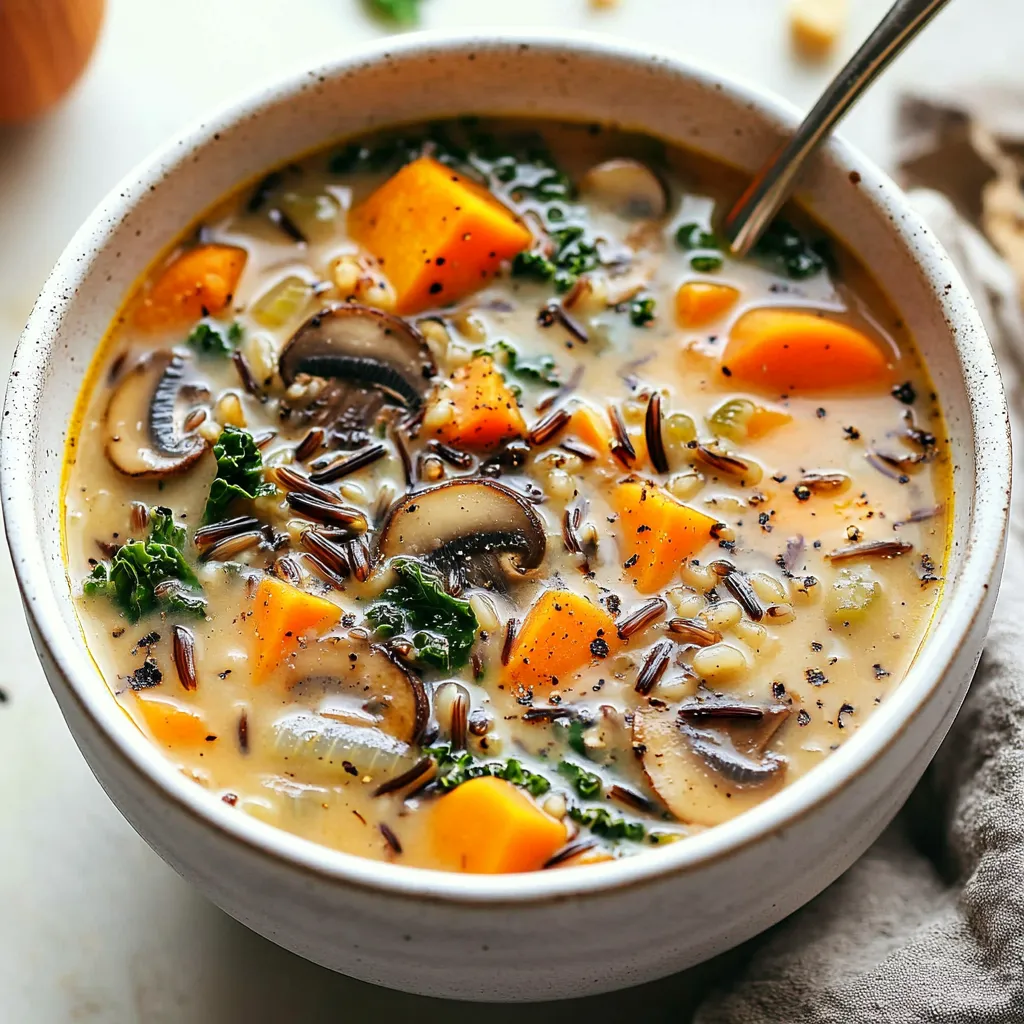
Wild rice needs time, but not a rolling boil. A gentle simmer keeps the grains from bursting and turning mushy. If the liquid drops too low before the rice is tender, add a cup of hot water or broth rather than cold liquid, which shocks the starch and tightens the grains. This method is similar to the slow build in Cozy Potato Kielbasa Soup.
Swaps and substitutions
No broccoli? Use cauliflower or chopped kale instead. Sweet potato swaps in beautifully for white potatoes and adds a hint of natural sweetness. If you want extra protein, stir in a can of rinsed white beans during the last 10 minutes of simmering. For another creamy soup built on seasonal vegetables, try Creamy Autumn Wild Rice Vegetable Soup.
Make it ahead and store
This soup improves after a night in the fridge because the wild rice continues to absorb flavor. Store it in an airtight container for up to 4 days. Reheat gently on the stove with a splash of broth to loosen the texture. If you are looking for a casserole version of the same flavors, Creamy Chicken and Wild Rice Casserole is a great next step.
Why the stovetop wins here
A slow cooker works, but the stovetop lets you control the rice texture in real time. Wild rice can go from pleasantly chewy to overcooked quickly, and being able to taste and adjust after 45 minutes is worth the extra attention. The payoff is a broth that is thick and creamy without any added thickeners.
FAQs
- Can I use a wild rice blend instead of pure wild rice?
Yes. A wild rice blend cooks faster and still gives you that chewy texture. Just check the package for timing, since blends often include brown or white rice that softens sooner than pure wild rice.
- How do I make this soup vegan?
Use vegetable broth and replace the cream with full-fat coconut milk or a plain oat cream. The soup will still be rich and creamy thanks to the starchy potatoes and long simmer.
- Can I make this in a slow cooker?
You can, but the stovetop gives you more control over the rice texture. If you do use a slow cooker, add the wild rice and broth first and cook on low for 6 to 7 hours, then stir in any dairy at the end so it does not separate.
- How long does leftover wild rice soup keep?
Refrigerate it in an airtight container for up to 4 days. The rice will continue to absorb broth as it sits, so thin it with a little water or broth when you reheat. The USDA offers safe leftover handling tips at fsis.usda.gov.
- What can I substitute for potatoes?
Sweet potatoes, butternut squash, or parsnips all work well. They break down similarly and add a subtle sweetness that pairs nicely with the earthy rice.
- Can I freeze this soup?
Yes, but the potatoes and rice may soften slightly after thawing. Freeze in portions for up to 3 months. Thaw overnight in the fridge and reheat gently on the stove.
- What should I serve with wild rice soup?
A crusty loaf of sourdough or a simple green salad with a sharp vinaigrette balances the creamy broth. For a heartier meal, pair it with Thanksgiving Wild Rice Pilaf on the side.
