 Pin it
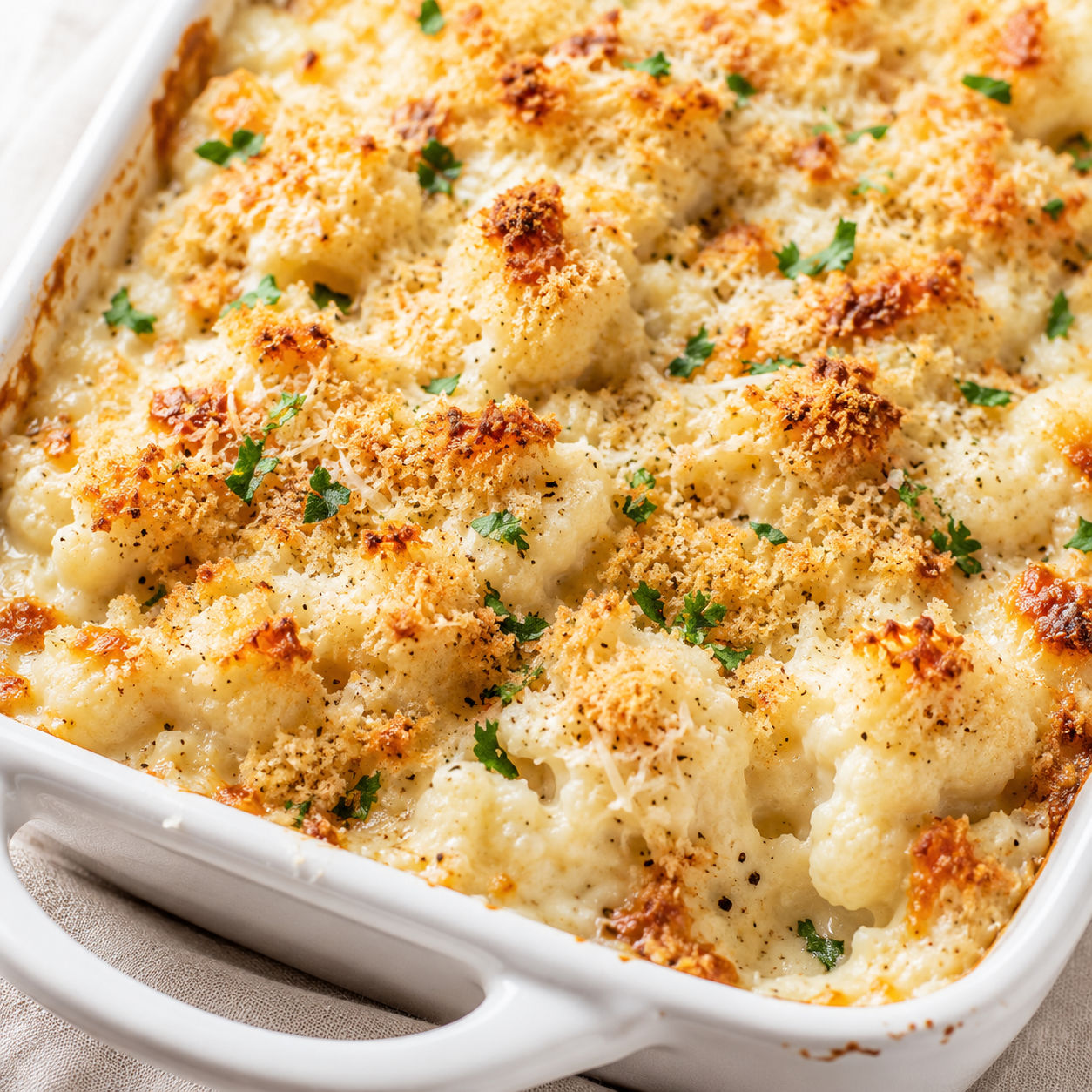
Easy Cauliflower Gratin With Gruyère is the side dish I make when plain steamed cauliflower is not going to cut it. The florets turn tender in a creamy sauce, the cheese melts into every gap, and the breadcrumb top gives you that good crackly bite.
Gruyère matters here. It melts smoothly, tastes nutty instead of sharp, and makes the whole baking dish smell like a cozy French kitchen. You do not need fancy technique, just a steady roux and cauliflower cut into even pieces.
Cauliflower gratin with Gruyère basics
Look for a firm white cauliflower head with tight florets and no damp brown patches. Shred the Gruyère yourself if you can, since freshly grated cheese melts into a smoother sauce.
- Cauliflower. The main vegetable, cut small enough to turn tender without falling apart.
- Gruyère. Melts into a nutty, creamy sauce that tastes rich but not heavy.
- Butter and flour. Make the roux that thickens the milk into a smooth base.
- Whole milk. Gives the sauce body without making it too thick or greasy.
- Parmesan. Adds salty depth to the crunchy topping.
- Panko breadcrumbs. Bake into a crisp golden lid over the soft cauliflower.
- Dijon and nutmeg. Small amounts sharpen the sauce and make the cheese taste fuller.
Bake it bubbly and golden
- Prep the pan. Heat the oven to 375°F and butter a 2-quart baking dish so the sauce does not cling hard to the sides.
- Soften the cauliflower. Simmer the florets in salted water for 4-5 minutes, then drain well so the finished gratin is creamy instead of watery.
- Make the roux. Melt butter in a saucepan, whisk in flour, and cook for 1 minute to remove the raw taste.
- Build the sauce. Whisk in warm milk slowly, then cook until smooth and lightly thickened. Stir in Dijon, nutmeg, pepper, and most of the Gruyère.
- Fill the dish. Fold cauliflower into the sauce, spoon it into the baking dish, and scatter the remaining Gruyère over the top.
- Add crunch and bake. Mix panko with Parmesan and melted butter, sprinkle it over the gratin, and bake until bubbling and browned, about 25-30 minutes.
The sauce should coat, not drown
A good gratin sauce should cling to the florets in a thin blanket. If it looks like soup before baking, the finished dish will taste flat and wet. Cook the roux for a full minute, then add warm milk slowly while whisking. Once the sauce coats the back of a spoon, pull it from the heat and add the cheese.
Classic versions often cook the cauliflower in milk or sauce before baking, a useful cue you can see in Martha Stewart's cauliflower gratin. I prefer a short blanch first because it gives better control. The cauliflower stays neat, and the sauce does not pick up too much water.
Cut the cauliflower evenly
The biggest mistake is leaving some florets huge and others tiny. Large pieces stay firm while the smaller bits collapse into the sauce. Aim for bite-size florets, about 1 to 1 1/2 inches wide. The stem is good too. Peel the tough outside and slice the tender core into small chunks.
If cauliflower sides are your thing, keep cheesy garlic Parmesan cauliflower in your back pocket for a faster weeknight pan. For a heartier vegetable bake, broccoli cauliflower cheese sausage leans more dinner than side dish.
Smart swaps that behave
Comté is the closest swap for Gruyère. Swiss works in a pinch, though it is milder. Sharp white cheddar gives a stronger flavor and a thicker sauce, so use a little less if you want the cauliflower to stay in front. For the topping, fresh breadcrumbs brown more softly, while panko gives a lighter crunch.
You can add a pinch of cayenne, chopped thyme, or a little roasted garlic. Keep add-ins modest. This dish is at its best when the cauliflower, cheese, and browned topping still taste clear.
Serve it with rich mains
This gratin fits holiday dinners because it holds its heat and does not need last-second fussing. It is lovely beside ham, roast beef, turkey, or a simple roast chicken. The nutty cheese also pairs well with oniony dishes, so French onion meatloaf with Gruyère makes a natural comfort-food match.
For a meatless plate, serve a square of gratin with a sharp salad and roasted mushrooms. The creamy sauce wants something crisp or acidic nearby.
Store and reheat gently
Leftovers keep in an airtight container in the fridge for up to 4 days. The USDA's leftover safety guidance recommends refrigerating cooked food promptly, so do not let the baking dish sit out all afternoon.
Reheat covered at 325°F until hot, then uncover for a few minutes to wake up the topping. The microwave works for a single serving, but the breadcrumbs will soften.
Summary
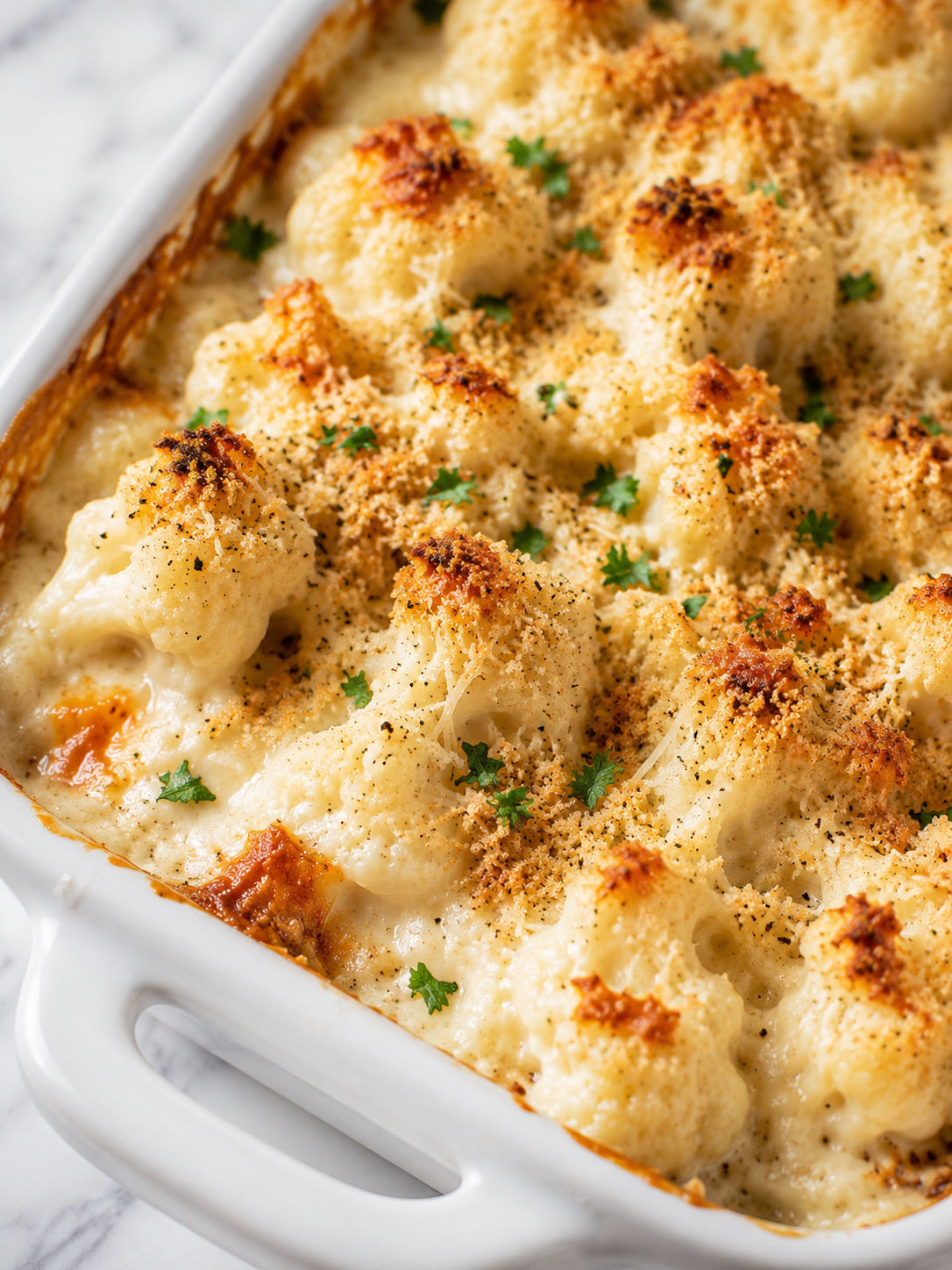
Serve this gratin hot from the oven with roasted chicken, beef, ham, or a crisp green salad for a simple vegetarian plate.

FAQs
- Can I make cauliflower gratin ahead of time?
Yes. Assemble the cauliflower and cheese sauce up to one day ahead, cover, and refrigerate. Add the breadcrumb topping right before baking so it stays crisp.
- Can I use frozen cauliflower?
You can, but thaw it fully and press out extra moisture first. Frozen cauliflower is softer than fresh, so skip any long simmer and expect a slightly looser texture.
- What can I use instead of Gruyère?
Comté, Emmental, Swiss, or sharp white cheddar all work. Gruyère gives the smoothest nutty flavor, but the dish still bakes well with another good melting cheese.
- How do I keep the gratin from getting watery?
Cut the cauliflower into small, even florets and cook it just until barely tender. Let extra steam escape before baking, and avoid overcooking it in the sauce.
- Is cauliflower gratin gluten-free?
This version is not gluten-free because it uses flour and panko breadcrumbs. For a gluten-free version, use a 1:1 gluten-free flour blend for the roux and gluten-free breadcrumbs for the topping.
- What goes well with cauliflower gratin?
It is rich enough for roast chicken, pork chops, ham, steak, or a holiday turkey plate. For a meatless dinner, serve it with a green salad and something bright like lemony beans.
