 Pin it
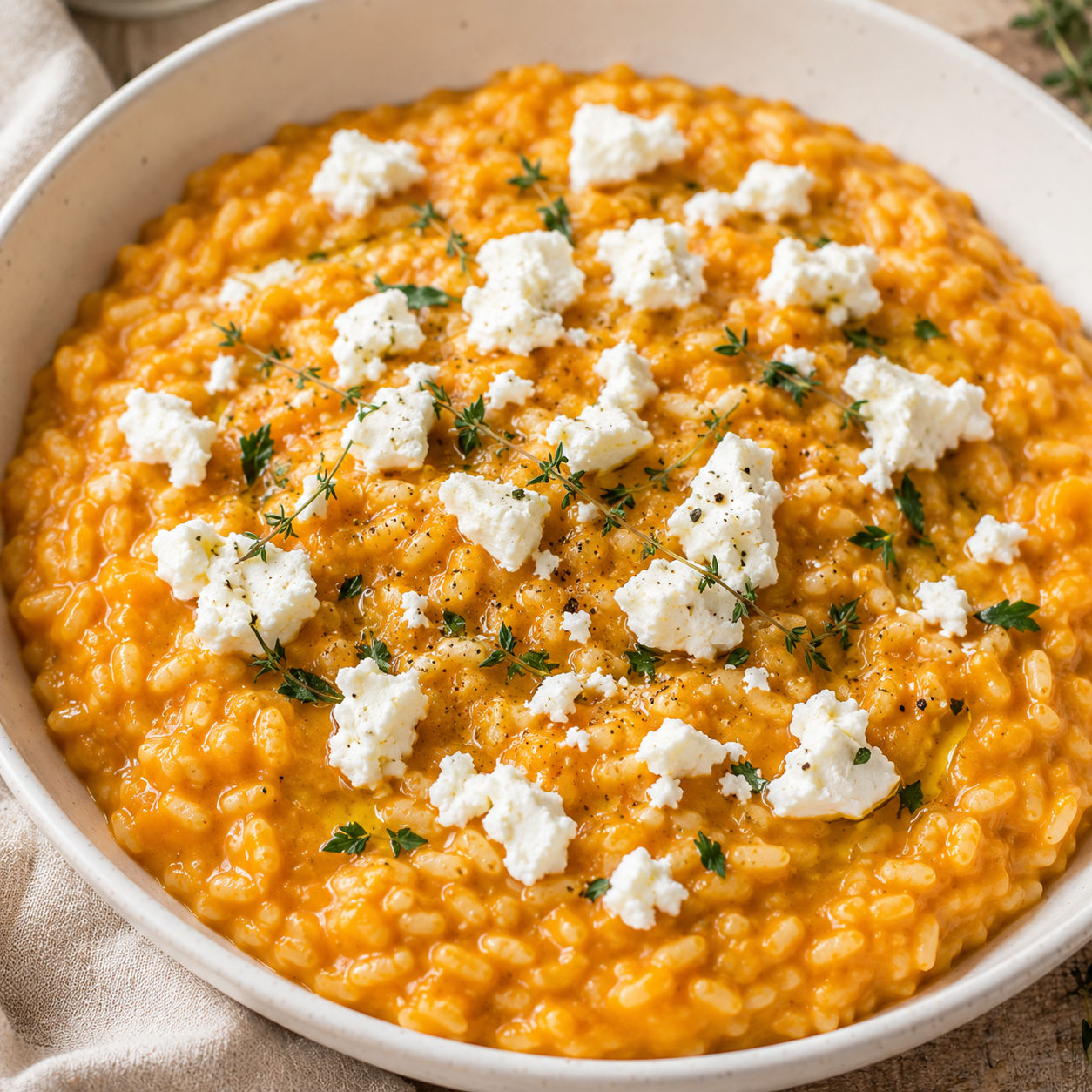
This is the bowl I reach for when the light starts fading early and the kitchen needs to feel like a refuge. Arborio rice slowly drinks up broth laced with pumpkin, turning velvety and rich without any cream. A log of goat cheese crumbled over the top adds just enough tang to keep each bite interesting.
The method is simple but it does ask for your attention for about half an hour. Keep the broth warm, add it one ladle at a time, and stir often. The result is a creamy, gently sweet risotto that works as a main course with a salad or as a side next to roasted chicken.
What builds the creamy base
Quality matters here because the ingredient list is short. Use real canned pumpkin puree, not pie filling. A good vegetable or chicken stock and a block of parmesan you grate yourself make a noticeable difference.
- Arborio rice. The high-starch short grain that gives risotto its signature creamy body without adding any cream.
- Canned pumpkin puree. Earthy and smooth, it colors the rice a deep orange and adds a subtle sweetness.
- Vegetable broth. The liquid the rice slowly absorbs. Warm broth keeps the cooking temperature steady.
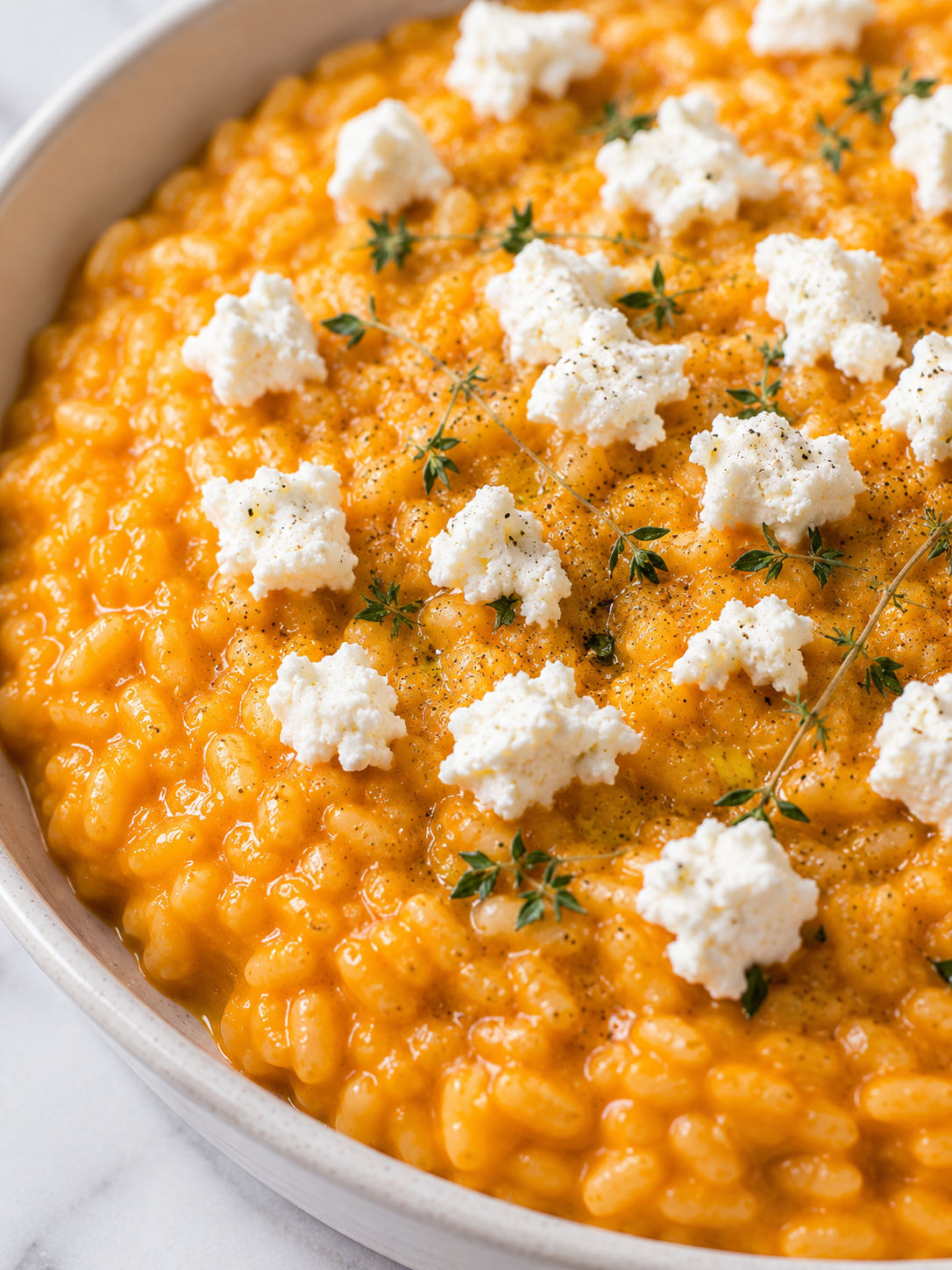
- Goat cheese. Tangy and soft, it melts into the hot rice and creates little pockets of richness.
- Parmesan cheese. Salty and nutty, it tightens the risotto and adds depth.
- Shallot and garlic. The quiet aromatics that build a savory backbone.
- Fresh thyme and nutmeg. Warm, woodsy notes that belong with pumpkin.
- Unsalted butter and olive oil. For toasting the rice and finishing with silkiness.
How to feed the rice
- Warm the broth. Whisk the pumpkin puree into the broth in a saucepan and bring it to a gentle simmer. Keep it covered over low heat. Cold broth shocks the rice and stops the starch from releasing.
- Toast the rice. Heat olive oil and half the butter in a wide pan or Dutch oven. Add the shallot and cook until soft, about 3 minutes. Stir in the garlic and thyme for 30 seconds, then add the rice. Toast for 2 minutes until the edges look translucent.
- Add the first ladle. Pour in one ladle of hot broth and stir gently. Let the rice absorb almost all of it before adding the next. This slow feeding is what creates creaminess.
- Keep feeding and stirring. Continue adding broth one ladle at a time, stirring often, for 20 to 25 minutes. The rice should be tender with a slight bite in the center and the dish should look loose and glossy.
- Finish with cheese. Remove the pan from the heat. Stir in the remaining butter, parmesan, nutmeg, and half the goat cheese. Season with salt and pepper. The residual heat melts everything into a smooth, flowing consistency.
- Rest and serve. Let the risotto sit for 2 minutes so it relaxes. Spoon into warm bowls and top with the remaining crumbled goat cheese and fresh parsley.
Why warm broth matters
Risotto cooks by slowly releasing starch into hot liquid. If the liquid is cold, the rice seizes and the surface starch turns gluey instead of creamy. Keeping the pumpkin-broth mixture at a low simmer on the back burner means every ladle you add keeps the rice cooking evenly. It is a small step that makes the difference between a loose, flowing risotto and a stiff one.
If you want a vegetarian Thanksgiving spread, this dish sits beautifully alongside maple pecan goat cheese roasted acorn squash or a crisp green salad.
The stir frequency sweet spot
Constant stirring is a myth. You do need to stir often enough to prevent sticking, but letting the rice sit for 30 seconds between stirs helps it absorb the broth and encourages even cooking. Think of it as a conversation, not a lecture. Stir, let it simmer, stir again.
Swaps and add-ins
No goat cheese? Use feta for a saltier punch or a soft gorgonzola for something bolder. Swap thyme for sage if you want a more peppery, autumnal note. For extra texture, fold in toasted pepitas or dried cranberries at the end. If you enjoy savory pumpkin bakes, roasted pumpkin quiche with caramelized onions uses a similar flavor palette.
You can also turn this into an appetizer by portioning it into small bowls and topping each with a mini pumpkin goat cheese tartlet on the side.
Storing and reheating
Risotto is best eaten right away, but leftovers keep in an airtight container in the fridge for up to three days. Reheat gently in a saucepan with a splash of broth or water over medium-low heat, stirring until loose again. The microwave tends to make the rice gummy, so avoid it if you can.
Pairing and serving
This risotto is rich, so it wants something crisp on the side. A simple arugula salad with lemon vinaigrette or roasted broccoli with lemon zest balances the bowl. For wine, a dry white like Pinot Grigio or a light Chardonnay works well. If you are serving it as a side, pair it with roasted chicken or seared pork chops.

FAQs
- Can I use fresh pumpkin instead of canned?
Yes. Roast cubed sugar pumpkin or butternut squash until very soft, then puree it with a little broth until smooth. You will need about 1 cup of puree.
- What can I substitute for goat cheese?
Feta or a soft blue cheese work well. For a milder option, use mascarpone or extra parmesan, though you will lose the tangy contrast.
- How do I keep risotto from getting mushy?
Add broth one ladle at a time and let it absorb before adding more. Stop cooking when the rice still has a slight firmness in the center. It will continue to soften as it sits.
- Can I make this ahead of time?
You can prep all the aromatics and cheeses ahead. The risotto itself is best served immediately, but leftovers reheat gently with a splash of broth.
- Is this recipe gluten-free?
Yes. Arborio rice is naturally gluten-free. Just confirm that your broth and cheeses are certified gluten-free if you are cooking for someone with celiac disease.
- What broth works best?
Vegetable broth keeps it vegetarian. A good homemade or low-sodium store-bought chicken broth adds a deeper savory note if you are not avoiding meat.
- Can I freeze pumpkin risotto?
Freezing is not ideal. The texture becomes grainy and the cheese can separate when thawed. It is best to make only what you plan to eat within a few days.
- How do I know when the risotto is done?
Taste a grain. It should be creamy on the outside with a tiny firm dot in the center. The overall dish should flow slowly when you tilt the pan, not stand in a mound.
