 Pin it
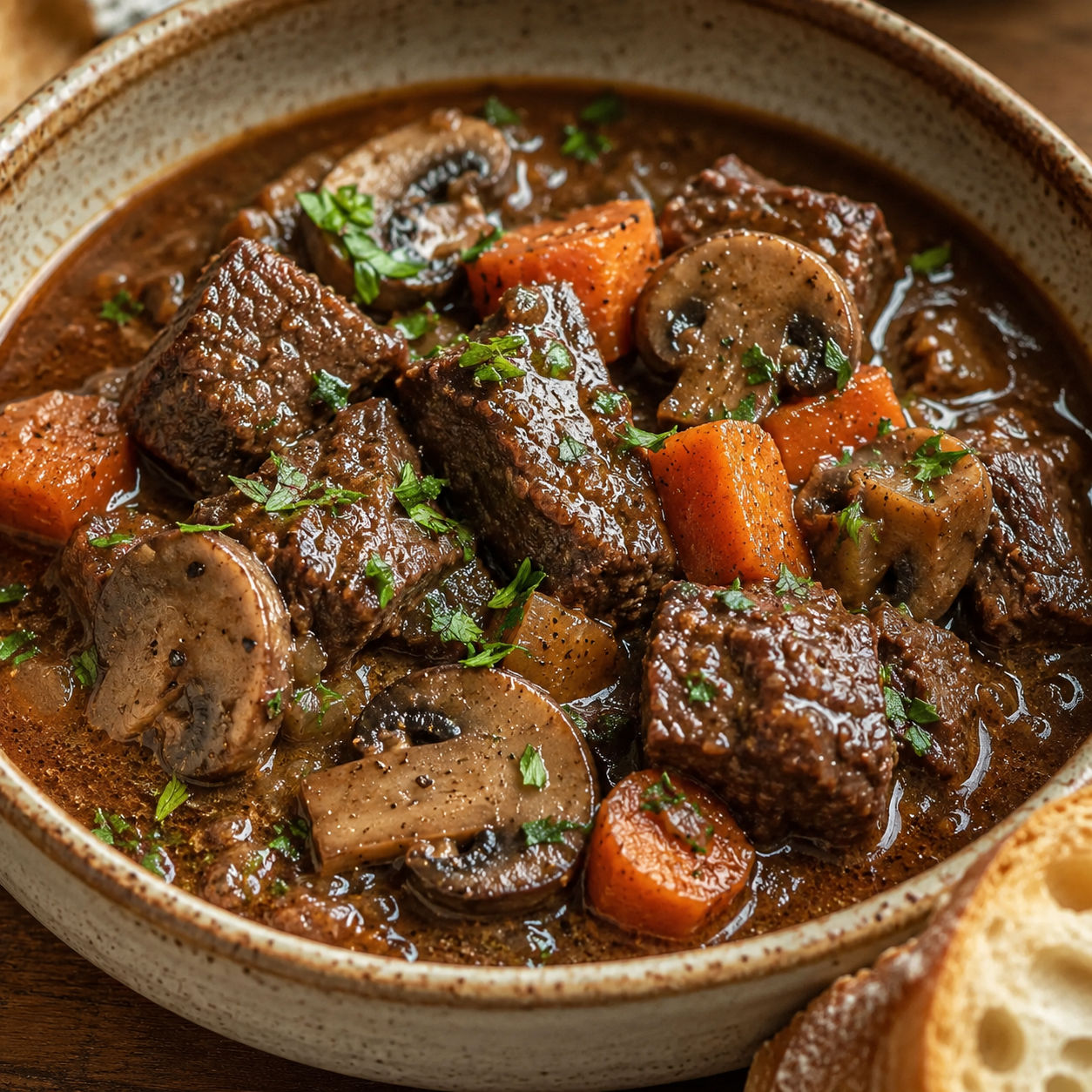
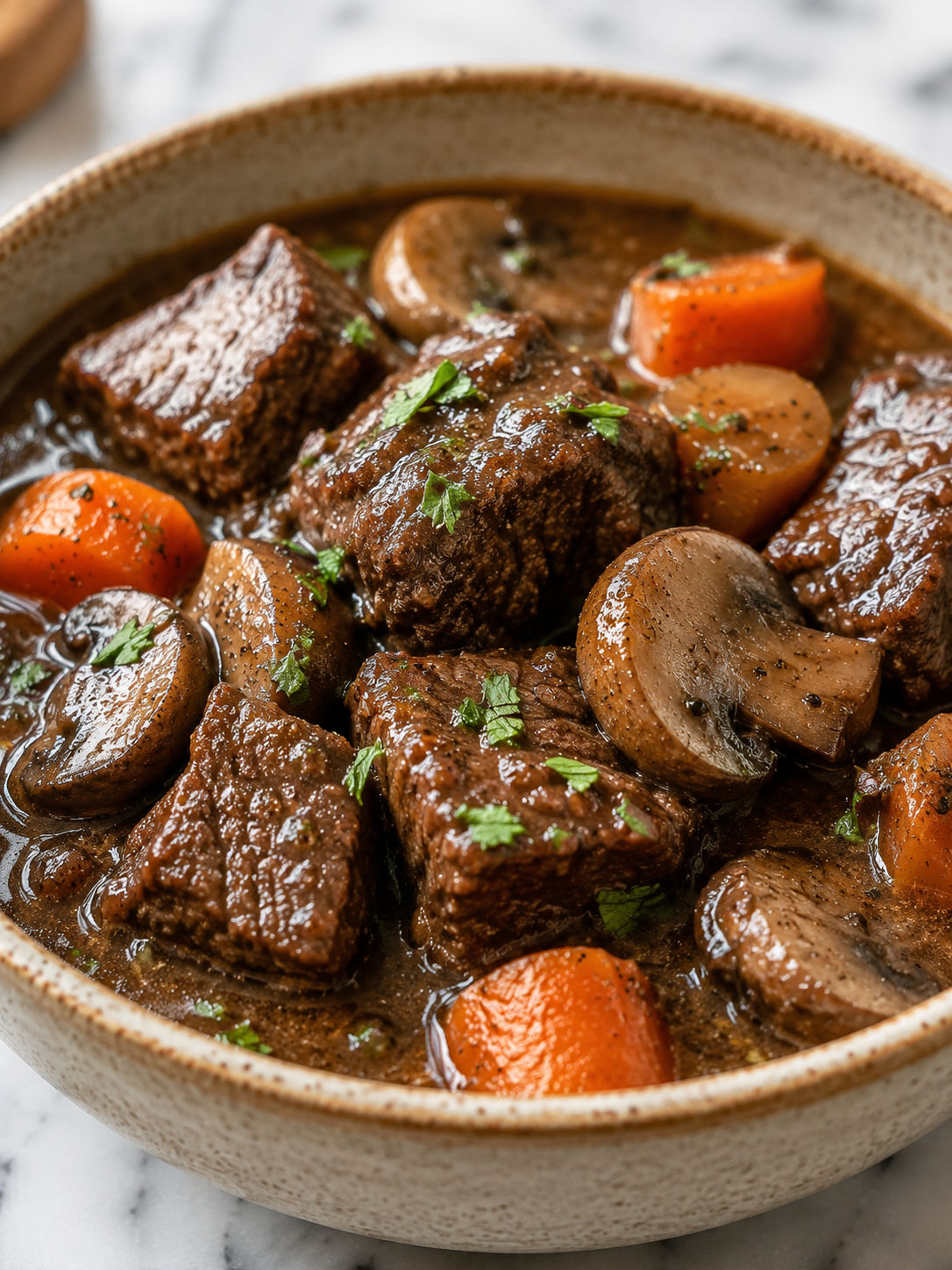
This is the stew I make when the temperature drops and the house needs to smell like something is actually cooking. Big chunks of beef chuck, a pound of mushrooms, and a few pantry staples turn into a rich, dark broth that clings to a spoon.
The method is straightforward. Brown the meat, soften the aromatics, add liquid, and walk away for a couple of hours. The only real secret is patience. Rush the simmer and the beef stays tough. Give it time and it falls apart with a fork.
What goes into the pot
A short list of solid ingredients that do real work. Buy well-marbled chuck roast and cut it yourself into thick cubes. Pre-cut stew meat is often too lean and irregular, so it cooks unevenly. For mushrooms, cremini give more flavor than plain white buttons, but either works.
- Beef chuck. Well-marbled and forgiving, it breaks down into tender pieces after a long simmer. Avoid lean cuts like top round.
- Cremini mushrooms. Sliced thick so they hold their shape and add an earthy, savory depth.
- Yellow onion. Diced and cooked until soft, it forms the sweet backbone of the broth.
- Garlic. Four cloves, minced, for real aroma without overpowering the beef.
- All-purpose flour. Tossed with the beef or stirred into the aromatics to lightly thicken the stew as it cooks.
- Beef broth. Low-sodium is best so you control the salt. It carries the whole dish.
- Tomato paste. Two tablespoons add color and a subtle tang that balances the richness.
- Worcestershire sauce. A splash of deep umami that makes the broth taste like it cooked all day.
- Fresh thyme. A few sprigs, or dried if that is what you have. It adds a woodsy note.
- Bay leaf. One leaf, subtle but necessary for background depth.
How the stew comes together
- Brown the beef. Pat the cubes dry and season with salt and pepper. Sear in batches in a hot Dutch oven until every side has a dark crust. Do not crowd the pan or the meat will steam instead of brown.
- Soften the aromatics. In the same pot, cook the onion until translucent, about five minutes. Add the garlic and stir for thirty seconds until fragrant.
- Add the flour and tomato paste. Stir for one minute so the raw taste cooks out and the paste caramelizes slightly.
- Deglaze and build. Pour in the beef broth and scrape up every browned bit from the bottom. Add the Worcestershire, thyme, bay leaf, and the beef with any juices. Bring to a gentle boil.
- Simmer low and slow. Cover and cook at a bare simmer for one and a half to two hours until the beef is fork-tender. Stir occasionally.
- Add the mushrooms. Stir them in during the last thirty minutes so they cook through without turning rubbery. Taste and adjust salt and pepper.
Searing builds the flavor base
That dark crust on the beef is not just for looks. It is the Maillard reaction, and it creates the deep savory flavor that defines a great stew. If you try to brown all the meat at once, the pot cools down and the beef boils in its own juices. Work in two or three batches and let each cube sit undisturbed until it releases easily from the pan. The fond left behind is liquid gold. Deglaze with broth and scrape every bit into the liquid.
Which mushrooms to choose
Cremini mushrooms are my default here. They have more flavor than white buttons and a firmer texture that holds up through the long cook. If you want something more intense, add a handful of dried porcini soaked in warm water. The soaking liquid becomes part of the broth and adds an almost meaty depth. Skip delicate varieties like enoki or oyster for this recipe. They break down too much and disappear into the gravy. If you enjoy earthy flavors, our ultimate savory mushroom rice uses a similar approach.
The low simmer that tenderizes
Once the liquid comes to a boil, drop the heat until you see only occasional gentle bubbles. A violent boil tightens the beef proteins and makes them tough. A low simmer lets the collagen in the chuck slowly convert into gelatin, which thickens the broth and gives it that silky mouthfeel. Check the meat after ninety minutes. It should yield easily to the tines of a fork. If it still resists, give it another twenty to thirty minutes. Every piece of meat is slightly different depending on the animal and the exact cut.
Serve it with something starchy
The broth is rich and demands a vehicle. Mashed potatoes are the classic choice. Egg noodles, buttered wide ribbons, or a hunk of crusty sourdough work just as well. For a lighter option, spoon the stew over roasted carrots or parsnips. A sprinkle of fresh parsley at the table adds color and a clean finish. If you are feeding a crowd, set out a basket of bread and let people help themselves. This stew also pairs well with a simple green salad dressed with vinegar to cut the richness. For another hearty beef dinner, try our classic beef tips and gravy.
Leftovers keep getting better
This stew tastes even better the next day after the flavors meld overnight. Store it in an airtight container in the refrigerator for up to four days. Reheat gently on the stovetop with a splash of water or broth to loosen the gravy. You can also freeze portions for up to three months. Thaw overnight in the fridge and reheat slowly. The USDA recommends keeping leftovers at 40°F or below during storage, see the USDA meat safety guidelines. If you want a different beef and vegetable combination, our vegetable beef soup classic is a lighter take on the same idea.
FAQs
- What is the best cut of beef for stew?
Beef chuck is ideal because of its marbling and connective tissue. It becomes tender and flavorful after a long simmer. Brisket and bottom round are good alternatives, but avoid pre-cut stew meat when possible.
- Can I make this stew in a slow cooker?
Yes. Brown the beef and soften the aromatics on the stovetop first, then transfer everything to a slow cooker. Cook on low for seven to eight hours or on high for four to five hours.
- How do I thicken the stew if it is too thin?
The flour in the recipe thickens it naturally as it simmers. If it is still thin after cooking, simmer uncovered for the last fifteen minutes or stir in a slurry of one tablespoon cornstarch and two tablespoons cold water.
- Can I use red wine instead of some broth?
Absolutely. Replace up to one cup of broth with a dry red wine like cabernet or merlot. The alcohol cooks off and leaves a deeper, more complex flavor.
- How long do leftovers last?
Refrigerate in an airtight container for up to four days. Freeze for up to three months. Reheat gently on the stovetop.
- Which mushrooms work best?
Cremini are the best all-around choice. White button mushrooms work too. For extra depth, add a small handful of dried porcini with their soaking liquid.
- Why is my beef tough?
It likely needed more time or the heat was too high. Tough beef usually means the collagen has not fully broken down. Keep the heat low and test again in twenty minutes.
