 Pin it
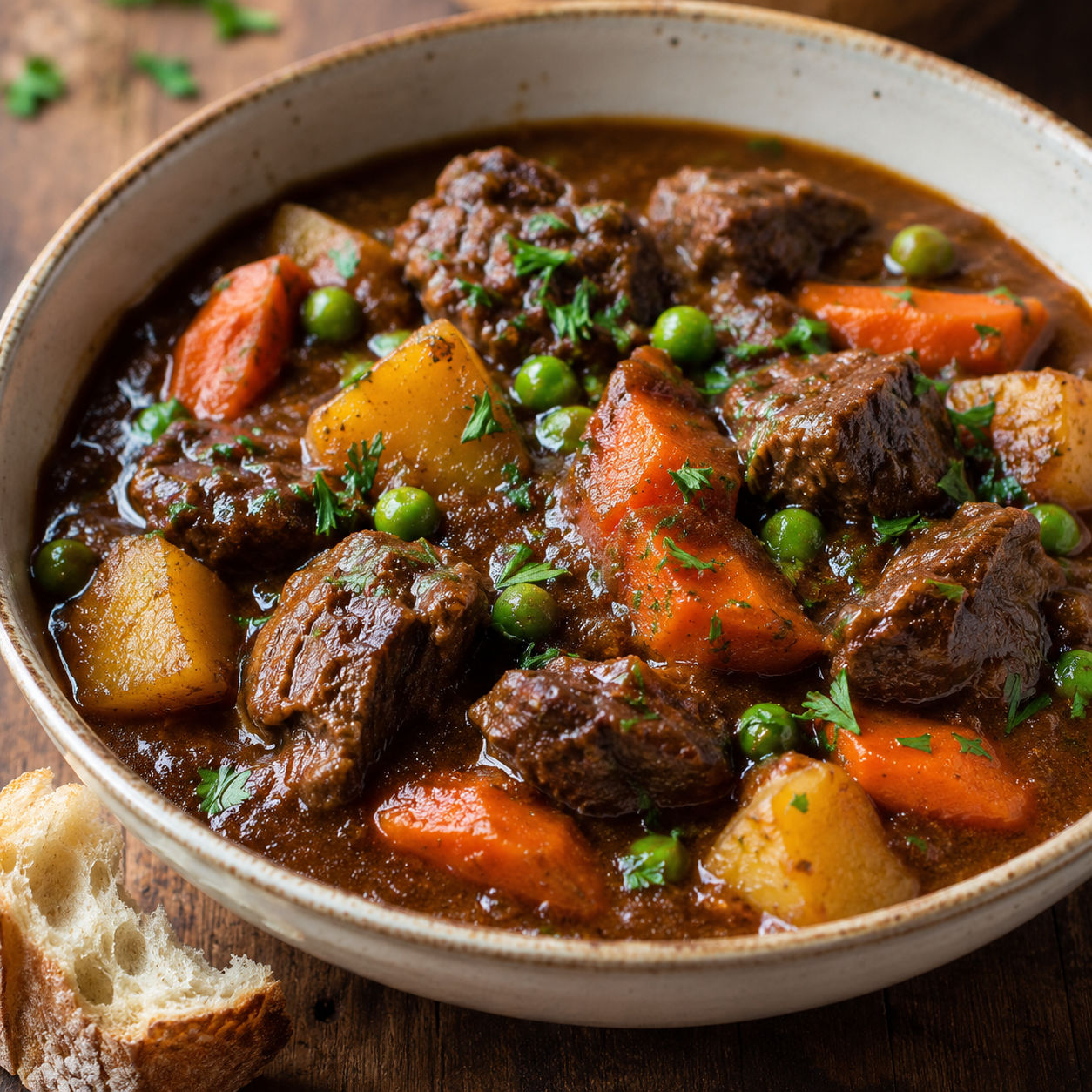
Perfect Beef Stew should taste like it took care of itself all afternoon, even though the best flavor comes from a few deliberate moves at the start. You brown the beef in batches, let the aromatics pick up the browned bits, then give the pot time to turn tough chuck into tender pieces you can cut with a spoon.
This version is classic and sturdy. The broth is rich with red wine, beef stock, tomato paste, thyme, and bay, with carrots and potatoes added near the end so every bowl has shape, color, and bite.
Perfect Beef Stew essentials
The best stew starts with ingredients that can handle a long, slow cook. Look for well-marbled chuck, sturdy vegetables, and a dry red wine you would not mind drinking.
- Beef chuck. This cut has the fat and connective tissue that turn soft and rich during braising.
- Salt and black pepper. Seasoning the beef before browning builds flavor from the first step.
- Olive oil. Helps the beef develop a dark crust in the Dutch oven.
- Onion, celery, and garlic. These soften into the base of the broth and make the stew smell savory right away.
- Tomato paste. Adds body, color, and a quiet sweetness once it cooks for a minute in the hot pot.
- All-purpose flour. Lightly thickens the broth so it coats the beef and vegetables.
- Dry red wine. Lifts the browned bits from the pot and gives the stew a deeper, rounder flavor.
- Beef broth and Worcestershire sauce. Bring savory depth and enough liquid for the long braise.
- Bay leaf and thyme. Classic herbs that keep the broth earthy without taking over.
- Carrots and Yukon gold potatoes. They hold their shape and soak up the sauce as they cook.
- Fresh parsley. Adds a clean finish to the dark, rich bowl.
Build the stew slowly
- Dry and season the beef. Pat the chuck pieces dry, then season them well with salt and pepper so they brown instead of steaming.
- Brown in batches. Sear the beef in hot oil until the pieces have a dark crust on several sides. Move each batch to a plate before adding the next.
- Cook the aromatics. Add onion and celery to the pot and scrape the browned bits as they soften. Stir in garlic and tomato paste until the paste darkens slightly.
- Thicken and deglaze. Sprinkle in flour and stir until it disappears. Add the wine slowly, scraping the bottom, then pour in broth and Worcestershire sauce.
- Braise the beef. Return the beef and juices to the pot with thyme and bay leaf. Cover and cook in a 325°F oven until the beef is starting to soften.
- Add the vegetables. Stir in carrots and potatoes, cover again, and cook until the beef is fork tender and the vegetables are done.
- Rest and finish. Let the stew stand for 10 minutes, skim excess fat if needed, then finish with parsley and a final taste for salt.
Browning is worth it
Do not rush the sear. The browned crust on the beef and the dark bits on the bottom of the pot are what make the broth taste roasted instead of flat. Work in batches with space between the pieces. If the pot looks wet, the beef is too crowded.
This is also why a Dutch oven helps. It holds heat well and gives the stew a steady braise once it moves into the oven. The same patient browning makes recipes like Savory Beef and Mushroom Stew taste fuller, especially when mushrooms are involved. For another classic method built around searing and braising, the beef stew from Once Upon a Chef is a useful reference point.
Vegetables need their moment
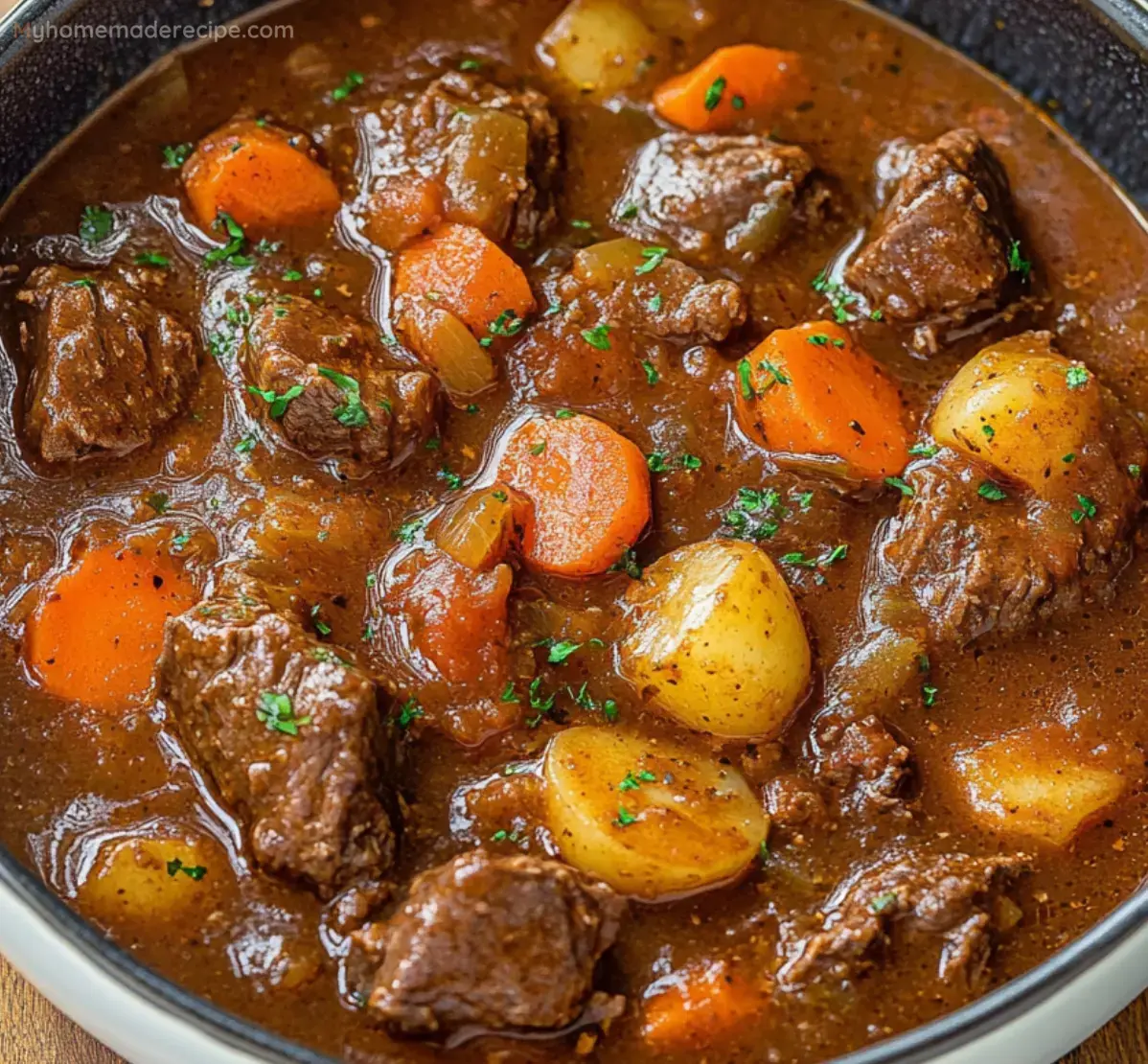
Carrots and potatoes do not need the full braising time. Add them after the beef has had a head start, then cook them until they are tender but still recognizable. This keeps the stew from turning into a muddy pot of broken vegetables.
Yukon gold potatoes are my first choice because they taste buttery and hold together. Russets work if you like a thicker stew, but they shed more starch. If you want a soupier bowl with more vegetables and a lighter broth, Vegetable Beef Soup Classic is the better fit.
Wine or no wine
Dry red wine gives beef stew depth, but it should not taste sharp. Let it bubble for a minute after it goes into the pot, then add the broth. Merlot, Cabernet Sauvignon, or Pinot Noir all work. Avoid sweet wine because the carrots and tomato paste already bring sweetness.
If you do not cook with wine, use extra beef broth and a spoonful of balsamic vinegar. The vinegar wakes up the sauce without making the stew taste sour. Worcestershire sauce helps too. It adds a deep savory note that makes a wine-free stew feel less thin.
Make it a day ahead
Beef stew is one of the rare dinners that improves after a night in the fridge. The sauce settles, the fat rises where you can remove it, and the flavors taste rounder the next day. Cool the pot uncovered until it stops steaming, then refrigerate it in shallow containers.
Reheat it gently on the stove. Add a splash of broth or water if the sauce has tightened. The USDA has practical guidance for chilling and reheating cooked food in its leftovers food-safety guide. For a slow cooker style meal with similar cozy flavor, try Crockpot Fall Harvest Stew.
How to serve it
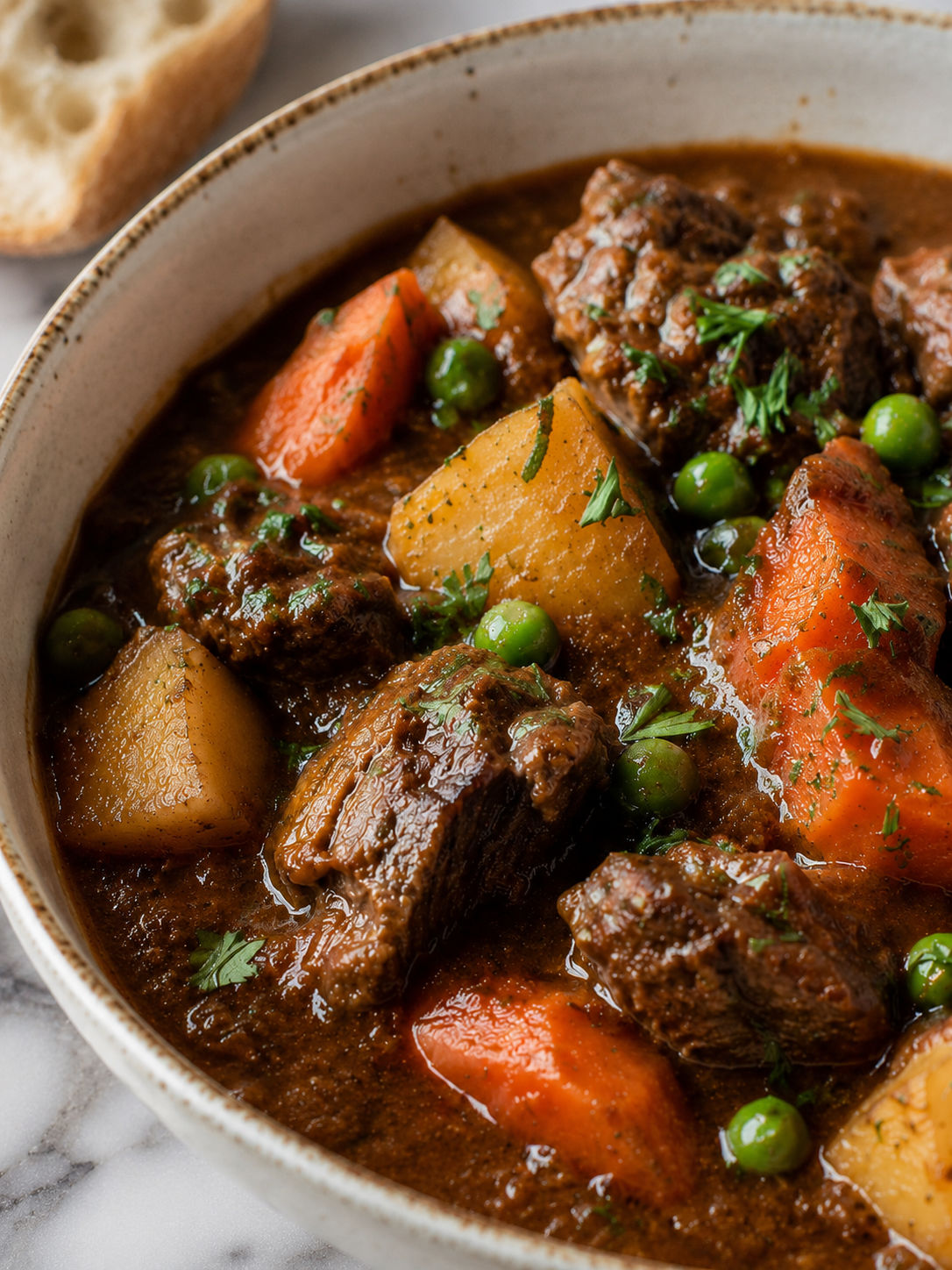
A bowl of Perfect Beef Stew only needs something simple beside it. Crusty bread is the obvious choice, but mashed potatoes turn it into a bigger Sunday dinner. Buttered noodles work too, especially if the sauce has reduced into a glossy gravy.
If you want to lean richer for a holiday meal, Julia Child Beef Bourguignon stays in the same slow-braised family. For a faster beef dinner on a busy night, Garlic Butter Beef Rice Skillet keeps the comfort but skips the long simmer.
FAQs
- What cut of beef is best for Perfect Beef Stew?
Beef chuck is the best choice because it has enough connective tissue and marbling to become tender during a long braise. Lean stew meat can work, but it often turns dry before it becomes soft.
- Can I make beef stew without red wine?
Yes. Replace the wine with more beef broth and add 1 tablespoon balsamic vinegar or red wine vinegar for brightness. The stew will be a little less deep, but it will still taste rich if you brown the beef well.
- Why is my beef stew tough?
It usually needs more time. Chuck becomes tender after the collagen breaks down, so keep the stew at a gentle simmer and check again every 20 minutes. Boiling hard can also tighten the meat and make the broth cloudy.
- Can I make this beef stew ahead?
Yes, and it tastes even better the next day. Cool it quickly, refrigerate it in a covered container, then reheat gently on the stove with a splash of broth if the sauce has thickened too much.
- Can I make this gluten-free?
Yes. Skip the all-purpose flour and thicken the finished stew with a cornstarch slurry made from 1 tablespoon cornstarch and 1 tablespoon cold water. Also check that your Worcestershire sauce and beef broth are labeled gluten-free.
- What should I serve with beef stew?
Crusty bread is the easiest choice because it soaks up the sauce. Mashed potatoes, buttered egg noodles, or a simple green salad also work well if you want to stretch the meal.
