 Pin it
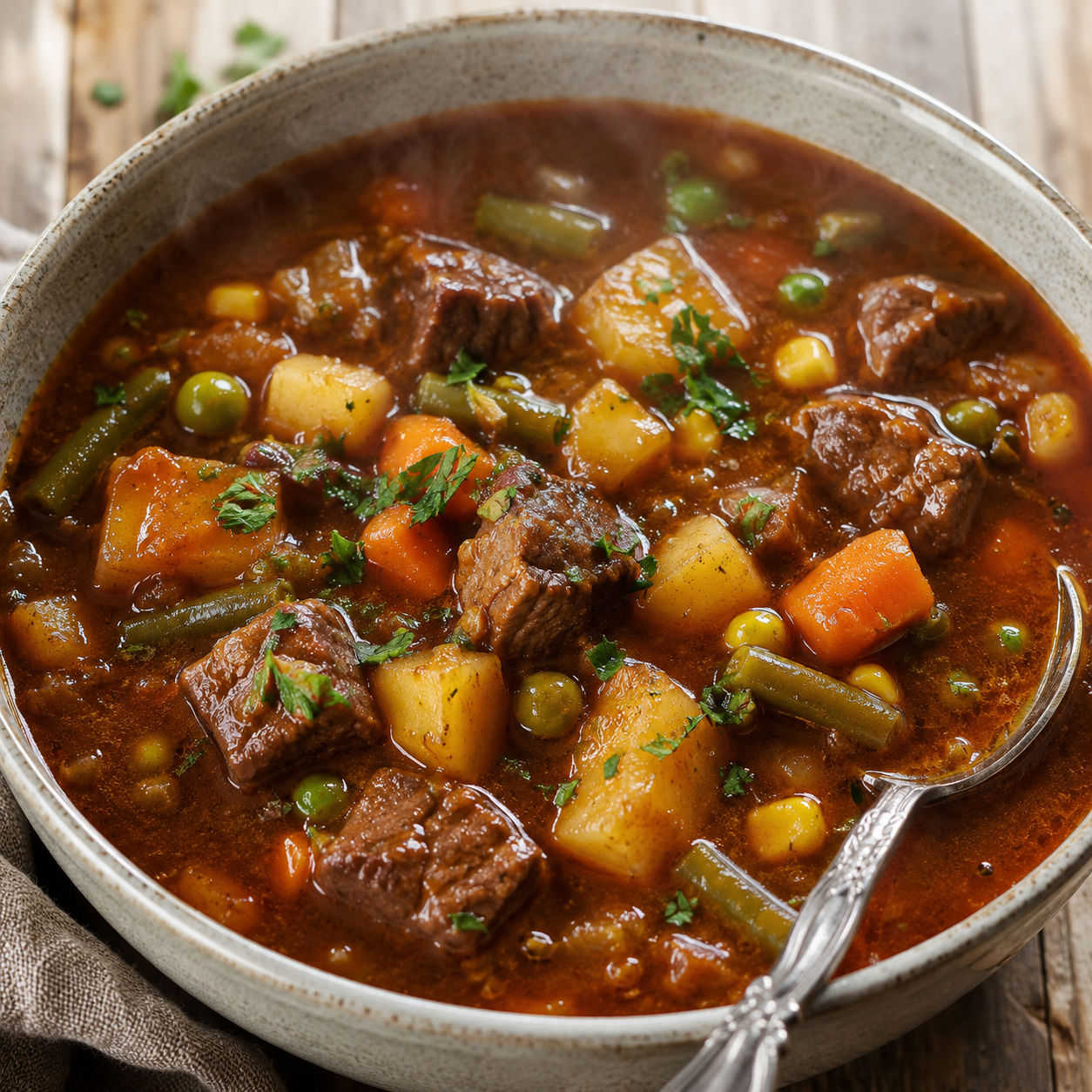
Hearty Vegetable Beef Soup with Potatoes and Herbs is the kind of pot that makes the kitchen smell settled and warm. It has tender chunks of beef, soft potatoes, sweet carrots, green beans, peas, and a tomato broth scented with thyme, rosemary, bay, and parsley.
The trick is patience at the start. Browning the beef and cooking down the tomato paste give the broth a deeper taste than just dropping everything into the pot.
I like this soup thick enough to feel like dinner but still brothy enough for a spoon. A little crusty bread is nice, but you will not miss it if the bowl is full.
The Beefy Herb Lineup
Choose beef with a little marbling and potatoes that hold their shape. Yukon golds are my favorite here because they turn creamy at the edges without falling apart.
The vegetables are everyday ones, but the soup tastes best when the herbs are not treated like an afterthought. Thyme, rosemary, bay, and parsley make the broth smell like it has been simmering all afternoon.
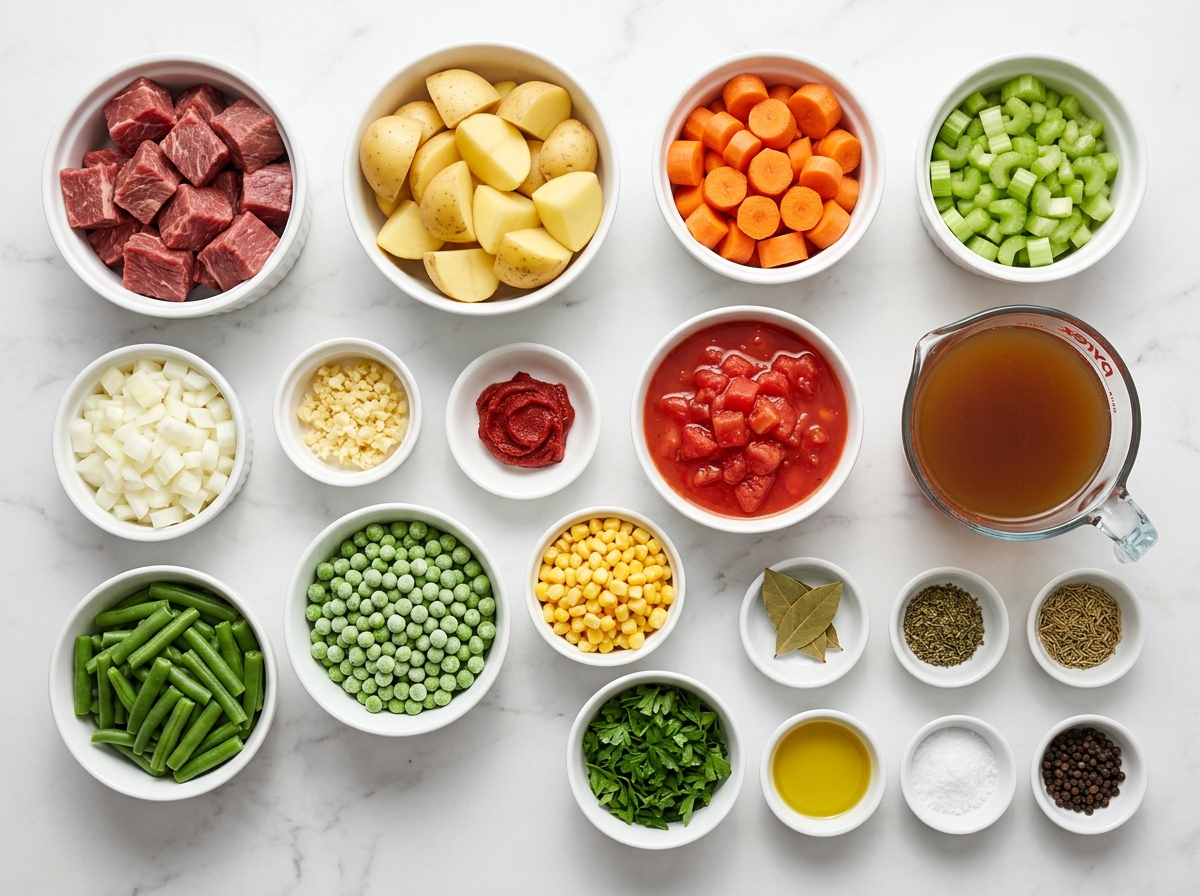
- Chuck beef. Becomes tender and gives the broth a deeper, rounder flavor as it simmers.
- Yukon gold potatoes. Add body and a creamy bite without turning the soup cloudy too fast.
- Onion, celery, and carrots. Build the sweet, savory base every good beef soup needs.
- Garlic. Adds warmth once it briefly cooks with the tomato paste.
- Tomato paste and diced tomatoes. Give the broth color, acidity, and a slow-cooked taste.
- Beef broth. Carries the whole pot, so use a low-sodium one you like.
- Green beans, corn, and peas. Bring color and sweetness near the end of cooking.
- Thyme, rosemary, bay, and parsley. Keep the soup herby, cozy, and fresh at the finish.
Build The Soup In Layers
- Brown the beef. Pat the beef dry, season it, and brown it in batches in a hot Dutch oven. Give the pieces space so they sear instead of steam.
- Cook the aromatics. Add onion, celery, and carrots to the pot and cook until the onion softens. Stir in garlic and tomato paste until the paste darkens slightly.
- Simmer until tender. Pour in broth and diced tomatoes, then add bay, thyme, rosemary, and the browned beef. Cover and simmer gently until the beef is nearly tender.
- Add potatoes and vegetables. Stir in the potatoes and green beans, then simmer uncovered until the potatoes are fork-tender. Add corn and peas in the last few minutes.
- Finish and serve. Remove the bay leaf, adjust salt and pepper, and stir in fresh parsley. Let the soup rest for 5 minutes before ladling so the broth settles.
Why Browning Matters
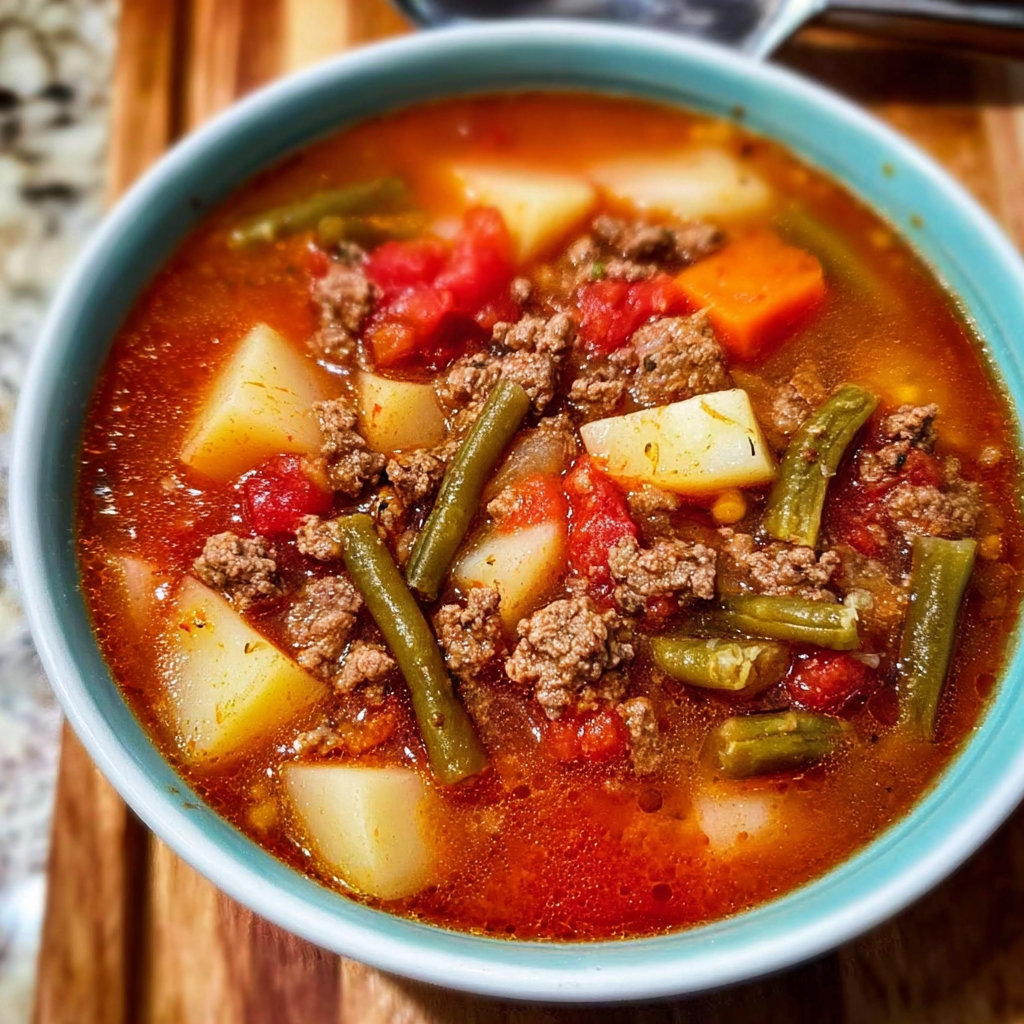
The first hot sear is where this soup gets its backbone. If the beef goes into broth pale, the finished bowl tastes fine but a little flat. Let the pot get properly hot, add oil, and brown the beef in two batches. The dark bits left on the bottom are not a problem. They are flavor waiting for liquid.
Once the onion and carrots soften, stir the tomato paste right into those browned bits. It should look darker and smell sweeter after a minute or two. That small step takes away the raw tomato edge and makes the broth taste richer without adding flour. If you like this style of cozy beef soup, the site's Vegetable Beef Soup Classic is another good bowl to keep close.
Keeping Vegetables Tender
Vegetables do not all cook at the same pace. Carrots and celery can start early because they flavor the broth. Potatoes and green beans need less time. Peas and corn need only a few minutes or they lose their bright color.
Cut the potatoes into 3/4-inch pieces so they cook evenly with the green beans. If you prefer a thicker soup, press a few potato pieces against the side of the pot and stir them back in. That gives the broth a natural body. For a beef soup with a different texture, try Hearty Beef & Barley Soup. Barley makes the broth thicker and a little nutty.
Swaps That Still Taste Right
This recipe is flexible as long as you keep the broth balanced. Red potatoes can stand in for Yukon golds. Frozen mixed vegetables can replace the green beans, corn, and peas. Add them near the end so they stay lively. If you want more tomato flavor, use crushed tomatoes instead of diced tomatoes.
For herbs, dried thyme and rosemary are steady choices. If you have fresh rosemary, use a small sprig and remove it before serving. Too much rosemary can take over the pot fast. For a warmer, Mexican-style beef and vegetable soup, the site's Traditional Mexican Caldo de Res leans into larger vegetables and a clearer broth.
Storing The Second Bowl
This soup is even better the next day because the herbs settle into the broth. Cool it before storing, then keep it in airtight containers in the refrigerator. The USDA's leftovers guidance is a useful reference for timing and safe reheating, see leftovers and food safety.
Reheat gently on the stove until steaming hot. Add a splash of broth or water if the potatoes have thickened the soup overnight. For beef safety, the USDA temperature chart lists 145°F with rest time for whole cuts, though chuck in soup usually cooks far beyond that while becoming tender. You can check the safe minimum temperature chart for details. If you want a lighter vegetable bowl later in the week, Easy Roasted Vegetable Soup is a good change of pace.
Summary
A sturdy one-pot beef soup with potatoes, vegetables, and herbs. Brown the beef well, simmer it low, and add the vegetables in stages for the best texture.
FAQs
- What cut of beef is best for vegetable beef soup?
Chuck roast or stew meat is best because it has enough connective tissue to become tender during a long simmer. Lean steak can turn dry, so save that for faster cooking.
- Can I use ground beef instead of stew meat?
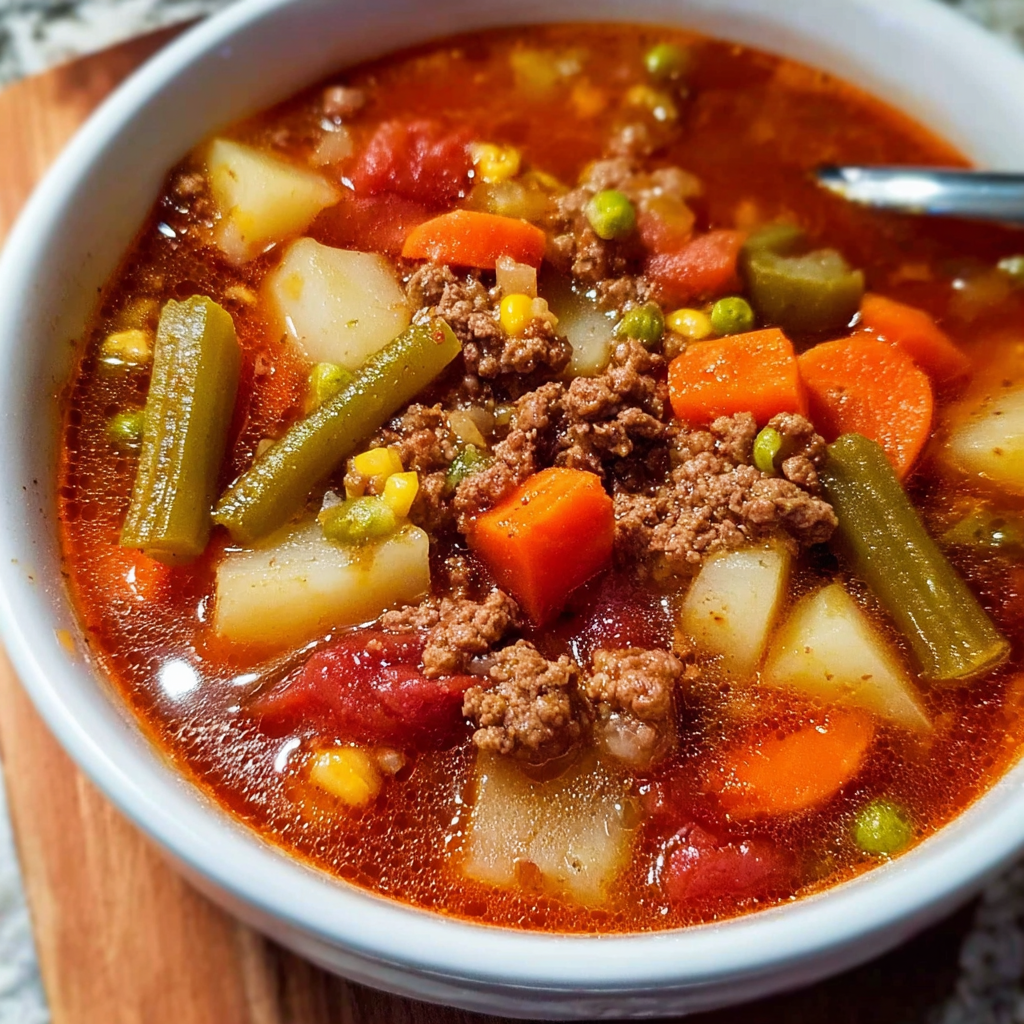
Yes. Brown 1 1/2 pounds of ground beef, drain excess fat if needed, and simmer the soup for about 35-45 minutes total. The broth will be faster but less silky than a chuck-based soup.
- When should potatoes go into beef soup?
Add potatoes after the beef has had time to soften, usually during the last 25-30 minutes. If they go in at the beginning, they may break down before the beef is tender.
- Can I make this soup in a slow cooker?
Yes. Brown the beef and aromatics first, then cook with broth, tomatoes, and herbs on low for 7-8 hours. Add potatoes and green beans during the last 2 hours so they do not turn mushy.
- How do I store vegetable beef soup?
Cool the soup, then refrigerate it in airtight containers for up to 4 days. Reheat gently on the stove with a splash of broth or water because the potatoes thicken the soup as it sits.
- Can I freeze vegetable beef soup with potatoes?
You can freeze it for up to 3 months, though potatoes soften a little after thawing. For the best texture, cool it completely and thaw overnight in the refrigerator before reheating.
- What herbs taste best in vegetable beef soup?
Thyme, rosemary, bay leaf, and parsley are reliable with beef and tomatoes. Use dried thyme and rosemary for the simmer, then finish with fresh parsley so the soup tastes bright.
