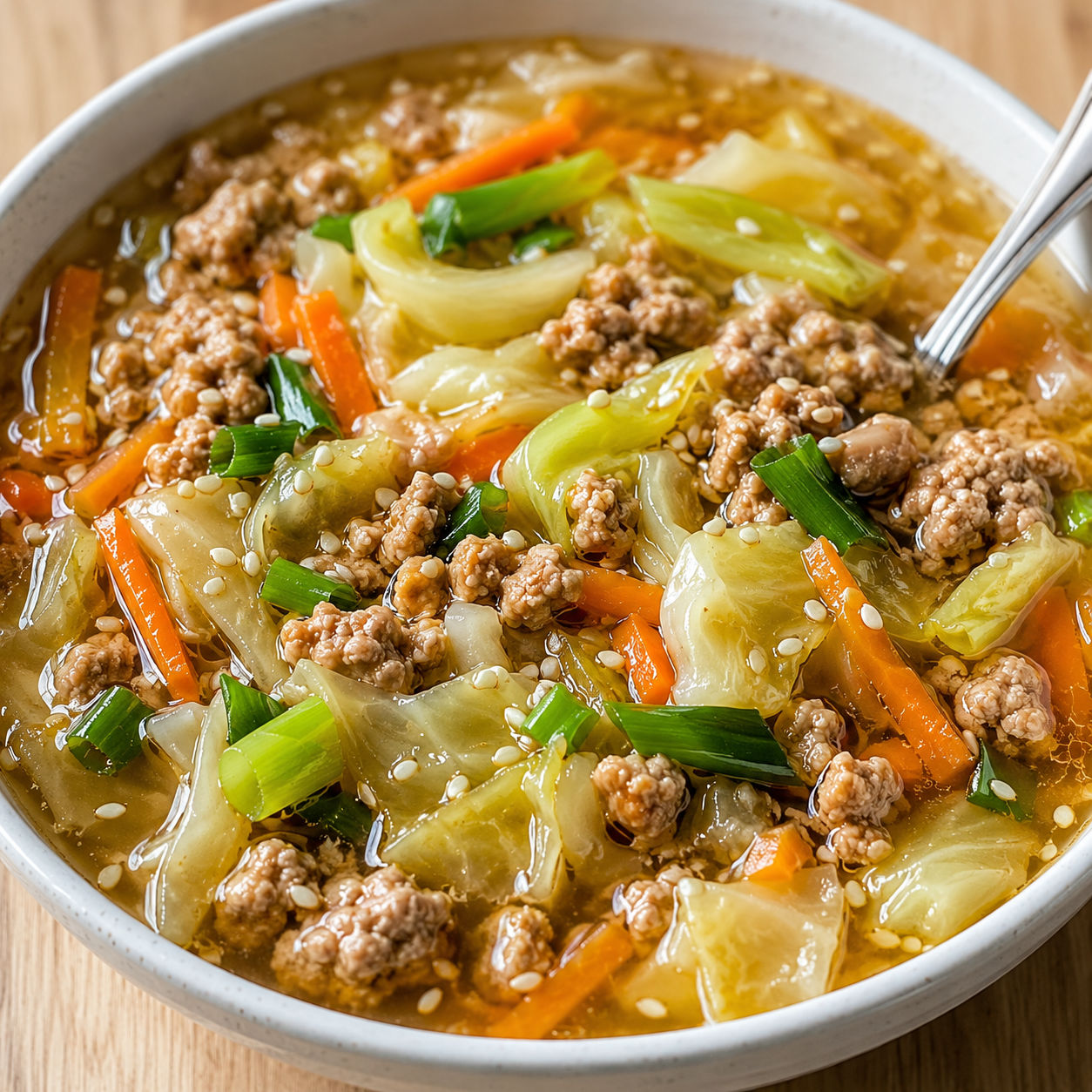
 Pin it
This soup is what I make when I want the flavor of an egg roll but not the wrappers, oil, or cleanup. The pot smells like ginger, garlic, browned pork, and sesame within the first ten minutes.
The cabbage softens into the broth but still keeps a little bite. A splash of rice vinegar at the end wakes everything up, so the soup tastes savory and fresh instead of heavy.
Egg Roll Soup with Ginger and Cabbage
The ingredient list is short, so each piece has a job. Use fresh ginger if you can, and choose a firm head of green cabbage with crisp leaves and no heavy browning at the core.
- Ground pork. Browning it first gives the broth a savory base and makes the soup feel satisfying.
- Green cabbage. It softens into sweet ribbons while keeping enough texture for a hearty bowl.
- Carrots. They add color, gentle sweetness, and the familiar egg roll filling feel.
- Yellow onion. It rounds out the pork and gives the broth a cooked-all-day taste.
- Fresh ginger. This is the clean, warm flavor that keeps the soup bright.
- Garlic. A quick bloom in the pork drippings makes the broth deeper.
- Chicken broth. It carries the cabbage and pork without covering the ginger.
- Tamari. It seasons the soup with salty depth and keeps the recipe gluten-free when certified.
- Rice vinegar. A small splash at the end cuts through the richness.
- Toasted sesame oil. Use it as a finish so the nutty aroma stays strong.
- Scallions. They add a fresh bite right before serving.
One Pot, Deep Flavor
- Brown the pork. Cook the pork in a Dutch oven until no pink remains and a few browned bits collect on the bottom.
- Soften the aromatics. Add onion and carrots, then cook until the onion turns glossy and the carrots start to relax.
- Bloom ginger and garlic. Stir in the fresh ginger and garlic for about 30 seconds. Stop before the garlic browns.
- Simmer the cabbage. Add cabbage, broth, tamari, and chili sauce if using. Cover loosely and simmer until the cabbage is tender, about 18-22 minutes.
- Finish the pot. Stir in rice vinegar, sesame oil, and scallions. Taste before adding more salt because tamari and broth vary a lot.
Keep Cabbage Tender
The cabbage is the part that can make or break this soup. Cut it into thin, even ribbons so it cooks at the same pace. Thick chunks near the core can stay firm while the outer leaves collapse. I like to slice around the core, stack the leaves, and cut them crosswise into spoon-friendly pieces.
If you have made Egg Roll Bowl, the flavor will feel familiar, but soup needs a little more control. Cabbage gives off water as it cooks. Start with the listed broth amount, then add more only if you want a looser bowl. For a fresher texture, stir in a small handful of raw cabbage at the very end.
Build A Ginger Broth
Fresh ginger works best here because it tastes sharp, warm, and clean. Add it after the pork has browned and the onion has softened. That short contact with hot fat wakes it up without boiling away the aroma. Garlic goes in at the same time, but watch it closely. Burnt garlic can make the whole pot taste flat and bitter.
For food safety, cook ground pork until it reaches 160°F. The USDA safe temperature chart is a useful reference if you want exact numbers. Once the pork is fully cooked, the simmer is mostly about tender cabbage and a broth that tastes balanced.
Swaps For Busy Nights
Bagged coleslaw mix is fine when you need dinner fast. It will cook a little quicker than hand-sliced cabbage, so start checking around 12 minutes. Ground chicken, turkey, or beef can replace the pork. Beef makes the soup richer, which is closer to Healthy Cabbage Ground Beef Soup. Chicken gives it a lighter broth.
For more vegetables, add sliced mushrooms with the onion or baby spinach right at the end. If you like the cabbage and egg combination, Chinese Cabbage Egg Stir Fry is a good side to keep in rotation. For heat, use sriracha in the pot or chili crisp on top at the table.
Serve And Store It
This soup is best hot, with scallions, sesame seeds, and an extra drizzle of toasted sesame oil. If you want crunch, add crispy wonton strips right before eating. They soften fast, so keep them separate until the bowls are ready. A scoop of rice makes it more filling, while cauliflower rice keeps it low-carb.
Leftovers keep well in the fridge for 3-4 days. Reheat gently on the stove and add a splash of broth if the cabbage has soaked up too much liquid. For another cozy cabbage dinner, try Stuffed Cabbage Roll Casserole. It has a different flavor profile, but the same comforting cabbage-and-meat heartiness.
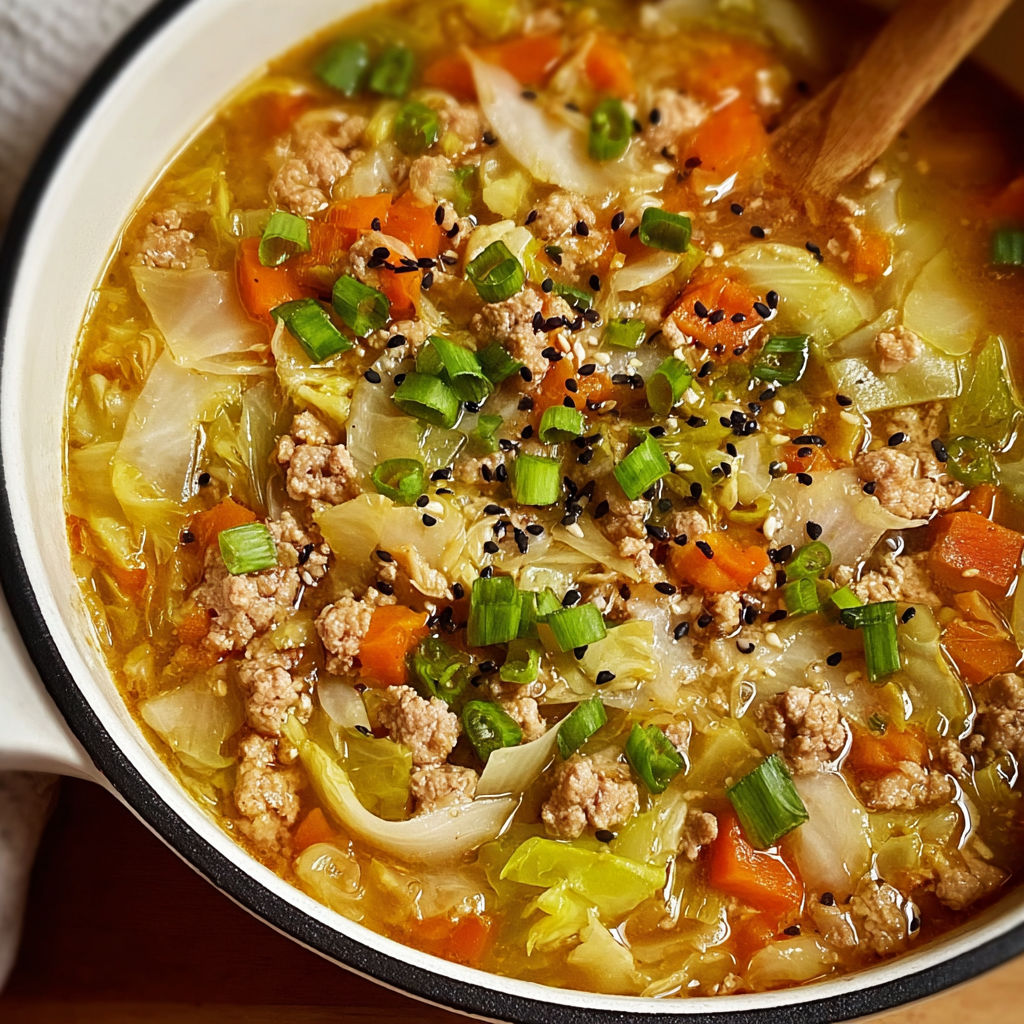
Summary
Serve this soup hot with scallions, sesame seeds, and a little chili crisp if you like heat.
FAQs
- Can I make egg roll soup with ground chicken instead of pork?
Yes. Ground chicken or turkey both work well. Add one extra teaspoon of sesame oil if the meat is very lean, since pork brings more natural richness.
- What kind of cabbage is best for this soup?
Green cabbage is the easiest choice because it holds its shape and sweetens as it simmers. Napa cabbage also works, but add it during the last 10-12 minutes because it wilts faster.
- How do I keep the cabbage from getting mushy?
Simmer it only until the thicker pieces are tender, about 18-22 minutes. If you like more texture, hold back a handful of shredded cabbage and stir it in right before serving.
- Is this egg roll soup gluten-free?
It can be gluten-free if you use certified gluten-free tamari and a gluten-free chicken broth. Regular soy sauce usually contains wheat, so check the label before cooking.
- Can I freeze egg roll soup?
Yes, but the cabbage will soften more after thawing. Freeze the cooled soup in airtight containers for up to two months, then reheat it gently on the stove.
- What should I serve with egg roll soup?
It is filling on its own, especially with pork and cabbage. For a bigger meal, serve it with steamed rice, cauliflower rice, cucumber salad, or a crisp cabbage side.
