 Pin it
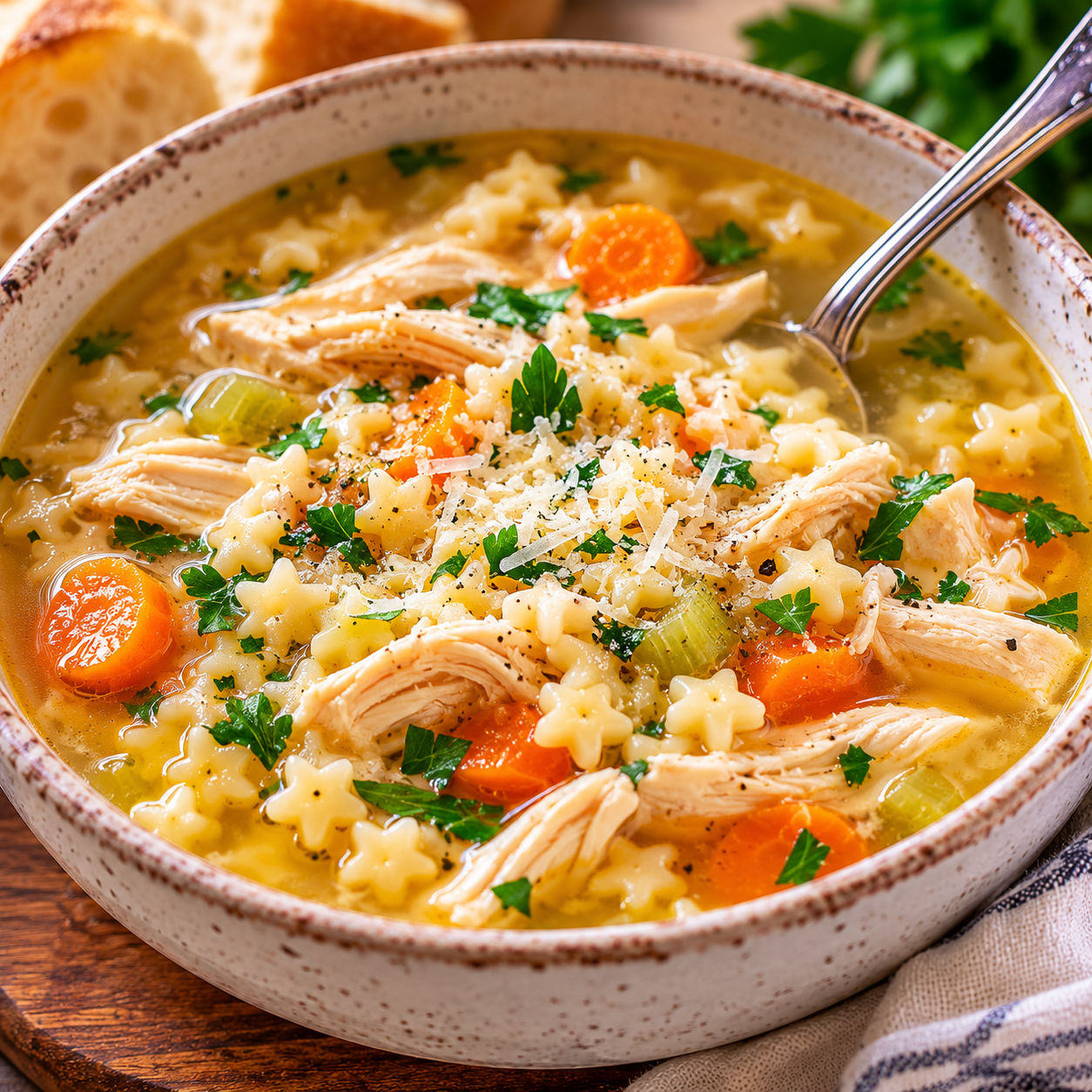
This is the soup my family asks for the moment someone starts sniffling. It is not fancy, but it tastes like care. Soft vegetables, silky broth, tiny pasta, and just enough Parmesan make the whole house smell good.
Italian nonnas have simmered versions of this bowl for generations. The trick that sets it apart from ordinary chicken noodle soup is blending the cooked vegetables back into the broth. The soup gains body without losing its clean, comforting flavor.
Rotisserie chicken and a leftover Parmesan rind turn it into a real dinner that comes together in under an hour. You just need a big pot and a little patience while the pastina softens.
The healing lineup
The ingredient list is short and forgiving. Use a lower-sodium broth so the Parmesan rind does not push the salt too high, and choose any tiny pasta shape you already have in the pantry.
- Chicken broth. Eight cups form the base. Lower-sodium lets the Parmesan and vegetables control the salt level.
- Onion, carrots, and celery. The classic trio softens quickly and gives the blended broth its subtle sweetness.
- Garlic. Smashed cloves release their aroma into the simmering liquid without turning harsh.
- Thyme and bay leaves. Fresh thyme adds earthy notes, while bay leaves deepen the background flavor.
- Parmigiano-Reggiano rind. A leftover rind melts savory, umami-rich flavor into the broth. Grated Parmesan finishes each bowl.
- Pastina. These tiny pasta stars cook right in the broth and thicken it just enough.
- Rotisserie chicken. Shredded cooked chicken turns the soup into a full meal and saves a cooking step.
How the broth gets its body
- Simmer the vegetables. Bring the broth, onion, carrots, celery, garlic, and salt to a boil in a large Dutch oven or saucepan. Reduce the heat and simmer until the vegetables are tender, about 10 minutes.
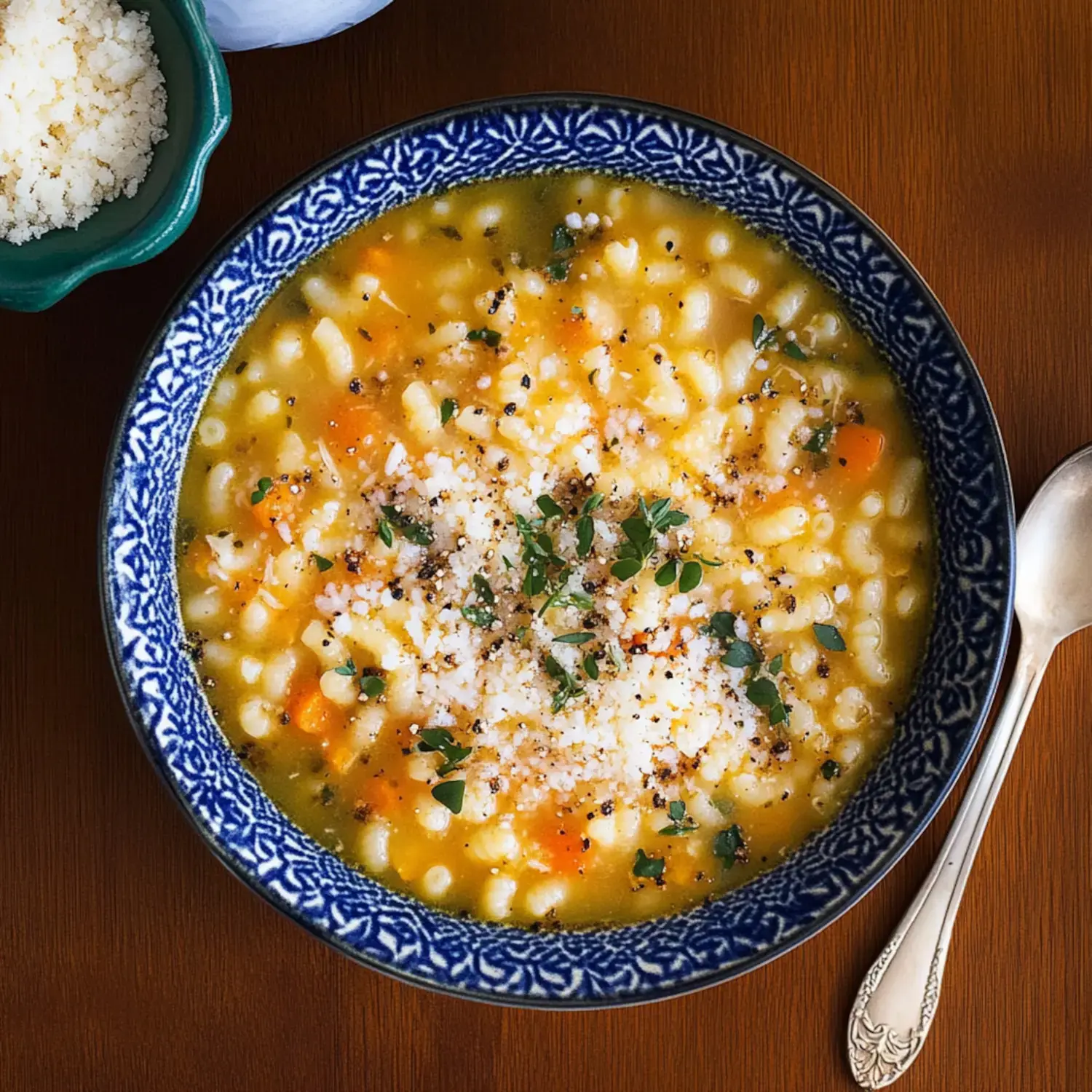
- Blend for body. Use a slotted spoon to transfer the cooked vegetables and 1 cup of the broth to a blender. Puree until smooth, then stir the mixture back into the pot. This is what gives the soup its silky, golden body.
- Season the broth. Add the thyme sprigs, bay leaves, and Parmesan rind. Return the soup to a gentle boil over medium-high heat.
- Cook the pastina and chicken. Add the pastina and simmer, stirring occasionally, until the pasta is tender, 18 to 20 minutes. Stir in the shredded chicken during the last 3 minutes so it heats through without drying out.
- Finish and serve. Remove and discard the thyme, bay leaves, and Parmesan rind. Ladle into bowls and top with fresh parsley and grated Parmesan.
Why blending changes everything
The blended vegetables are the quiet secret behind this soup's silky texture. After the carrots, onion, celery, and garlic simmer until tender, a quick puree turns them into a golden, slightly sweet base that thickens the broth without any cream.
That step does more than improve mouthfeel. It hides extra vegetables from picky eaters and gives the finished bowl a gentle sweetness that balances the saltiness of the broth and cheese. If you own an immersion blender, you can puree directly in the pot. A standard blender works too. Just remove the center cap and cover it with a clean towel so steam can escape safely.
Picking the right pasta
Pastina is the traditional choice, but the name covers any tiny pasta shape. Look for stelline, acini di pepe, orzo, or mini shells. They cook quickly and add just enough starch to give the soup a little heft without turning it gluey.
Cook the pasta directly in the broth so it absorbs flavor, but keep in mind that it will continue to swell as the soup sits. If you plan to save leftovers for more than a day, consider boiling the pasta separately and adding it to each bowl. That keeps the texture intact. For another take on the classic, try our Italian Penicillin Pastina Soup.
Simple swaps and add-ins
You can easily adjust this pot to fit what is in your fridge. Swap the rotisserie chicken for shredded turkey, or leave it out and add a can of drained white beans for a meatless version. A handful of baby spinach or chopped kale stirred in at the end adds color and nutrients without extra work.
For a little brightness, squeeze in fresh lemon juice right before serving. A pinch of red pepper flakes wakes up the broth if your sinuses need clearing. If you love the egg version of this tradition, our Italian Pastina Soup With Egg is worth a try. When adding raw poultry, the USDA recommends cooking chicken to a safe internal temperature of 165 degrees Fahrenheit, see the USDA chicken safety guide.
Storing and reheating leftovers
This soup keeps well in the refrigerator for up to four days in a tightly sealed container. The pasta will absorb broth as it sits, so the soup thickens into something closer to stew. That is normal. Thin it with a splash of chicken broth or water when you reheat.
Reheat gently over medium heat, stirring now and then, until the soup is steaming. The microwave works in a pinch, but the stovetop keeps the pasta from turning mushy.
What to serve alongside
A bowl of this soup is filling on its own, but a few simple sides turn it into a meal. Serve it with crusty bread, a green salad with lemon vinaigrette, or a plate of roasted broccoli. If you want another comforting Italian soup on the table, our Hearty Italian White Bean Soup With Pasta pairs well with the same bread and salad.

FAQs
- Can I use homemade chicken broth?
Absolutely. Homemade broth gives the soup extra depth. Just taste before adding salt, since homemade broth can vary widely in seasoning.
- What is pastina and can I substitute it?
Pastina is a category of tiny pasta shapes, including stelline and acini di pepe. You can substitute orzo, mini shells, or even broken angel hair. Cooking time will change slightly.
- Do I really need a Parmesan rind?
The rind adds a deep, savory backbone that is hard to replicate. If you do not have one, stir in a few tablespoons of grated Parmesan earlier in the simmer and adjust salt to taste.
- Can I make this vegetarian?
Yes. Replace the chicken broth with vegetable broth and skip the shredded chicken. Add a can of drained white beans or extra vegetables to keep it satisfying.
- Why are the vegetables blended?
Blending softens the vegetables into a silky puree that thickens the broth naturally and adds subtle sweetness. It also hides the vegetables for anyone who avoids chunky soup.
- How do I store and reheat leftovers?
Refrigerate the soup in an airtight container for up to four days. The pasta will absorb liquid, so thin with broth or water and reheat gently on the stove.
- Can I freeze Italian Nonna's Penicillin Soup?
Freeze the blended broth base without the pasta for up to three months. Add fresh pasta when reheating so it does not turn mushy after thawing.
- Is this soup gluten-free?
Not as written, because pastina contains wheat. Use a small gluten-free pasta shape and confirm your broth is gluten-free if needed.
