 Pin it
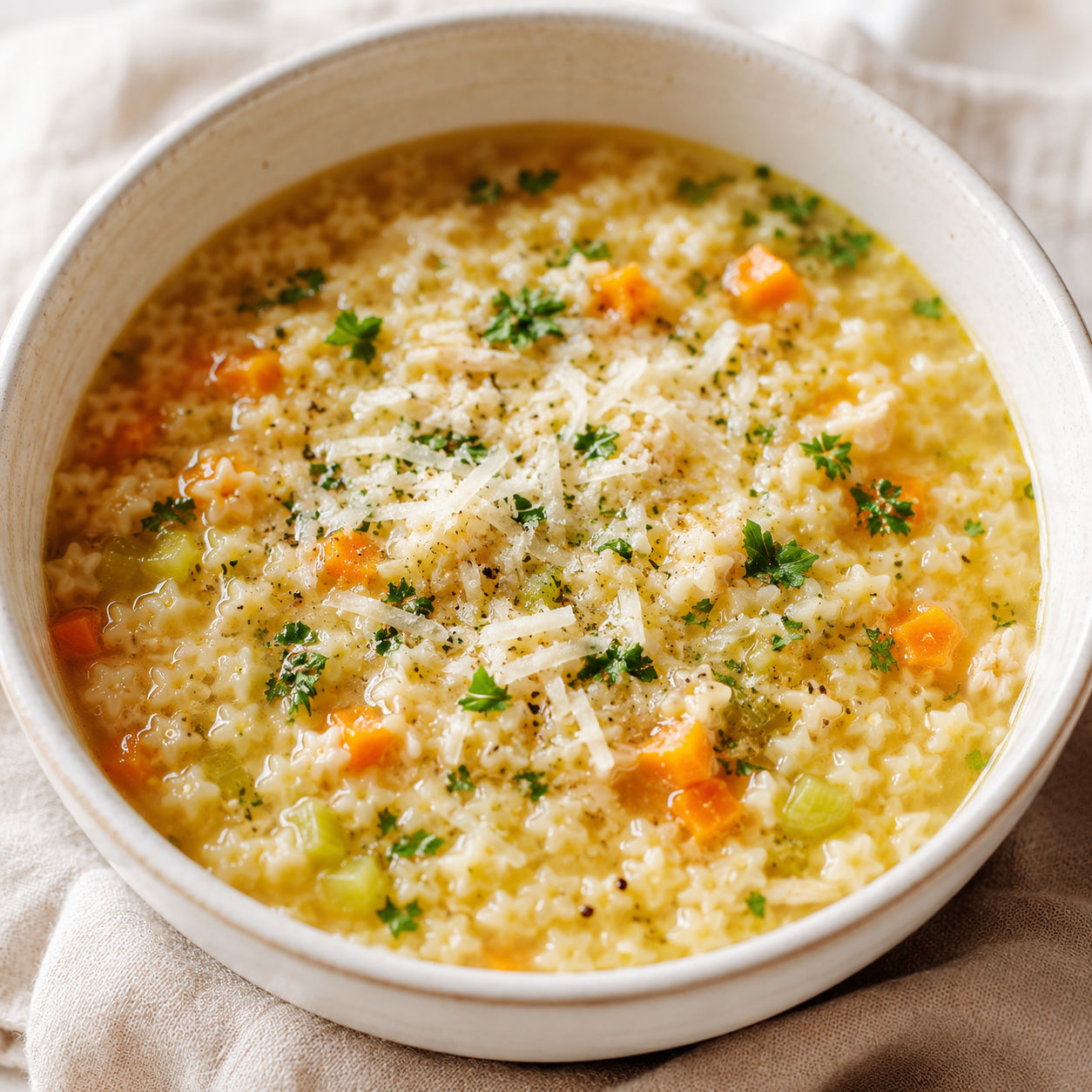
Italian Pastina Soup with Chicken Broth and Parmesan is the bowl I make when I want comfort without a long project. The pasta is tiny, the broth turns silky, and the Parmesan gives it that savory finish that makes a simple soup feel cared for.
This version is brothy rather than creamy. A Parmesan rind seasons the pot while the vegetables soften, then the grated cheese goes in at the end so it melts gently instead of clumping.
Tiny Pasta, Big Broth
Choose a small pasta shape that cooks in 5-8 minutes and will fit easily on a spoon. A good low-sodium chicken broth matters here because the ingredient list is short and every flavor shows.
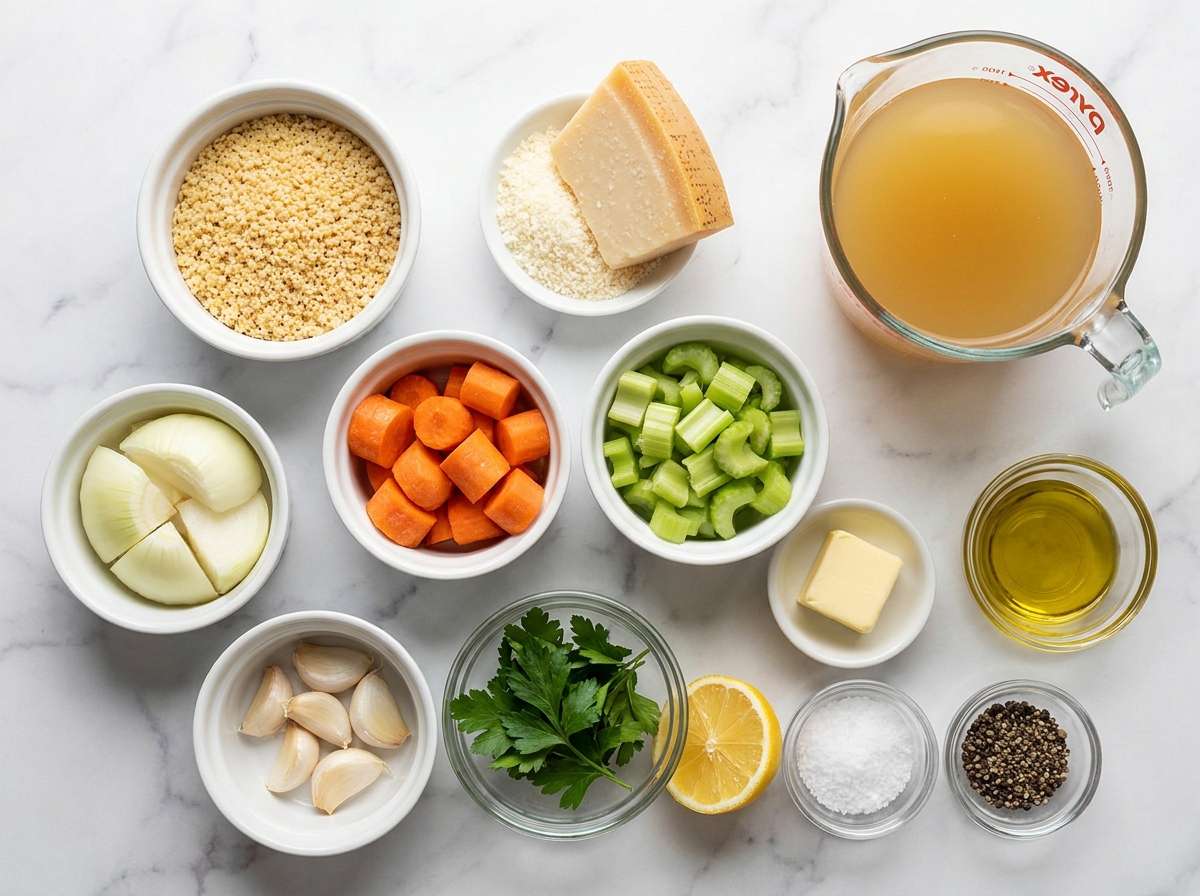
- Pastina. Tiny pasta makes the soup tender, cozy, and easy to eat by the spoonful.
- Chicken broth. The main flavor of the soup, so use one that tastes clean and savory.
- Parmesan rind. Simmers in the pot and gives the broth a deeper, salty richness.
- Grated Parmesan. Melts in at the end for a creamy finish without adding cream.
- Onion, carrot, and celery. The simple vegetable base that makes the broth taste homemade.
- Garlic. Adds warmth as long as it is cooked gently and not browned.
- Butter and olive oil. Help soften the vegetables and give the broth a rounder flavor.
- Parsley and lemon. Wake up the bowl right before serving.
Italian Pastina Soup Method
- Soften the vegetables. Warm the butter and olive oil in a pot, then cook the onion, carrot, and celery until glossy and softened around the edges.
- Add garlic and broth. Stir in the garlic for about 30 seconds, then pour in the chicken broth and scrape the bottom of the pot.
- Simmer the rind. Add the Parmesan rind and let the broth simmer for 10-12 minutes so the vegetables turn tender and the rind seasons the soup.
- Cook the pastina. Stir in the pastina and cook until tender, stirring often so the tiny pasta does not stick to the bottom.
- Finish with cheese. Turn off the heat, remove the rind, and stir in grated Parmesan a little at a time until the broth looks lightly creamy.
- Serve warm. Add parsley, black pepper, and a small squeeze of lemon if you like a brighter finish.
Why The Rind Matters
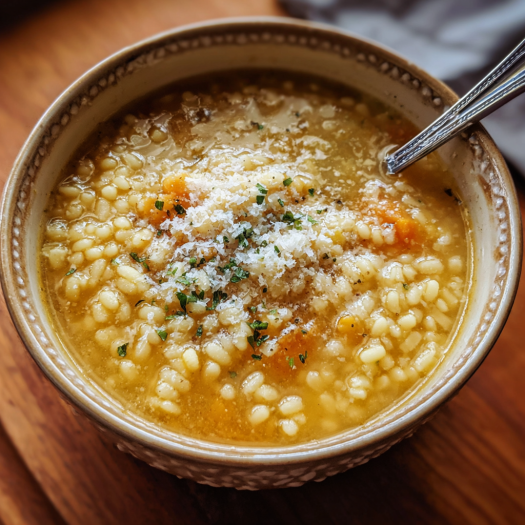
A Parmesan rind is not just a scrap to save. It slowly releases salt, nuttiness, and a little body into the chicken broth. The key is a gentle simmer. A hard boil can make the cheese stick to the bottom and leave the broth cloudy in a heavy way.
If you like the cozy pastina family, compare this broth-forward bowl with Italian Pastina Soup With Egg or the more loaded Italian Penicillin Pastina Soup. They use the same tiny pasta idea but land differently in the bowl.
Keep The Pasta Tender
Pastina cooks fast. It also absorbs broth faster than larger pasta, which is why a soup that looks loose in the pot can turn thick after 15 minutes. Stir often once the pasta goes in. Tiny shapes settle and can stick before you notice.
For a dinner you plan to store, cook the pastina in a separate small pot and spoon it into bowls before ladling over broth. That keeps leftovers from turning into a soft pasta porridge. Barilla shares a classic pastina-in-broth approach with cheese in its pastina soup recipe, which is helpful if you want to see how tiny pasta behaves in hot broth.
Swaps For Your Pantry
Stelline is lovely because the little stars feel nostalgic, but acini di pepe, ditalini, tiny shells, or orzo all work. Orzo takes a little longer, so check the package time and taste before serving. For a gluten-free bowl, use a gluten-free small pasta and watch it closely because some shapes soften quickly.
You can add shredded cooked chicken if you want more protein. Stir it in near the end so it warms without drying out. For a richer chicken-and-Parmesan dinner, Creamy Chicken Orzo with Parmesan Finish has the same comfort lane with a heartier skillet feel.
Serving It Well
Serve this soup as soon as the pastina is tender. The broth should be hot, glossy, and loose enough to move around the spoon. A little parsley makes the bowl fresher, and lemon adds lift if your broth tastes rich or sleepy.
For a bigger meal, add a salad, crusty bread, or a simple chicken main. I like it next to Chicken Piccata with Lemon and Capers when I want the lemony flavor to carry through dinner without making everything heavy.
Storing Without Soggy Pasta
Let leftovers cool, then refrigerate them in a covered container for up to 3 days. FoodSafety.gov lists practical cold storage guidance in its cold food storage chart. Reheat the soup gently on the stove with a splash of broth or water.
If you know you are cooking ahead, store the broth and pastina separately. That one small step keeps the texture much better. The broth can also be made a day ahead with the vegetables and Parmesan rind, then reheated before you cook the pasta.
Summary
This pastina soup is best served right away, while the stars or tiny pasta are tender and the broth is glossy from Parmesan.
FAQs
- What is pastina?
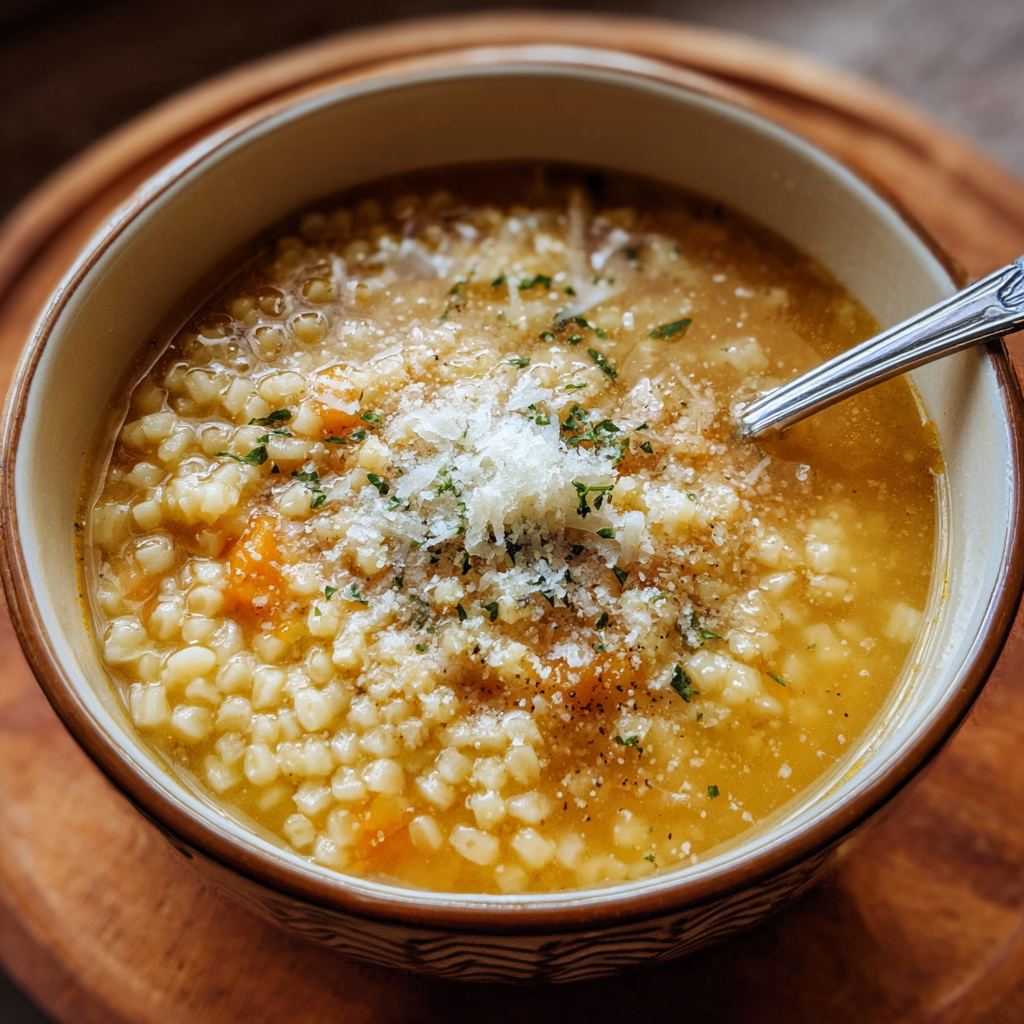
Pastina means tiny pasta. It can be stars, acini di pepe, tiny shells, or another small shape. In soup, it cooks quickly and makes the broth feel soft and spoonable.
- Can I use store-bought chicken broth?
Yes. Use low-sodium chicken broth so you can control the salt once the Parmesan goes in. If the broth tastes flat, simmer it with a Parmesan rind and a small piece of onion for a few extra minutes.
- Can I make this without a Parmesan rind?
You can. The soup will still be good with grated Parmesan stirred in at the end. Add a little extra cheese and let the broth simmer with the vegetables long enough to pick up flavor.
- How do I keep pastina from getting mushy?
Cook it just until tender and serve the soup soon after. Pastina keeps drinking broth as it sits. For leftovers, cook the pasta separately and add it to each bowl.
- Can I add chicken to this soup?
Yes. Stir in 1-2 cups of shredded cooked chicken during the last few minutes, just long enough to warm it through. Rotisserie chicken works well if you remove the skin first.
- How long do leftovers keep?
Store leftovers in an airtight container in the fridge for up to 3 days. The pasta will thicken the soup, so reheat it gently with extra broth or water.
