 Pin it
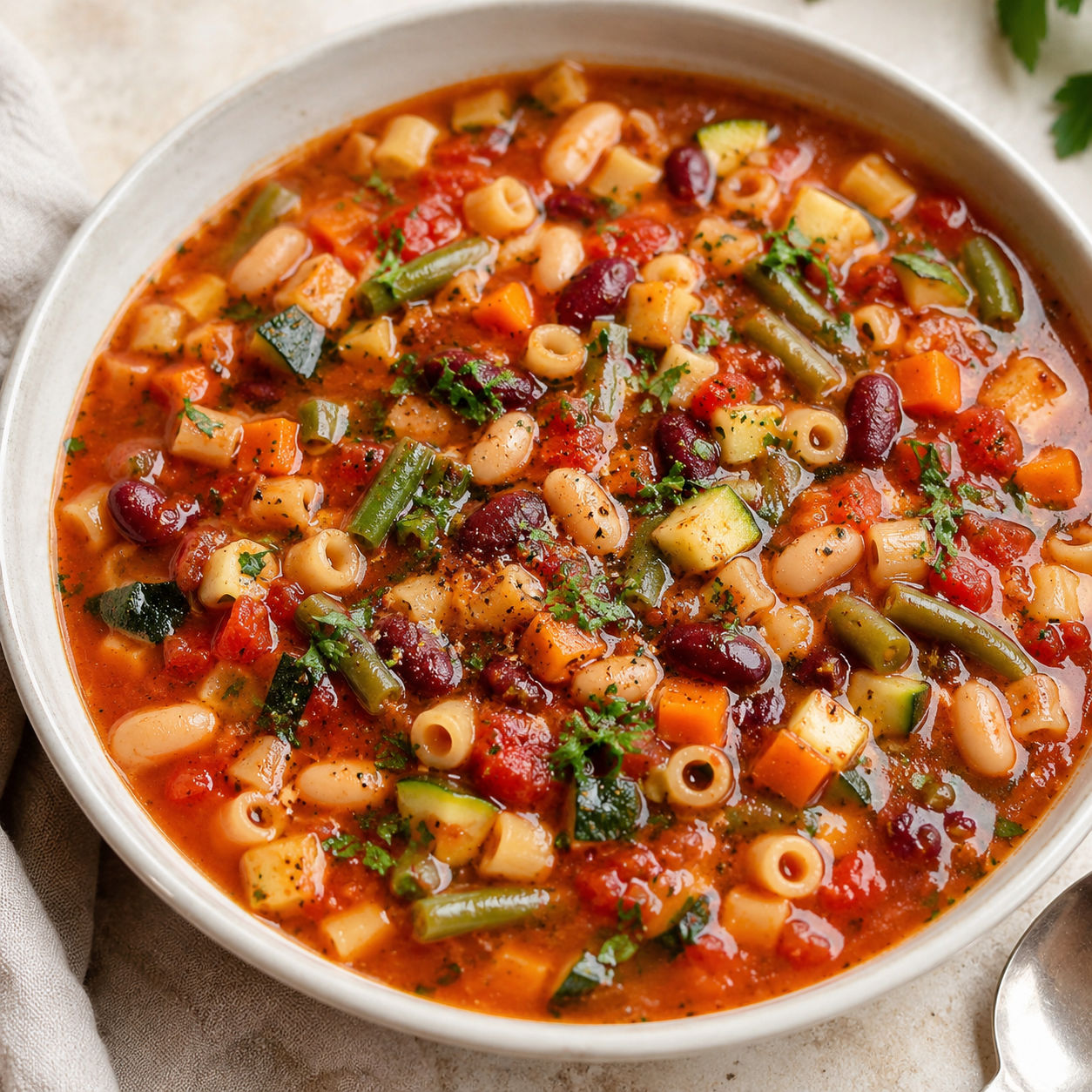
This Easy Vegetarian Minestrone Soup is the kind of pot I like to make when the fridge has a few vegetables left and dinner still needs to feel complete. The broth is tomato-rich but not heavy, with beans for protein and small pasta for that cozy spoonful.
The trick is timing. Carrots and celery go in early so they sweeten the broth. Zucchini, green beans, and pasta go in later so they keep their shape instead of turning tired and soft.
Vegetables That Carry The Pot
Use vegetables that can handle a simmer and still taste fresh at the end. The best bowl has soft beans, sweet carrots, tender pasta, and a few green pieces with bite.
- Olive oil. Starts the soup with a gentle richness and helps the onion, carrot, and celery soften evenly.
- Onion, carrot, and celery. Build the sweet, savory base that makes the broth taste cooked instead of canned.
- Garlic. Adds warmth near the end of the saute so it does not burn.
- Tomato paste. Deepens the broth and gives the soup a round tomato flavor.
- Diced tomatoes. Bring body, acidity, and little pieces of tomato in every bowl.
- Vegetable broth. Keeps the recipe vegetarian and gives the beans and pasta enough liquid to simmer.
- Cannellini and kidney beans. Add protein, creaminess, and color without meat.
- Ditalini pasta. Small pasta cooks right in the pot and makes the soup filling.
- Zucchini and green beans. Go in late so they stay tender and bright.
- Lemon and parsley. Wake up the finished soup so it tastes fresh, not flat.
How The Soup Comes Together
- Soften the base. Cook onion, carrot, and celery in olive oil until the onion turns glossy and the carrots start to smell sweet.
- Toast the tomato paste. Stir in garlic, tomato paste, and Italian seasoning. Cook for a minute or two until the paste darkens slightly on the bottom of the pot.
- Simmer the broth. Add diced tomatoes, vegetable broth, beans, bay leaf, salt, and pepper. Simmer until the carrots are almost tender.
- Add pasta and greens. Stir in ditalini, zucchini, and green beans. Cook until the pasta is tender and the zucchini still has a little shape.
- Finish bright. Remove the bay leaf. Stir in lemon juice and parsley, then taste for salt before serving.
Easy Vegetarian Minestrone Soup Timing
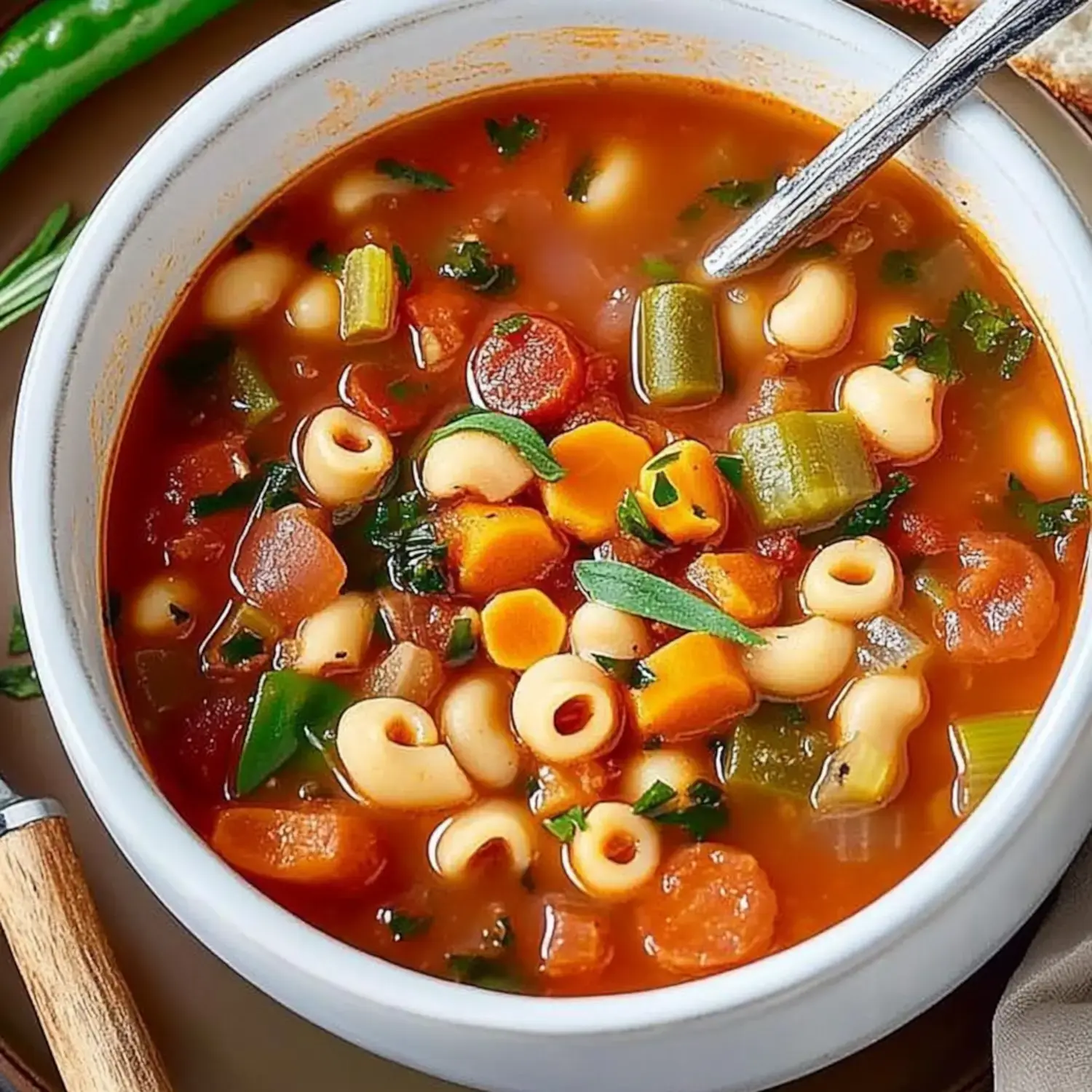
The order matters more than the chopping style. Onion, carrot, and celery need a few minutes in oil before any liquid goes in. That short saute pulls sweetness out of the vegetables and gives the tomato broth a cooked flavor. Tomato paste also needs direct heat. Stir it until it stains the vegetables and smells a little deeper.
Pasta and zucchini are the easy places to go wrong. If they simmer too long, they swell and soften until the soup loses texture. Add them near the end and start checking at 9 minutes. If you like your soup thicker, let it sit off the heat for 10 minutes before serving. For another bean-heavy bowl, try vegetarian lentil soup.
How To Make It Heartier
This soup is filling as written, but it can stretch in useful ways. Add an extra can of white beans for more protein, or stir in a handful of chopped kale during the last 3 minutes. A diced potato can go in with the broth if you want a thicker, rustic bowl.
If you like classic Italian vegetable soups, the site also has Olive Garden Minestrone Soup and Vegetable Soup. This version stays fully vegetarian and leans on pantry staples, which makes it easier for a weeknight.
Smart Swaps For Any Season
Minestrone should bend with what you have. In spring, use peas and spinach. In summer, use extra zucchini and fresh basil. In colder months, add cabbage, potatoes, or butternut squash. Keep the total amount of vegetables close to the recipe so the pot still has enough broth.
Small pasta shapes work best. Ditalini, elbows, small shells, or orzo all cook quickly and fit on a spoon. For gluten-free minestrone, use a gluten-free small pasta and watch it closely because some brands soften faster. The cold storage chart at FoodSafety.gov is a useful reference for leftover timing.
Storing Without Soggy Pasta
Leftovers keep well, but pasta keeps drinking broth as it sits. If you know you are cooking for meal prep, boil the pasta separately and store it in its own container. Add a spoonful to each bowl before reheating. The texture stays much better.
For regular leftovers, refrigerate the soup in an airtight container for up to 4 days. Reheat it gently on the stove with a splash of broth or water. Freeze the soup base without pasta for up to 3 months. Thaw overnight in the fridge, simmer until hot, then add freshly cooked pasta.
What To Serve With It
A bowl of minestrone can stand on its own, but bread makes it feel like dinner. Serve it with toasted sourdough, garlic bread, focaccia, or a simple green salad. A drizzle of good olive oil on top is enough if you want to keep it dairy-free.
If you want another cozy vegetarian soup for the same week, Quick Tuscan White Bean Soup has the same pantry-friendly feel. For a thicker vegetable option, Roasted Mixed Vegetable Soup is a good match.
Summary
Serve this minestrone hot with crusty bread, a drizzle of olive oil, or a small spoonful of pesto if you have it.

FAQs
- What makes minestrone different from vegetable soup?
Minestrone is a hearty Italian-style vegetable soup that usually includes beans and either pasta or rice. Those two additions make it feel more like a full meal than a lighter vegetable broth soup.
- Can I make this minestrone soup vegan?
Yes. This recipe is already vegan as written because it uses vegetable broth and skips Parmesan. If you add pesto or cheese on top, check that those toppings are dairy-free if needed.
- Can I use different vegetables?
Absolutely. Use about 3 cups of chopped vegetables total. Peas, spinach, kale, diced potato, cabbage, yellow squash, and butternut squash all work, but add quick-cooking greens at the very end.
- How do I keep the pasta from getting mushy?
Add the pasta during the last 10-12 minutes of cooking and stop when it is just tender. For meal prep, cook the pasta separately and add it to each bowl before reheating.
- How long does vegetarian minestrone keep?
Keep it in an airtight container in the refrigerator for up to 4 days. The pasta will continue to absorb broth, so add a splash of water or vegetable broth when reheating.
- Can I freeze minestrone soup?
Yes, but it freezes best without pasta. Freeze the soup base for up to 3 months, then cook fresh small pasta when you reheat it.
