 Pin it
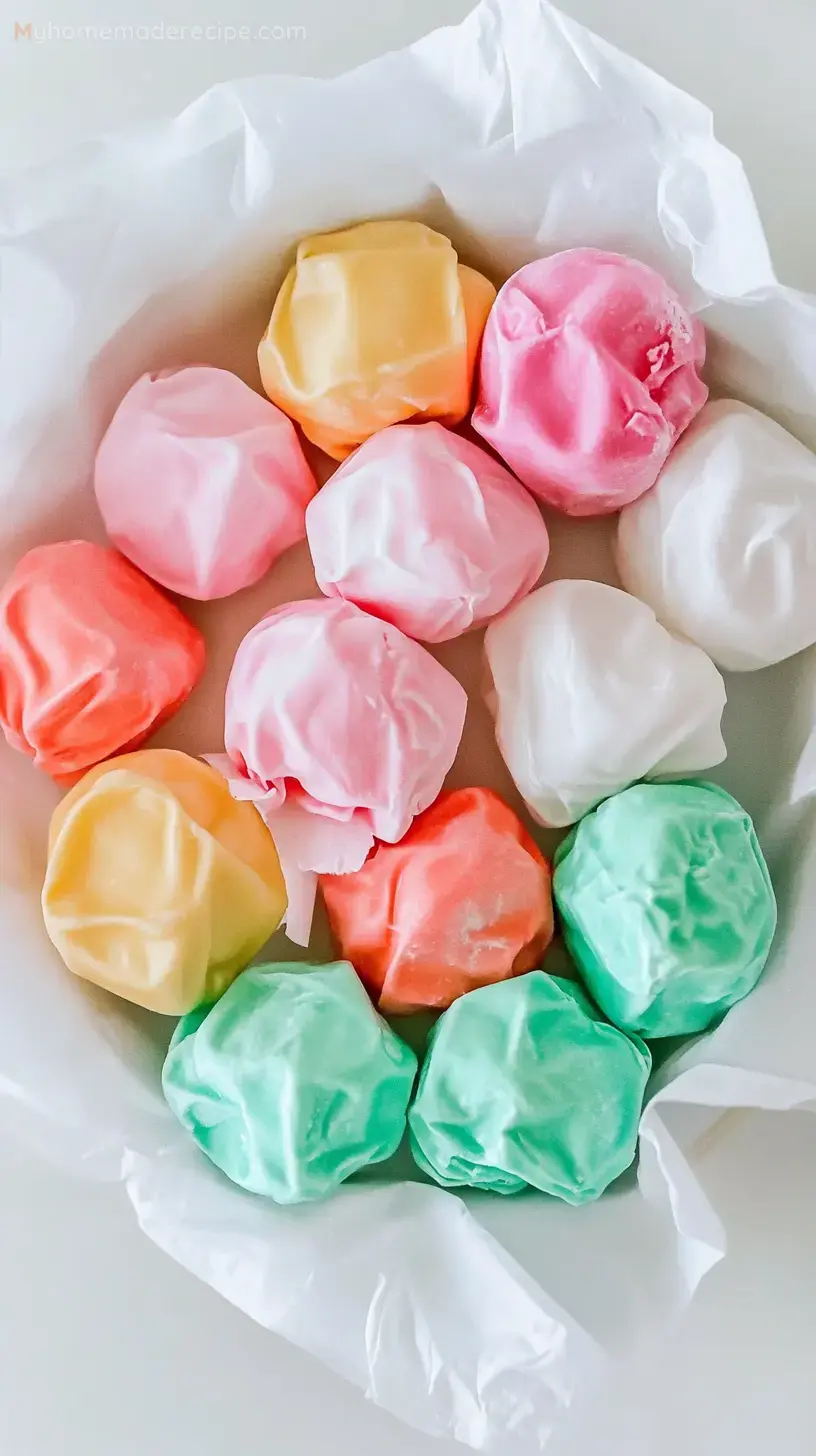
Easy Homemade Saltwater Taffy is a little messy in the best way. You cook one glossy syrup, pour it onto a buttered surface, then pull it until the candy changes from clear and sticky to pale, stretchy, and soft-chewy.
The recipe is simple, but the thermometer matters. A few degrees can make the difference between taffy that slumps and taffy that snaps, so keep your eyes on the pot once the syrup starts climbing past 240°F.
I like vanilla or lemon for a first batch because both let you taste the buttery candy base. Once you get the pull down, peppermint, orange, strawberry, and two-color twists are easy to play with.
Candy basics that matter
This candy uses a short list, so measure before the pot goes on the stove. Corn syrup keeps the sugar from crystallizing, butter softens the chew, and a little cornstarch gives the taffy its smooth body.
- Granulated sugar. Builds the candy base and gives the taffy its clean sweetness.
- Light corn syrup. Helps keep the texture smooth instead of grainy.
- Water. Dissolves the sugar at the start so the syrup can cook evenly.
- Cornstarch. Adds a soft, stretchy chew without making the candy cloudy.
- Unsalted butter. Rounds the flavor and helps the finished taffy stay tender.
- Fine salt. Balances the sweetness and gives saltwater taffy its classic taste.
- Flavor extract. Vanilla, lemon, peppermint, orange, or strawberry all work well.
- Gel food coloring. Adds color without thinning the candy the way liquid color can.
Easy Homemade Saltwater Taffy Method
- Prep the wrapping station. Cut wax paper squares and butter a silicone mat, bench scraper, and kitchen scissors before you cook. Hot candy waits for nobody.
- Start the syrup. Stir sugar, cornstarch, corn syrup, water, butter, and salt in a heavy saucepan over medium heat until the sugar dissolves and the mixture begins to boil.
- Cook without stirring. Clip on a candy thermometer and let the syrup bubble until it reaches 250-255°F. Brush down sugar crystals with a wet pastry brush if you see them on the pan sides.
- Add flavor and color. Pour the syrup onto the buttered mat. Let it cool for a few minutes, then fold in extract and a tiny bit of gel color while the candy is still warm.
- Pull the taffy. Butter your hands and stretch the candy into a rope, fold it back, and repeat for 10-15 minutes. Stop when it looks lighter, satiny, and harder to pull.
- Cut and wrap. Stretch into a 3/4-inch thick rope, snip into bite-size pieces, and wrap each piece in wax paper right away.
Watch the syrup closely
The most important part of this recipe is the final temperature. Below 250°F, the pieces may stay too soft and sticky. Above 260°F, the chew can turn stiff after wrapping. Redpath Sugar's salt water taffy guide uses the same classic candy idea of cooking a sugar and corn syrup base, then pulling it until pale.
Once the syrup reaches a full boil, stir as little as possible. Stirring can splash sugar crystals onto the side of the pan. Those crystals can seed the whole batch and make the taffy grainy. A wet pastry brush fixes any crystals you spot.
The pull changes everything
Pulling taffy is not just for show. Stretching and folding works tiny air bubbles into the candy, which turns it from dark and glassy to lighter, opaque, and pleasantly chewy. At first it will feel loose and sticky. After several minutes, it starts resisting your hands and holding a rope shape.
Butter your hands lightly. Too much butter makes the outside greasy and harder to wrap. If the candy is too hot, fold the edges inward with a buttered scraper for another minute before touching it. If you like hands-on sweets, the playful texture is a lot like making homemade gummies, only warmer and stretchier.
Flavor ideas that work
Vanilla is the easiest starter flavor because it forgives a little extra salt and lets the butter come through. Lemon tastes bright and old-fashioned. Peppermint makes a clean candy-shop batch, but use less at first because mint can take over fast. Strawberry and orange work best with a small dot of matching gel color.
For striped taffy, split the warm candy into two pieces after cooking. Color one piece and leave the other plain. Pull them separately until satiny, then twist the ropes together before cutting. Keep batches small until you get comfortable because warm taffy firms as you work.
Cutting without the stickiness
Have your wax paper ready before you cut. Taffy pieces start sticking to each other quickly, especially in a warm kitchen. Butter the blades of your scissors, stretch the candy into an even rope, and snip pieces about one inch long. Twist the paper ends gently so the candy keeps its shape.
If you are making a dessert tray, pair the taffy with cold treats like homemade orange Dole Whip or creamy chocolate popsicles. The taffy brings the chewy bite, and the frozen sweets keep the table from feeling all sugar and no refreshment.
Storage and weather tips
Humidity is the quiet troublemaker with homemade candy. On rainy days, taffy may feel tackier and take longer to set. Cook to the higher end of the temperature range and wrap each piece as soon as it is cut. Store the wrapped candy in an airtight tin or container at cool room temperature.
Do not pile unwrapped pieces in a bowl. They will merge into one stubborn lump. If the candy gets a little firm after a few days, warm one wrapped piece in your palm for a minute before eating. For a softer dessert spread, keep homemade whipped cream in mind for cakes or fruit while the taffy handles the candy jar.

Summary
This taffy is all about the right temperature and a steady pull. Once you learn how the candy should feel in your hands, the flavor options are wide open.
FAQs
- Does saltwater taffy actually use sea water?
No. The name is traditional, but homemade saltwater taffy is made with sugar, corn syrup, water, butter, salt, and flavoring. The salt is small, but it keeps the candy from tasting flat.
- What temperature should saltwater taffy reach?
For soft, chewy taffy, aim for 250-255°F on a candy thermometer. Cook closer to 250°F for a softer pull and closer to 255°F for firmer pieces. If your kitchen is very humid, the higher end helps.
- Can I make taffy without a candy thermometer?
You can use the cold water test, but a thermometer is much easier. Drop a little syrup into ice water. It should form a firm ball that bends when pressed, not a brittle shard.
- Why did my taffy turn hard?
It was likely cooked too hot or pulled after it cooled too much. Keep the syrup in the 250-255°F range and start pulling as soon as it is warm enough to handle with buttered hands.
- Can I change the flavor and color?
Yes. Add 1-2 teaspoons of extract after the syrup comes off the heat, then add a tiny amount of gel food coloring. Use a light hand because both flavor and color spread as you pull.
- How should I store homemade taffy?
Wrap each piece in wax paper and keep it in an airtight container at cool room temperature. It is best within 1-2 weeks. Avoid the fridge because moisture can make the wrappers stick.
