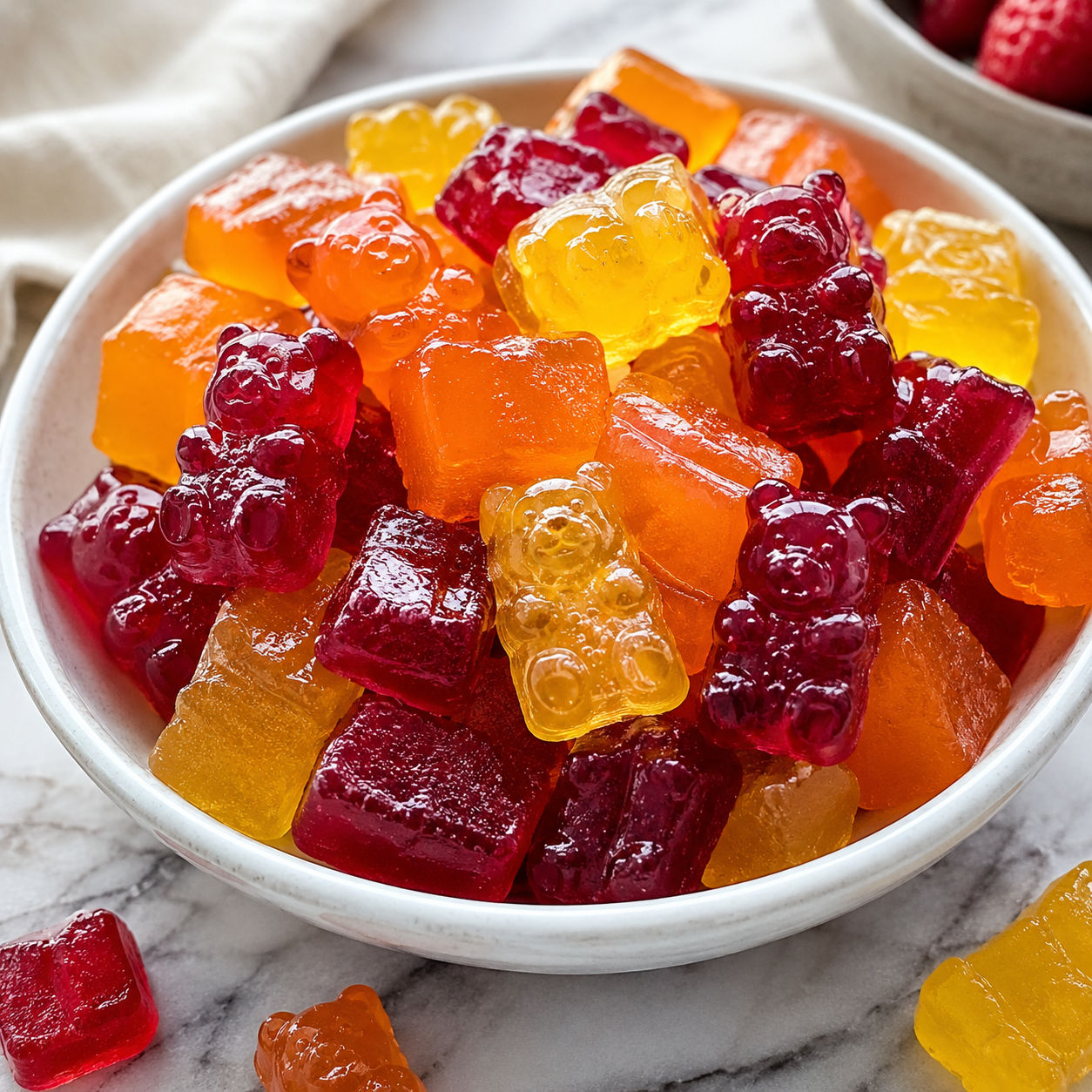
 Pin it
Store-bought fruit snacks are convenient, but the ingredient list is usually a parade of corn syrup, artificial flavors, and dyes you cannot pronounce. Making your own gummies at home fixes that. You control the juice, the sweetener, and the texture, and the whole process takes about as long as brewing a pot of coffee.
This version uses just four simple ingredients. The gelatin gives them that classic chewy bounce and a little protein, while real fruit juice carries all the flavor. Gelatin also provides collagen-supporting amino acids that make these more than just candy. My kids grab these from the fridge after school, and I like them as a light post-dinner treat when I want something sweet without the crash.
What goes into the mold
Quality here matters more than quantity. A good unflavored gelatin and a juice you would actually drink are the two non-negotiables. Everything else is just there to round out the flavor and help the mixture set properly.
- 100% fruit juice. Apple, grape, or tart cherry all work beautifully. Pick something with no added sugar so the sweetness stays in your control.
- Unflavored gelatin. This is what gives the gummies their structure. A grass-fed brand dissolves cleanly and leaves no off-taste.
- Honey or maple syrup. Just a tablespoon is enough to balance tart juices without turning these into candy.
- Fresh lemon juice. A small splash brightens the whole batch and keeps the flavor from tasting flat.
- Pinch of salt. It rounds out the sweetness the same way it does in baking.
How they come together
- Bloom the gelatin. Pour 1/2 cup of cold juice into a bowl and sprinkle the gelatin over the surface. Let it sit for five minutes until it looks spongy and wrinkled. This step prevents clumps later.
- Warm the juice. In a small saucepan, heat the remaining 1 1/2 cups juice with the honey, lemon juice, and salt over medium-low heat until steaming but not boiling. Boiling can weaken the gelatin.
- Combine and dissolve. Scrape the bloomed gelatin into the warm juice and whisk constantly for about a minute until completely smooth and lump-free.
- Pour into molds. Carefully pour the mixture into silicone molds set on a baking sheet. Work quickly because it starts to thicken as it cools.
- Chill and unmold. Slide the tray into the fridge for one to two hours until the gummies feel completely firm. Pop them out and store in an airtight container.
The enzyme issue with pineapple
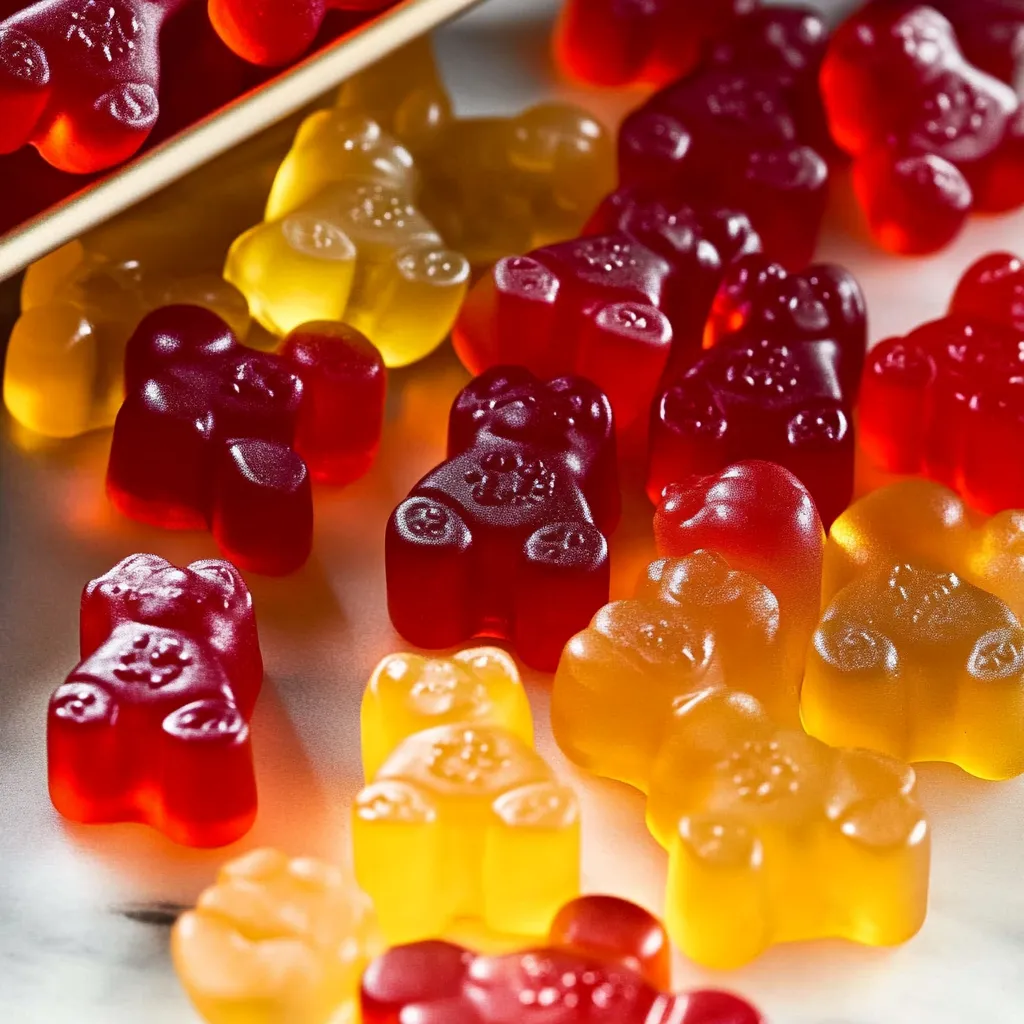
Fresh pineapple, kiwi, papaya, and mango all contain enzymes that break down protein. Gelatin is a protein, so those juices can stop your gummies from setting entirely unless you heat them aggressively first. If you want a tropical flavor, use pasteurized bottled mango or passionfruit juice instead, or cook fresh pineapple juice to at least 175 degrees F and hold it there for eight minutes to denature the enzyme. I learned this the hard way the first time I tried pineapple gummies and ended up with fruit soup.
If sour candy is more your style, you can coat finished gummies in a light dusting of citric acid and sugar. Our homemade sour strawberry gummies use the same trick for that puckery finish.
Dialing in the texture
The ratio of gelatin to liquid controls the chew. Three tablespoons of gelatin per cup of juice gives a classic gummy-bear bounce. Four tablespoons makes them firmer and more rubbery, which some people prefer. If you want a softer, jiggler-like texture, drop to two and a half tablespoons, but do not go much lower or they will melt at room temperature.
Flavor swaps that still work
Almost any juice is fair game as long as you respect the enzyme rule. Tart cherry juice is a favorite in our house because it tastes great and the natural melatonin does not hurt at bedtime. Apple juice is the mildest and most kid-friendly. Grape juice gives the deepest color without any food dye. For grown-up versions, try pomegranate juice with a tiny pinch of ginger, or cranberry juice with orange zest. You can also stir in a drop of vanilla extract off the heat for a creamsicle effect.
Once you master the base recipe, you can branch out into other homemade candies. Our homemade saltwater taffy pulls the same way the old-fashioned shops do, and if you want something with no cooking at all, healthy date snickers bites come together in a food processor.
Keeping them fresh
Store the gummies in an airtight container in the refrigerator for up to one week. They will sweat a little if the container is not sealed well, and they can dry out and turn tough if left uncovered. For lunchboxes, pack them in a small insulated bag with an ice pack so they stay firm until snack time.
FAQs
- Can I use agar-agar instead of gelatin?
Agar-agar will set the liquid, but the texture is very different. It produces a much firmer, more brittle gel that lacks the chewy bounce of gelatin. You also need to boil agar to activate it, and the ratio is different.
- Why are my gummies too soft?
Usually too little gelatin or not enough chilling time. Double-check your measurement and let them sit in the fridge for the full two hours. Warm kitchens can also slow setting.
- Can I use pineapple juice?
Fresh pineapple contains bromelain, an enzyme that breaks down gelatin. If you want pineapple flavor, use canned pasteurized juice or boil fresh juice to 175 degrees F for eight minutes first.
- How long do homemade gummies last?
Keep them refrigerated in an airtight container and they stay good for about one week. For longer storage, freeze them in a single layer.
- Can I make these without added sweetener?
Yes, if your juice is already sweet. Omit the honey and taste the warm juice before adding the gelatin. Very tart juices like pure cranberry or lemon will need at least a little sweetener.
- Are these vegetarian?
No. Standard unflavored gelatin is made from animal collagen, usually beef or pork. Vegetarians and vegans can experiment with agar-agar, though the texture will not be identical.
- How do I keep them from sticking together?
A light dusting of cornstarch or extra-fine sugar helps prevent clumping. You can also layer parchment paper between rows in your storage container.
