 Pin it
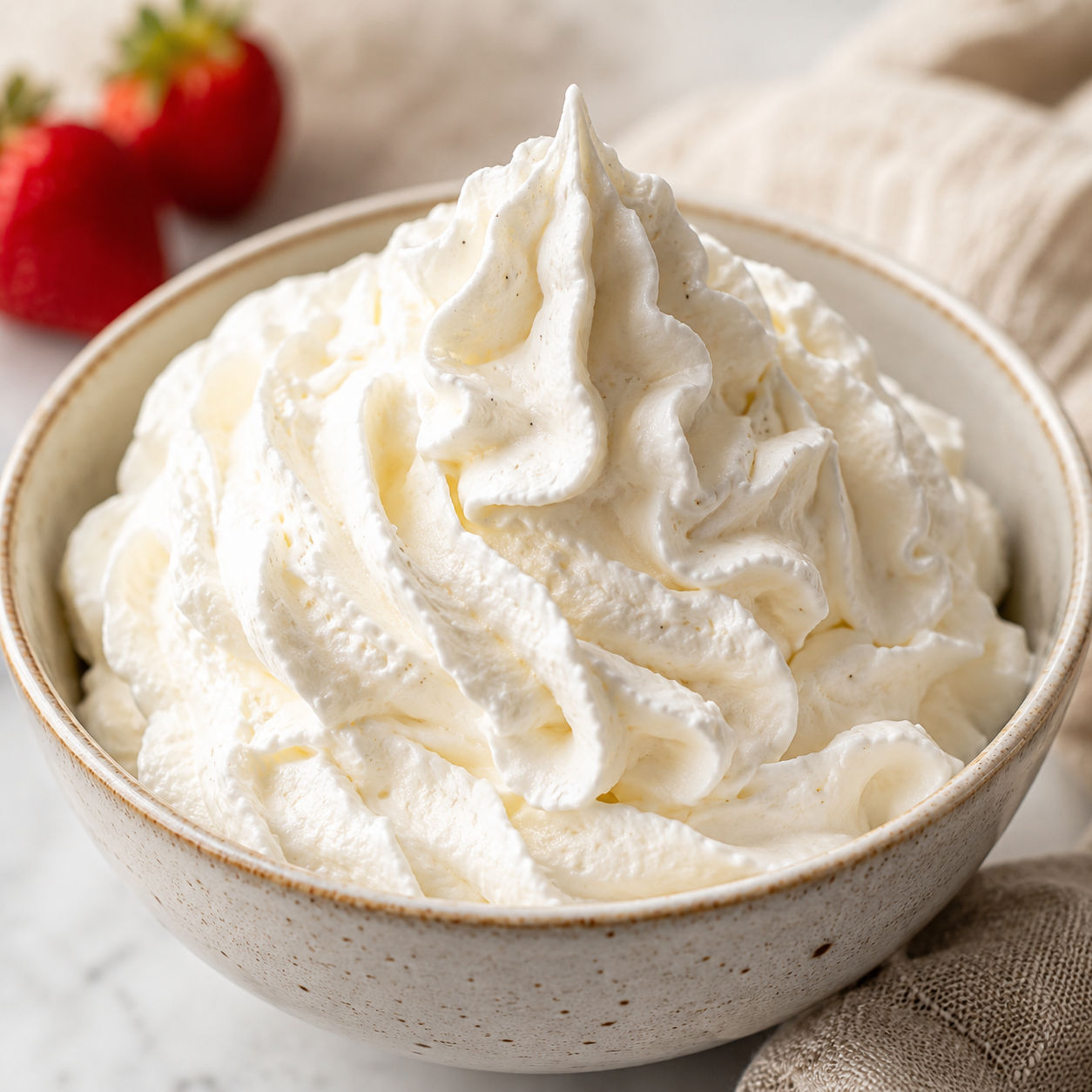
There is no reason to reach for a can of whipped cream once you realize how fast the homemade kind comes together. I am talking about five minutes from carton to fluffy peak, with nothing more than cold cream, a little sugar, and vanilla.
This method is the one I use when I need a quick topping for weeknight desserts. The trick is temperature. Keep everything cold and you barely have to think. Over the years I have learned which sugar gives the silkiest result and how to save a batch if you walk away from the mixer for ten seconds too long.
The three-ingredient lineup
Quality matters when the ingredient list is this short. Reach for heavy whipping cream with at least 36 percent milk fat. It whips fuller and holds longer than lighter creams. Powdered sugar dissolves instantly and adds a touch of cornstarch that helps the peaks stay perky.
- Cold heavy whipping cream. The high fat content traps air and builds structure. Warm cream will refuse to whip no matter how long you beat it.
- Powdered sugar. It sweetens without grit and the small amount of starch in it helps stabilize the foam for days.
- Pure vanilla extract. A half teaspoon is enough to make the cream taste like dessert rather than plain dairy.
Whip it in minutes
- Chill everything. Place your bowl and beaters in the freezer for ten minutes while you gather the ingredients. A cold vessel keeps the fat firm so it traps air faster.
- Pour and start low. Add the cold cream, powdered sugar, and vanilla to the bowl. Begin on low speed so the sugar does not fly out, then slowly raise to medium-high.
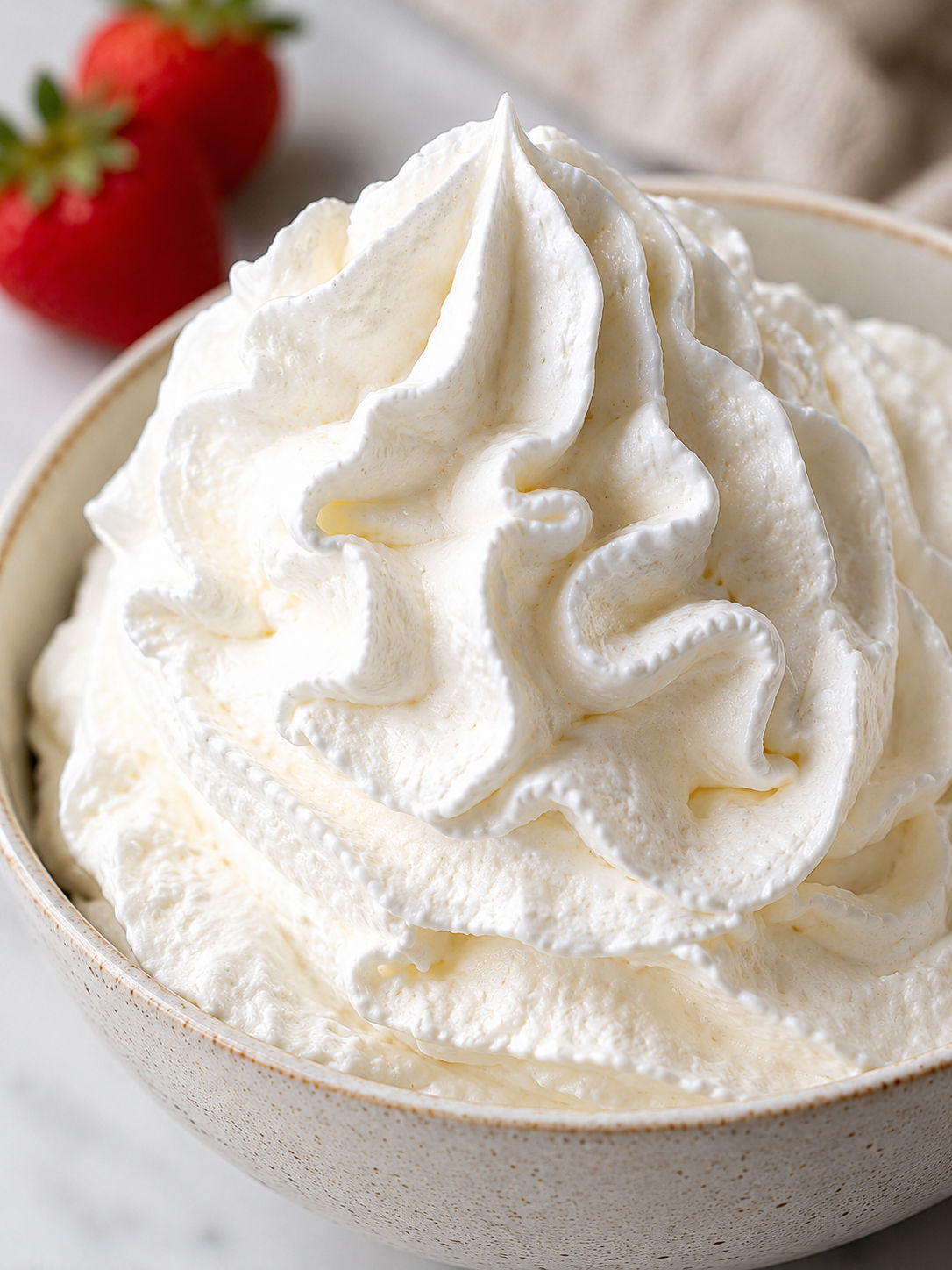
- Watch for peaks. Beat until the cream thickens and the beaters leave distinct trails. Stop and lift the whisk. If the peak stands straight up without drooping, you are done. This usually takes two to three minutes.
- Serve or store. Use it right away for the fluffiest texture, or transfer to an airtight container and refrigerate.
Why cold wins
Fat globules in cream are like tiny balloons. When cold, they stay rigid and hold the air bubbles you are beating in. Warm fat collapses and the cream turns soupy. If your kitchen is hot, set the bowl over an ice bath while whipping. It sounds fussy but it takes thirty seconds and saves a batch.
Sugar swaps and flavors
Granulated sugar works in a pinch, but the crystals take longer to dissolve and can leave a slight crunch. Powdered sugar is worth keeping on hand for this reason alone. For a chocolate version, sift one tablespoon of cocoa powder in with the sugar. A few drops of almond or peppermint extract replace the vanilla beautifully during the holidays. Try this on top of homemade strawberry cream cake or spooned over coffee ice cream for an easy treat.
Keep it fresh
Homemade whipped cream lasts up to three days in the refrigerator in a tightly sealed container. It may weep slightly as it sits, so give it a gentle whisk by hand for ten seconds before serving to revive the volume. I do not recommend freezing it. The ice crystals rupture the fat structure and the thawed result is thin and separated. The FDA safe food handling guidelines are a good reminder to keep dairy cold and covered.
Desserts that need it
This cream belongs on almost every dessert in your rotation. Pile it high on banana cream cheesecake roll or dollop it beside a warm slice of pumpkin bars with cream cheese frosting. It also turns a simple bowl of berries into something that feels a little special.

FAQs
- Can I make whipped cream without an electric mixer?
Yes. A balloon whisk and a cold bowl work fine. It takes about five to seven minutes of steady whipping by hand, which is a great arm workout. The same rules apply: keep everything cold and stop when stiff peaks form.
- What is the difference between heavy cream and heavy whipping cream?
Very little. Heavy whipping cream usually contains about 36 percent milk fat, while heavy cream can be slightly higher. Both whip beautifully. Avoid regular whipping cream with 30 percent fat, since it produces a lighter, less stable foam.
- Can I use granulated sugar instead of powdered sugar?
You can, but it may feel slightly gritty if not fully dissolved. Powdered sugar contains a small amount of cornstarch that helps stabilize the whipped cream, so I prefer it for texture and longevity.
- How do I know when to stop whipping?
Stop when the cream looks thick and glossy and the peak on the end of your whisk stands straight up without curling over. If it starts to look clumpy or yellow, you have gone too far and are making butter.
- How long does homemade whipped cream last in the fridge?
It stays fresh for up to three days in an airtight container. It may release a little liquid over time. Just give it a brief whisk by hand before serving to bring back the fluff.
- Can I freeze leftover whipped cream?
I do not recommend it. Freezing breaks the emulsion and causes the cream to separate and weep once thawed. It only takes five minutes to make a fresh batch, so I always whip it the day I need it.
- Why did my whipped cream turn to butter?
You overwhipped it. When cream is beaten past the stiff-peak stage, the fat clumps together and separates from the liquid buttermilk. You can fix early graininess by folding in a splash of cold cream, but once it separates fully, it has become butter.
