 Pin it
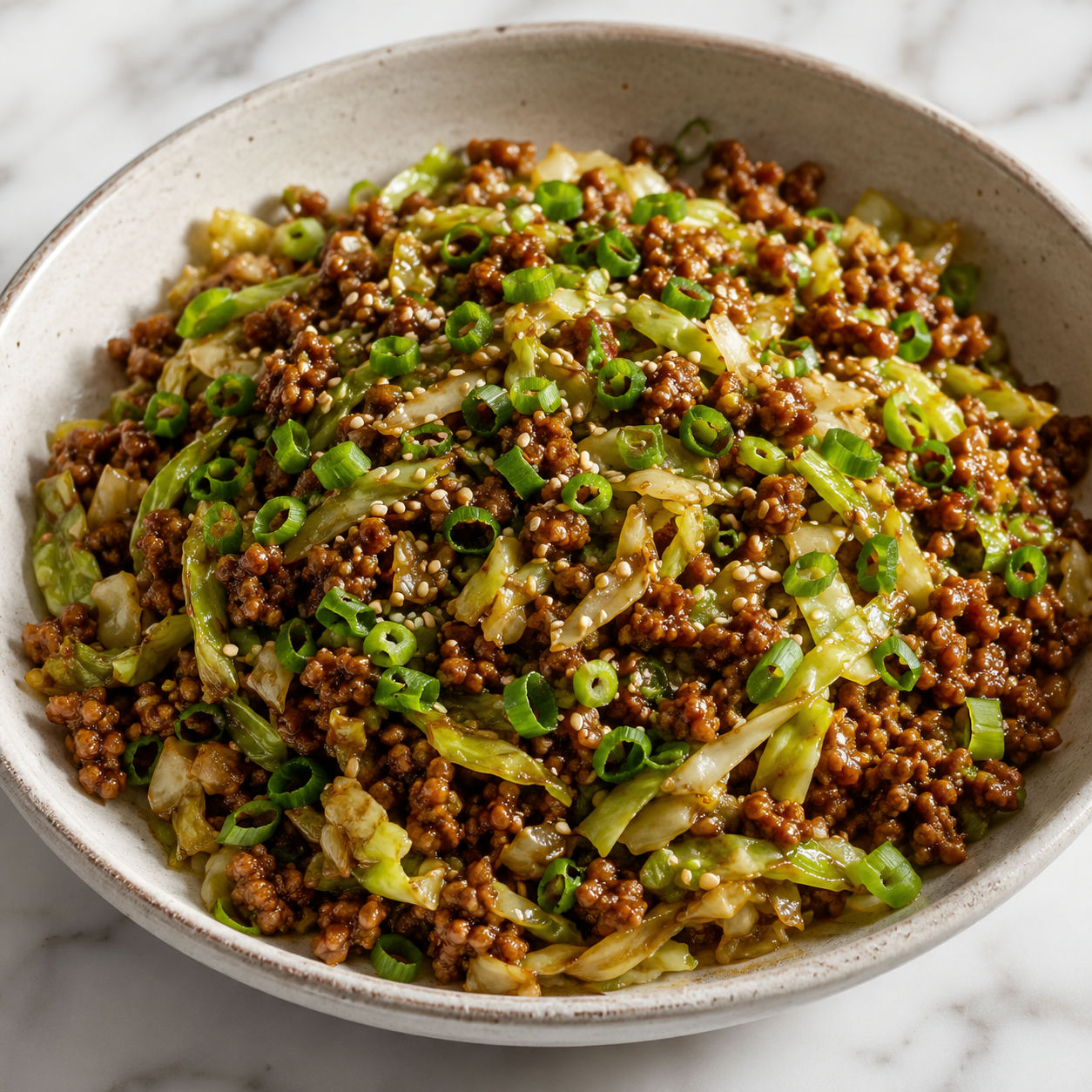
This is the stir fry I make when I need dinner fast and I want something that actually feels like a real meal. One pound of ground beef, half a head of cabbage, and a sauce I mix in a bowl while the pan heats up. Twenty-five minutes start to finish, one pan to wash.
The beef gets a proper brown because the pan is hot and the meat isn't crowded. That browning is what gives this dish depth instead of just tasting steamed. Add garlic and ginger once the beef is cooked, then the cabbage goes in and softens in just a few minutes while keeping some crunch.
It works over steamed jasmine rice or cauliflower rice if you want to keep carbs low. Either way, it's a reliable weeknight dinner.
What's Actually in the Pan
A short ingredient list that rewards simplicity. You want lean ground beef (85/15 is ideal) so it browns cleanly without sitting in a puddle of fat, and a firm head of green cabbage that holds up in the pan. Fresh garlic and grated ginger are not optional.
- Ground beef (85/15). Lean enough to brown properly but with enough fat to carry the sauce flavors well.
- Green cabbage. The bulk of the dish. It stays pleasantly crisp and is rich in fiber and vitamin C, adding real nutritional value.
- Carrot. Julienned carrot adds a touch of natural sweetness and a pop of color without changing the flavor profile.
- Fresh garlic. The aromatic foundation. Mince it fine so it cooks quickly in the hot pan without burning.
- Fresh ginger. Grated ginger gives the stir fry its characteristic warmth. Dried powder is not a real substitute here.
- Soy sauce. The primary salt and umami in the sauce. Use low-sodium if you want more control.
- Rice vinegar. A small splash brightens the dish and keeps the sauce from tasting flat.
- Sesame oil. Goes in off the heat at the end. Cooking it at high heat destroys the nutty aroma entirely.
- Green onions. White parts cook with the aromatics, green tops go on as a fresh garnish at the end.
How to Pull This Off Fast
- Mix the sauce first. Whisk the soy sauce, rice vinegar, brown sugar, and red pepper flakes in a small bowl before you turn on the heat. The stir fry moves quickly once it starts.
- Brown the beef properly. Heat a large skillet or wok over high heat until very hot. Add the oil, then the beef. Break into pieces and let it sit about 1 minute before stirring so it builds color. Cook 4 to 5 minutes until browned with no pink remaining. The USDA recommends cooking ground beef to 160 degrees F. Drain excess fat if needed.
- Add the aromatics. Push beef to one side. Add garlic, ginger, and white parts of the green onions to the cleared space. Cook 30 to 60 seconds, stirring constantly, until fragrant. Stir into the beef.
- Stir fry the vegetables. Add the cabbage and carrot. Toss everything and cook 3 to 4 minutes, stirring often, until the cabbage is just tender but still has some bite.
- Finish with the sauce. Pour sauce over the pan and toss to coat. Cook 1 minute more. Remove from heat, drizzle with sesame oil, and scatter green onion tops and sesame seeds on top. Serve immediately.
Why the Pan Must Be Hot
A lukewarm pan is the main reason home stir fry comes out pale and watery. Ground beef releases a lot of moisture as it cooks, and if the pan isn't hot enough that moisture can't evaporate. The meat ends up braising in its own liquid instead of browning.
Heat your skillet over high heat for a full minute before anything goes in. Cast iron and carbon steel hold heat well. A nonstick pan works but struggles to maintain the high temperature once the cold beef hits the surface.
If you enjoy the same high-heat sear method with different vegetables, quick ground beef and broccoli stir fry is a natural next recipe to try.
Swaps That Keep It Simple
The sauce is the most flexible part. Want it gluten-free? Use tamari. Want it spicier? Double the red pepper flakes or finish with a drizzle of chili oil. A tablespoon of hoisin added to the sauce makes it a bit sweeter and richer.
For the protein, ground turkey or chicken work with the same method. If you like chicken with cabbage, chicken cabbage stir-fry is a great companion recipe. Ground pork gives a richer, slightly more traditional Chinese flavor.
Napa cabbage works in place of green cabbage and cooks even faster. Snap peas or sliced bell pepper can replace up to half the cabbage without changing anything else.
Getting the Cabbage Texture Right
The cabbage only gets 3 to 4 minutes in the pan. Cut it thin (about a quarter inch wide) and it cooks evenly in that window. Thick wedges won't soften properly before the beef dries out.
The goal is cabbage that's just tender with a little resistance when you bite it. If liquid pools in the pan, raise the heat and cook it off. If you want the same beef-and-cabbage combination in a heartier format, the hearty cabbage and ground beef soup uses the same ingredients with a savory broth.
Storing and Reheating Leftovers
This stir fry keeps in an airtight container in the fridge for up to 4 days. The cabbage softens overnight, which most people find acceptable. If texture matters a lot to you, slightly undercook the cabbage on the first go.
Reheat in a skillet over medium heat with a small splash of water. It comes back to life in about 2 minutes. The microwave works in a pinch but tends to make the beef rubbery and the cabbage limp.
What to Serve This With
Steamed jasmine rice is the most natural pairing and soaks up the soy-sesame sauce well. Brown rice adds more fiber. Cauliflower rice keeps things low-carb without much sacrifice. Rice noodles also work well since the sauce coats them without any adjustments.
A simple cucumber salad or pickled daikon on the side cuts through the richness nicely. When you're ready to try a new sauce angle, the all-purpose stir fry sauce on this site is a great customizable base.
FAQs
- Can I use a different ground meat instead of beef?
Ground turkey or ground chicken works well and cooks exactly the same way. Ground pork gives a richer, slightly more traditional flavor. Any of these works at 1 lb for four servings.
- What type of cabbage works best here?
Green cabbage is the standard choice and holds up well to high heat with a pleasant crunch. Napa cabbage cooks faster and has a more delicate texture. Avoid red cabbage since it bleeds purple into the sauce.
- How do I make this stir fry gluten-free?
Swap the soy sauce for tamari or coconut aminos. Both behave the same in the pan with minimal flavor difference. Check your rice vinegar label too, since some brands add gluten-containing flavorings.
- How do I keep the cabbage from getting watery?
High heat is the main answer. Make sure the pan is very hot before the cabbage goes in and never cover it. If liquid pools in the pan, raise the heat and cook it off. You can also salt the raw cabbage 15 minutes ahead and squeeze out the moisture first.
- What other vegetables can I add?
Sliced mushrooms, snap peas, baby bok choy, and bell pepper strips all work well. Add firmer vegetables with the cabbage and tender ones in the last minute. A tablespoon of hoisin sauce alongside the soy sauce adds a sweeter, deeper layer.
- How long do leftovers last and can I freeze this?
Leftovers keep in an airtight container in the fridge for up to 4 days. Reheat in a skillet with a small splash of water over medium heat. This also freezes well for up to 2 months, though the cabbage texture changes noticeably after thawing.
