 Pin it
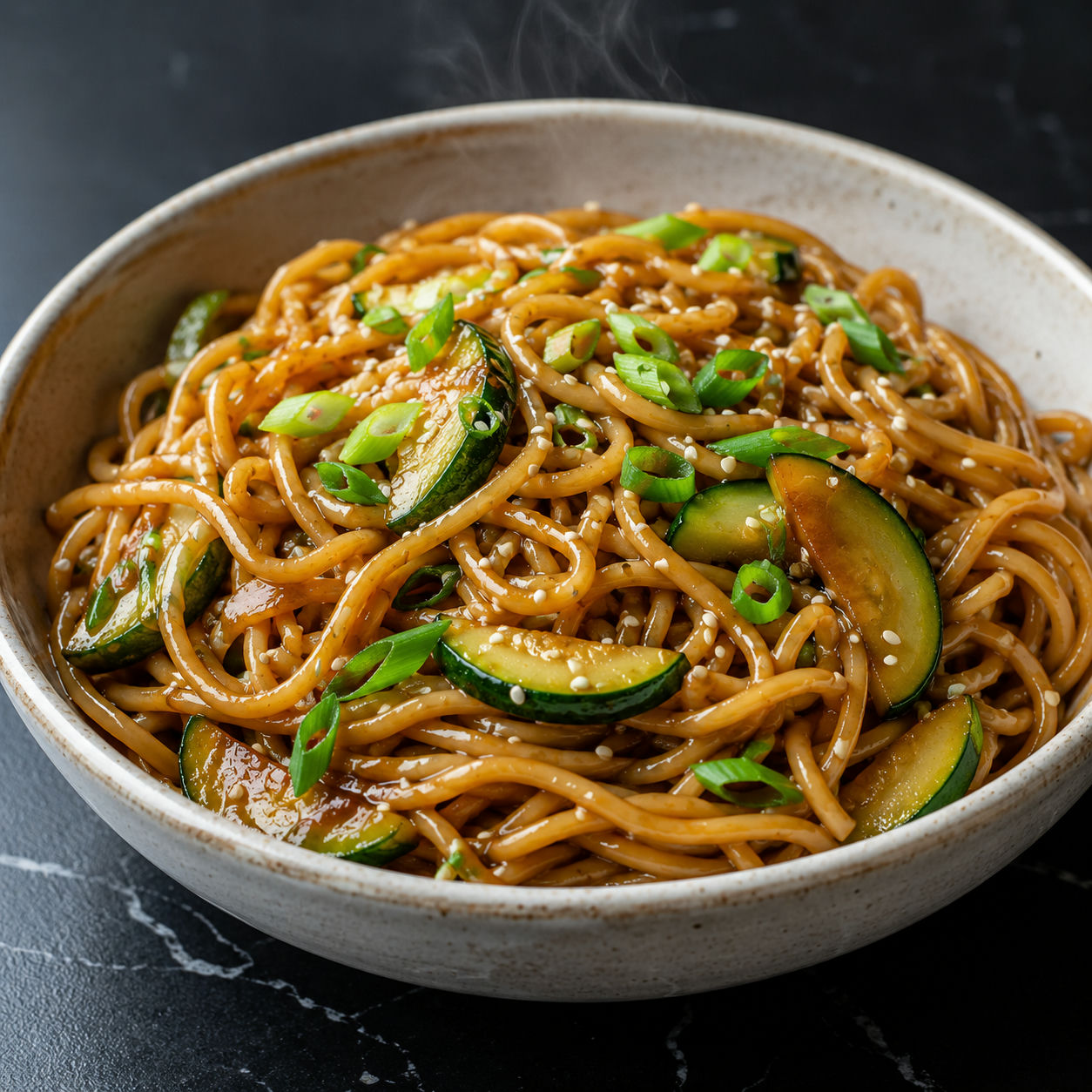
If you've ever sat at a hibachi table and watched the chef toss noodles in a sizzling, buttery sauce, you already know why they disappear before the steak or shrimp. The flavor looks more complicated than it is. The ingredient list is short. What makes them taste like the restaurant is the heat, not some secret ingredient.
A screaming-hot pan lets the noodles pick up a little char in spots. The butter goes slightly nutty just before the soy sauce hits. That combination is what you've been chasing. This is not a complicated dish, but it rewards a confident hand on the stove.
Ready in about 20 minutes, these hibachi noodles work as a side dish for hibachi steak and shrimp or classic hibachi chicken with fried rice, or honestly just on their own with a pair of chopsticks.
The Four-Ingredient Sauce That Does Everything
Most of the flavor here comes from butter, garlic, soy sauce, and sesame oil. Quality matters most in the soy sauce since it is the backbone of everything. Beyond that, zucchini, yellow onion, sesame seeds, and green onions round out the classic hibachi table look.
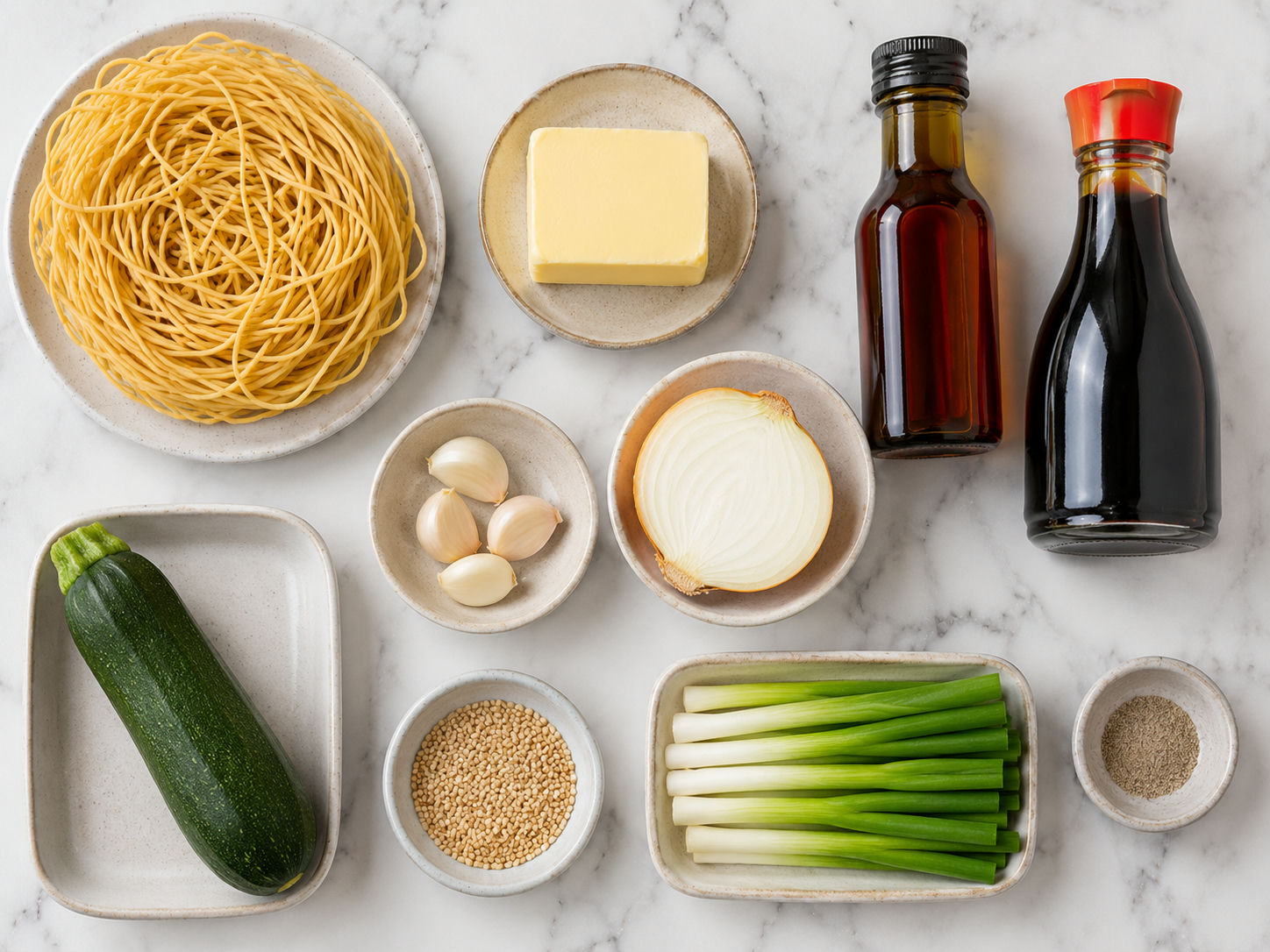
- Lo mein noodles. The closest match to hibachi restaurant noodles. They are thick, chewy, and hold up in a hot pan. Spaghetti is a fine substitute if lo mein is not at your store.
- Unsalted butter. The rich base of the sauce. It goes slightly nutty as it hits the hot pan and carries the garlic flavor into every strand.
- Garlic. Cooked in the melted butter for just 30 seconds, long enough to bloom the flavor without burning.
- Soy sauce. The salty, savory coating that ties everything together. Use a quality brand since there is nothing else to hide behind here.
- Sesame oil. Drizzled at the very end for a toasted, nutty finish. Adding it to a screaming-hot pan early turns the flavor harsh.
- Zucchini and yellow onion. The standard hibachi vegetable pairing. They cook fast over high heat and pick up a little char at the edges that adds depth.
- Sugar. Just a teaspoon to balance the salt and round out the sauce.
Move Fast Once the Pan Is Hot
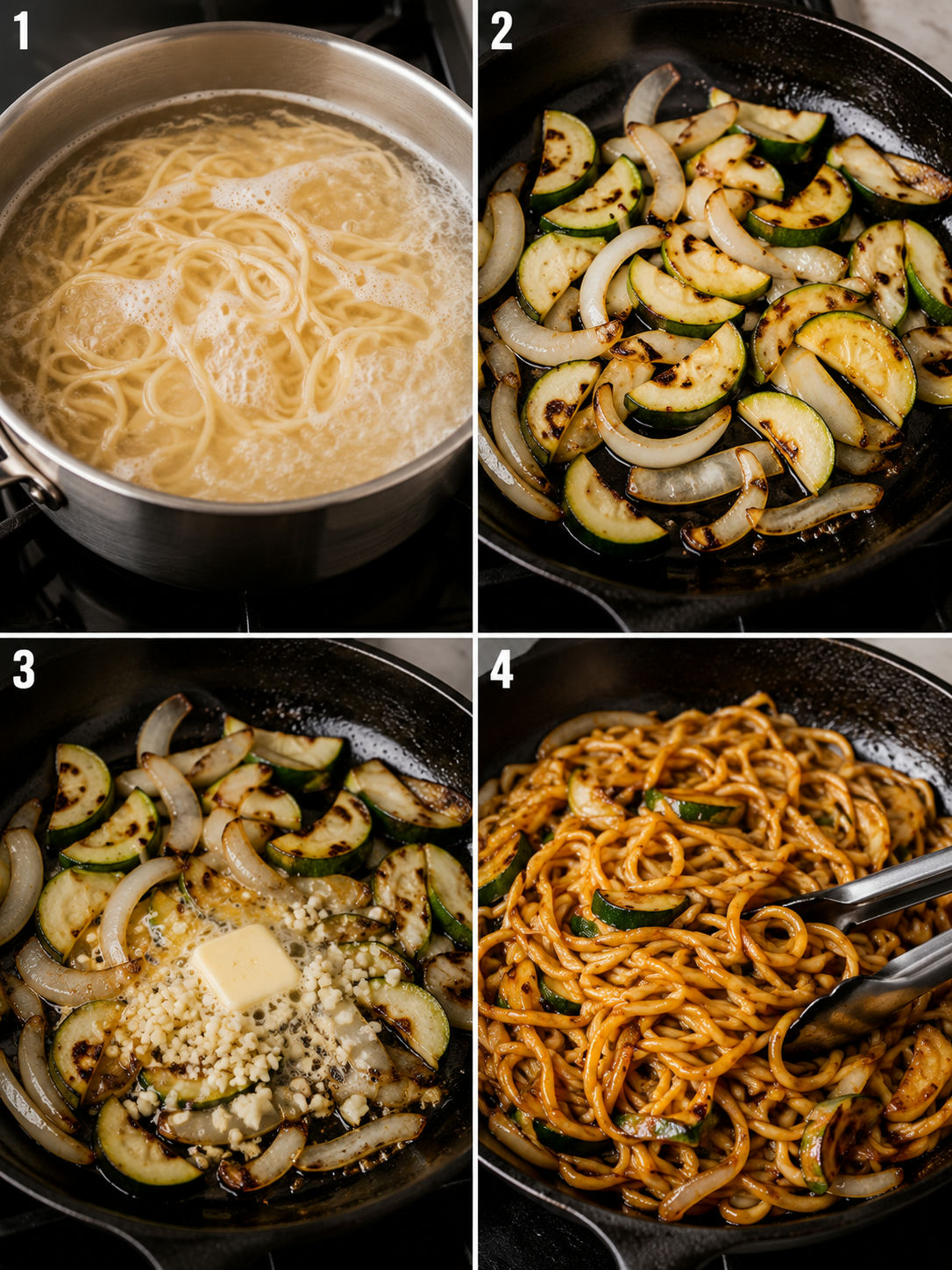
- Cook the noodles. Boil in well-salted water until just under al dente, about 1 minute less than the package time. Drain and rinse with cold water to stop the cooking. Toss with a drizzle of vegetable oil to prevent sticking.
- Sear the vegetables. Heat 1 tablespoon of vegetable oil in a large skillet or wok over high heat until shimmering. Add the onion and zucchini and cook, stirring occasionally, until softened and lightly charred at the edges, 3 to 4 minutes.
- Make the garlic butter. Push the vegetables to one side. Add the butter to the empty side of the pan. Once melted, add the minced garlic and cook for about 30 seconds until fragrant. Toss everything together.
- Stir-fry the noodles. Add the drained noodles and toss constantly for 2 to 3 minutes. Let them sit undisturbed for 30 seconds at a stretch so they pick up some char, then toss again.
- Season and finish. Drizzle in the soy sauce, sesame oil, sugar, and white pepper. Toss for 1 more minute until the sauce coats every strand. Taste and adjust the soy sauce if needed.
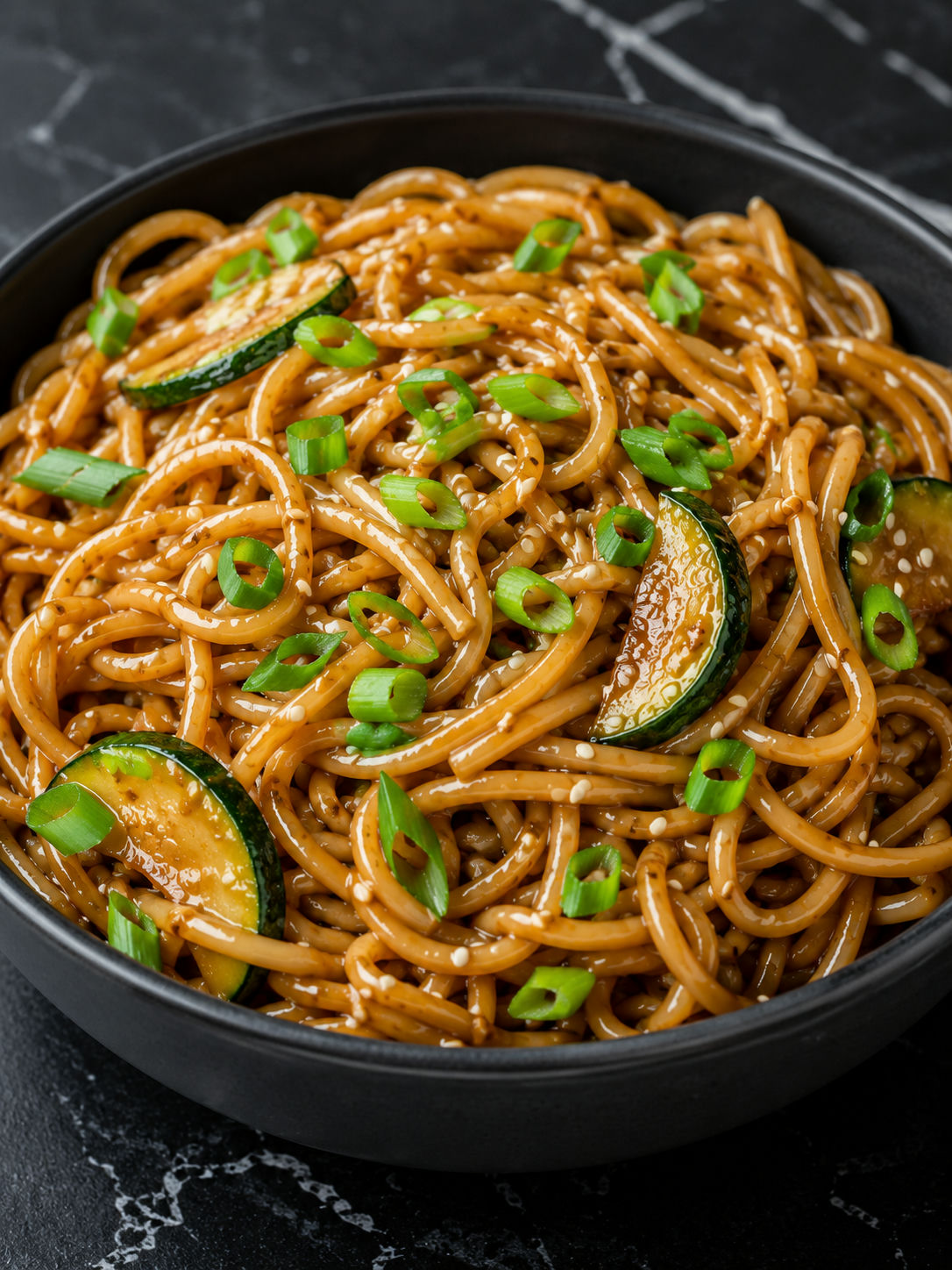
- Garnish and serve. Transfer to a platter and top with sliced green onions and sesame seeds. Serve immediately while the noodles are still glossy.
Why Pan Temperature Changes Everything
The biggest gap between flat, bland noodles and great ones is temperature. Restaurant hibachi grills run much hotter than a home burner, but a well-seasoned cast iron or carbon steel pan gets close enough. Preheat it over high heat for at least two minutes before anything goes in. The pan should sizzle loudly the moment the noodles touch it. If it just sits there quietly, it was not hot enough.
Do not crowd the pan either. A 12-ounce batch of noodles needs at least a 12-inch skillet. Crowding drops the temperature immediately and you end up steaming the noodles instead of searing them. That is how they turn soft and dull rather than glossy and lightly charred. For a detailed breakdown of why wok-style high heat works the way it does, Serious Eats covers the science thoroughly.
Which Noodle to Actually Buy
Lo mein noodles are the most similar to what hibachi restaurants use. They are thick, have a satisfying chew, and stay glossy after tossing in the sauce. Find them in the Asian food section of most grocery stores, often labeled fresh or steamed lo mein.
Standard spaghetti is the most common home substitute and works genuinely well. Use regular-thickness spaghetti, not thin spaghetti or angel hair, both of which overcook fast in a hot pan. Yakisoba noodles are another option, though they often come pre-sauced in the package. Drain off the included sauce packet and let this recipe's butter-soy sauce take over instead.
Swaps, Add-Ins, and Building a Bigger Table
The base recipe is vegetarian as written. To add protein, cook shrimp, sliced chicken breast, or thin steak strips in the same pan before the vegetables, set aside, and fold back in at the final toss. For shrimp, about 2 minutes per side over high heat is enough. Bean sprouts stirred in during the last minute add a fresh crunch against the rich sauce.
If you are building out a full hibachi-style spread at home, these noodles sit nicely next to a batch of flavorful chicken stir fry with rice noodles for a noodle-forward table. For a quicker companion dish, sesame garlic ramen noodles come together in about 15 minutes and use a similar pantry lineup.
Storing and Reheating Leftovers
Leftover hibachi noodles keep well in an airtight container in the fridge for up to 3 days. The texture softens a little overnight, which is fine for a quick lunch. To reheat, add a small splash of water and a knob of butter to a hot skillet and toss over medium-high heat for about 2 minutes. They come back to life faster than you would expect. Skip the microwave if you can since it heats unevenly and tends to make the noodles limp.
FAQs
- What type of noodles work best for hibachi noodles?
Lo mein noodles are the closest to what hibachi restaurants use and stay glossy without going sticky. Spaghetti or linguine work almost as well if lo mein is not available. Cook them slightly under al dente since they finish cooking in the hot pan. Avoid thin rice noodles or capellini, which go mushy too quickly under high heat.
- Can I substitute the butter with something else?
Yes. A neutral oil like vegetable or avocado oil gives you the high-heat sear without burning as easily. Vegan butter keeps the richness if you need a dairy-free version. The flavor will not be quite as nutty, but it gets close. A mix of vegetable oil and vegan butter gives the best results.
- Are hibachi noodles the same as yakisoba?
They are related but not the same. Yakisoba uses a specific tangy sauce and is a Japanese street food dish. Hibachi noodles as served at American hibachi steakhouses lean on a simpler butter-soy-sesame combination and taste milder. The technique is similar but the flavor profile is distinctly different.
- How do I get that restaurant-style char at home?
The key is a fully preheated pan and not crowding it. Cast iron or carbon steel works best. Let the noodles sit undisturbed for 30 to 45 seconds before tossing so they can pick up some color. A home stove cannot match a commercial hibachi burner, but a screaming-hot 12-inch skillet gets surprisingly close.
- How should I store and reheat leftover hibachi noodles?
Store in an airtight container in the fridge for up to 3 days. To reheat, add a small splash of water and a half teaspoon of butter to a hot skillet and toss over medium-high heat for about 2 minutes. The microwave works in a pinch but tends to heat unevenly and can make the noodles soft and dull.
- Can I add protein to make this a full meal?
Absolutely. Shrimp, sliced chicken, thin steak strips, or cubed tofu all work well. Cook the protein in the same pan before the vegetables, set it aside, and fold it back in at the final toss. For shrimp, about 2 minutes per side over high heat is enough. For chicken, cook until no pink remains in the center.
- Can I make hibachi noodles ahead of time?
You can boil and drain the noodles up to a day ahead. Keep them in the fridge tossed in a little vegetable oil to prevent sticking. The stir-fry itself takes only about 10 minutes once the noodles are ready. Avoid making the full dish ahead since the noodles lose their glossy texture and the butter sauce firms up as it cools.
