 Pin it
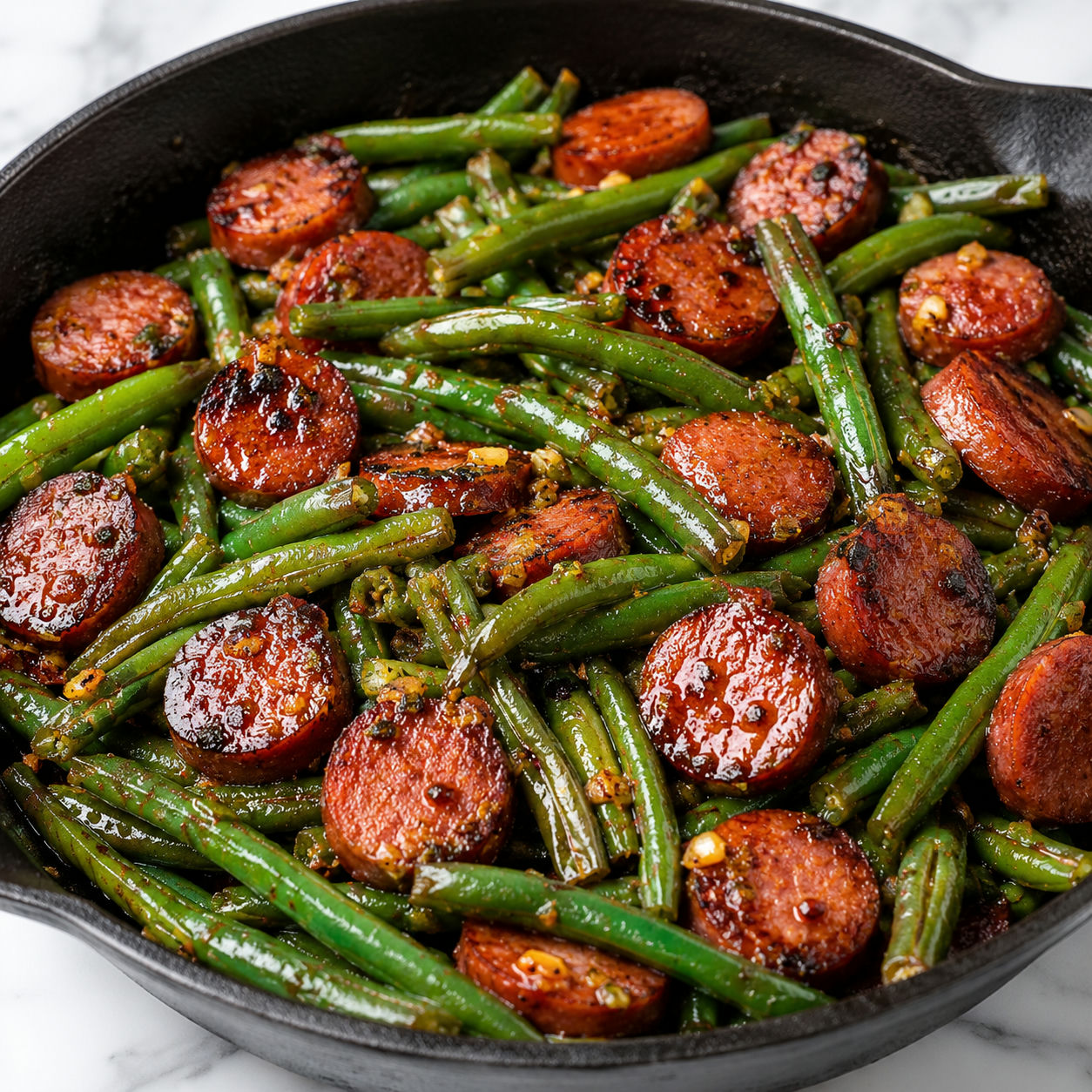
This skillet dinner came together on a night when I had half a ring of kielbasa, a bag of green beans, and about twenty minutes. It has been on regular rotation ever since. The smoky richness of the sausage and the bright snap of the beans balance each other without any fuss.
Everything happens in one pan. You sear the sausage first so the cut sides get a real crust, then cook the beans in the same pan using the fond left behind. Butter and garlic finish the job. It tastes like more work than it is.
What Goes in the Pan
The ingredient list is short enough to keep in your head after the first time. Smoked sausage and fresh green beans do most of the work, and everything else plays a supporting role. Look for a sausage with a visible smoke ring and firm casing. A pale, soft sausage will steam instead of brown and the dish suffers for it.
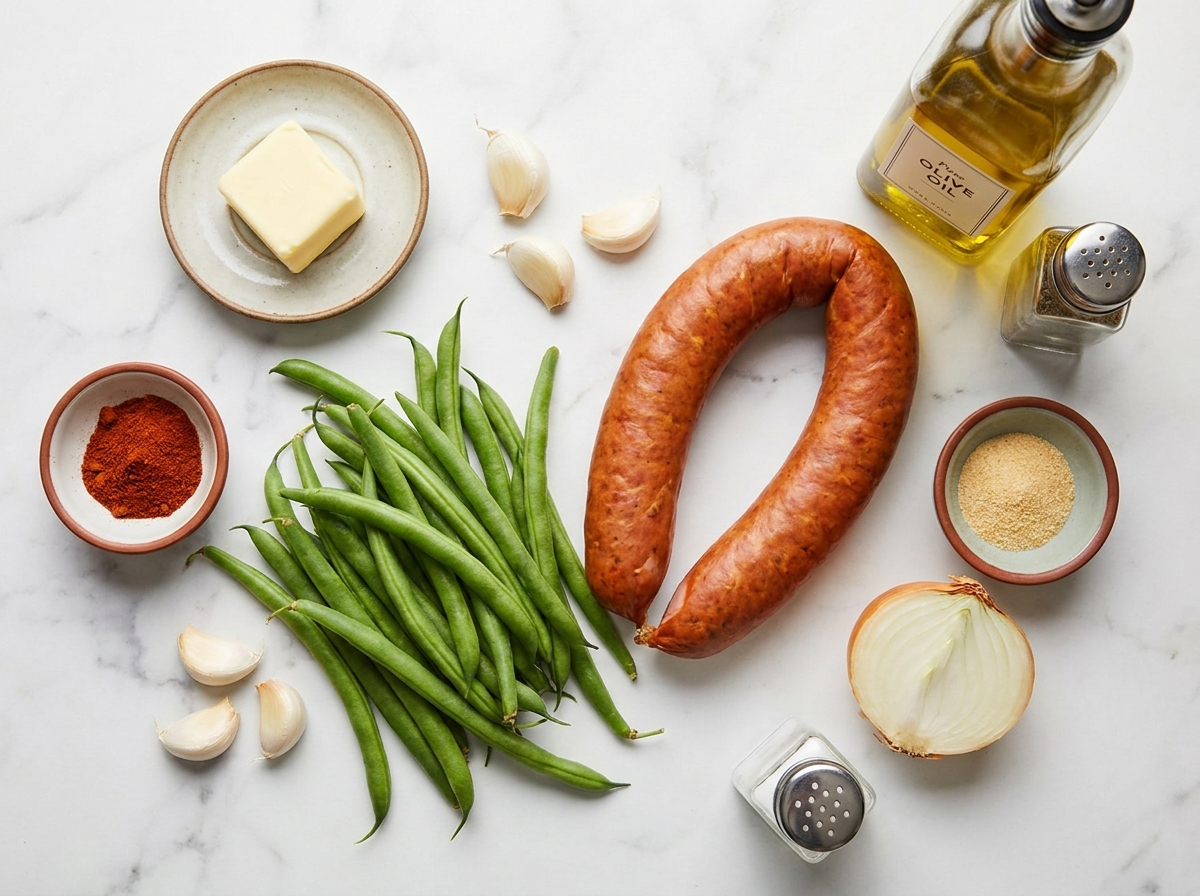
- Smoked sausage (kielbasa or andouille). The fat it renders as it sears gives the whole pan its flavor base and naturally coats the green beans.
- Fresh green beans. They hold their snap even after being covered and steamed. Trim the stem ends but the tails are fine to leave.
- Butter. Added at the end, it pulls everything into a glossy savory finish that ties the dish together.
- Garlic. Stirred in after the onion so it stays fragrant without burning against the hot pan.
- Yellow onion. It softens fast in the sausage drippings and adds a mild sweetness that rounds out the smokiness.
- Smoked paprika. Just a pinch deepens the color and adds gentle warmth without adding heat.
- Olive oil. Gets the sausage browning started. The rendered sausage fat takes over from there.
Sear First, Then Build Flavor
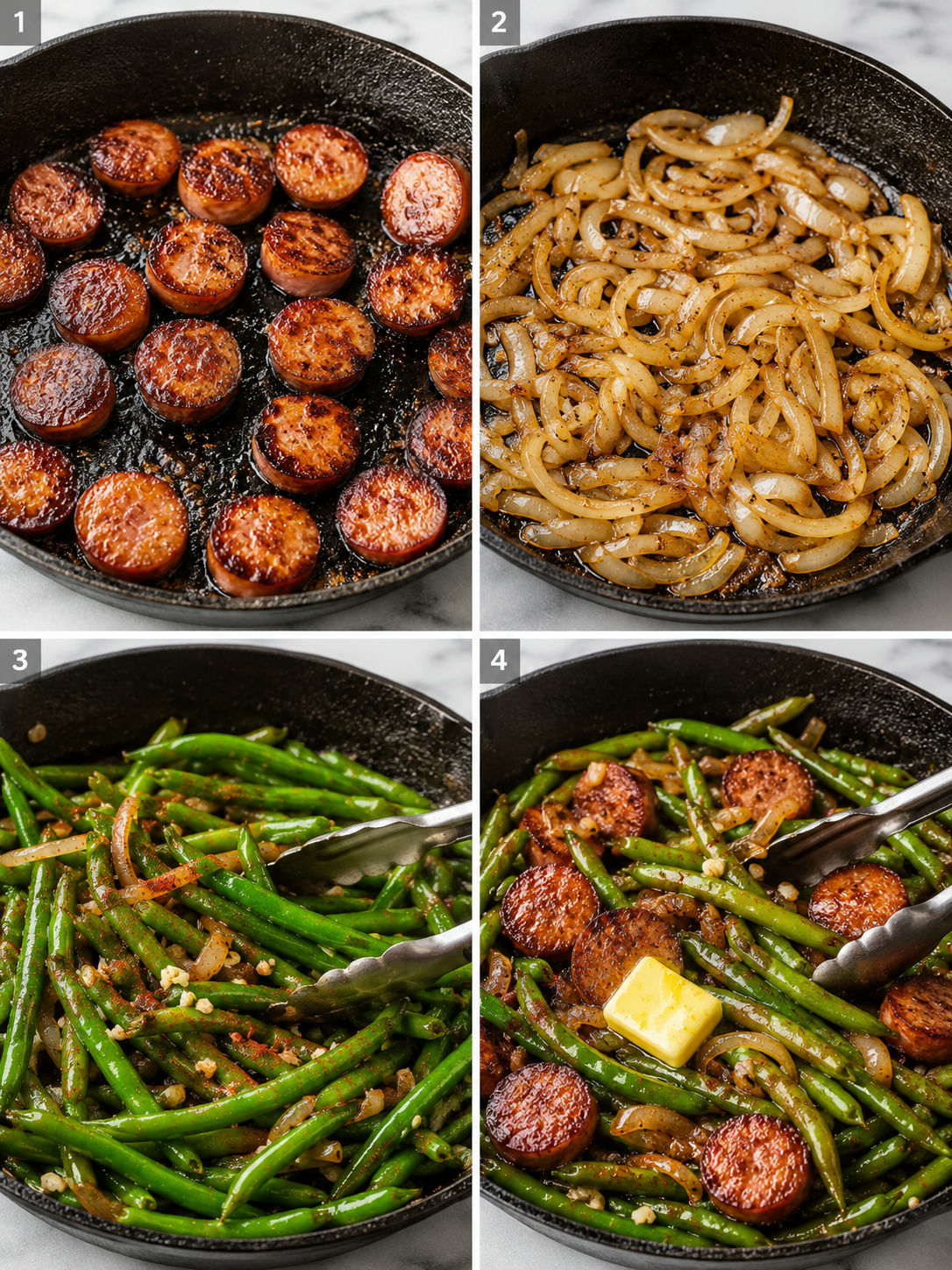
- Heat the pan. Set a large, heavy skillet over medium-high heat and add the olive oil. Let it heat for a full minute until shimmering before anything goes in.
- Brown the sausage. Add the rounds in a single layer without crowding and leave them alone for 2-3 minutes until the cut sides are deeply browned. Flip and repeat. Remove to a plate.
- Soften the onion. Lower the heat to medium. Add the sliced onion and cook 2-3 minutes, scraping up the browned bits from the pan as the onion releases moisture.
- Season and add beans. Stir in the garlic, garlic powder, and smoked paprika for about 30 seconds until fragrant. Add the green beans, season with salt and pepper, and toss to coat.
- Steam until tender. Add 3 tablespoons of water and cover the pan. Cook 5-7 minutes until the beans are tender with some bite left. Uncover and let any remaining water evaporate, about 1 minute.
- Finish and serve. Return the sausage to the pan and add the butter. Toss over medium heat until the butter melts and coats everything. Add a splash of soy sauce or Worcestershire if using, taste for salt, and serve hot.
Why the Sausage Sear Matters
The browned crust on each sausage round is where most of the flavor in this dish comes from. When you sear at high heat and leave the pieces alone, the cut surface caramelizes and develops fond (the dark, sticky bits that cling to the pan). That fond gets lifted by the onion and becomes the invisible backbone of the sauce.
If you crowd the pan, the sausage steams in its own moisture and fond never forms. The dish ends up tasting flat no matter how good the sausage is. Cook in two batches if your skillet is not large enough to hold the rounds in a single layer with space between them. Cast iron and stainless steel give the best crust. Nonstick works but produces less fond.
Fresh or Frozen, Crisp or Soft
Five to six minutes covered gives you green beans with a noticeable snap. Seven to eight minutes gets them more yielding and tender throughout. Both are good. Fresh beans hold their texture far better than canned. If you use canned, skip the water and the covered steam step entirely and just toss them in the pan during the last two minutes to warm through, or they will turn to mush.
Frozen beans work fine if you thaw them first and pat them dry. They come out slightly softer than fresh but still hold up to the butter toss at the end. For a side that pushes harder on the garlic, the cheesy garlic green beans takes the same flavors further with a parmesan finish.
Sausage Swaps That Still Work
Kielbasa is the default here, but andouille turns the heat up several notches and adds a Cajun character that works especially well over rice. Turkey or chicken sausage keeps things lighter, though it browns a bit less dramatically and benefits from slightly lower heat. For a sheet-pan version with more vegetables, the easy sheet pan chicken sausage with vegetables is worth a look.
Bratwurst works too, sliced thick and cooked the same way. If you want to stretch the meal, the one pan sausage with green beans and potatoes adds diced potatoes to the same basic method and takes maybe ten minutes longer with the same single pan and the same cleanup.
Storing and Reheating This Dish
Leftovers keep in the fridge for up to four days in a sealed container. The butter sauce firms up when cold, which is normal. Reheat in a skillet over medium heat with a tablespoon of water or broth, it loosens quickly as it warms. The green beans soften a little on the second day, so if texture matters to you, pull them out when you refrigerate and add fresh-cooked ones when you reheat the sausage.
This dish does not freeze well. The green beans turn waterlogged and the butter sauce separates. Make what you plan to eat within a few days.
What to Serve Alongside This
Steamed white or brown rice is the most popular pairing and soaks up the garlic butter from the pan. Crusty bread is good for wiping the skillet clean. Egg noodles and mashed potatoes work just as well. For another one-pan dinner in the same family, the shrimp and sausage veggie skillet adds shrimp and colorful peppers if you want to go bigger on protein. According to USDA FoodData Central, one cup of cooked green beans provides roughly 4 grams of fiber along with meaningful amounts of vitamins C and K, which makes this one of the more nutritionally solid quick dinners you can pull off on a weeknight.
FAQs
- Can I use frozen green beans instead of fresh?
Yes. Thaw them first and pat them dry so they cook rather than steam in the pan. Frozen beans will be slightly softer than fresh once done, which some people prefer. Add them the same way and check for doneness after 4-5 minutes instead of 6-7.
- What kind of sausage works best for this recipe?
Smoked kielbasa is the most forgiving choice. Its mild flavor goes with everything and it browns nicely. Andouille adds heat and depth for a bolder dish. Turkey or chicken sausage keeps things lighter, though it needs slightly lower heat to avoid drying out. Avoid raw sausage links since they need longer to cook through and the timing will be off.
- Is smoked sausage already fully cooked?
Most commercially sold smoked sausage and kielbasa is fully cooked at the factory. You are essentially reheating it and adding color. According to the USDA FSIS sausage safety guidelines, precooked sausage should reach 165 degrees F internally before serving. The sear step in this recipe handles that easily.
- Can I add potatoes to make it heartier?
Absolutely. Cut 2 medium Yukon Gold potatoes into 1/2-inch cubes and add them right after the onion softens. Cover and cook 12-15 minutes, stirring once or twice, before adding the green beans. The potatoes soak up the savory drippings beautifully.
- How do I store and reheat leftovers?
Store in an airtight container in the fridge for up to 4 days. Reheat in a skillet over medium heat with a splash of water or broth to loosen the butter. The microwave works in a pinch but softens the green beans more than a skillet reheat does.
- How do I make it spicier?
Swap regular kielbasa for andouille, add a generous pinch of red pepper flakes with the garlic, or stir in a teaspoon of sriracha at the very end. Any of those moves turns up the heat without changing the rest of the recipe.
- What should I serve alongside sausage and green beans?
Steamed white or brown rice is the most popular pairing and soaks up the garlic butter nicely. Crusty bread is great for wiping the pan clean. Egg noodles, mashed potatoes, and polenta all work well too. A simple cucumber salad or coleslaw on the side keeps things light.
