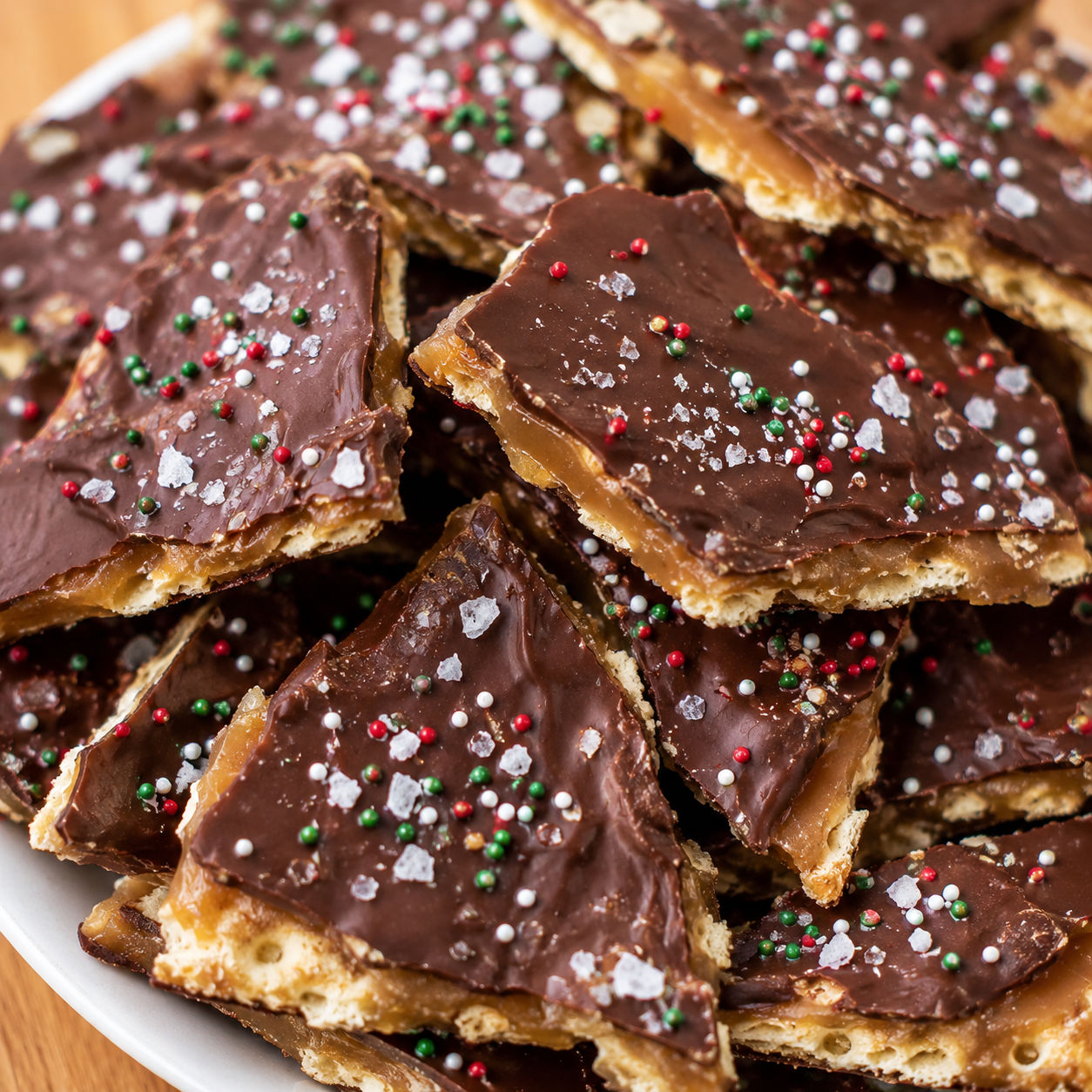
 Pin it
Christmas Crack is the kind of holiday treat that disappears before the tins even make it to the table. It starts with plain saltine crackers, gets coated in a bubbling brown sugar toffee, and finishes with a layer of melted chocolate and whatever festive toppings you have on hand. The whole thing takes about half an hour and uses four ingredients you probably already own.
I make a batch every December for neighbors and office parties. It travels well, keeps for days, and the sweet-salty crunch gets everyone asking for the recipe. Here is exactly how to make it without a candy thermometer or any fancy equipment.
The 4-ingredient lineup
This recipe is built on pantry staples that do way more than their share of the work. The saltines create a light, shattering base. The butter and brown sugar cook down into a quick toffee that soaks into every cracker edge. Semisweet chocolate chips melt into a smooth layer that ties it all together.
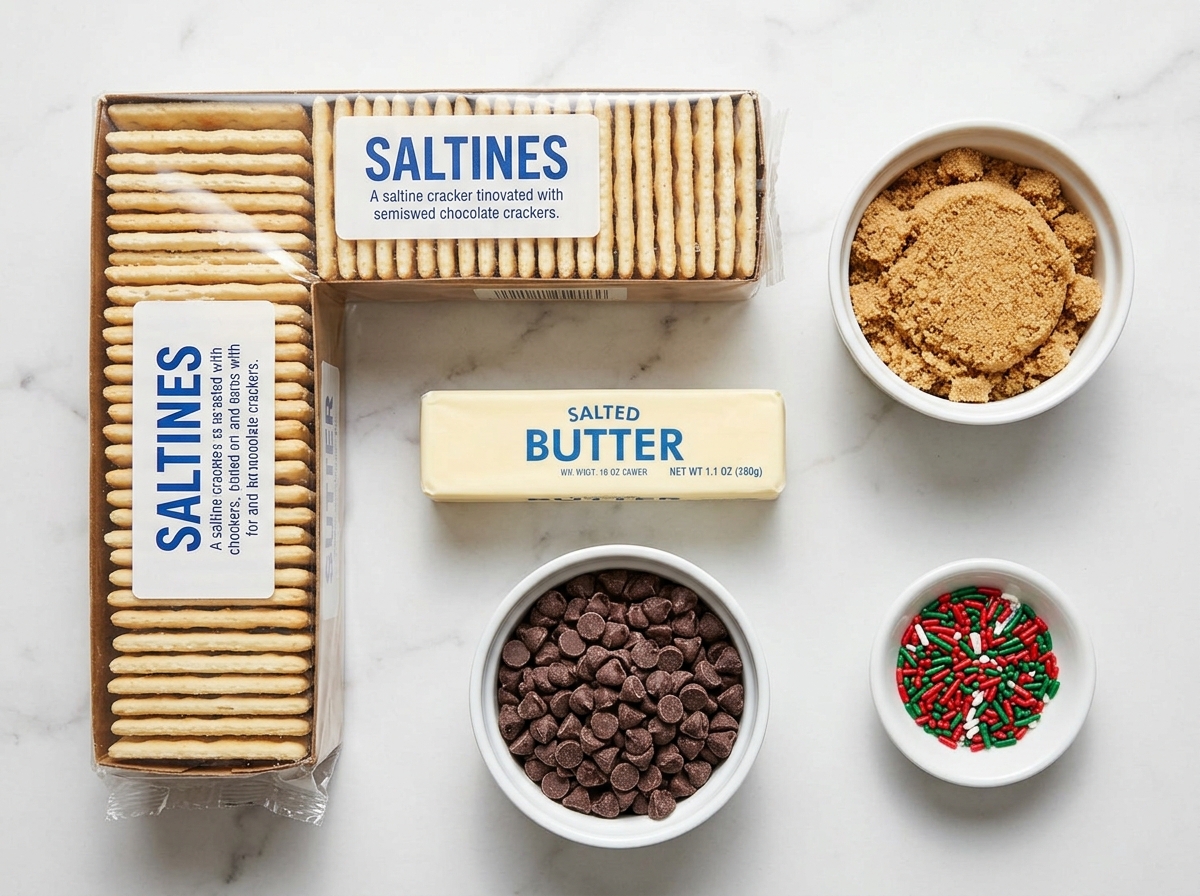
- Salted saltine crackers. One sleeve, about 40 crackers, laid edge to edge. The salt on top balances the sweetness and the crackers stay crisp even after baking.
- Unsalted butter. One full cup melts into the brown sugar to create the toffee layer. Unsalted lets you control the final salt level.
- Packed brown sugar. Light or dark both work. Dark gives a deeper molasses note, light is more classic butterscotch.
- Semisweet chocolate chips. Two cups melt evenly over the hot toffee and set into a firm, snappy layer. Milk chocolate works too if you prefer it sweeter.
- Optional toppings. Festive sprinkles, chopped pecans, crushed candy canes, or flaky sea salt for texture and holiday color.
Toffee, chocolate, chill
- Prep the pan. Preheat your oven to 375°F. Line a rimmed baking sheet with parchment paper. Lay the saltines in a single layer so they touch but do not overlap. Fold up the parchment edges to catch any bubbling toffee.
- Boil the toffee. Melt the butter and brown sugar together in a small saucepan over medium heat. Once it reaches a full rolling boil, set a timer for 3 minutes and stir constantly. The mixture should thicken and look like thin caramel. Pour it over the crackers immediately and spread to the edges with a spatula.
- Bake briefly. Slide the pan into the oven for 5 to 6 minutes. The toffee will bubble vigorously. Keep an eye on it. You want deep golden bubbles, not dark brown or smoking edges.
- Melt the chocolate. Pull the pan from the oven and sprinkle the chocolate chips evenly across the top. Let them sit for 2 to 3 minutes until they look glossy, then spread into an even layer with an offset spatula or butter knife.
- Top and chill. Add sprinkles, nuts, or a pinch of flaky salt while the chocolate is still wet. Refrigerate the pan for 1 to 2 hours until completely hard, then lift the parchment out and break or cut into pieces.
Why saltines make the best base
Saltine crackers sound like an odd foundation for candy, but they are the secret to the whole thing. They are thin and dry so the hot toffee soaks straight through and caramelizes the surface without turning soggy. The salt baked onto each cracker acts as a built-in flavor enhancer that keeps the candy from tasting one-dimensional. If you only have unsalted saltines, scatter a light pinch of kosher salt over the crackers before you pour the toffee. Some people swap in Ritz or graham crackers, which works in a pinch, but the texture changes. Ritz are richer and softer; graham crackers add a honey note and more chew. Stick with saltines if you want that signature light, shattering crunch. If you love holiday treats built on simple bases, our Saltine Cracker Toffee uses the same technique with a slightly different finish.
Fixing grainy or soft toffee
If your toffee turns out grainy or separates, the sugar likely dissolved unevenly or the heat was too low. Make sure the butter and sugar come to a full rolling boil across the entire surface, not just the edges. Stir constantly so the sugar crystals dissolve completely before the mixture hits the crackers. Humidity can also soften the finished candy. If you live in a very damp climate, let the slab chill in the refrigerator for the full 2 hours and store it there rather than on the counter.
Toppings that make it festive
The chocolate layer is your blank canvas. Red and green sprinkles are the obvious choice for a Christmas platter, but chopped toasted pecans add a grown-up crunch that cuts through the sweetness. Crushed candy canes look beautiful and add a cool peppermint burst, though they can soften after a day so add them the same day you serve. Mini M&Ms work well because they do not sink into the warm chocolate. For a more refined look, skip the candy entirely and finish with flaky sea salt and a drizzle of melted white chocolate. However you top it, do it within five minutes of spreading the chocolate so everything sticks. Looking for more holiday sweets to round out your tray? Our Christmas Sheet Cake and Christmas Caramel Popcorn both travel well and feed a crowd.
Break or slice cleanly
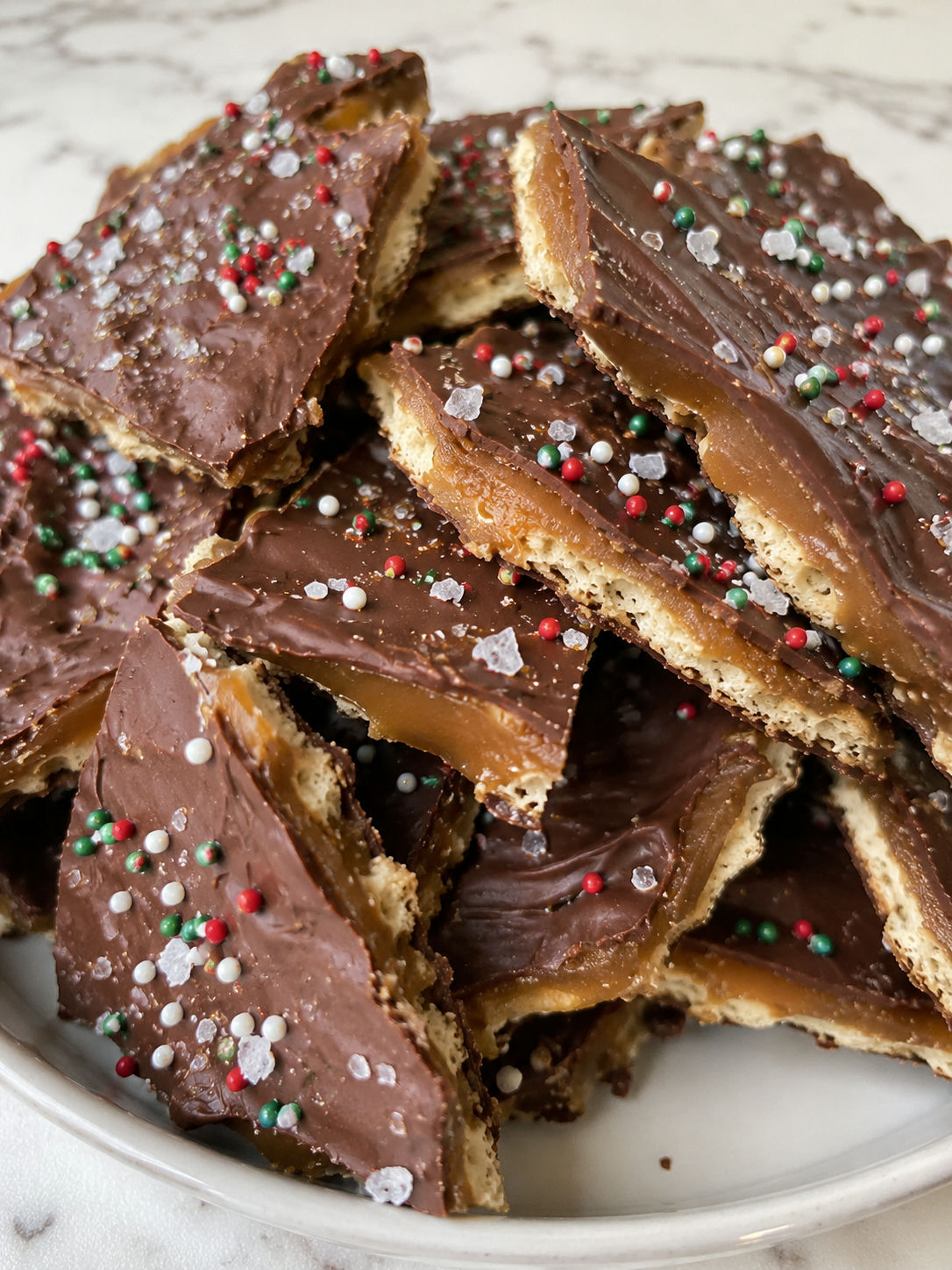
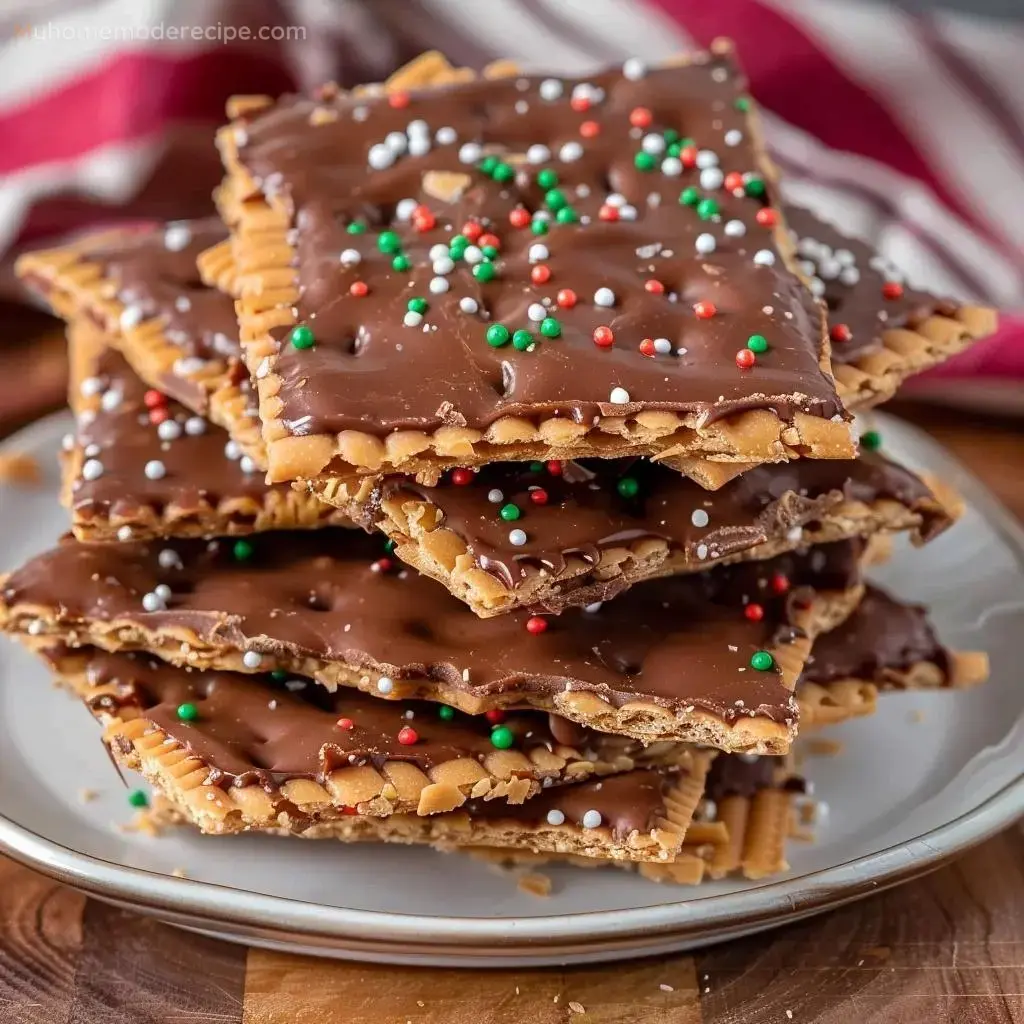
For rustic, bark-style pieces, let the slab come fully to room temperature after chilling, then lift the parchment and snap it with your hands. The cracks follow natural fault lines and look homemade in the best way. If you prefer neat squares, use a large sharp knife and press straight down rather than sawing. Wipe the blade clean between cuts so the chocolate does not smudge. Cutting works best when the slab is cold but not frozen. This pairs beautifully on a cookie platter next to our Best Soft Christmas Cookies.
Storing and gifting ahead
Once the chocolate is fully set, break the slab into irregular shards or cut clean squares with a sharp chef's knife. Store the pieces in an airtight container at room temperature for up to 5 days. If your kitchen runs warm, keep them in the fridge for up to 2 weeks. The cold keeps the chocolate firm and the toffee snappy. You can also freeze Christmas Crack for up to 3 months. Layer pieces between sheets of parchment paper in a freezer-safe container and thaw at room temperature for 15 minutes before serving. The texture stays surprisingly crisp after freezing because the toffee layer is essentially a cooked candy, not a moist caramel. For safe food storage practices, see the FDA food-safety guidelines.
FAQs
- Why is it called Christmas Crack?
The name comes from how addictive it is. The combination of salty crackers, buttery toffee, and sweet chocolate is hard to stop eating. It is also sometimes called saltine cracker toffee or cracker candy.
- Can I use Ritz crackers instead of saltines?
Yes, but the texture will be different. Ritz crackers are richer and softer, so the final candy has less of that light, shattering crunch. If you use unsalted crackers of any kind, add a pinch of kosher salt to the toffee layer.
- How long does Christmas Crack last?
Stored in an airtight container at room temperature, it stays fresh and crisp for about 5 days. In the refrigerator it lasts up to 2 weeks. Keep it away from warm spots so the chocolate does not soften.
- Can I freeze Christmas Crack?
Yes. Layer the pieces between parchment paper in a freezer-safe container and freeze for up to 3 months. Thaw at room temperature for about 15 minutes before serving. The texture remains crisp after freezing.
- Do I need a candy thermometer?
No. This is a beginner-friendly recipe that relies on timing, not temperature. Just boil the butter and sugar for 3 minutes at a full rolling boil while stirring constantly.
- Why did my toffee separate or turn grainy?
Grainy toffee usually means the sugar did not fully dissolve before boiling, or the heat was too low. Stir constantly and make sure the mixture is boiling vigorously across the entire surface. Avoid stirring once it is poured over the crackers and in the oven.
- Can I use white chocolate instead of semisweet?
Yes. White chocolate chips or a chopped white chocolate bar work well and give a sweeter, creamier finish. You can also do a swirl of both by melting half the batch with semisweet and half with white chocolate.
