 Pin it
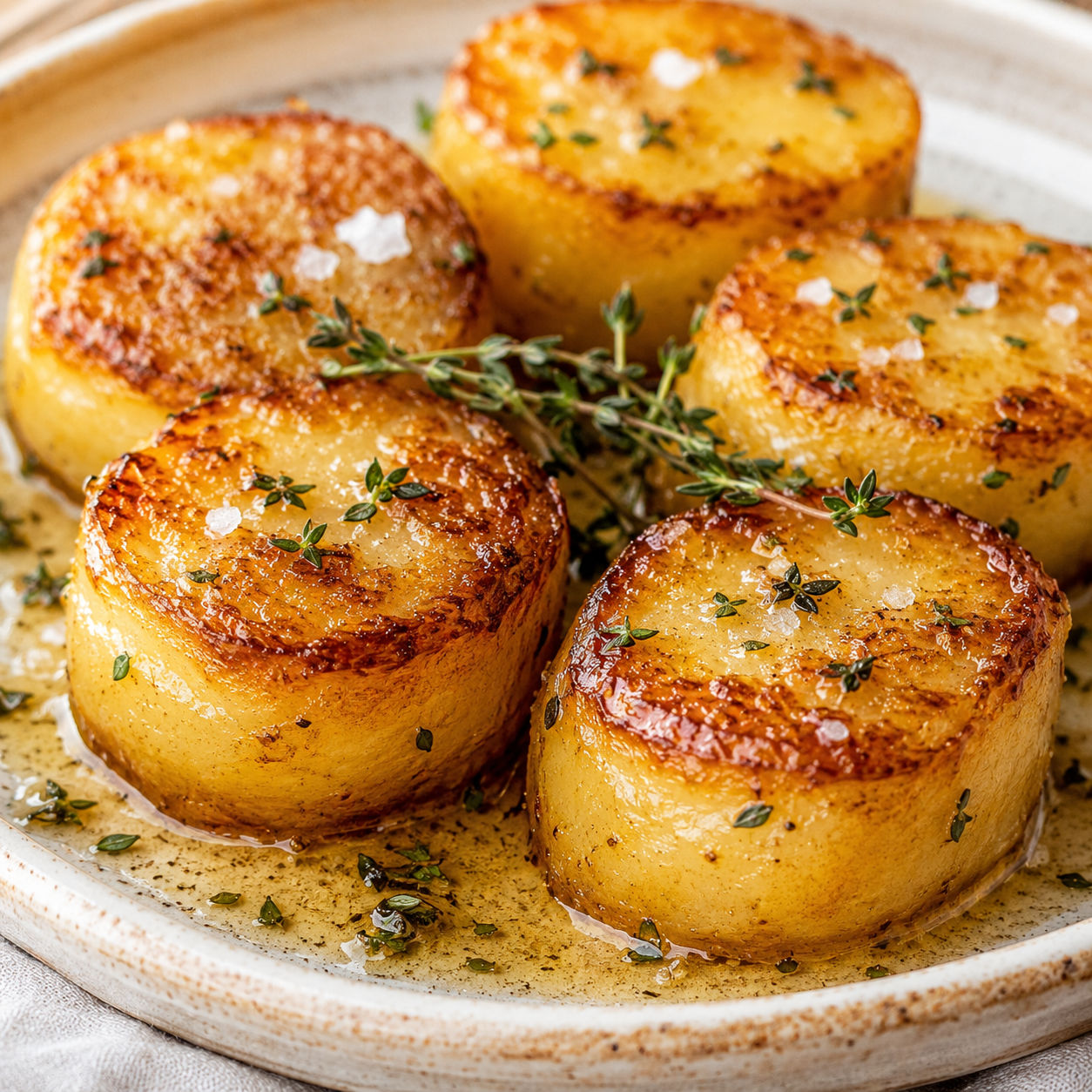
I make these potatoes when I want a side dish that feels like a restaurant treat but does not require a culinary degree. They look fancy on the plate, but the method is simple. Brown, baste, bake. That is it.
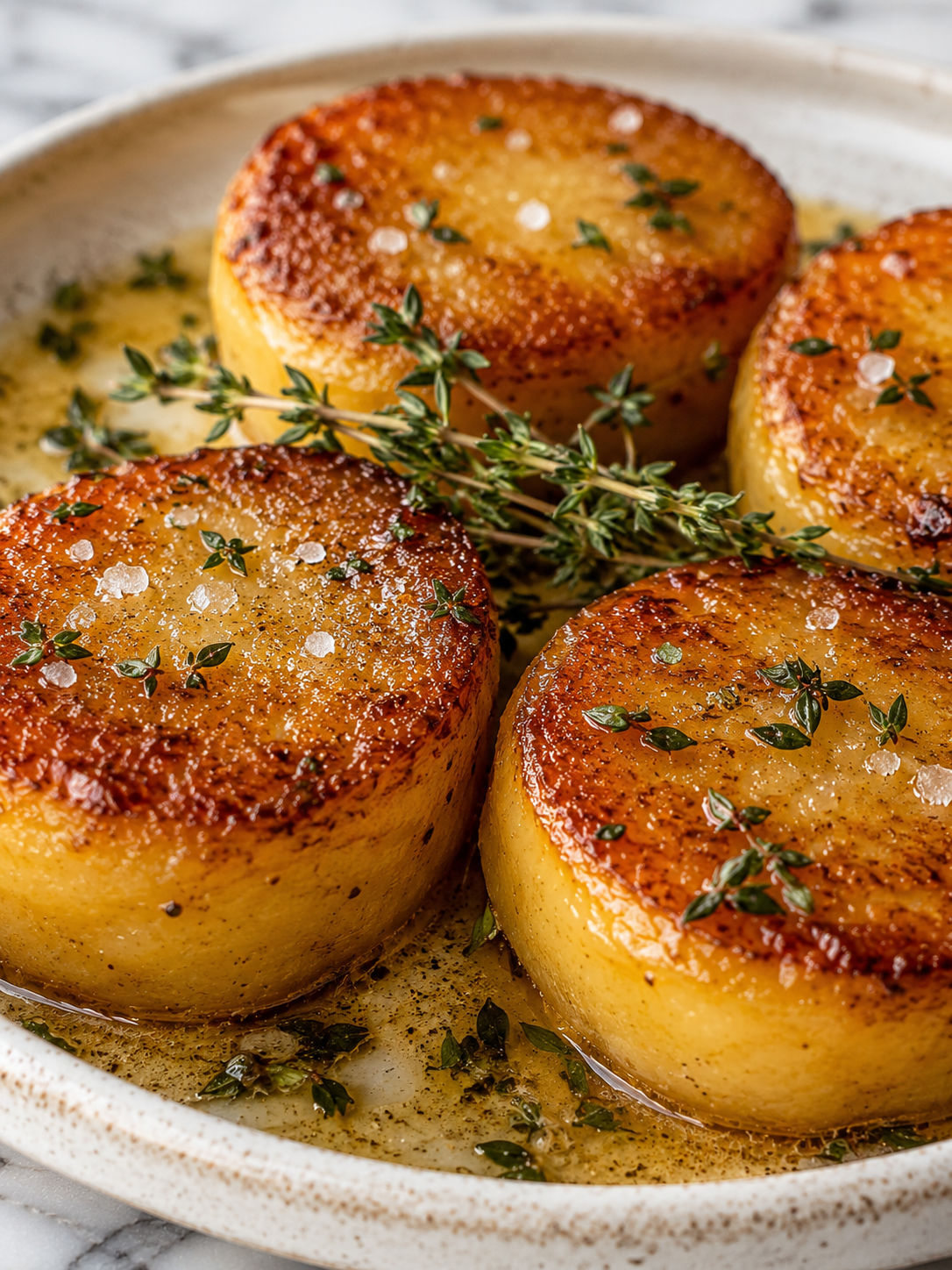
The magic is in the contrast. The outside gets a shattering crust from a hard sear in a hot pan. The inside turns creamy and rich as it soaks up butter and stock in the oven. A sprig of thyme and a few garlic cloves do the rest of the work.
The right potatoes for fondants
Starchy or all-purpose potatoes are the best choice here. They absorb the savory stock and butter as they bake, turning fluffy inside while holding their shape. Skip waxy new potatoes. They stay too firm and do not soak up the braising liquid the same way.
- Yukon Gold potatoes. Their semi-waxy, semi-starchy flesh browns beautifully and stays intact through the sear and braise.
- Neutral oil. Vegetable or canola oil handles high heat without burning, giving you a deep golden crust that butter alone cannot achieve.
- Unsalted butter. It foams and browns slightly in the pan, creating the rich glaze that coats each potato at the end.
- Fresh thyme. Woody sprigs infuse the braising liquid with an earthy, floral note and are easy to remove before serving.
- Garlic. Lightly smashed cloves perfume the butter without overwhelming the delicate potato flavor.
- Low-sodium chicken stock. The savory bath that steams the interior creamy. Low-sodium lets you control the final salt level.
Sear first, baste second
- Shape and dry. Peel the potatoes and slice off the ends so they stand flat. Cut into thick cylinders about one and a half inches tall. Pat them very dry with paper towels. Water is the enemy of browning.
- Sear hard. Heat oil in an oven-safe skillet over medium-high heat until it shimmers. Lay the potatoes flat-side down and do not move them for five to six minutes. Let a deep golden crust form. Flip and sear the other side.
- Add aromatics. Drop in cubed butter, thyme sprigs, and smashed garlic. Swirl the pan until the butter melts and starts to foam. Cook for thirty seconds until the kitchen smells nutty and herbal.
- Deglaze with stock. Pour in warm chicken stock and bring it to a boil. Scrape up any browned bits stuck to the pan. Those bits carry serious flavor.
- Roast to finish. Slide the skillet into a 425°F oven. Bake for twenty-five to thirty minutes, basting once halfway through, until a knife slides through the centers like soft butter and the liquid has reduced to a saucy glaze.
Dry spuds brown better
Surface moisture turns into steam the second the potato hits the pan. Steam softens the crust before it ever gets a chance to crisp. I pat my potatoes dry twice, once after peeling and again right before they go into the skillet. If you want an even richer flavor, swap the neutral oil for duck fat or schmaltz. The technique stays the same. If you enjoy crispy potatoes with bold flavor, try our Greek roast potatoes with lemon and feta or roasted garlic butter parmesan potatoes next.
Pantry swaps that work
Russet potatoes will give you an even fluffier center, though they are slightly more fragile. Vegetable stock makes the dish vegetarian. Rosemary or sage can stand in for thyme if that is what you have. For a bolder side dish with similar comfort, our cowboy butter roasted potatoes are a great follow-up. The U.S. Food and Drug Administration offers safe food handling guidance at FDA.gov.
Serving and reheating
Fondant potatoes are at their best straight from the oven, glossy and hot. Leftovers keep in an airtight container in the fridge for up to three days. Reheat gently in a skillet with a splash of stock to wake up the sauce. The microwave will make them rubbery. If you are feeding a crowd that loves creamy potato sides, our mashed potatoes with roasted garlic are a reliable companion dish.
FAQs
- What are fondant potatoes?
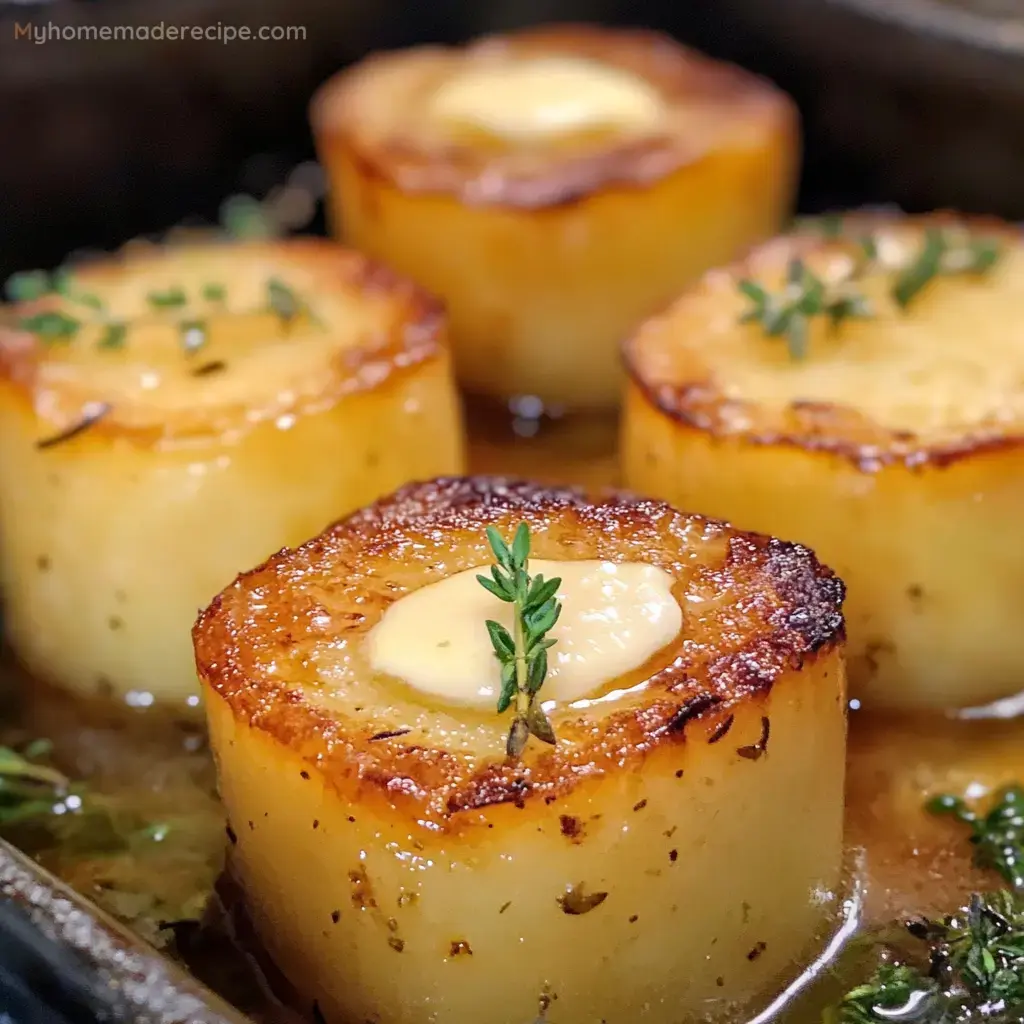
Fondant potatoes, also called melting potatoes, are a classic French side dish. Thick potato cylinders are seared until golden, then braised in butter, stock, and herbs until the centers turn creamy and the liquid reduces to a glaze.
- Can I use Russet potatoes instead of Yukon Gold?
Yes. Russets are starchier and absorb more liquid, giving you a fluffier center. They are slightly more fragile, so handle them gently when flipping and basting.
- Why are my fondant potatoes not browning?
Almost always, the potatoes were too wet or the pan was not hot enough. Pat them completely dry with paper towels and let the oil shimmer before adding the potatoes. Do not move them for the first five minutes.
- Can I make fondant potatoes ahead of time?
Yes. Sear them earlier in the day, cool, and refrigerate in the pan. Add the stock and finish in the oven when you are ready to eat. Fully cooked leftovers reheat well in a skillet with extra stock.
- What can I use instead of thyme?
Fresh rosemary or sage sprigs work beautifully. Dried thyme is fine in a pinch, but the tiny leaves stick to the potatoes and do not look as elegant.
- Are fondant potatoes gluten-free?
Yes, as long as you use a gluten-free stock. Most chicken and vegetable broths are naturally gluten-free, but always check the label on store-bought brands.
- What main dishes pair best with fondant potatoes?
They shine next to any protein that loves a butter sauce. Think seared steak, roast chicken, grilled lamb chops, or pan-roasted fish.
