 Pin it
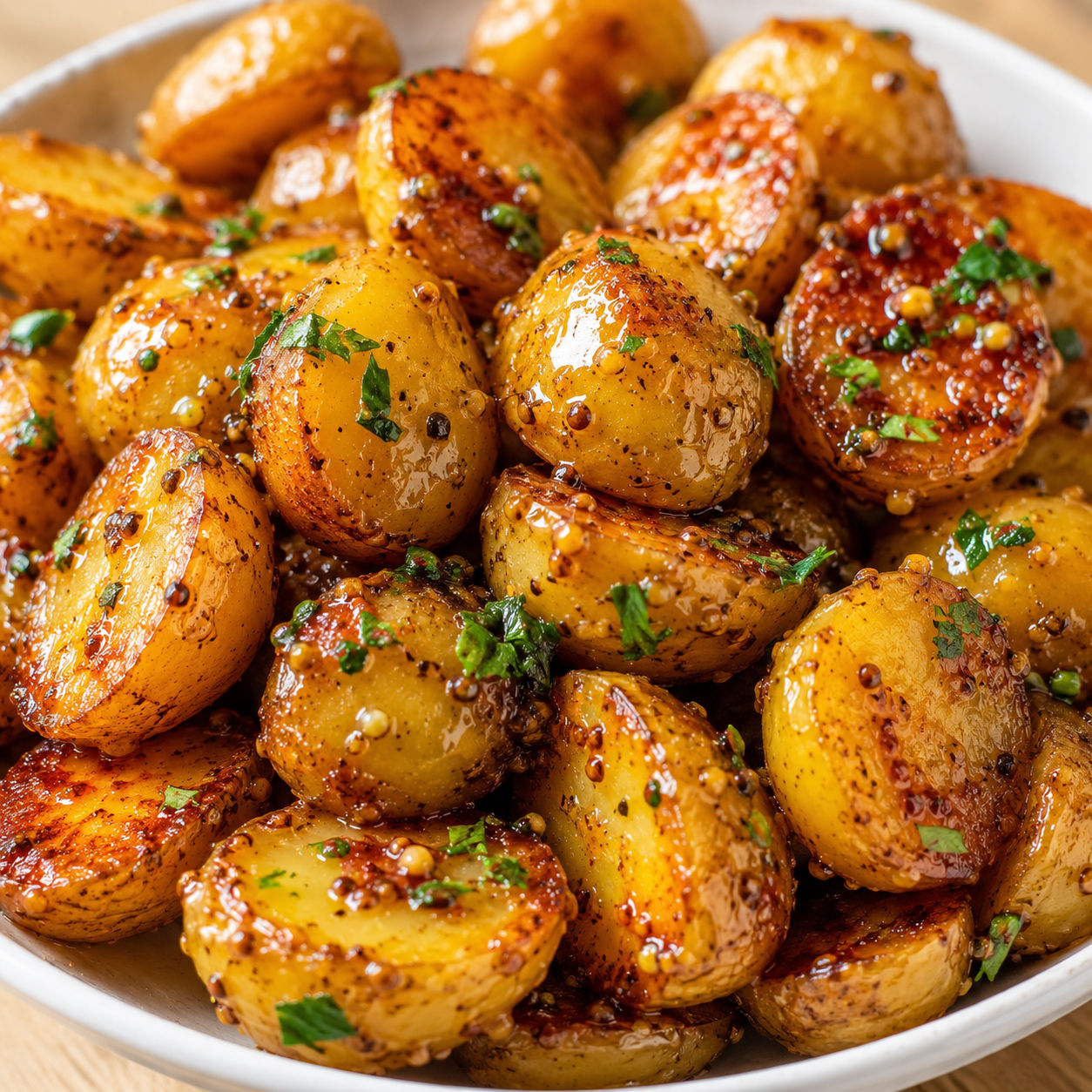
Some side dishes are so simple you wonder why they are not already in your weekly rotation. These honey mustard potatoes are exactly that. The glaze comes together in one bowl, the oven does the hard work, and the result is a tray of potatoes with shatteringly crisp edges and a soft, creamy center.
I make these when I need something reliable that still feels a little special. The honey caramelizes in the heat while the mustard keeps the sweetness in check, so every bite has balance. They pair with roasted chicken, grilled pork, or even a simple piece of fish. If you already love honey mustard chicken, this is the natural next step.
What goes on the pan
This is a short list of pantry staples that do a lot of heavy lifting. Buy firm baby potatoes with smooth skin and no green spots. Good Dijon mustard matters here because it provides the sharp backbone that balances the honey.
- Baby potatoes. Waxy and creamy, they hold their shape while the cut surfaces turn golden. Halve or quarter them so every piece is roughly the same size.
- Dijon mustard. The sharp, vinegary kick that keeps the glaze from tasting like candy. Use a smooth Dijon rather than whole grain for the best coating.
- Honey. The natural sugars caramelize against the hot pan and create those dark, sticky edges everyone fights over.
- Olive oil. Helps the glaze cling and encourages crisping. Do not skimp or the potatoes will steam instead of roast.
- Garlic. Minced fine so it distributes through the glaze without burning in the oven.
- Salt and black pepper. Essential seasoning. The salt also draws out surface moisture so the potatoes can brown.
- Fresh parsley. A handful at the end adds color and a clean, grassy finish.
How they get crispy
- Preheat the oven. Set it to 425°F (220°C) and place a large, rimmed baking sheet inside while it heats. A hot pan jump-starts the browning.
- Prep the potatoes. Scrub the baby potatoes and cut them into halves or quarters so the pieces are even. Pat them dry with a towel. Surface moisture is the enemy of crispness.
- Whisk the glaze. In a large bowl, stir together olive oil, Dijon mustard, honey, minced garlic, salt, and pepper until smooth. The mixture should be thick but still pourable.
- Toss to coat. Add the potatoes to the bowl and stir until every cut surface is glazed. Use your hands if needed to rub the mixture into the crevices.
- Spread and roast. Tip the potatoes onto the hot baking sheet and spread them in a single layer with a little space around each piece. Roast for 15 minutes, then flip and roast another 10-20 minutes until deeply golden and fork-tender.
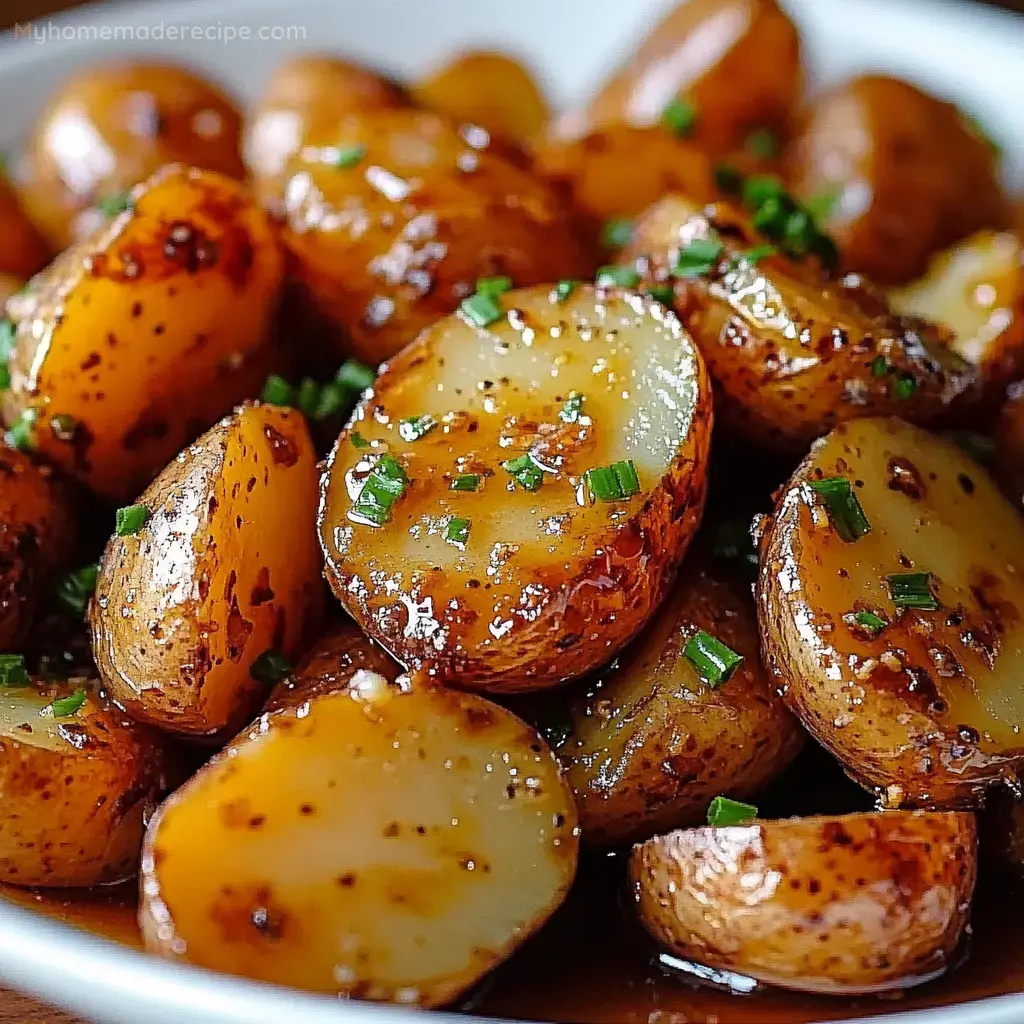
- Garnish and serve. Transfer to a serving bowl and sprinkle with chopped fresh parsley while they are still hot.
Why a hot pan matters
Placing potatoes on a preheated sheet is the difference between roasted and steamed. The instant contact with hot metal sets the exterior and helps the honey caramelize quickly. If the pan is cold, the potatoes release moisture as they heat and sit in their own steam. For a deeper dive into roasted potato technique, our Greek roast potatoes with lemon and feta use the same principle with a different flavor profile.
Mustard and honey balance
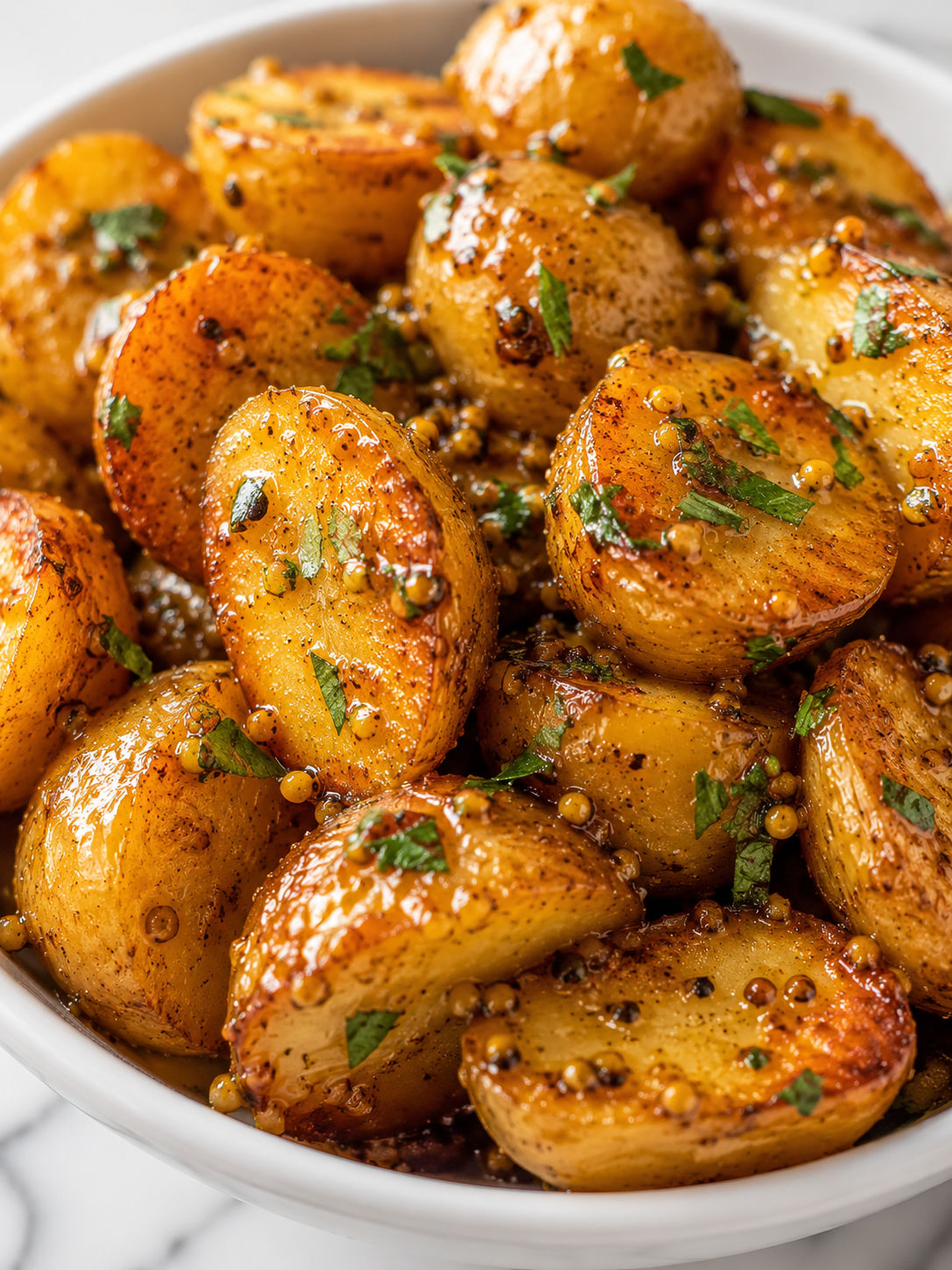
The ratio matters. Too much honey and the glaze burns before the potatoes cook through. Too much mustard and the tang overpowers everything else. I like three parts mustard to two parts honey by volume, which gives a glaze that browns evenly without turning bitter. Whole-grain mustard works if you want visible seeds and a little extra texture, but smooth Dijon coats more evenly. If you prefer a milder flavor, swap in yellow mustard and reduce the honey slightly.
Size and spacing rules
Cut the potatoes so each piece is between one and one-and-a-half inches across. Anything smaller can dry out before it browns. Anything larger stays raw in the center while the outside burns. Spacing is just as important. Crowding traps steam and softens the edges you worked for. If your sheet looks full, split the batch across two pans and rotate them halfway through. This is the same logic we use for cowboy butter roasted potatoes.
Easy swaps and add-ins
Add a pinch of cayenne or smoked paprika for heat. Swap baby potatoes for Yukon Golds cut into one-inch chunks. Toss in a few sprigs of fresh thyme or rosemary before roasting and the herbs will perfume the potatoes as they cook. For a sweeter fall version, honey glazed acorn squash uses a nearly identical glaze on a different vegetable.
Storing and reheating
Leftovers keep in an airtight container in the refrigerator for up to four days. Reheat them in a 375°F oven on a baking sheet for 8-10 minutes to revive the crisp edges. The microwave works in a pinch but softens the exterior. For more on safe food handling, see the FDA food safety guidelines.
FAQs
- Can I use regular yellow mustard instead of Dijon?
Yes, but the flavor will be milder and slightly sweeter. Start with the same amount and taste the glaze before adding the potatoes.
- What is the best potato for this recipe?
Waxy baby potatoes or Yukon Golds hold their shape and develop the best creamy interior. Russets can work but tend to fall apart.
- Can I make these ahead of time?
You can prep the potatoes and glaze separately up to a day ahead. Roast them just before serving for the crispiest results.
- How do I store leftovers?
Refrigerate in an airtight container for up to four days. Reheat in a hot oven rather than the microwave to restore the texture.
- Can I add other vegetables?
Yes. Carrots, parsnips, or Brussels sprouts cut to a similar size roast well alongside the potatoes. Just do not overcrowd the pan.
- Why are my potatoes not getting crispy?
Usually the pan was not hot enough, the potatoes were too wet, or they were crowded on the sheet. Dry them well and give them space.
- Are these potatoes gluten-free?
Yes. Mustard, honey, and potatoes are naturally gluten-free, but check your mustard label if you have celiac disease.
- What mains pair well with honey mustard potatoes?
They are excellent with roasted chicken, grilled pork chops, pan-seared salmon, or any simple protein that needs a bold side.
