 Pin it
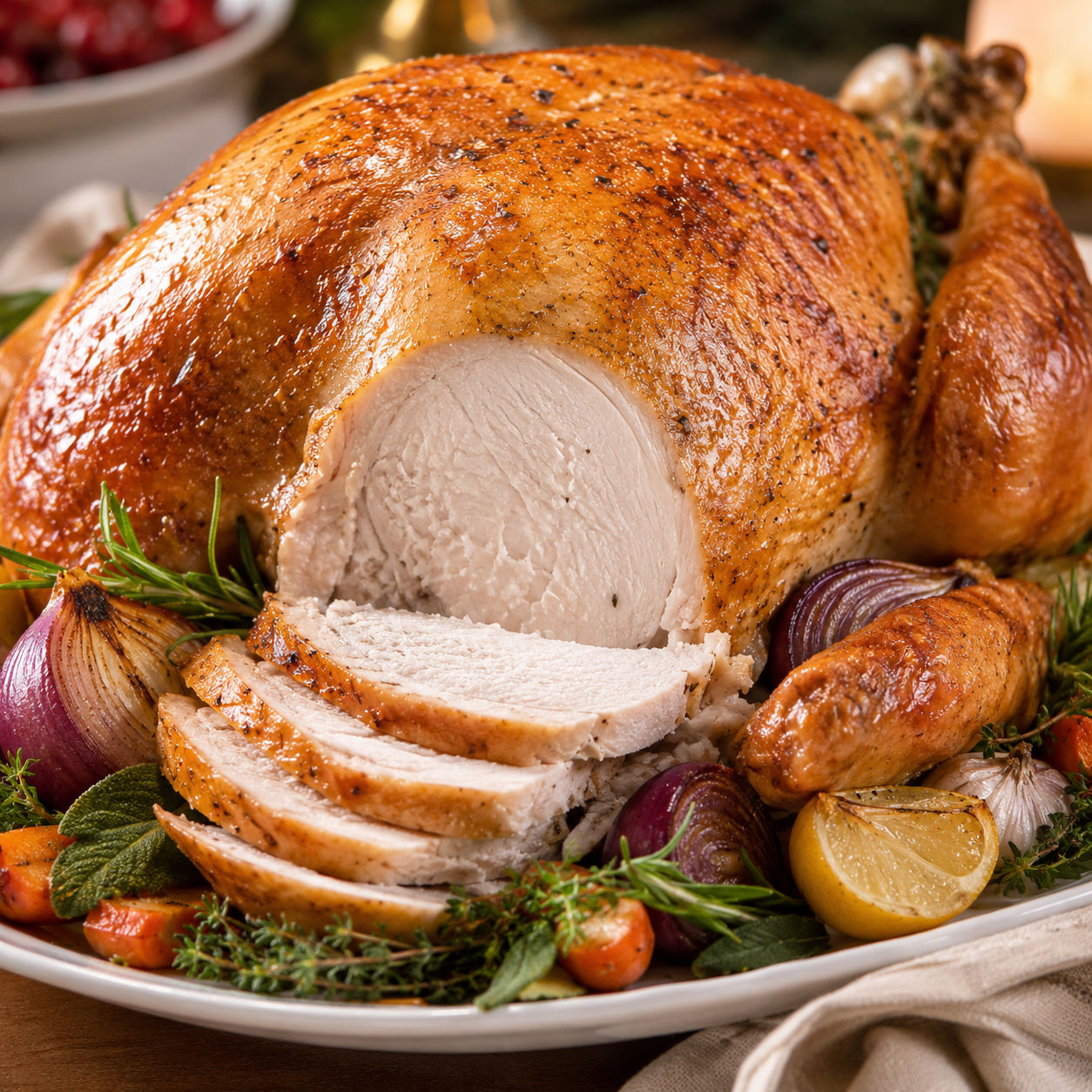
Perfect Roast Turkey is not about fussing all day. It is about a dry bird, enough seasoning, steady oven heat, and a real thermometer. Those four things do more than any complicated trick.
This version uses garlic herb butter under the skin and simple aromatics in the cavity. The skin turns bronzed and crisp while the meat stays tender enough to slice cleanly.
The Turkey And Herb Lineup
Choose a fully thawed 12- to 14-pound turkey if you want the easiest timing. Patience matters here because wet skin will not brown well.
The butter should be soft enough to smear without tearing the skin. Fresh herbs smell brighter, but dried herbs still work if that is what you have.
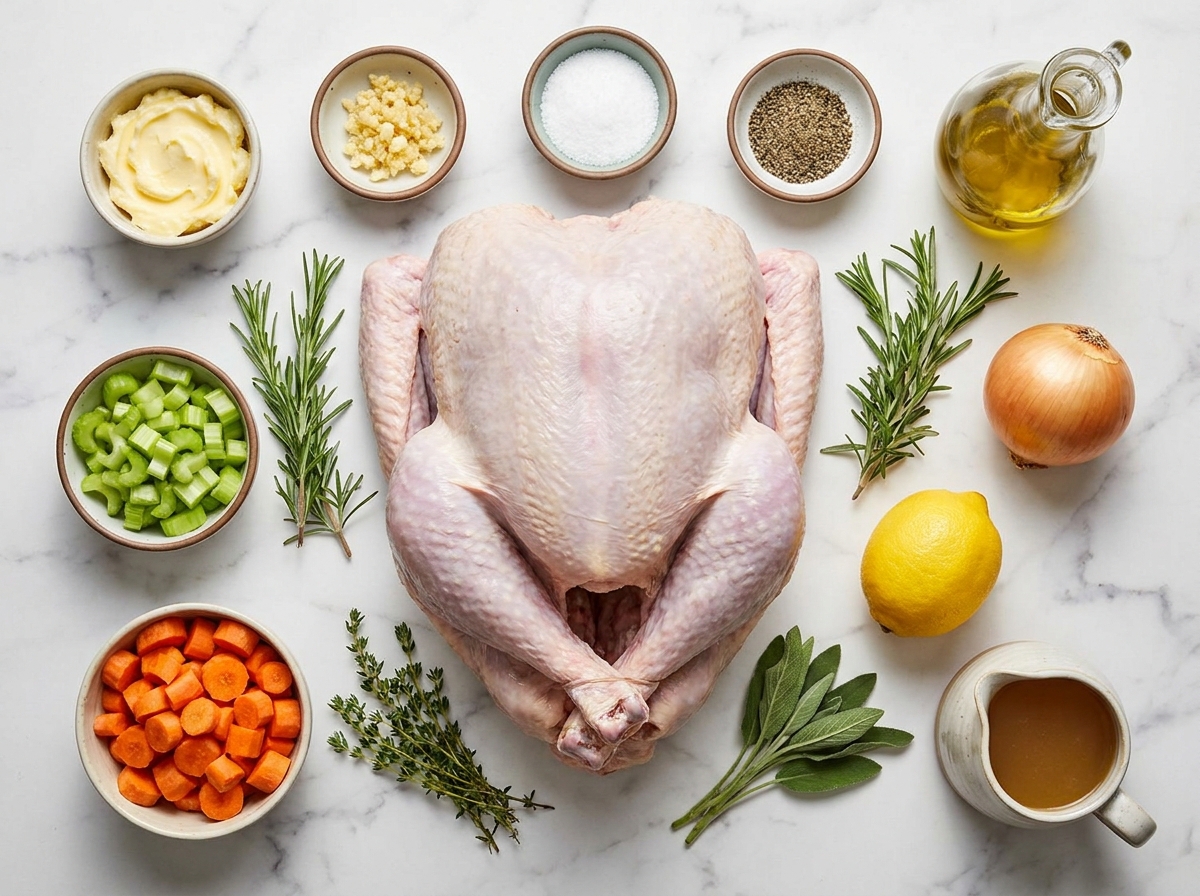
- Whole turkey. A 12- to 14-pound bird feeds a table well and roasts more evenly than a very large turkey.
- Unsalted butter. Carries the herbs under the skin and helps the breast stay moist.
- Kosher salt. Seasons the skin and meat more evenly than fine table salt.
- Black pepper. Adds gentle bite without taking over the holiday flavors.
- Garlic. Softens as it roasts and perfumes the pan drippings.
- Rosemary, thyme, and sage. Classic turkey herbs with woodsy flavor that stands up to roasting.
- Lemon. Brightens the cavity aromatics and keeps the flavor from tasting flat.
- Onion, celery, and carrot. Lift the flavor of the drippings and give the kitchen that holiday roast smell.
- Olive oil. Helps the outside brown evenly once the butter starts to melt.
Perfect Roast Turkey Method
- Dry the turkey. Remove the neck and giblets, then pat the turkey very dry inside and out. Let it sit at room temperature for 45 minutes while the oven heats.
- Make the herb butter. Mash softened butter with garlic, salt, pepper, rosemary, thyme, sage, and lemon zest until it smells fragrant.
- Season under the skin. Gently loosen the breast skin with your fingers. Spread half the butter underneath, then rub the rest over the outside with a little olive oil.
- Fill the cavity lightly. Add onion, lemon, celery, carrot, and a few herb sprigs. Do not pack it tightly because airflow helps the bird cook evenly.
- Roast hot, then lower. Roast at 425°F for 25 minutes, then reduce to 325°F and keep roasting until a thermometer reads 165°F in the breast and thigh.
- Rest before carving. Move the turkey to a board, tent loosely with foil, and rest for 30-45 minutes so the juices settle.
The Browning Move
The first blast of heat is why this turkey gets deep color without spending the whole afternoon at a high temperature. Those first 25 minutes wake up the skin. After that, the lower oven finishes the meat more gently.
If the breast gets dark before the thigh is close, lay a loose piece of foil over just the breast. Do not wrap it tight. Tight foil traps steam and softens the skin you worked to build. For a more classic version, compare the same idea in this Roast Turkey Recipe.
Do Not Wash The Bird
Older recipes sometimes tell you to rinse turkey. Skip it. Water splashes raw poultry juices around the sink, and it does nothing useful for flavor or texture. The CDC holiday turkey guide recommends safe thawing, clean handling, and cooking turkey to 165°F.
Drying is different from washing. Blot the turkey with paper towels until the skin feels tacky, then season it. That small step makes the butter cling and helps the skin roast instead of steam.
Aromatics, Not Stuffing
I fill the cavity with onion, lemon, celery, carrot, and herbs because they scent the turkey without slowing the roast too much. Stuffing is better in a baking dish where it can get crisp edges and cook evenly.
The pan drippings will be savory and herb-scented. Spoon off excess fat, then use them for gravy or drizzle a little over carved slices. If you are building out the table, Greek roast potatoes with lemon and feta are bright enough to cut through the richness.
Resting Saves The Slices
A big turkey needs a long rest. Thirty minutes is the minimum, and 45 minutes is not too much. The bird will stay hot under loose foil while the juices calm down inside the meat.
This is also the best window to finish sides, make gravy, and clear the carving board. If you have leftovers, turn them into easy turkey vegetable soup or crisp little leftover turkey stuffing balls the next day.
Scaling And Timing
For smaller birds, start checking after 2 1/2 hours. For a 16-pound turkey, expect closer to 3 1/2 to 4 hours. The thermometer matters more than the clock because pan depth, oven accuracy, and how cold the bird was at the start all change the timing.
If the turkey finishes early, that is fine. Keep it loosely tented in a warm spot. A rested turkey is easier to carve and usually tastes better than one rushed straight from the oven.
Summary
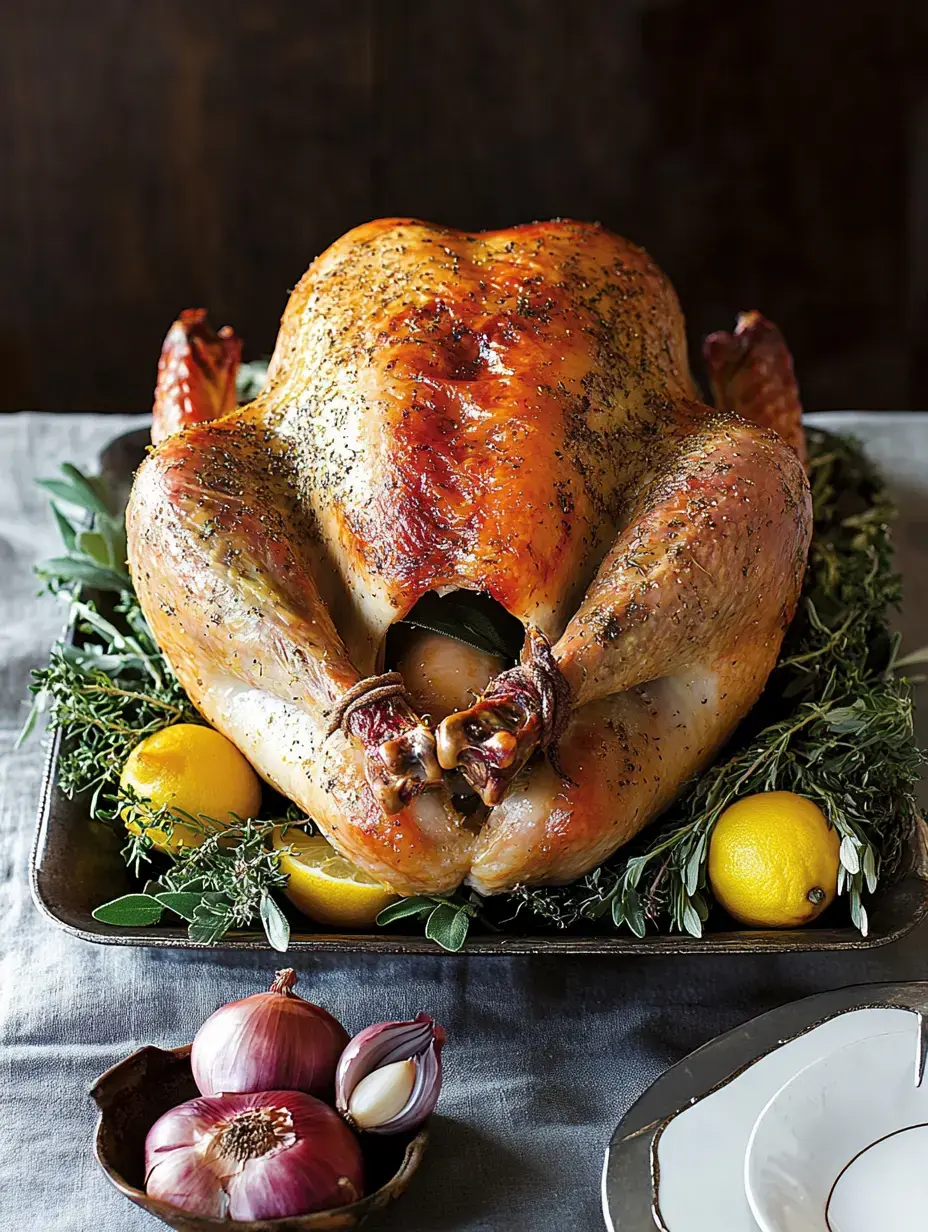
This herb butter roast turkey is built for holidays, Sunday dinners, and any meal where you want a classic centerpiece without guesswork.
FAQs
- How long does a 14-pound turkey take to roast?
A 14-pound unstuffed turkey usually takes about 3 to 3 1/2 hours after the oven is reduced to 325°F. Start checking early because every oven and roasting pan behaves a little differently.
- Do I need to brine this turkey?
No. The herb butter, generous salt, and long rest give good flavor without a brine. If your turkey is already enhanced or pre-salted, reduce the added salt so the meat does not taste harsh.
- Can I use oil instead of butter?
You can rub the outside with olive oil, but butter under the skin gives better flavor and helps protect the breast meat. For dairy-free cooking, use olive oil with the same herbs and garlic.
- Should I stuff the turkey?
I prefer roasting the stuffing in a separate dish. It is easier to cook the turkey evenly, and you can confirm the bird is safe without waiting for stuffing in the cavity to reach temperature.
- How do I keep turkey breast from drying out?
Put some of the butter under the breast skin, roast breast side up, and tent the breast loosely with foil if it browns too quickly. Pull the turkey when the thickest breast area reaches 165°F.
- How should I store leftovers?
Carve leftover turkey from the bone and refrigerate it in shallow containers within 2 hours. Use it within 3 to 4 days, or freeze portions for soups, sandwiches, and casseroles.
