 Pin it
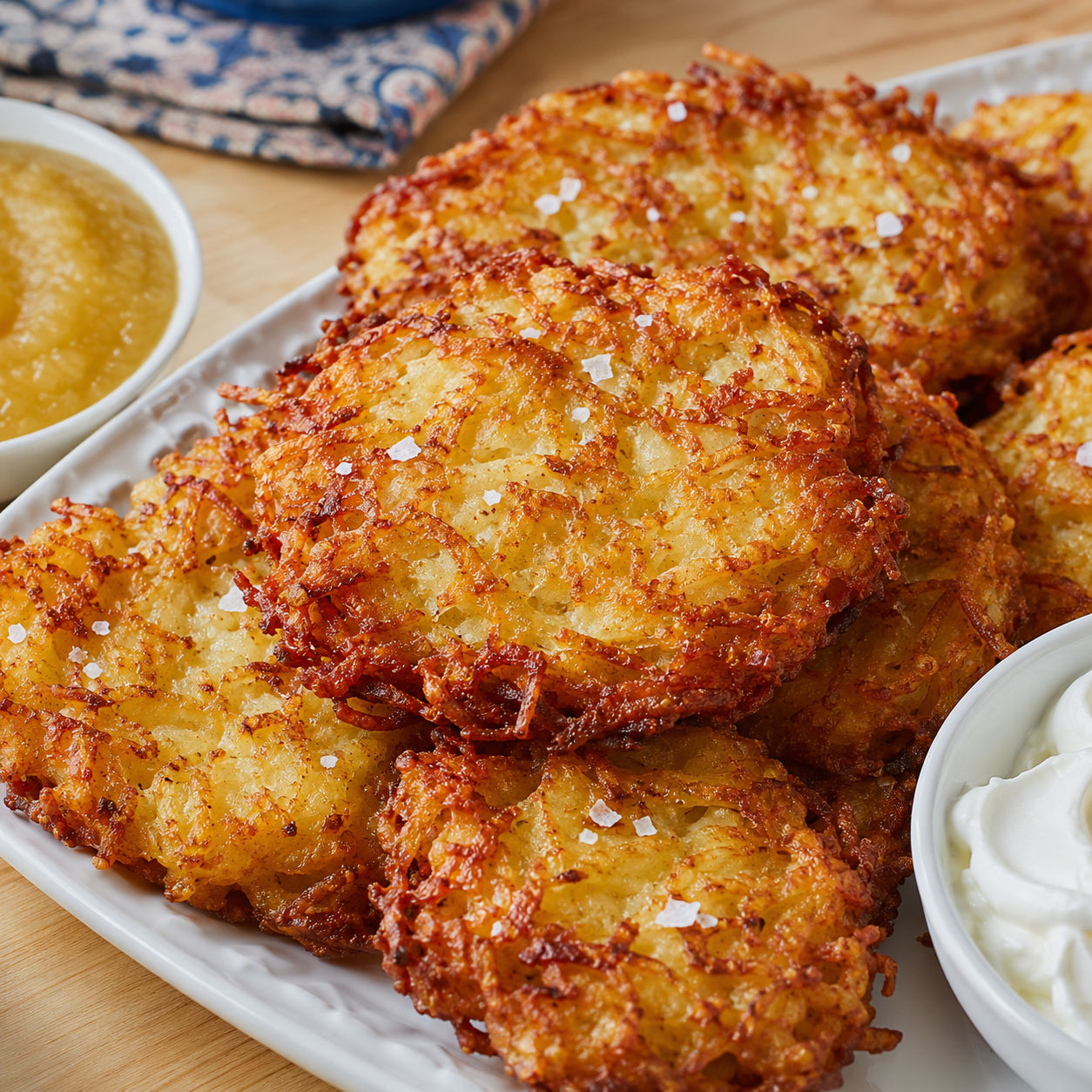
A good latke should crackle at the edges and stay soft in the center. This Traditional Jewish Potato Latkes Recipe for Hanukkah keeps the ingredient list simple, then leans hard on the two steps that matter most, squeezing the potatoes dry and frying in properly hot oil.
I like russet potatoes here because they shred cleanly and brown well. A little onion gives the latkes that familiar savory smell the second they hit the pan.
The Latke Lineup
Latkes do not need much, so each ingredient has to pull its weight. Use firm potatoes, a sharp onion, fresh eggs, and an oil that can handle steady frying heat.
- Russet potatoes. Their starch helps the shreds cling together and gives the latkes crisp, lacy edges.
- Yellow onion. Adds the savory bite and warm aroma people expect from Hanukkah latkes.
- Eggs. Bind the shredded potatoes so the pancakes hold together in the pan.
- Matzo meal. Absorbs extra moisture and keeps the mixture sturdy without making it heavy.
- Potato starch. A small spoonful improves structure and helps the centers stay tender.
- Kosher salt and pepper. Season the potatoes from the inside instead of only salting at the end.
- Neutral frying oil. Vegetable, peanut, grapeseed, or avocado oil all work because they tolerate high heat.
- Applesauce and sour cream. The classic finishes, one sweet and one tangy.
Traditional Jewish Potato Latkes for Hanukkah
- Grate the vegetables. Shred the potatoes on the large holes of a box grater or in a food processor. Grate the onion finely so it melts into the mixture.
- Squeeze them dry. Wrap the potato and onion in a clean towel and twist hard over a bowl. Let the liquid sit, then pour it off and keep the white starch at the bottom.
- Mix the batter. Combine the squeezed potatoes, onion, reserved starch, eggs, matzo meal, potato starch, salt, and pepper. The mixture should look moist but not watery.
- Heat the oil. Pour oil about 1/4 inch deep into a heavy skillet and heat to 350-365°F. A shred of potato should sizzle right away.
- Fry in batches. Drop 1/4-cup portions into the oil, flatten gently, and fry 2-3 minutes per side until deep golden. Do not crowd the pan.
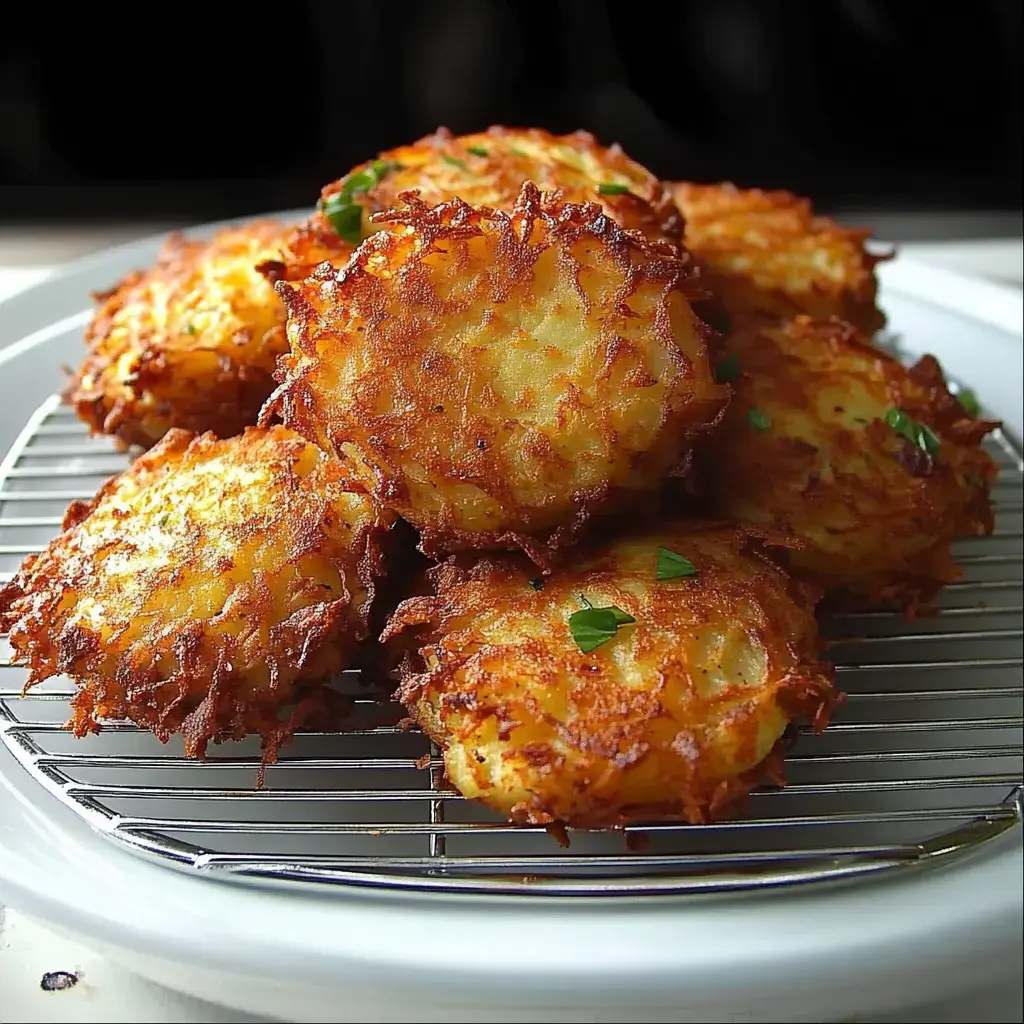
- Drain and serve. Move latkes to a wire rack, sprinkle lightly with salt, and serve hot with applesauce or sour cream.
The Squeeze Matters
The difference between crisp latkes and soggy ones is usually water. Potatoes and onions release more liquid than you expect, and that moisture fights the hot oil. Twist the towel until the shreds feel almost squeaky and your hands are tired. Then let the squeezed liquid sit for a minute. You will see a chalky layer of potato starch settle at the bottom of the bowl. Pour off the brown liquid and scrape that starch back into the mixture.
This is the same potato logic behind Classic Potato Kugel, where starch helps grated potatoes bake into a sliceable dish. For latkes, it helps the pancakes hold together while keeping the texture light.
Oil Temperature Is Everything
Latkes need enough oil to fry, not just brown on a dry surface. Keep it around 350-365°F and adjust the burner as you work. If the oil is too cool, the potatoes soak it up and turn heavy. If it is too hot, the outside darkens before the center softens. A thermometer helps, but your ears help too. The oil should bubble actively around the edges without smoking.
Hanukkah foods fried in oil carry the holiday's symbolism, a tradition explained well by Chabad's Jewish recipe resources. This is why I would rather make fewer well-fried latkes than a big tray of pale ones.
Keep Them Crisp
Paper towels are fine for a quick blot, but do not leave latkes sitting on them. Steam gets trapped underneath and softens the crust. A wire rack is better because air can move around each pancake. If you are frying for a crowd, hold cooked latkes on a rack in a 250°F oven while the next batches cook.
For a party spread, pair these with Classic Potato Latkes if you want another familiar version on the table, or add Crispy Mashed Potato Cheese Bites for a more snack-style potato bite.
Smart Swaps
Matzo meal is traditional in many homes, but breadcrumbs or panko work when that is what you have. For gluten-free latkes, use potato starch in place of the matzo meal and check that every packaged ingredient is certified gluten-free if needed. You can also swap part of the russet potato for sweet potato, but keep at least half russet so the mixture still holds well.
For more latke history and holiday context, My Jewish Learning is a steady reference. The basic method stays flexible, but the best latkes still come back to potatoes, onion, salt, and hot oil.
Make-Ahead Plan
Latkes are best within minutes of frying, but Hanukkah cooking often means feeding people in waves. Fry them earlier in the day, cool completely on a rack, and store uncovered until they stop steaming. Then cover and refrigerate. Reheat at 400°F on a rack until crisp and hot. Skip the microwave unless you only care about warming them, because it softens the crust fast.
You can freeze cooked latkes too. Place them in a single layer until frozen, then pack them in a freezer bag. Reheat from frozen at 400°F for 14-18 minutes.
Summary
These latkes are best served hot, with applesauce for sweetness or sour cream for tang. If you need to cook ahead, reheat them on a rack in a hot oven so the crust comes back.

FAQs
- What potatoes are best for traditional Jewish latkes?
Russet potatoes are my first choice because they are starchy and fry up crisp. Yukon Gold potatoes work too, but the centers come out a little creamier and the edges may be less craggy.
- Can I make potato latkes ahead for Hanukkah?
Yes. Fry them fully, cool them on a rack, and refrigerate for up to 2 days. Reheat on a wire rack set over a baking sheet at 400°F until hot and crisp, usually 8-12 minutes.
- Can I make latkes without matzo meal?
Yes. Use plain breadcrumbs, panko, or potato starch instead. For Passover or gluten-free latkes, potato starch is the cleanest swap and keeps the flavor focused on the potatoes.
- Why are my latkes falling apart?
The mixture may be too wet, the oil may be too cool, or the latkes may be too large. Squeeze the potatoes harder, add another spoonful of matzo meal or potato starch, and fry smaller scoops until the first side sets.
- What should I serve with Hanukkah latkes?
Applesauce and sour cream are the classic pairings. For a larger holiday table, serve them with brisket, roast chicken, a green salad, or other potato sides like kugel.
- Can I bake latkes instead of frying?
You can bake them, but they will not taste quite like Hanukkah latkes because the oil is part of the tradition and the texture. For a lighter version, brush both sides with oil and bake on a preheated sheet pan at 425°F, flipping once.
