 Pin it
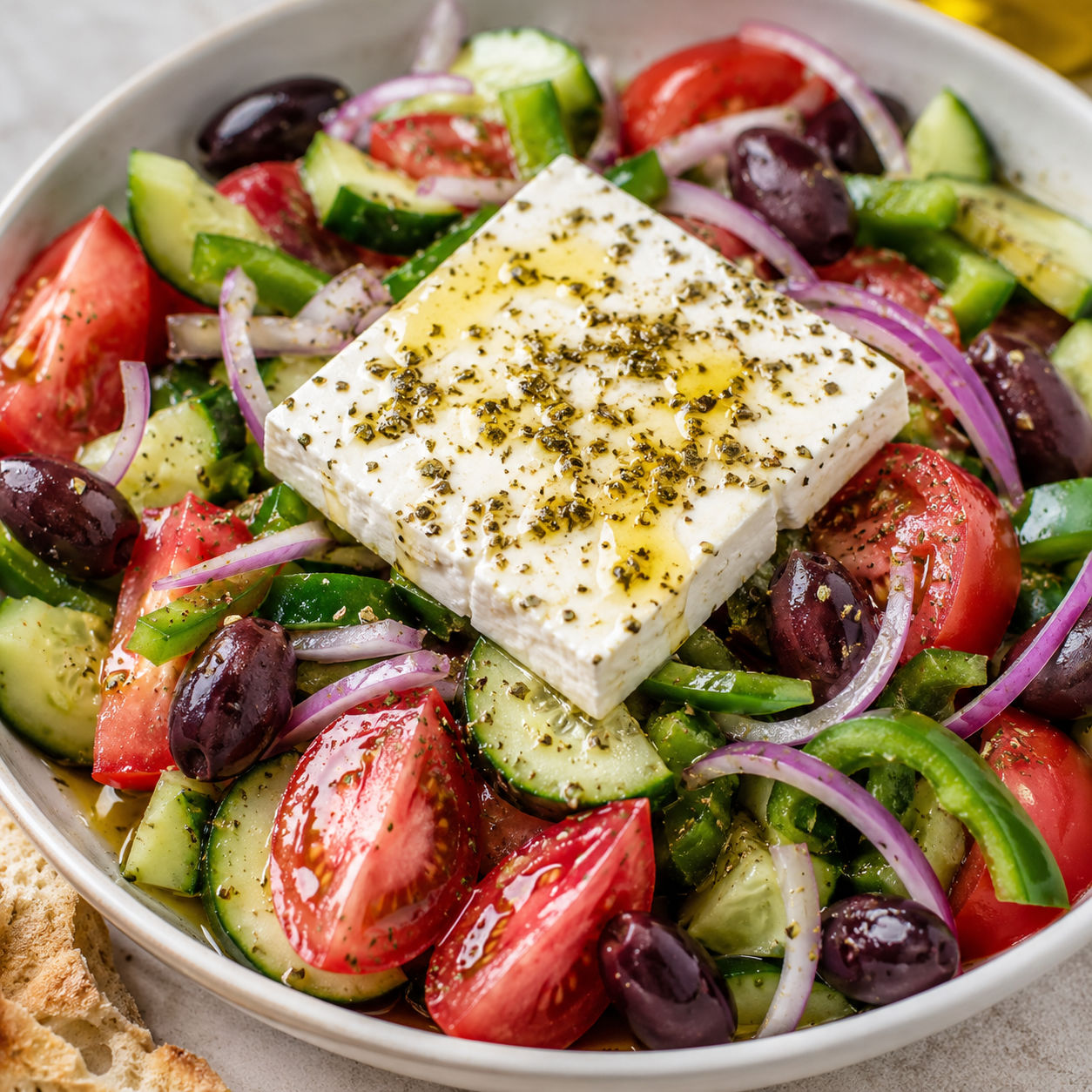
Classic Greek Salad is at its best when it looks a little rustic. Big pieces of tomato, cool cucumber, a few sharp onion slices, salty olives, and a slab of feta on top make the bowl feel generous without needing much work.
I make it when tomatoes smell sweet before I even cut them. That is the real test here. The dressing is not a bottled vinaigrette. It is the tomato juice, olive oil, oregano, and salt collecting at the bottom of the bowl.
The Village Salad Lineup
This salad depends on a short list, so the produce matters. Choose tomatoes that feel heavy for their size, a firm cucumber, briny olives, and feta packed in brine rather than dry crumbles.
- Ripe tomatoes. They provide the juice that becomes the base of the dressing.
- Cucumber. Adds cool crunch and keeps the salad refreshing.
- Red onion. Gives a sharp bite that wakes up the sweet tomatoes.
- Green bell pepper. Brings grassy crunch and a classic taverna flavor.
- Kalamata olives. Add salt, depth, and a little fruity bitterness.
- Feta cheese. A block on top stays creamy and lets each person break off what they want.
- Extra virgin olive oil. Turns tomato juice and oregano into the simplest dressing.
- Dried oregano. Gives the salad its familiar Greek aroma.
- Red wine vinegar. Optional, but helpful if the tomatoes need more brightness.
Build It Like Horiatiki
- Cut the vegetables chunky. Slice tomatoes into wedges or large bite-size pieces. Cut the cucumber into half-moons and slice the pepper and onion thinly.
- Season the tomatoes first. Add the tomatoes to a wide bowl with a pinch of salt. Let them sit for a few minutes so their juices start to collect.
- Add the crisp vegetables. Scatter in the cucumber, onion, green pepper, and olives. Toss gently with your hands or a large spoon so the pieces stay intact.
- Finish the dressing in the bowl. Drizzle with olive oil and a small splash of red wine vinegar if using. Sprinkle with oregano and black pepper.
- Top with feta. Lay the feta block over the salad, add one last drizzle of olive oil, and dust the cheese with oregano before serving.
Classic Greek Salad Cues
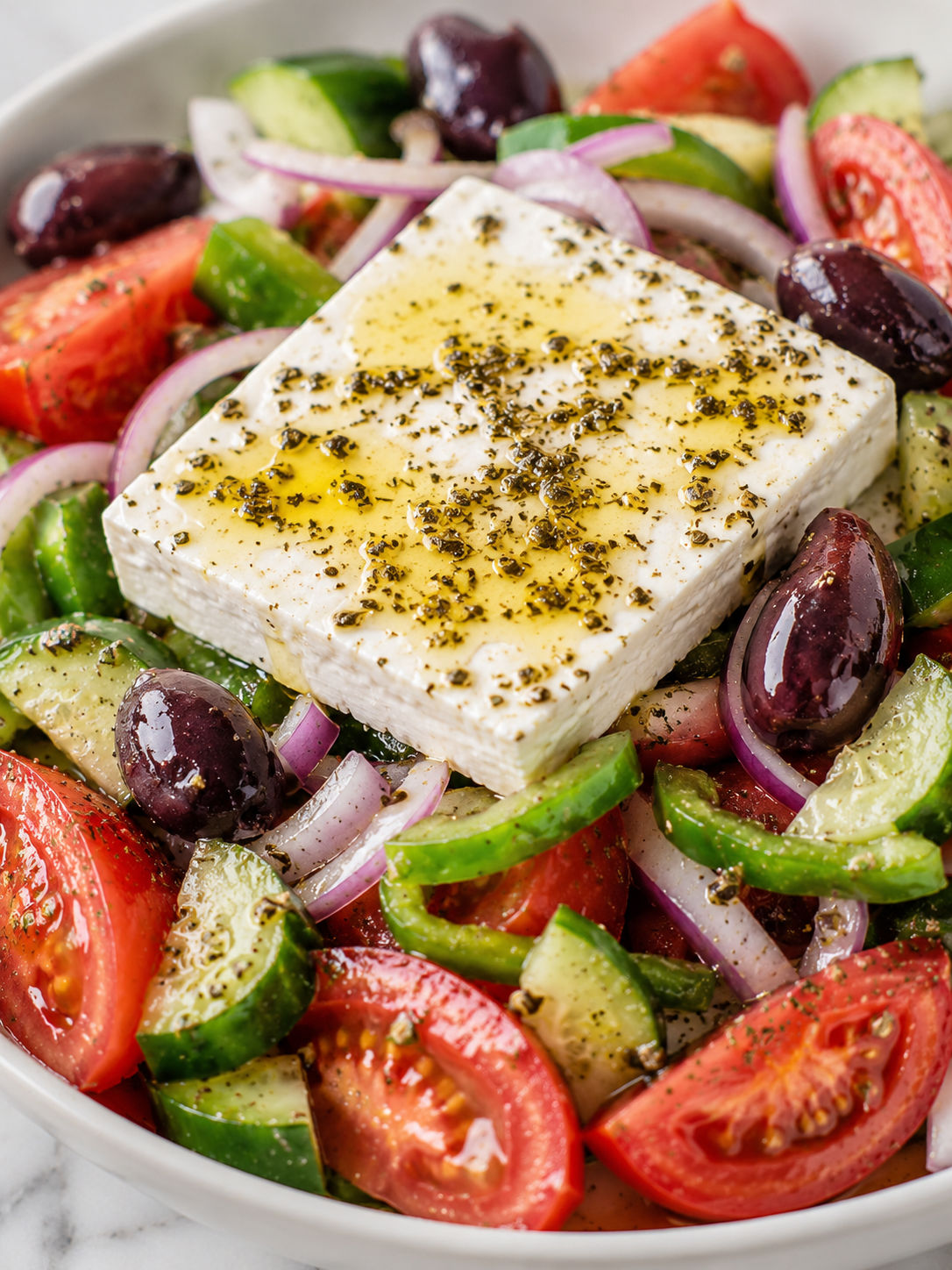
A good Classic Greek Salad should look loose and juicy, not finely chopped and tidy. The tomatoes are the main event, so cut them large enough that they keep their shape. The cucumber should crunch. The onion should be present but not take over.
Traditional versions are usually served with the feta as a slab on top. That keeps the cheese creamy and lets it season the vegetables as you break it apart. Real Greek Recipes describes the same simple horiatiki style with tomatoes, cucumber, onion, green pepper, olives, olive oil, oregano, and feta. That spare lineup is why every ingredient has to pull its weight.
How To Tame The Onion
Red onion gives Greek salad its clean bite, but too much can make every forkful taste sharp. Slice it thinly from root to tip so the pieces bend through the salad instead of landing in harsh chunks. If your onion smells very strong, soak the slices in cold water for 10 minutes, then drain and pat dry.
Another easy fix is salting the tomato first and adding onion after a short rest. The tomato juice softens the onion just enough. If you like onion but want a gentler flavor, use a smaller amount and scatter it near the top rather than mixing it hard through the bowl. For another cool cucumber and feta bowl with a softer flavor, try this Cucumber Feta Salad.
Feta, Oil, And Oregano
Feta in brine is worth buying here. It breaks into creamy pieces at the table and tastes cleaner than the dry crumbled tubs. Pat the block lightly if it is dripping, then place it on top of the vegetables. A little olive oil over the cheese helps the oregano bloom and cling.
Use dried oregano, not a pile of fresh leaves. Dried Greek oregano has a stronger perfume, and it is one of the flavors that makes horiatiki taste familiar. Greek Boston notes the traditional seasoning is simple, with olive oil, salt, and oregano. A splash of red wine vinegar is fine if you like more tang, but the salad should not taste like bottled dressing.
Make It A Meal
Classic Greek Salad can stand alone for lunch with warm pita or crusty bread. The bread matters because the bottom of the bowl fills with tomato juice, olive oil, and tiny bits of feta. That is the part everyone reaches for at the end.
For dinner, serve it beside grilled chicken, fish, lamb chops, or roasted vegetables. It is especially good with Greek Chicken Gyros with Tzatziki Sauce because the cool tomatoes and feta cut through the warm spiced chicken. If you want a side that keeps the same lemony Greek feeling, add Greek Roast Potatoes Lemon Feta. For a potluck version with more staying power, Greek Pasta Salad is the better choice.
Storage Without Soggy Vegetables
This salad tastes best within an hour of making it. That short rest lets the salt draw out tomato juice and lets the oregano soften in the oil. After a full day, the cucumber loses its snap and the feta starts to crumble through everything.
If you need to prep ahead, chop the cucumber, pepper, and onion and refrigerate them in a covered container. Keep tomatoes whole until the day you serve. Add the oil, vinegar, oregano, olives, and feta at the end. Leftovers are still good the next day with grilled chicken or tucked into a pita, but they will be juicier and softer. Use a slotted spoon if you do not want too much liquid.
FAQs
- Does Classic Greek Salad have lettuce?
Traditional horiatiki usually does not include lettuce. It is built from chunky tomatoes, cucumber, onion, green pepper, olives, feta, olive oil, and oregano. Lettuce can be added for a restaurant-style version, but it changes the texture and waters down the tomato juices.
- Can I make Greek salad ahead of time?
You can chop the cucumber, pepper, and onion a few hours ahead. Keep the tomatoes, salt, olive oil, and feta separate until close to serving. Once salted, the tomatoes release juice quickly, which is delicious but best eaten the same day.
- What kind of feta is best?
Use a block of feta in brine if you can. It stays creamy and salty in a way pre-crumbled feta usually does not. Sheep's milk feta has a richer flavor, while a sheep and goat blend tastes a little tangier.
- Can I use cherry tomatoes?
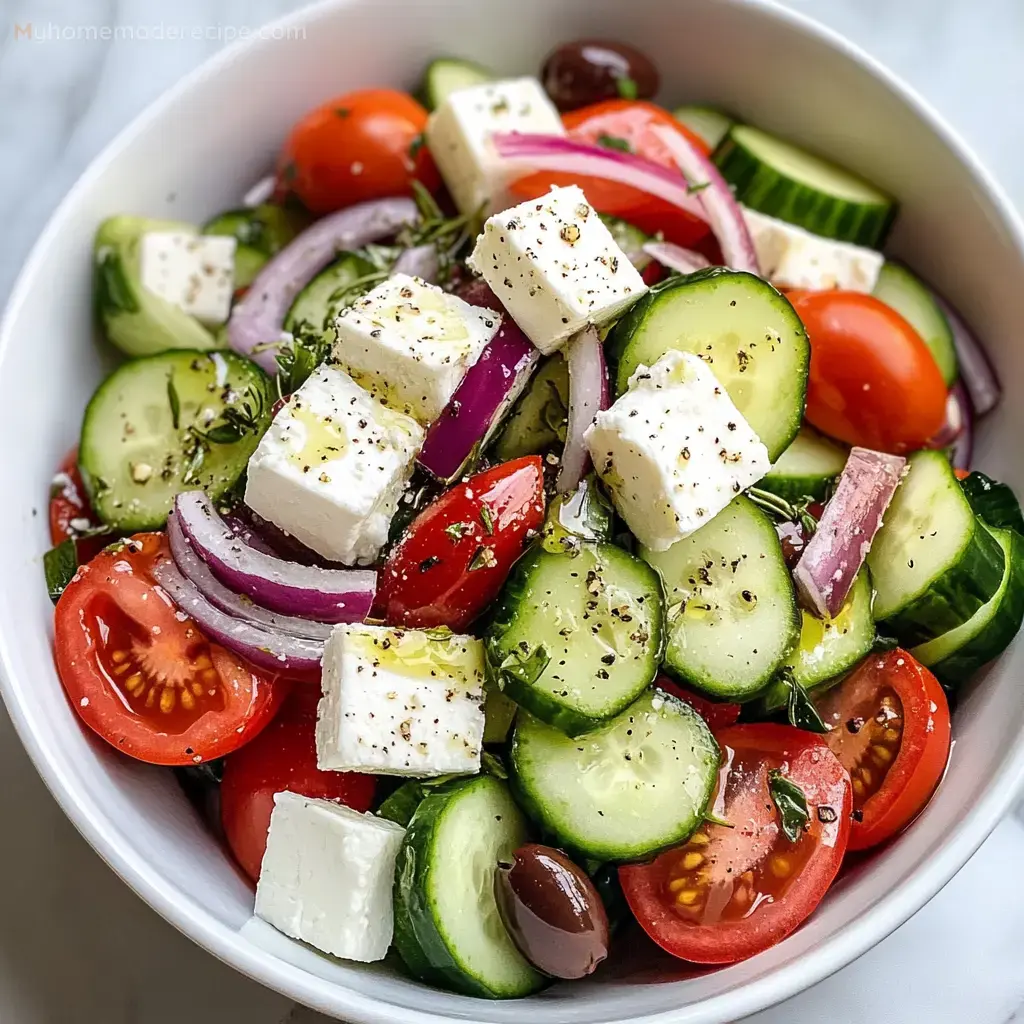
Yes. Cherry tomatoes are a good choice when large tomatoes are out of season. Halve them so their juice can mix with the olive oil and oregano. If they taste very sweet, add a small splash of red wine vinegar for balance.
- What can I serve with Classic Greek Salad?
Serve it with grilled chicken, lamb, fish, pita, or crusty bread for soaking up the juices. It also works next to lemony potatoes, gyros, or a simple hummus plate. For a fuller Greek-inspired meal, pair it with a warm main dish and keep the salad cool.
- How do I keep the salad from getting watery?
Use ripe but firm tomatoes and scoop out only very seedy, watery centers if needed. Salt lightly at first, then taste after the salad rests. Serve it in a wide bowl so the vegetables sit in the juices instead of collapsing under them.
