 Pin it
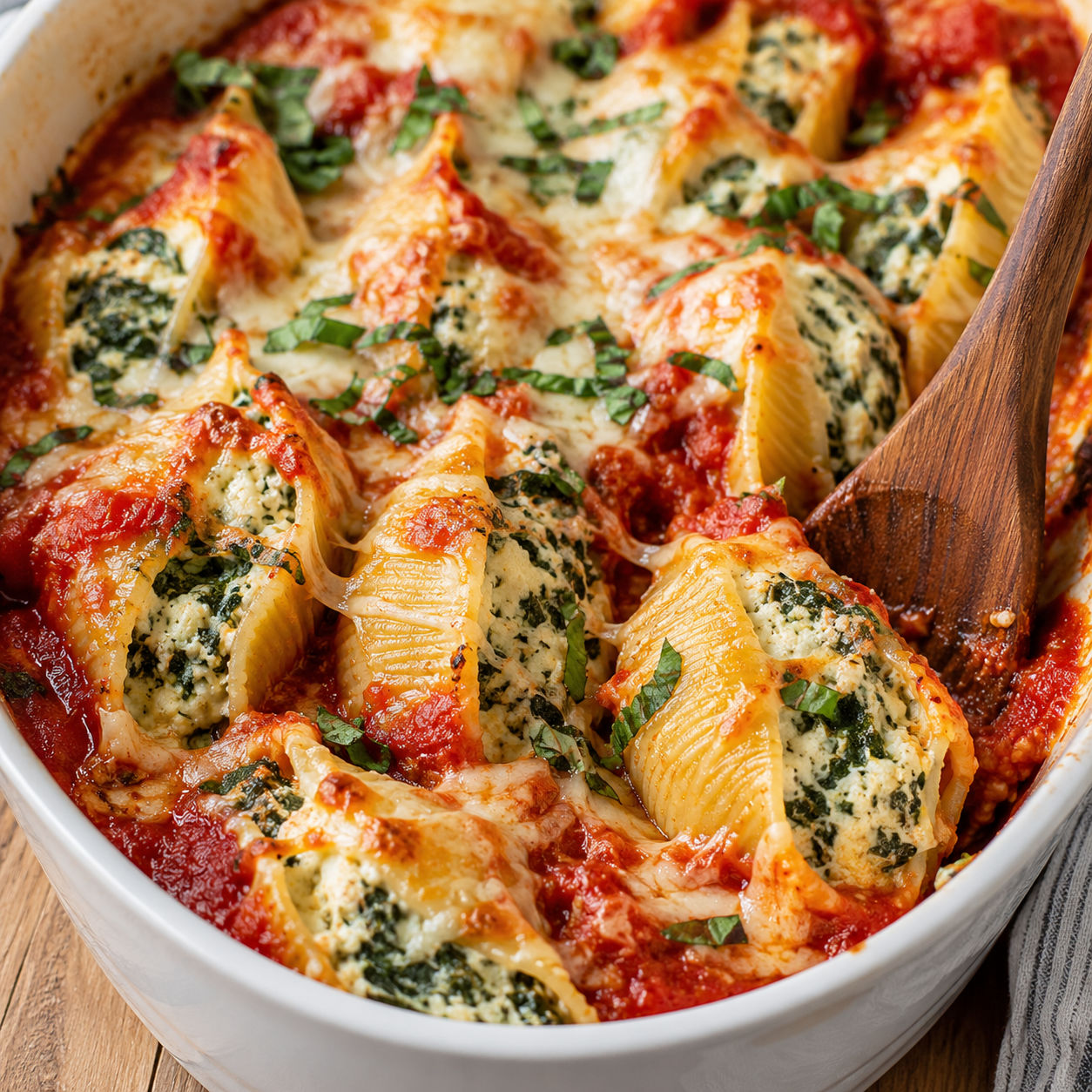
This is the kind of dinner that makes the whole kitchen smell like a good Italian restaurant. Jumbo pasta shells get filled with a creamy spinach and ricotta mixture, then baked under a blanket of marinara and mozzarella until everything bubbles and browns. It feeds a crowd without breaking the budget, and the leftovers reheat surprisingly well.
I like to make this on Sundays when I have a little extra time to stuff the shells properly, but it is straightforward enough for a weeknight if you prep the filling while the pasta water heats up. The key is getting the spinach dry so the filling stays rich and thick instead of watery.
What fills the shells
The filling is built on a few simple dairy ingredients that need to be good quality. Whole milk ricotta makes a difference here. Low-fat versions can be grainy and dry once they hit the oven. Freshly grated parmesan melts into the ricotta far better than the pre-shredded kind.
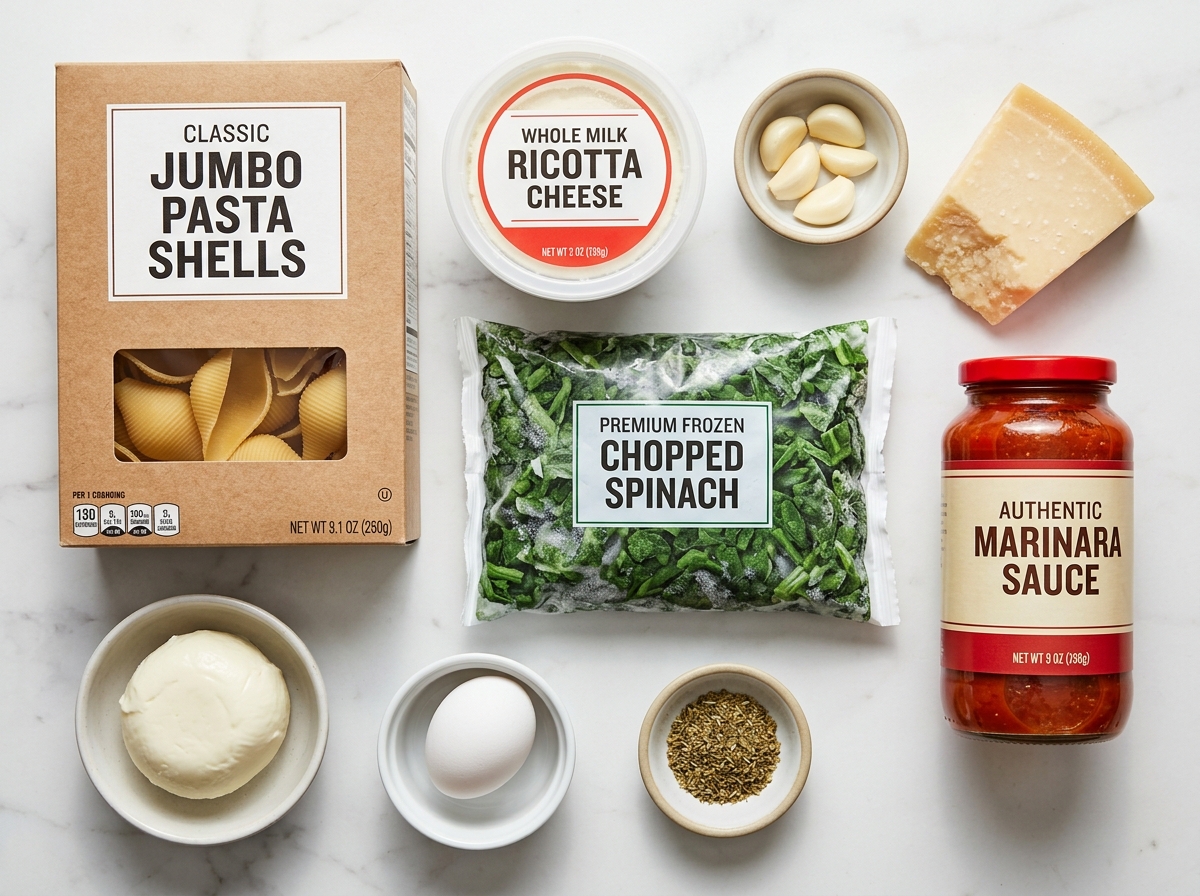
- Jumbo pasta shells. Also called conchiglioni, these large pasta tubes hold the filling and soften into tender pockets in the oven.
- Whole milk ricotta. The creamy base of the filling. It should be thick and spreadable, not wet or runny.
- Frozen chopped spinach. Thaw it completely and squeeze out every drop of water. Wet spinach turns the filling grey and loose.
- Parmesan cheese. Adds a salty, savory backbone. Grate it fresh from a block for the best melt.
- Egg. Binds the filling so it stays put inside the shells instead of oozing into the sauce.
- Garlic and Italian seasoning. Aromatics that keep the filling from tasting flat.
- Marinara sauce. Use a jarred sauce you enjoy straight from the jar, or make your own if you have time.
- Shredded mozzarella. The melty cap on top that makes the dish look as good as it tastes.
How to build the bake
- Boil the shells. Cook the jumbo shells in well-salted water for about 9 minutes, just until they bend easily but still hold their shape. Drain and rinse briefly so you can handle them.
- Dry the spinach. If using frozen, thaw it and squeeze handfuls over the sink until no more water drips out. For fresh spinach, wilt it in a hot pan, then drain and chop.
- Mix the filling. Stir together the ricotta, parmesan, egg, minced garlic, Italian seasoning, salt, and pepper. Fold in the dried spinach until it is evenly distributed.
- Stuff the shells. Spoon or pipe the filling into each cooked shell. Fill them generously but not so full that they split open.
- Assemble and sauce. Spread a cup of marinara across the bottom of a 9 by 13 inch baking dish. Nestle the stuffed shells in seam-side up, then pour the remaining sauce over and around them.
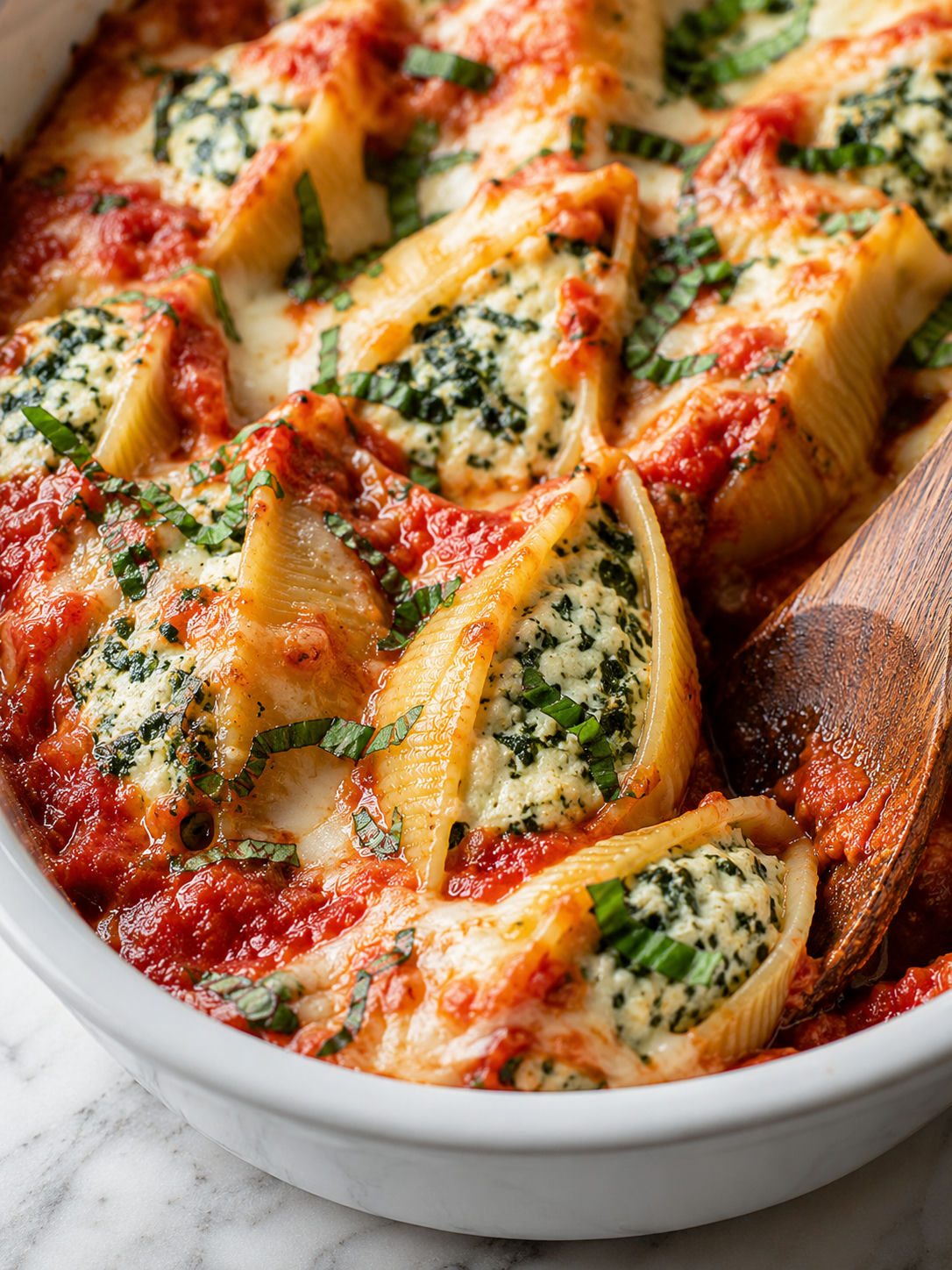
- Top and bake. Cover the dish with foil and bake at 375°F for 25 minutes. Remove the foil, scatter mozzarella on top, and bake uncovered for another 10 to 15 minutes until the cheese is spotty and golden.
Squeeze the spinach dry
This is the step that separates a rich, creamy filling from a watery one. After thawing frozen spinach, grab fistfuls and squeeze hard over the sink or through a clean kitchen towel. You will be surprised how much liquid comes out. If you skip this, the filling loosens in the oven and the shells swim in thin sauce instead of baking into dense, cheesy pockets. The same principle applies to fresh spinach. Wilt it first, then press out the moisture before you chop it fine.
Cheese and sauce swaps
If ricotta is not your favorite, cottage cheese blended smooth works in its place. Some cooks even mix the two for a lighter filling that still holds together. For the sauce, a good jarred marinara saves time, but a homemade tomato sauce with garlic and basil is worth the extra twenty minutes. You can also layer in a few spoonfuls of pesto between the shells for a brighter flavor. If you want a meaty version, the beef filling from creamy ricotta beef stuffed shells is a great template. For another vegetarian spin, spinach cheese stuffed portobello uses the same flavors in a different format.
Make ahead and freeze
You can assemble the entire dish up to a day ahead and keep it covered in the refrigerator. Add an extra 10 minutes to the covered baking time since it will be cold going in. To freeze, assemble the unbaked shells in a foil pan, wrap tightly in plastic and foil, and freeze for up to two months. Thaw overnight in the fridge before baking, or bake straight from frozen at 350°F for about an hour covered, then add the mozzarella and finish uncovered. The U.S. Department of Agriculture offers safe guidelines for cooking with eggs at FDA Safe Food Handling.
What to serve on the side
A simple green salad with a sharp vinaigrette balances the richness of the cheese. Garlic bread or crusty ciabatta is almost required for scooping up the extra marinara. For a full Italian-inspired spread, start with cheese tortellini with sausage and spinach as a hearty first course, or keep it light with roasted vegetables. A glass of medium-bodied red wine, like Chianti or Sangiovese, cuts through the dairy and tomato beautifully.
FAQs
- Can I use fresh spinach instead of frozen?
Yes. Use about 10 ounces of fresh baby spinach. Saute it in a hot pan with a little olive oil until fully wilted, then drain and squeeze out the moisture just like you would with frozen. Chop it roughly before folding into the ricotta.
- Can I make this ahead of time?
Absolutely. Assemble the stuffed shells in the baking dish, cover tightly, and refrigerate for up to 24 hours. Bake straight from the fridge, adding about 10 extra minutes to the covered baking time.
- Why is my filling runny?
Excess moisture from the spinach is almost always the culprit. Thaw frozen spinach completely and squeeze it until almost dry. Also check that your ricotta is thick. If it looks watery, drain it through cheesecloth for 15 minutes before mixing.
- Can I add meat to the filling?
Yes. Browned Italian sausage or ground beef mixed into the ricotta makes a heartier version. Cook the meat fully, drain the fat, and let it cool before folding it into the cheese mixture so it does not scramble the egg.
- How do I store and reheat leftovers?
Refrigerate covered leftovers for up to 4 days. Reheat in a 350°F oven for 15 minutes to restore the texture. The microwave works for single portions but softens the pasta more.
- What is the best mozzarella to use?
Low-moisture shredded mozzarella melts evenly and browns nicely. Fresh mozzarella adds great flavor but releases more water, so pat it dry and tear it into small pieces if you choose to use it.
