Pin it
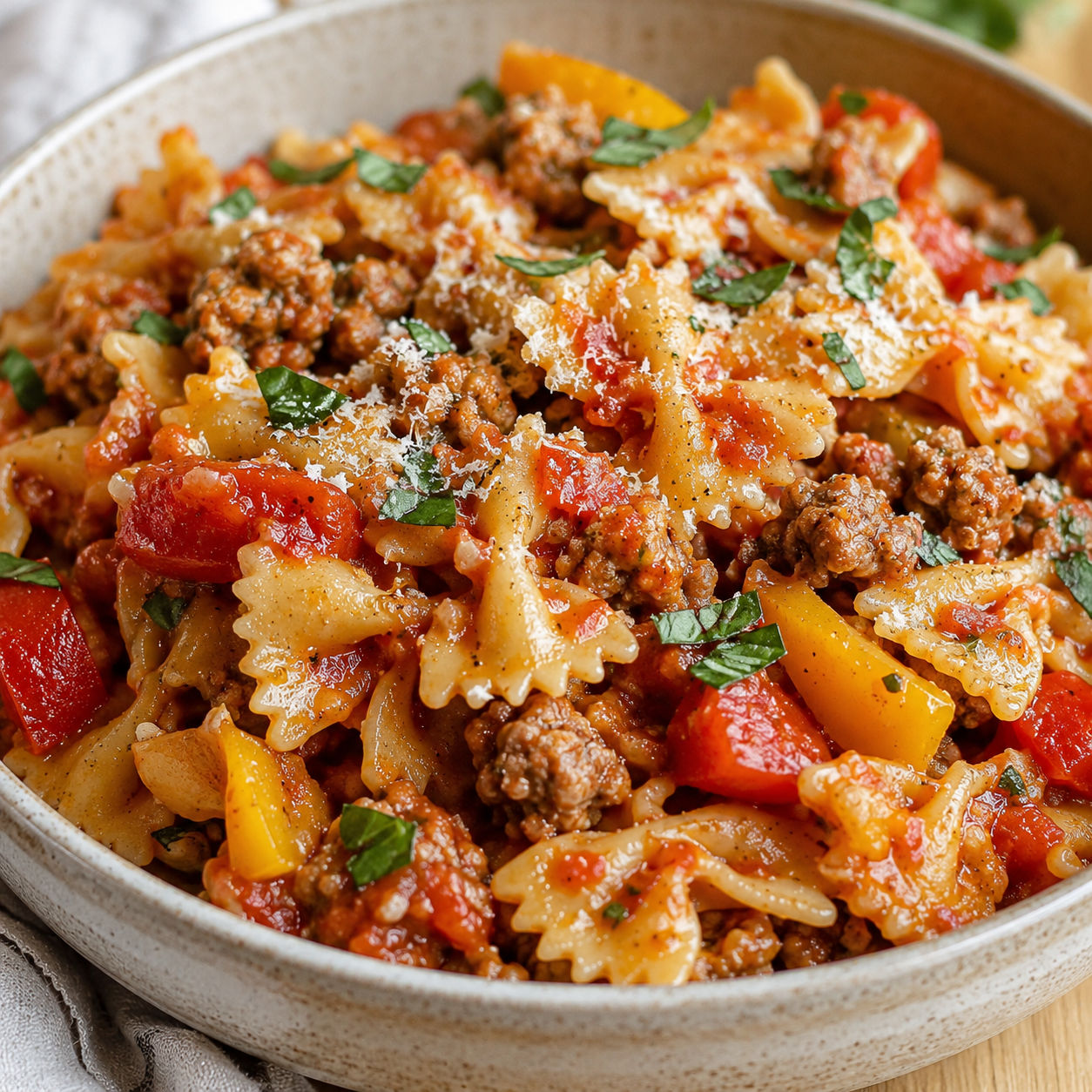
Savor Italian Sausage & Bow Tie Pasta is the kind of dinner that smells good before the pasta even hits the skillet. The sausage browns in its own spices, the peppers soften into the sauce, and the farfalle catches little pockets of tomato and Parmesan.
I like this one for nights when you want something generous without a long simmer. It has the comfort of a baked pasta, but it stays lighter and faster because everything finishes on the stovetop.
Savor Italian Sausage Bow Ties
The ingredient list is short, so the sausage matters most. Choose fresh Italian sausage with visible herbs and enough fat to brown well in the skillet.

- Bow tie pasta. Farfalle has folds and ridges that catch the sausage crumbles, diced peppers, and tomato sauce.
- Italian sausage. Mild or hot sausage seasons the whole pan with fennel, garlic, and pepper as it browns.
- Olive oil. A small amount helps start the browning and keeps the first bits from sticking too hard.
- Onion. It adds sweetness and gives the tomato sauce a softer base.
- Garlic. Added after the vegetables so it turns fragrant without scorching.
- Red and yellow bell peppers. They bring color, sweetness, and a tender bite that balances the sausage.
- Diced tomatoes. The juice becomes the body of the sauce and keeps the pasta from feeling heavy.
- Chicken broth. It loosens the tomatoes and pulls browned sausage flavor from the pan.
- Basil and oregano. Dried herbs give the sauce a familiar Italian-American flavor.
- Parmesan cheese. A salty finish that melts slightly into the hot pasta.
Build The Skillet Sauce
- Boil the pasta. Cook the bow ties in salted water until just al dente. Save a little pasta water before draining.
- Brown the sausage. Heat the oil in a wide skillet and cook the sausage in crumbles until browned and cooked through. Move it to a plate.
- Soften the vegetables. Add the onion and bell peppers to the same skillet. Cook until the edges soften and the onion turns glossy.
- Add the garlic. Stir in the garlic for about 30 seconds. Stop as soon as it smells sweet and savory.
- Simmer the sauce. Add tomatoes, broth, basil, oregano, salt, and pepper. Return the sausage and simmer until slightly thickened.
- Toss the pasta. Add the drained bow ties and toss until coated. Use a splash of pasta water if the sauce needs help clinging.
- Finish and serve. Spoon into bowls and add Parmesan, fresh basil, and black pepper while the pasta is hot.
Browned Sausage Carries Everything
The best flavor in this skillet starts before the tomatoes go in. Let the sausage sit against the hot pan long enough to brown before you break it too small. Those browned bits make the sauce taste deeper without adding extra ingredients. A wide skillet helps because the meat sears instead of steaming.
If your sausage releases a lot of fat, spoon off a little but leave enough to coat the vegetables. That seasoned fat is what makes the onion and peppers taste like they belong in the sauce. For a richer sausage pasta with a different finish, save garlic butter sausage pasta for another night.
Why Bow Ties Work
Bow tie pasta is more than a fun shape here. The pinched center stays pleasantly chewy while the wider edges turn tender, so every bite has texture. The folds also catch the sausage crumbles better than smooth spaghetti. Cook it just to al dente because it will spend another minute or two in the sauce.
Do not rinse the pasta after draining. The light starch on the surface helps the tomatoes and Parmesan cling. If you like this sausage and pasta combination, the site also has a creamier cheesy sausage pasta skillet and a baked cheesy sausage pasta bake.
Small Swaps That Fit
Mild sausage keeps the dish family-friendly. Hot sausage gives it a sharper edge without changing the method. You can use turkey Italian sausage, but add an extra teaspoon of olive oil because it is usually leaner. Green bell pepper works too, though it tastes less sweet than red or yellow.
For a creamy version, stir in a splash of heavy cream near the end. For more vegetables, add sliced mushrooms with the peppers or fold in baby spinach after the pasta goes in. The spinach only needs a minute to wilt. If you like sausage with peppers as the main idea, try sausage pepper pasta next.
Food Safety And Doneness
Crumbled sausage is easy to judge by color, but temperature is the more reliable check. Pork sausage should reach 160F. The FoodSafety.gov temperature chart is a good reference if you are unsure.
Once the sausage is cooked, the rest of the recipe is about texture. Simmer the tomatoes long enough for the sauce to thicken slightly, but do not boil it hard after the pasta goes in. Hard boiling can split the pasta edges and make the skillet look dry.
Leftovers Stay Better Saucy
This pasta keeps well because the sauce is tomato-based and not too delicate. Store it in a shallow airtight container once it cools, then refrigerate it for up to 3-4 days. The USDA leftover safety guide has helpful timing if you are cooking ahead for the week.
Reheat leftovers in a skillet over medium-low heat with a splash of broth or water. Stir gently until the sauce loosens. The microwave works for lunch portions, but cover the bowl and pause once to stir so the sausage heats evenly.


FAQs
- Can I use hot Italian sausage instead of mild?
Yes. Hot Italian sausage works very well here because the tomatoes and sweet peppers soften the heat. If you are cooking for kids, use mild sausage and add red pepper flakes only to the adult portions.
- What can I substitute for bow tie pasta?
Penne, rotini, or medium shells are good swaps because they hold the chunky sausage and pepper sauce. Long pasta works too, but the dish will feel less hearty and skillet-style.
- Can I make this pasta ahead?
You can make the sausage and tomato mixture up to two days ahead. Cook the pasta fresh if possible, then warm the sauce in a skillet and toss everything together with a splash of broth.
- How do I know the sausage is cooked through?
Crumbled Italian sausage should be browned with no pink spots left. For food safety, pork sausage should reach 160F according to federal guidance.
- Can I make it creamy?
Yes. Stir in 1/3 cup heavy cream after the tomato sauce has simmered, then keep the heat low. Add Parmesan at the end so the sauce stays smooth instead of grainy.
- How should I store leftovers?
Cool leftovers and refrigerate them in an airtight container for up to 3-4 days. Reheat in a skillet with a small splash of broth or water so the pasta loosens without drying out.