 Pin it
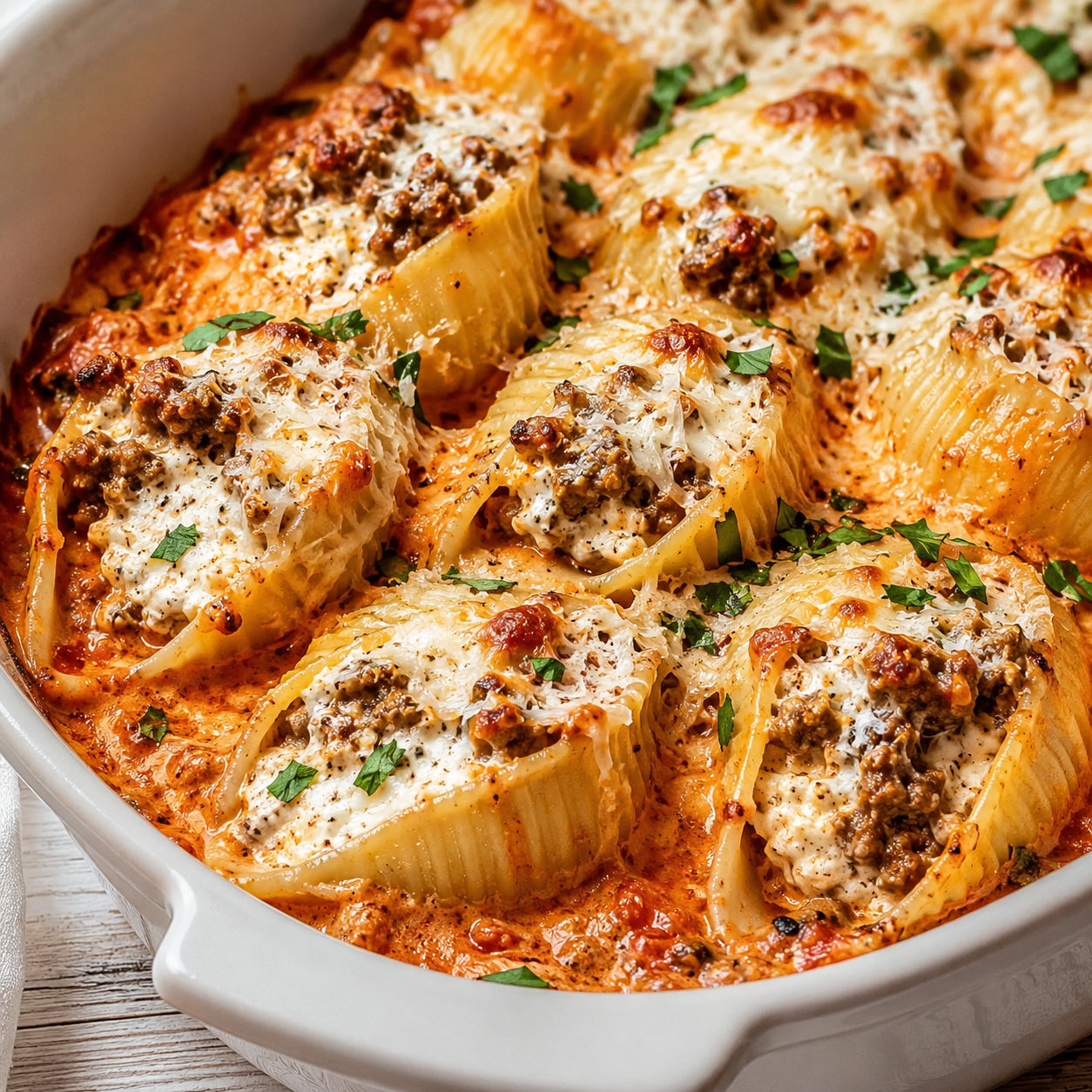
Creamy Ricotta Beef Stuffed Shells Pasta is the kind of baked dinner that makes the kitchen smell like garlic, tomato sauce, and browned cheese before anyone even asks what is for supper. The filling is hearty from ground beef but still soft and creamy from ricotta.
I like this version because the sauce is not plain marinara. A splash of cream rounds out the tomato and keeps the edges of the shells tender while the top gets bubbly. It is sturdy enough for a family meal and still nice enough to take to a friend.
Creamy Ricotta Beef Stuffed Shells Pasta
The best filling starts with whole-milk ricotta, freshly shredded mozzarella, and beef that has been browned with onion and garlic. Choose jumbo shells with a few extras in the box because some will split while boiling.
- Jumbo pasta shells. They hold the filling and bake into tender pockets under the sauce.
- Ground beef. Adds savory depth and makes the shells feel like a full meal.
- Whole-milk ricotta. Gives the filling its creamy body and mild tang.
- Mozzarella. Melts through the filling and bubbles over the top.
- Parmesan. Adds salty sharpness so the filling does not taste flat.
- Egg. Helps the ricotta mixture set softly instead of running out.
- Marinara and cream. Make a smooth tomato sauce that keeps the baked shells moist.
- Parsley and basil. Fresh herbs brighten the cheese and beef.
Stuff and bake the shells
- Cook the shells. Boil them in salted water until just shy of al dente, then drain and cool them enough to handle.
- Brown the beef. Cook the beef with onion and garlic until no pink remains, then drain off extra fat so the filling stays creamy.
- Mix the filling. Stir ricotta, egg, mozzarella, Parmesan, herbs, seasoning, and cooled beef together until evenly combined.
- Start the sauce layer. Spread tomato cream sauce across the bottom of the baking dish so the shells do not stick.
- Fill the shells. Spoon or pipe the ricotta beef mixture into each shell and set them open side up in the dish.
- Top and bake. Spoon on more sauce, scatter with mozzarella, cover with foil, and bake until hot and bubbling.
- Brown and rest. Uncover for the last few minutes, then let the dish stand before serving so the filling settles.
Keep Shells From Tearing
Shells tear when they are cooked too soft or dumped into the colander in one heavy pour. Cook them a little underdone, then lift and separate any that cling together. A quick rinse with cool water stops the cooking and makes them easier to hold. I also spread them on a lightly oiled sheet pan while I mix the filling. That small step saves the shells from sticking into one big clump. If you have a few broken ones, tuck them along the edge of the pan under extra sauce. They still taste good and nobody complains.
Creamy Sauce Without Sogginess
The sauce should be loose enough to spoon but not thin like soup. I stir cream into marinara, then keep some sauce under the shells and some over the top. The bottom layer protects the pasta from drying out. The top layer melts into the cheese and gives you those browned, saucy edges. If you like saucy beef pasta dinners, the same cozy flavor shows up in One Pot Cheesy Beef Shells and Creamy Garlic Beef Pasta.
Swaps I Actually Use
Italian sausage can replace half the beef if you want a bolder filling. Ground turkey works too, but add an extra pinch of Italian seasoning and a spoonful of olive oil so it does not taste dry. Spinach is an easy add-in. Squeeze it very dry and fold it into the ricotta with the beef. For a meatless pan, use the cheese filling style from Cheesy Spinach Stuffed Shells and keep the same tomato cream sauce. The safe internal temperature for ground beef is 160°F according to FoodSafety.gov.
Make Ahead and Freezer Notes
This pasta bake is friendly to prep. Assemble it in the morning, cover it tightly, and refrigerate until dinner. Add extra oven time if the pan is cold. For freezing, assemble without baking and wrap the dish well. Thaw overnight before baking for the best texture. Leftovers keep in the fridge for 3-4 days. The USDA has a useful leftovers safety guide if you want storage timing by the book.
What To Serve Beside Them
A sharp salad is my first choice because it cuts through the ricotta and mozzarella. Garlic bread is useful too, especially if your baking dish has extra tomato cream sauce around the edges. For a holiday-style pasta table, pair these shells with Christmas Stuffed Pasta and a simple green vegetable. Keep dessert light if you can. This is a filling main dish, and two shells per person is usually enough when you have sides.
Summary
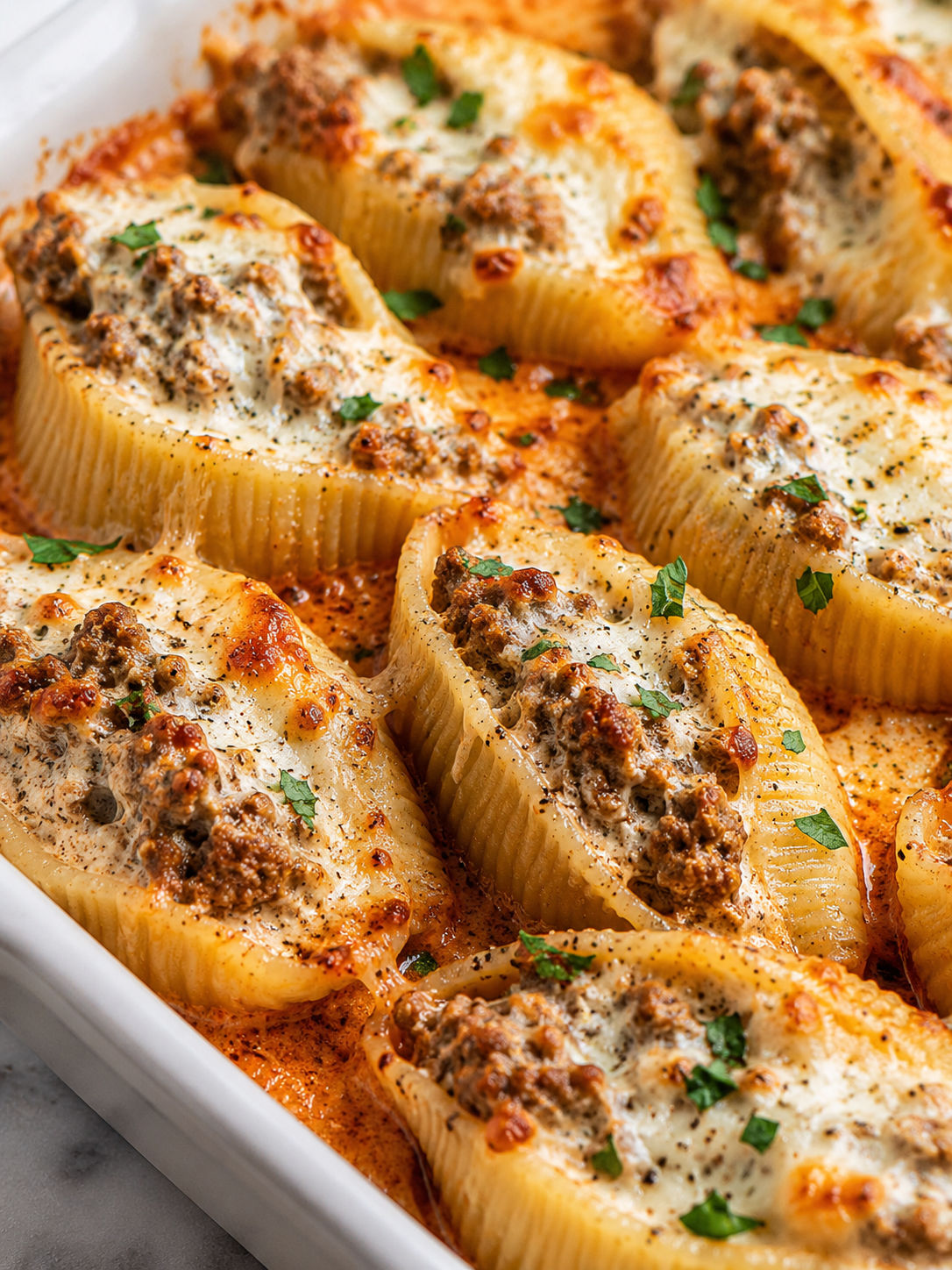
These beef and ricotta stuffed shells are best served warm from the oven after a short rest, with extra sauce spooned over the top.

FAQs
- Can I make Creamy Ricotta Beef Stuffed Shells Pasta ahead of time?
Yes. Assemble the shells up to one day ahead, cover the dish tightly, and refrigerate it. Bake covered until hot in the center, adding 10-15 minutes because the dish starts cold.
- Can I use cottage cheese instead of ricotta?
You can, but drain it first if it looks watery. For a smoother filling, pulse cottage cheese a few times in a food processor before mixing it with the beef, egg, and shredded cheese.
- How do I stop stuffed shells from tearing?
Boil the shells 1-2 minutes less than the package says and stir gently while they cook. Rinse briefly with cool water after draining so they are easier to handle.
- Can I freeze beef stuffed shells?
Yes. Freeze the assembled unbaked shells in a tightly wrapped baking dish for up to 2 months. Thaw overnight in the fridge, then bake covered until the sauce bubbles and the center is hot.
- What sauce works best with ricotta beef stuffed shells?
A tomato cream sauce works especially well because it balances the rich cheese filling. Plain marinara also works, and a spicy arrabbiata-style sauce is good if you want heat.
- What should I serve with stuffed shells?
Serve them with a crisp green salad, roasted broccoli, garlic bread, or sauteed green beans. Keep the side simple because the pasta bake is already rich and filling.
