 Pin it
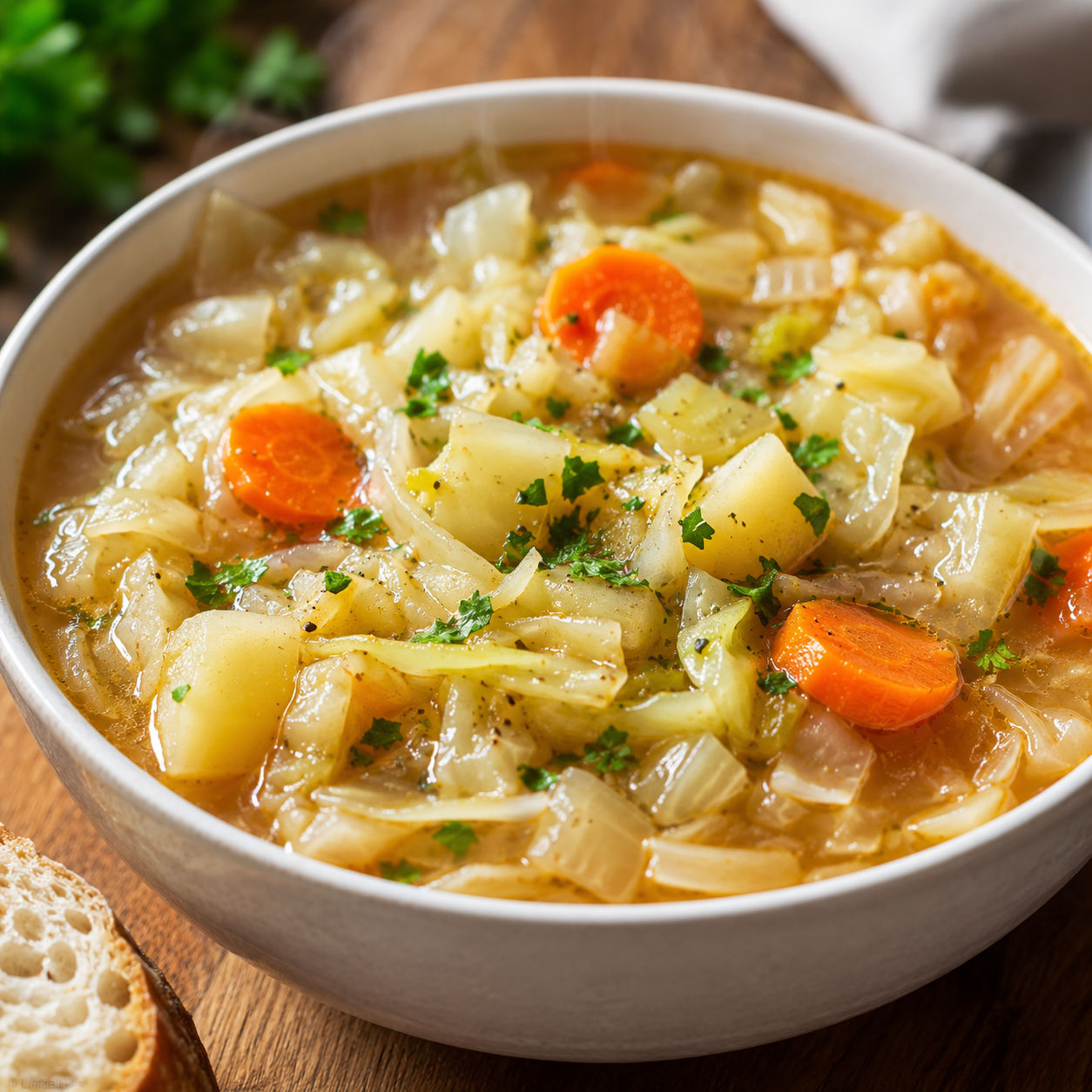
This is the soup I make when I need something warm and filling without a long grocery list. A head of cabbage, a few carrots, and some pantry staples simmer into a bowl that tastes like it took way more effort than it actually did.
The potatoes give it body and the tomatoes add a gentle tang. It is comforting without being heavy, and it costs next to nothing to feed a crowd.
The vegetable lineup
Quality matters even in a simple soup. Use a firm head of green cabbage and potatoes that feel heavy for their size. The rest is mostly chopping and waiting.
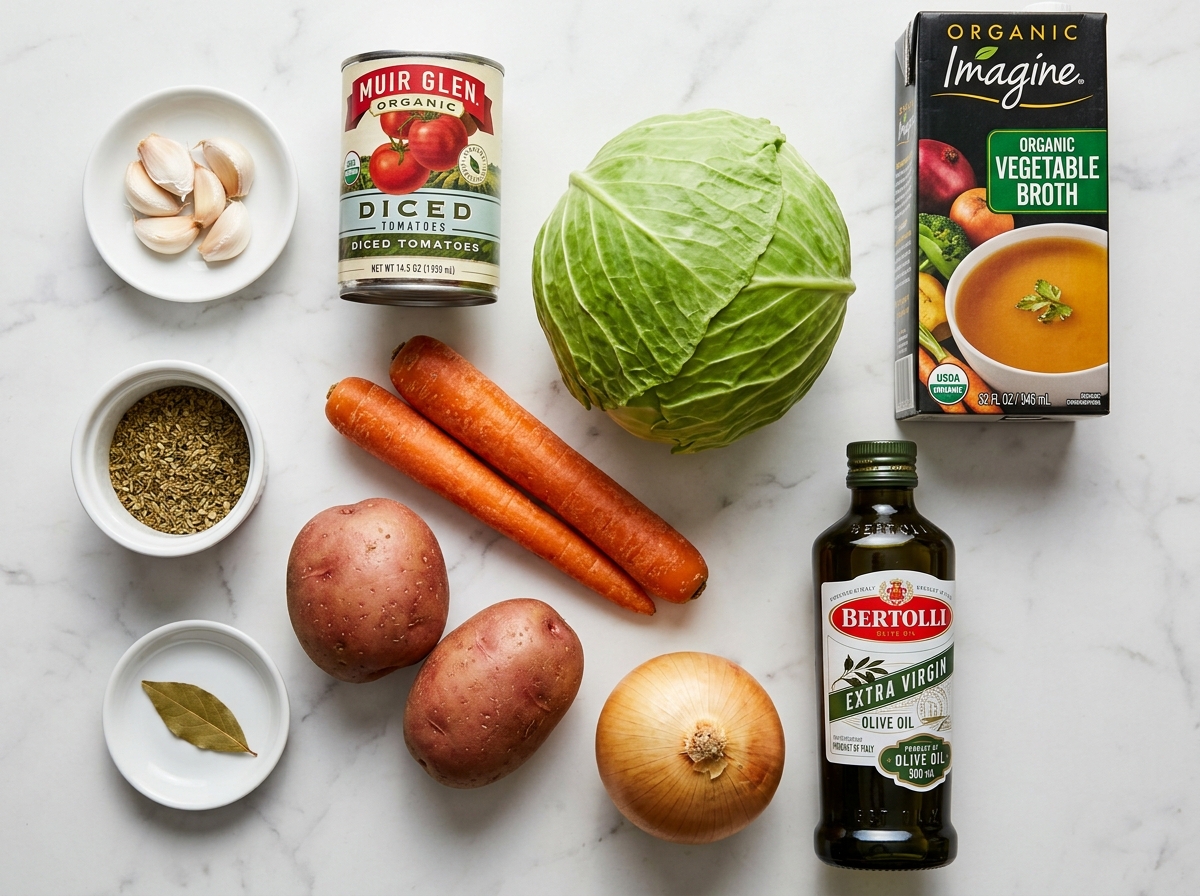
- Green cabbage. The backbone of the soup. It softens into silky ribbons but still holds a little bite if you watch the clock.
- Carrots. Add natural sweetness and color. Slice them thin so they cook through in the same time as the cabbage.
- Potatoes. Diced small, they break down just enough to thicken the broth without turning mushy.
- Onion and garlic. The savory base. Cook them until they soften and smell sweet before adding liquid.
- Diced tomatoes. A can of tomatoes adds acidity and depth that plain broth alone cannot give.
- Vegetable broth. Use a good low-sodium broth so you control the salt at the end.
- Dried oregano and bay leaf. These two herbs do most of the work. The bay leaf adds a subtle savory layer.
Build the broth
- Sauté the aromatics. Warm the olive oil in a large pot over medium heat. Add the onion, garlic, and carrots and cook for about five minutes until the onion is soft and the carrots brighten.
- Add the cabbage and potatoes. Stir in the chopped cabbage and diced potatoes. Let them mingle with the aromatics for two minutes so they pick up some flavor before the liquid goes in.
- Pour in broth and tomatoes. Add the broth, diced tomatoes, bay leaf, oregano, and paprika. Bring the pot to a boil, then drop the heat to a gentle simmer.
- Simmer until tender. Cover loosely and cook for twenty to thirty minutes until the potatoes and carrots pierce easily with a fork. The cabbage should be soft but not falling apart.
- Season and serve. Discard the bay leaf. Taste the broth and add salt and pepper. Ladle into bowls and top with fresh parsley.
Why cabbage texture matters
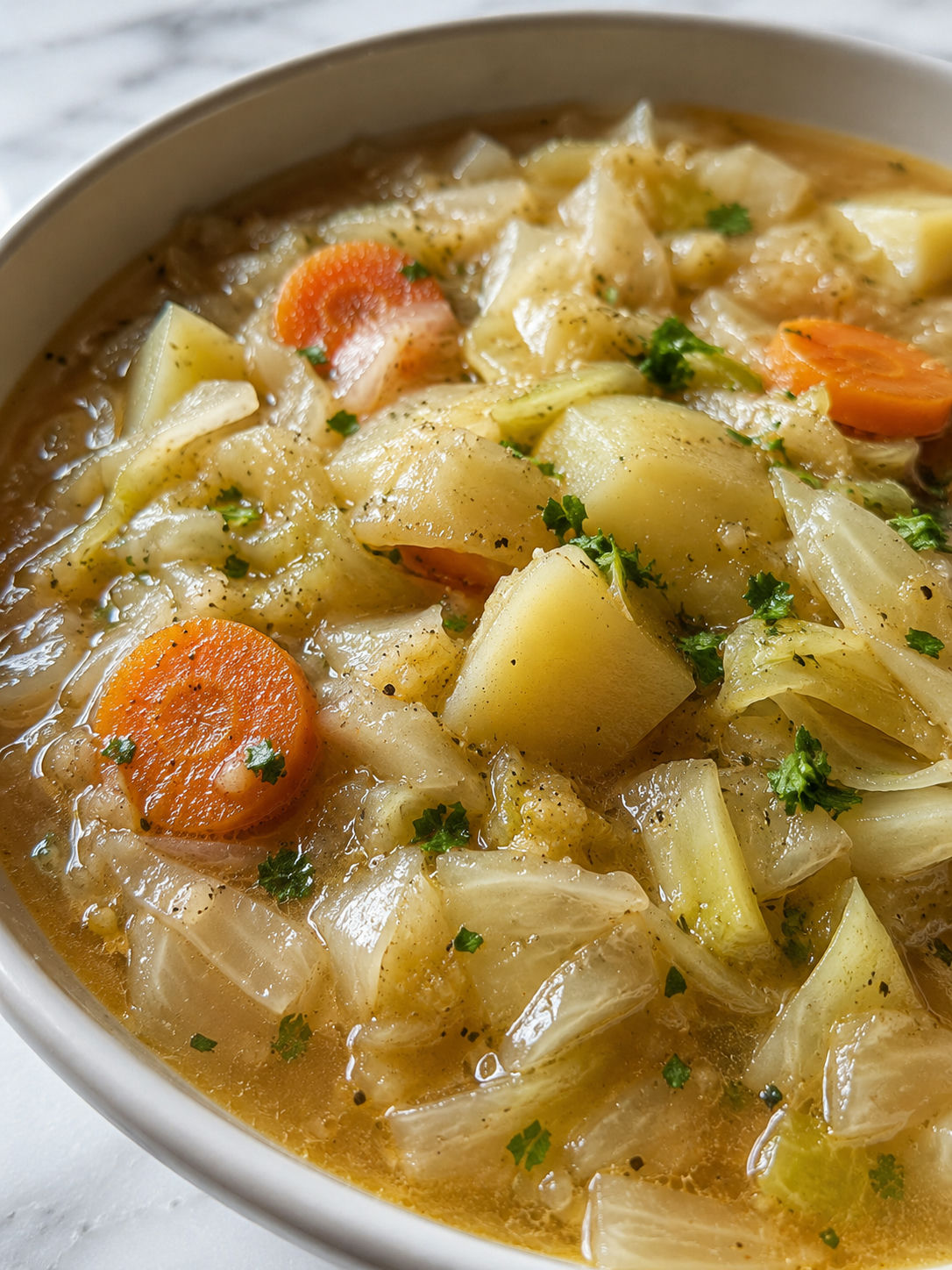
Cabbage can go from tender to mushy fast. I like to chop it into rough bite-sized pieces rather than shredding it too fine. That way it keeps some structure after half an hour of simmering.
If you prefer softer cabbage, just cook the soup five to ten minutes longer. For a heartier variation with meat, our healthy cabbage ground beef soup uses the same vegetable base with browned beef stirred in.
Broth swaps and add-ins
Vegetable broth keeps this fully plant-based, but chicken broth adds a richer backbone. You can also stir in a can of white beans during the last ten minutes for extra protein.
Some nights I add a pinch of red pepper flakes with the garlic for gentle heat. If you want a leaner option with more tomato, the cabbage fat burning soup takes a similar approach with a lighter broth.
Make it ahead
This soup keeps beautifully. Cool it completely and refrigerate in airtight containers for up to four days. The flavors deepen overnight, so lunch the next day often tastes better than dinner.
Freeze portions for up to three months. Thaw overnight in the fridge and reheat gently on the stove with a splash of water or broth to loosen it.
What to serve alongside
A thick slice of crusty bread or a hunk of rye is the classic move. A simple green salad with a sharp vinaigrette balances the mild sweetness of the vegetables.
For a more filling dinner, pair it with a grilled cheese sandwich or a scoop of vegetable beef soup if you want to stretch the meal for hungry eaters. And if you love cabbage in casserole form, try our stuffed cabbage roll casserole later in the week.
Avoiding bland broth
The biggest mistake with vegetable soup is under-seasoning. Cabbage and potatoes drink up salt, so taste at the end and add more than you think you need. The canned tomatoes help, but they are not enough on their own.
A little paprika adds a smoky backbone without heat. Dried herbs should go in early so they bloom in the hot broth. The Academy of Nutrition and Dietetics notes that broth-based soups can be a simple way to increase vegetable intake in a daily diet.

FAQs
- Can I use red cabbage instead of green?
Yes, but red cabbage will turn the broth a deep purple color and has a slightly pepperier bite. Green or Savoy cabbage keeps the color and flavor more neutral.
- How do I make this soup vegan?
Use vegetable broth and skip any cheese toppings. The base recipe is already vegan as written if you choose oil and vegetable broth.
- Can I add meat to this recipe?
Absolutely. Brown ground beef, turkey, or diced chicken separately and stir it in during the last ten minutes of simmering.
- Why does my cabbage soup taste flat?
It usually needs more salt or a hit of acid. Try a squeeze of lemon or a splash of vinegar at the end. Salt brings out the natural sweetness of the vegetables.
- How long does cabbage soup last in the fridge?
Store it in an airtight container for up to four days. Reheat gently on the stove or in the microwave until piping hot.
- Can I freeze cabbage soup?
Yes, for up to three months. If you are sensitive to potato texture after freezing, omit the potatoes and add fresh ones when reheating.
- What other vegetables can I add?
Celery, bell peppers, zucchini, or chopped kale all work well. Add quick-cooking greens like spinach or kale in the last five minutes so they stay bright.
