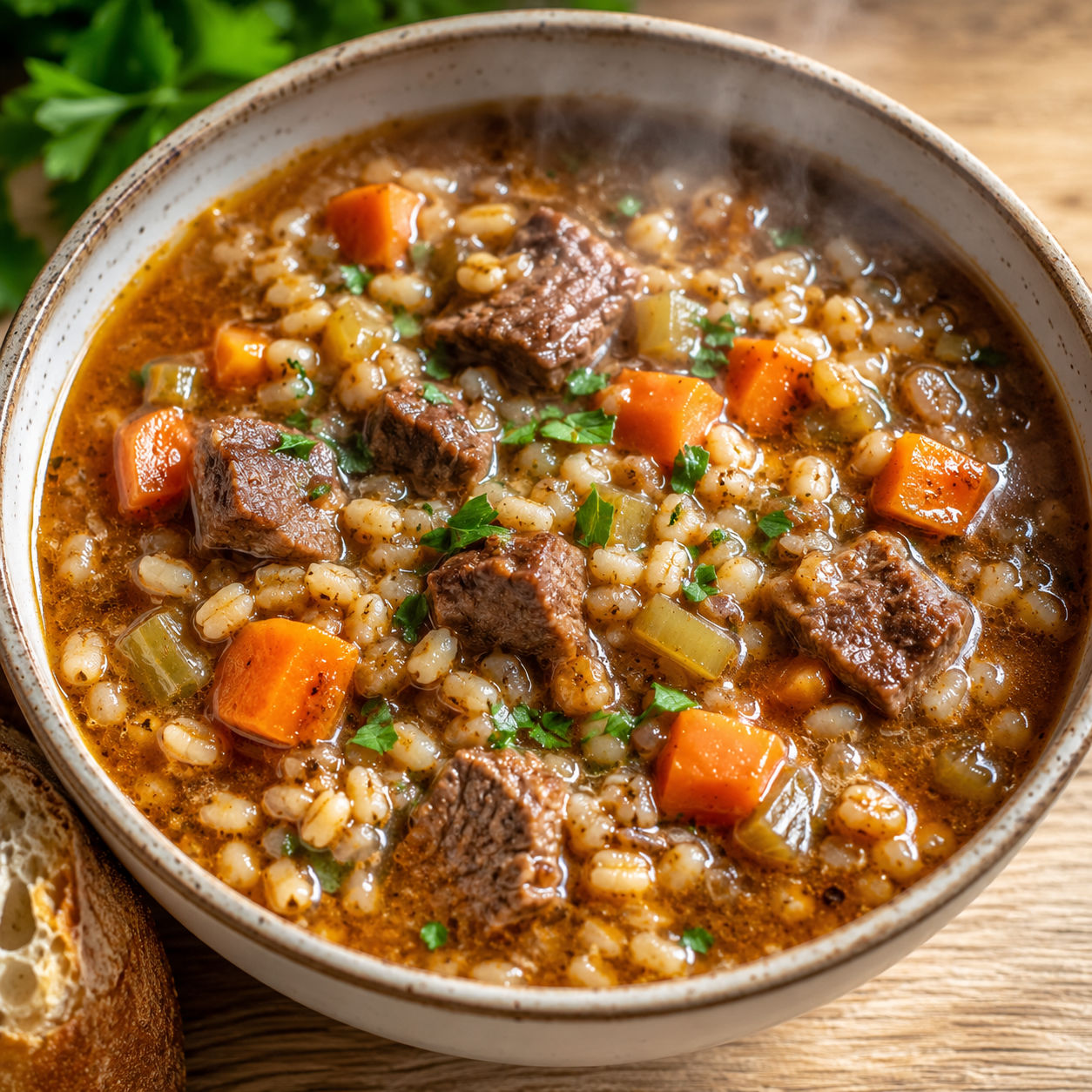
 Pin it
This is the soup I make when the wind is howling and the fridge is nearly empty. A single pot, a handful of humble ingredients, and two hours later the house smells like a cabin in the woods. The barley swells into chewy little pillows while the beef relaxes into soft shreds, and the broth turns thick and silky without a drop of cream.
It feeds a crowd, reheats like a dream, and asks very little of you once it is on the stove. If you can brown meat and chop an onion, you can make this.
What goes into the pot
This is a short list that rewards patience more than expense. A tough cut of beef turns tender with time, and a scoop of barley does the thickening work for you. Buy beef with some marbling if you can, and check that your barley is fresh. Old grain takes forever to soften.
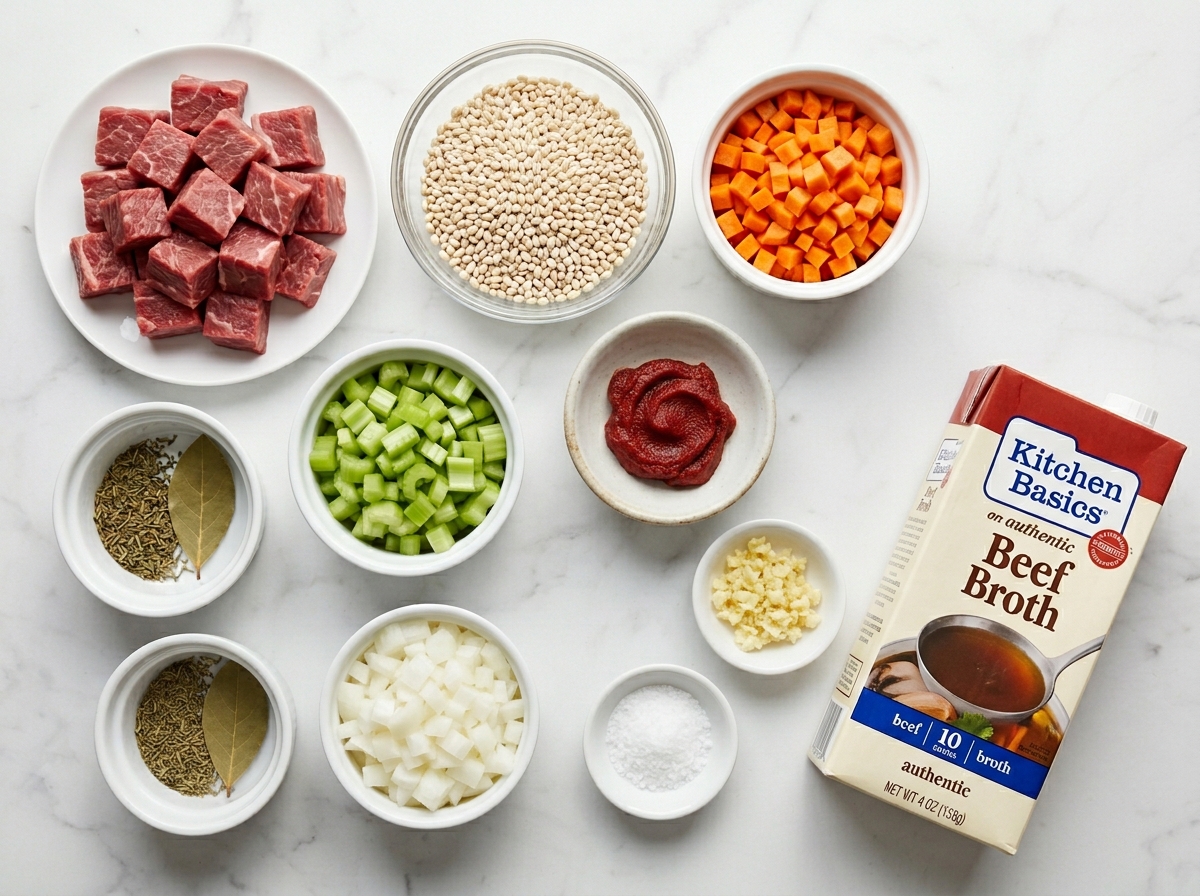
- Boneless chuck roast. Cut into small cubes, this tough cut softens into rich shreds after a long simmer and carries more flavor than lean stew meat.
- Pearl barley. The grain that makes the soup a meal. It plumps into chewy bites and thickens the broth naturally as it cooks.
- Carrots and onion. Sweet, earthy backbone for the broth. Dice them small so they soften in the same time as the barley.
- Celery. Often skipped, but it adds a quiet herbal note and classic soup aroma.
- Tomato paste. Just two tablespoons deepen the broth with umami and give the finished soup a warm amber color.
- Garlic and thyme. Aromatics that steer the pot toward savory without overpowering the beef.
- Beef broth. Use a good low-sodium broth so you control the salt, or homemade if you have it stashed in the freezer.
How the soup builds flavor
- Brown the beef hard. Pat the cubes dry and sear them in a hot Dutch oven with olive oil. Let the pieces sit undisturbed for a few minutes so they develop a dark crust. That crust is flavor.
- Soften the vegetables. Reduce the heat to medium and add the onion, carrots, and celery. Cook for about five minutes until the onions turn translucent and the carrots soften at the edges. Stir in the garlic for the last thirty seconds.
- Add the paste and seasonings. Stir in the tomato paste, thyme, bay leaf, salt, and pepper. Cook for one minute so the paste toasts and loses its raw edge. Scrape up any browned bits stuck to the bottom of the pot.
- Simmer with barley and broth. Return the beef to the pot and add the pearl barley. Pour in the beef broth, bring to a gentle boil, then cover and lower the heat. Simmer for about one and a half hours until the beef is fork-tender.
- Adjust and serve. Taste the broth and add more salt or pepper as needed. Remove the bay leaf, ladle into bowls, and finish with chopped parsley if you have it.
Why browning matters most
The biggest mistake people make with beef soup is rushing the sear. Gray boiled beef never tastes as rich as beef that has spent time in a hot pot developing a crust. That crust is the Maillard reaction, and it creates hundreds of flavor compounds that water alone can never provide. When you pour in the broth later, those browned bits dissolve into the liquid and become the backbone of the soup. If your pot is crowded, the meat steams instead of sears, so work in two batches if needed. The extra five minutes of effort pays off in every spoonful.
Barley turns broth into body
Pearl barley is the more common choice because it cooks in about an hour and has a soft, slightly chewy texture. Hulled barley is less processed and holds a firmer bite, but it can take an extra thirty to forty minutes of simmering and will drink even more broth. Either way, barley releases starch as it cooks, which thickens the soup without flour or cream. If you prefer a thinner soup, start with an extra cup of broth and add more at the end. Leftovers will always thicken as they sit because the grain keeps absorbing liquid. If you enjoy grain-based soups, our cozy lentil and potato soup uses a similar technique.
Smart swaps and extras
You can replace the chuck roast with ground beef to save money. Brown it well, drain any excess fat, and reduce the simmering time to about one hour. For deeper flavor, deglaze the pot with half a cup of red wine after the vegetables soften and let it reduce before adding the broth. Mushrooms are another excellent addition. Stir in eight ounces of sliced cremini with the carrots. A splash of Worcestershire sauce at the end adds a subtle savory boost. If you want a vegetable-heavy bowl, add a diced potato in the last twenty minutes of cooking so it does not turn to mush. For another beefy one-pot meal, try our French onion beef short rib or vegetable beef soup classic.
Storing and reheating leftovers
This soup keeps in the refrigerator for up to four days and tastes better on day two after the flavors have mingled. Store it in airtight containers and reheat gently on the stove with a splash of water or broth to loosen the barley. You can also freeze it for up to three months. Thaw overnight in the fridge and warm slowly. The USDA provides safe handling guidelines for beef at their food safety portal.
What to serve alongside
A hunk of crusty bread is the classic companion. The sturdy broth stands up to a sharp cheddar grilled cheese or a simple green salad with lemon vinaigrette. For a larger spread, pair it with our hearty navy bean soup as a starter on a soup-and-bread night, though one bowl of this is often enough on its own.

FAQs
- Can I use ground beef instead of chuck roast?
Yes. Brown one pound of ground beef, drain the fat, and reduce the simmering time to about one hour. The texture will be softer and the soup will be ready faster.
- Do I need to soak barley before cooking?
No. Pearl barley does not require soaking. Rinse it under cold water to remove dust, then add it directly to the pot. It will soften as the soup simmers.
- How do I store and reheat leftovers?
Refrigerate in airtight containers for up to four days. Reheat gently on the stove with a splash of broth or water. The soup thickens as it sits, so loosen it to your taste.
- Can I make this in a slow cooker?
Yes. Brown the beef and soften the vegetables on the stove first, then transfer everything to a slow cooker. Cook on low for six to eight hours or on high for three to four hours.
- What cut of beef works best?
Boneless chuck roast is ideal because the marbling melts into the broth. You can also use stew meat or bottom round, but avoid very lean cuts that can turn dry.
- Can I freeze beef and barley soup?
Yes. It freezes well for up to three months. Thaw overnight in the refrigerator and reheat slowly. The barley will be softer after freezing but still taste great.
- Why did my soup turn out too thick?
Barley continues to absorb liquid as it cools. If the soup is too thick, stir in extra hot broth or water until you reach the consistency you like.
