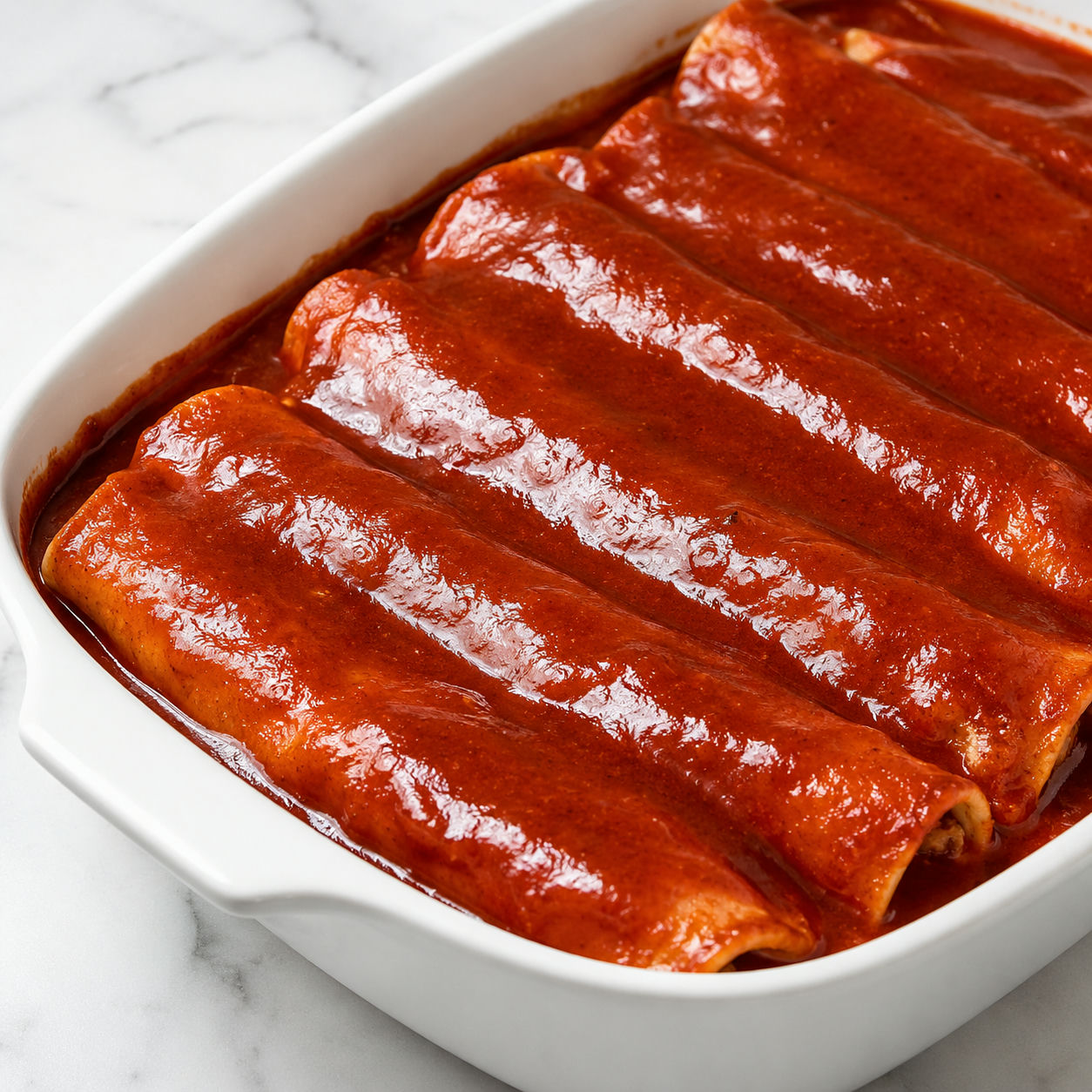
 Pin it
This is the sauce that makes enchiladas taste like enchiladas. Not the thinned-out stuff from a can, and not something built on chili powder from a jar. This one starts with whole dried chiles, toasted just long enough to wake them up, then simmered in broth and blended with garlic, cumin, and a pinch of Mexican oregano until the color turns a deep brick red and the kitchen smells exactly right.
Dried guajillo and ancho chiles are the workhorse pair here. Guajillo brings a fruity, slightly tart heat. Ancho adds earthy sweetness and depth without pushing the spice level up much. Together they build the kind of flavor that tastes like it took all day, even though the whole process wraps up in about 30 minutes.
Once you make it from scratch, the canned version stops making sense. A batch covers two pans of enchiladas, freezes perfectly, and works for tamales, chilaquiles, and braised meats just as well as it does for the dish that made it famous.
The chiles and pantry staples that build it
The chile lineup matters more than anything else here. Look for dried chiles at any Latin grocery or in the Latin aisle of a large supermarket. They should feel slightly pliable and have a mild leathery smell, not bone-dry and shattering. Avoid bags where the chiles look faded or dusty.
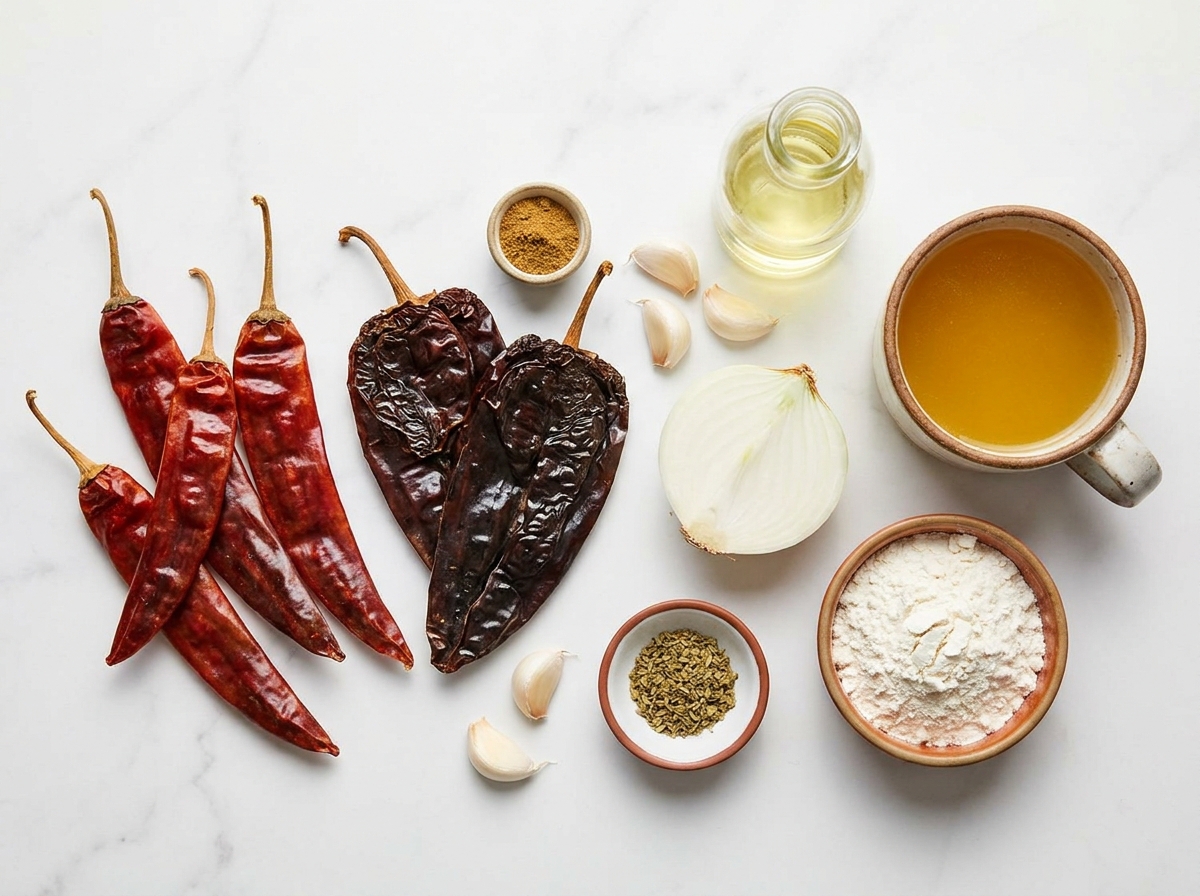
- Dried guajillo chiles. The main flavor driver. Fruity, tangy, and moderately hot with a vivid red color that carries straight through to the finished sauce.
- Dried ancho chiles. Dried poblanos with a deep, earthy sweetness and very mild heat. They round out the guajillo's brightness and add body to the texture.
- Chicken broth. The soaking and simmering liquid. It adds background savoriness that water alone can't match. Vegetable broth works for a plant-based version.
- White onion and garlic. Added to the blender raw with the soaked chiles. They give the sauce its savory backbone without needing to be sautéed separately first.
- Ground cumin. Warm and smoky. Use freshly ground for the best result, though pre-ground works fine.
- Dried Mexican oregano. More citrusy and assertive than Italian oregano. It is worth seeking out at a Latin market, but regular oregano is a decent stand-in.
- Vegetable oil and all-purpose flour. For a light roux that gives the sauce its clinging body. Without it the sauce runs off enchiladas instead of coating them.
How the sauce comes together
- Toast the chiles. Heat a dry skillet over medium heat. Press each dried chile flat with tongs and hold it for 15 to 20 seconds per side until fragrant and just pliable. Do not let them brown or smoke or the sauce will turn bitter. Set them aside as you go.
- Simmer in broth. Put the toasted chiles in a small saucepan with 2 cups of chicken broth. Bring to a gentle boil, then reduce the heat and simmer for 12 to 15 minutes until the chiles are completely soft and yield easily when pressed.
- Blend smooth. Transfer the softened chiles to a blender with 1 to 1.5 cups of the cooking liquid. Add the garlic, roughly chopped onion, cumin, Mexican oregano, black pepper, and a pinch of salt. Blend on high for about a full minute until completely smooth. For a silkier sauce, strain through a fine mesh sieve.
- Build the roux. In a wide skillet, warm the vegetable oil over medium heat. Stir in the flour and cook, stirring constantly, for about 1 minute until the roux smells faintly nutty and turns a light golden color.
- Combine and simmer. Carefully whisk the blended chile mixture into the roux. It will spatter at first so stand back and whisk steadily. Pour in the remaining broth to reach the consistency you want. Simmer over medium-low heat for 10 to 12 minutes, stirring occasionally, until the sauce is thick enough to coat the back of a spoon.
- Season and finish. Taste and add salt as needed. If the sauce is too thick, loosen it with a splash of broth. If too thin, simmer uncovered for a few more minutes. Use immediately or cool completely before storing.
Why toasting the chiles matters
Skipping the toast is the single most common shortcut that costs you flavor. A raw dried chile, even after a full soak, carries a flat vegetal edge in the finished sauce. Just 15 to 20 seconds per side in a dry hot pan shifts something fundamental. The natural oils in the chile skin wake up and the sauce comes out darker, deeper, and far more complex.
The line between toasted and scorched is about ten seconds. Watch for the moment the chile presses flat and releases a faintly smoky, almost nutty smell. That is done. The second it smells acrid or the surface darkens to true brown, it has gone too far. Work in batches if your pan is small and have a plate ready so the chiles come off the heat immediately.
Getting the texture right every time
A good red chile sauce should coat enchiladas like a thin gravy: fluid enough to ladle easily but with enough body to cling and not puddle at the bottom of the baking dish. The flour roux is the tool, but it is easy to overshoot. If the sauce thickens past the point of easy pouring, add broth a few tablespoons at a time and stir over low heat. It loosens quickly.
Straining makes a real difference for texture. After blending, push the sauce through a fine mesh sieve into the roux pan before combining. This removes any remaining bits of chile skin and produces a smoother, more uniform result. The rustic unstrained version is also correct. Both work. This roux-and-blend method is similar to the approach in our Chimayo red chile enchilada sauce, which uses a slightly different regional chile but the same base technique.
Chile varieties worth knowing
The more familiar you get with dried chiles, the more useful this sauce becomes. Guajillo and ancho are the most widely available pair and the most forgiving to work with, but the category is broad. New Mexico chiles (also called California chiles) are mild and earthy with a clean red flavor close to guajillo but without the tang. Pasilla chiles are long, dark, and slightly fruity with a gentle heat. Chile de arbol are thin, bright red, and very hot, used in small numbers to lift the heat level without changing the base flavor much.
A good reference for identifying dried chiles by their appearance and heat range is available from The Spruce Eats' dried chile guide. Once you are comfortable with the guajillo-ancho base, try replacing one guajillo with a pasilla and taste what shifts. Small swaps teach you the sauce faster than any rule.
What to use this sauce on beyond enchiladas
A full batch goes well beyond one pan of enchiladas. Use it as a braising liquid for chicken thighs or a pork shoulder in the slow cooker. Stir two tablespoons into scrambled eggs with some leftover tortilla strips for a weekday chilaquiles. Use it as a bold taco sauce or coat chicken pieces with it and let them marinate overnight before grilling.
When you are ready to put it to work right away, red chile stacked enchiladas with ground beef and cheese are a natural starting point. For a more straightforward weeknight dinner, homemade enchiladas rojas use this style of sauce as the centerpiece. For storage, keep the sauce in an airtight container in the refrigerator for up to 5 days, which aligns with general safe food handling guidance from the FDA. Freeze in 1-cup portions for up to 3 months and reheat directly from frozen in a small saucepan over low heat.
Common mistakes and how to fix them
Old dried chiles are the most overlooked problem. Dried chiles do go stale. If they shatter when you try to bend them and smell like nothing, they will not produce a flavorful sauce no matter how long you simmer them. Buy from a store with high turnover or replenish your stock at least once a year.
Blending without enough liquid is another common issue. You need at least 1 cup of liquid in the blender to get a smooth result. Too little and you get a thick paste that scorches the moment it hits the roux. Err on the side of adding more liquid and adjust thickness later during the simmer.
The last mistake is skipping the seasoning pass at the end. Dried chiles vary in salinity and intensity batch to batch, so the right amount of salt shifts every time. Taste the finished sauce carefully and adjust. If you are planning a thinner, fresher chile sauce closer to a table condiment, take a look at our authentic Mexican salsa roja which takes a slightly different approach to the same base chiles.
FAQs
- Can I use chili powder instead of whole dried chiles?
You can in a pinch, but the flavor is genuinely different. Commercial chili powder is a seasoning blend that includes cumin, garlic, and other spices already mixed in, and it produces a flatter, less complex sauce. Whole dried chiles carry layers of fruit, smoke, and earthiness that powder can't replicate. If dried chiles aren't available, use 3 to 4 tablespoons of pure ancho or guajillo powder (single-chile, not a blend) and skip the soaking and blending steps.
- What is the difference between guajillo and ancho chiles?
Guajillo chiles are long, narrow, and brick-red with a clean fruity heat and a slight tang. Ancho chiles are dried poblanos, wide and deep brown, with a mild almost chocolate-like sweetness and very little heat. Together they form the backbone of most traditional Mexican red sauces. If you can only find one, guajillo alone still makes a very good sauce.
- How do I know when the chiles are soft enough to blend?
They are ready when they feel completely pliable and have gone from dry and brittle to soft and yielding, usually 12 to 15 minutes of gentle simmering in hot broth. Press one against the side of the pan with a spoon. If it mashes easily with no resistance, it is done. Undercooked chiles leave a raw, slightly harsh edge in the finished sauce.
- How long does homemade red chile sauce keep?
In an airtight container in the refrigerator it keeps for 5 days. For longer storage, it freezes beautifully for up to 3 months. Freeze it in 1-cup portions so you can thaw just what you need for a single pan of enchiladas. Reheat from frozen in a small saucepan over low heat with a splash of broth to loosen it back to the right consistency.
- My sauce tastes bitter. What went wrong?
Two common causes. First, the chiles were toasted too long. They should turn fragrant and pliable, not dark brown or smoking. The second is that seeds were left inside. The seeds in dried chiles carry most of the bitterness. Make sure you tear each chile open and shake them out completely before soaking. If the sauce is already made, a small pinch of sugar or half a teaspoon of honey stirred in at the end balances it quickly.
- Can I make this sauce vegan or gluten-free?
Yes to both. Swap chicken broth for vegetable broth or plain water for a fully vegan version. The chiles carry most of the flavor, so the sauce still comes out well. For gluten-free, skip the flour in the roux step entirely. The sauce will be thinner but a longer uncovered simmer of 5 to 10 extra minutes concentrates it. You can also stir in a teaspoon of masa harina to thicken it without any gluten.
- What can I use this sauce for besides enchiladas?
Quite a lot. Use it as a braising liquid for chicken thighs or pork shoulder in the slow cooker, stir two tablespoons into scrambled eggs for a quick chilaquiles base, or use it straight as a bold taco sauce. It also works as an overnight marinade for chicken before grilling. Anywhere you want a smoky, deeply flavored red chile base, this sauce fits.
- How do I adjust the heat level?
The base recipe using guajillo and ancho chiles is mild to medium. To add more heat, drop 1 to 2 dried chile de arbol into the broth while the chiles simmer. They are small but very hot, so start with one. To make the sauce milder, use only ancho chiles, which have very little heat, and make sure every seed is removed before soaking.
