 Pin it
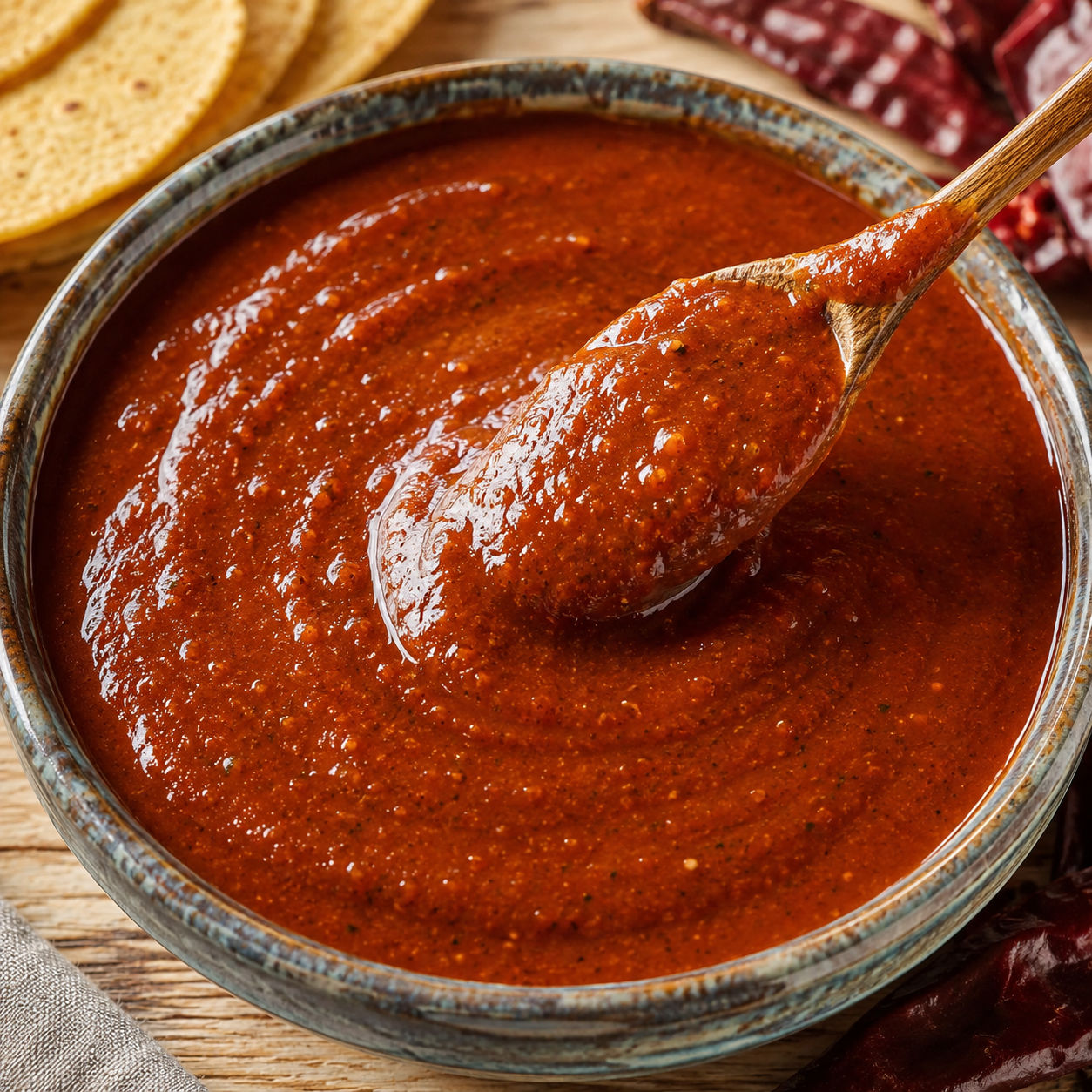
Chimayo Red Chile Enchilada Sauce with Authentic Flavors is all about restraint. You do not need tomato, sugar, or a crowded spice drawer. Good chile powder, garlic, oregano, and a steady simmer do the work.
The sauce should taste earthy and warm before it tastes hot. It clings to corn tortillas, stains cheese a deep brick red, and makes a pan of enchiladas smell like a New Mexican kitchen.
Chimayo Red Chile Sauce Base
Start with pure Chimayo red chile powder if you can find it. The color should be brick red and the aroma should smell warm, dusty, and a little fruity, not stale or harsh.
Masa harina gives the sauce light body without muting the chile. Warm broth matters too because cold liquid can make the paste seize into lumps.
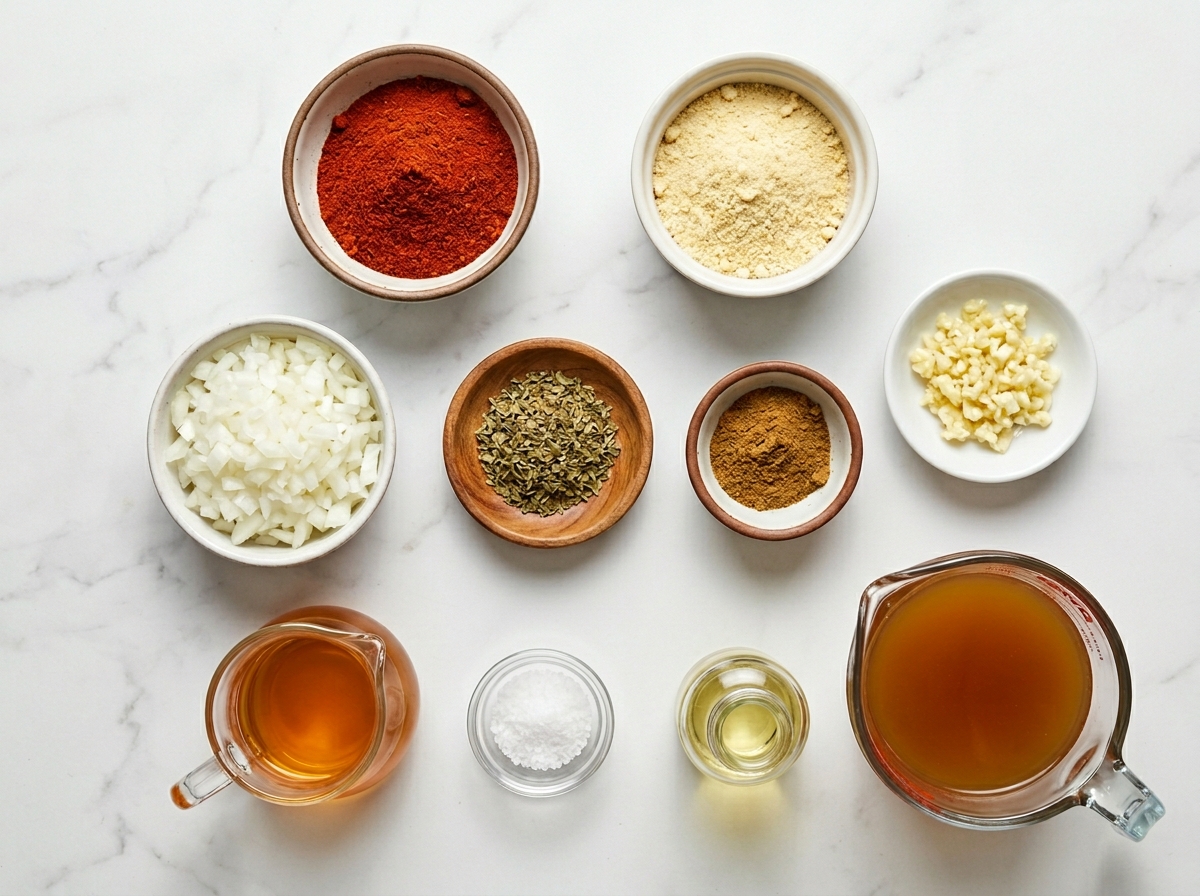
- Chimayo red chile powder. The main flavor, color, and gentle heat of the sauce.
- Neutral oil. Carries the chile flavor and helps bloom the powder without adding a heavy taste.
- Masa harina. Thickens the sauce lightly and keeps it gluten-free.
- Garlic and onion. Add savory depth so the chile tastes full instead of flat.
- Mexican oregano. Brings a dry, herbal note that fits New Mexican red chile.
- Ground cumin. Use a small amount for warmth, not enough to take over.
- Warm broth. Turns the chile paste into a smooth sauce and sets the final body.
- Apple cider vinegar. A small finish that wakes up the chile after simmering.
Build It Without Scorching
- Soften the aromatics. Cook onion in oil until glossy, then add garlic for the last minute so it smells sweet instead of sharp.
- Bloom the chile. Whisk in masa harina, Chimayo red chile powder, oregano, and cumin over medium-low heat. Stop as soon as the mixture smells toasted.
- Add warm broth slowly. Pour in the broth a little at a time while whisking. This keeps the sauce smooth and prevents dry chile pockets.
- Simmer gently. Let the sauce bubble softly until it coats the back of a spoon, about 15 minutes. Stir often because chile settles fast.
- Finish and adjust. Add salt and a small splash of vinegar. Blend or strain if you want a polished restaurant-style texture.
Bloom The Chile Gently
The make-or-break moment is the minute after the chile powder hits the oil. You want the powder to darken slightly and smell warm. You do not want it to fry hard. Chimayo chile has a natural sweetness that can turn bitter if the pan is too hot.
Keep the heat at medium-low and whisk like you mean it. If the paste looks dry, add a tablespoon of oil or broth right away. The official New Mexico stacked enchilada style relies on plenty of red chile sauce, and you can see that tradition in the New Mexico red enchilada recipe. For a shorter sauce variation on this site, try the Chimayo red chile sauce too.
Choose The Right Chile
Read the package before you buy. You want pure ground red chile, preferably Chimayo or New Mexico red chile, not supermarket chili powder made for chili con carne. Those blends often include salt, paprika, garlic powder, and anti-caking ingredients. They can work in a pinch, but the sauce will taste flatter and less regional.
If real Chimayo chile is hard to find, use a mild New Mexico red chile powder and add a spoonful of deeper ancho powder. Guajillo powder also works, though it leans fruitier and less earthy. Taste before adding extra cumin. A small pinch supports the chile, but too much pushes the sauce toward taco seasoning.
Where This Sauce Belongs
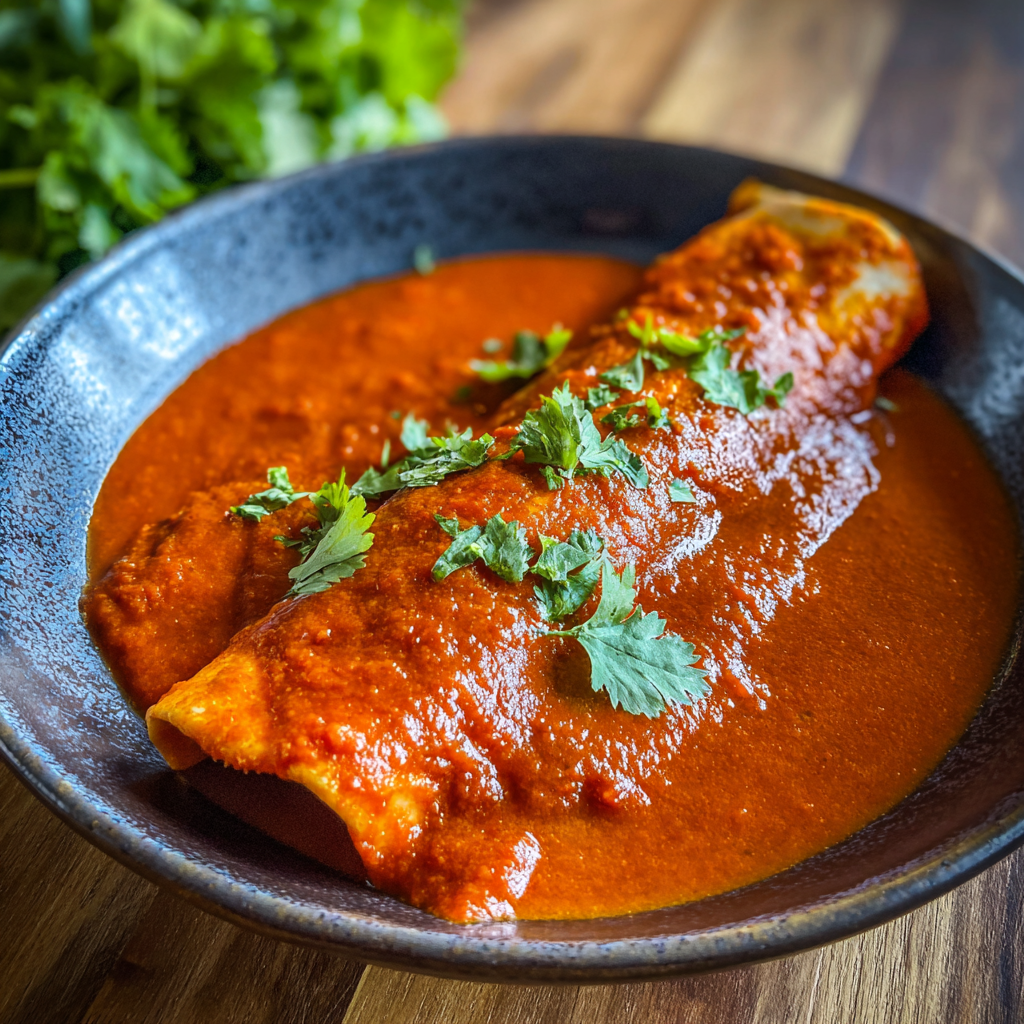
This sauce was made for corn tortillas. Dip warm tortillas into it, stack them with cheese and onion, then bake or griddle until the edges soften. It also turns a basic burrito into a proper red chile plate. Try spooning it over beef and bean burritos, or use it beside baked chile rellenos casserole when you want a red-and-green table.
For seafood, keep the sauce a little thinner and use it lightly. A few spoonfuls bring warmth to shrimp enchiladas without burying the filling. Leftover sauce is excellent over fried eggs, potatoes, beans, or roasted zucchini.
Texture And Thickness Cues
A good enchilada sauce should coat a spoon but still run off in a ribbon. If it lands in clumps, whisk in warm broth two tablespoons at a time. If it looks watery, keep simmering uncovered and stir from the bottom so the chile does not catch.
Blending is optional, but it helps if your onion was chopped larger or your chile powder is coarse. Straining gives the smoothest finish. I only do that for company or stacked enchiladas where the sauce is the whole point. For family dinners, a little texture feels homemade in the best way.
Store It For Busy Nights
Cool the sauce before storing, then refrigerate it in a glass jar or freezer container. It keeps well for 4 days in the fridge and about 3 months in the freezer. The USDA has a useful guide for safe storage timing in its leftovers and food safety resource.
Reheat it slowly in a small saucepan. The sauce thickens when cold, so add a splash of broth or water and whisk until glossy again. Do not boil it hard. Strong heat can dull the chile and make the bottom taste scorched before the top is hot.
Summary
This sauce is smooth enough for stacked enchiladas and sturdy enough for burritos, tamales, roasted potatoes, or breakfast eggs.
FAQs
- What makes Chimayo red chile different?
Chimayo chile is prized for its earthy sweetness, deep red color, and rounded heat. It tastes fuller and less sharp than many generic chili powders. Buy pure ground Chimayo or New Mexico red chile powder, not a chili seasoning blend with salt and additives.
- Can I use dried whole chiles instead of powder?
Yes. Toast dried red New Mexico chiles briefly, remove stems and seeds, soak them in hot water, then blend until smooth. Strain the puree and simmer it with the garlic, oregano, broth, and salt. The texture will be a little more rustic unless you strain well.
- How spicy is this enchilada sauce?
Chimayo red chile is usually medium, but every batch is different. Start with 1/3 cup chile powder if you are sensitive to heat, then add more after the sauce has simmered. Dairy, tortillas, beans, and cheese will soften the heat when you serve it.
- Can I make this sauce ahead?
Yes. The flavor gets rounder after a night in the fridge. Store it airtight for up to 4 days, then reheat slowly with a splash of broth or water because the chile and masa thicken as they sit.
- Why does my red chile sauce taste bitter?
The chile powder probably got too hot or scorched on the bottom of the pan. Keep the heat at medium-low when blooming the chile, whisk constantly, and add warm broth as soon as the mixture smells toasted. A tiny splash of vinegar can brighten the sauce, but it will not fully fix burnt chile.
- What should I serve with Chimayo red chile sauce?
Use it on cheese enchiladas, beef burritos, huevos rancheros, tamales, or roasted squash. It also works as a spoon sauce for grilled chicken or beans. Keep the sides simple so the chile flavor stays clear.
