 Pin it
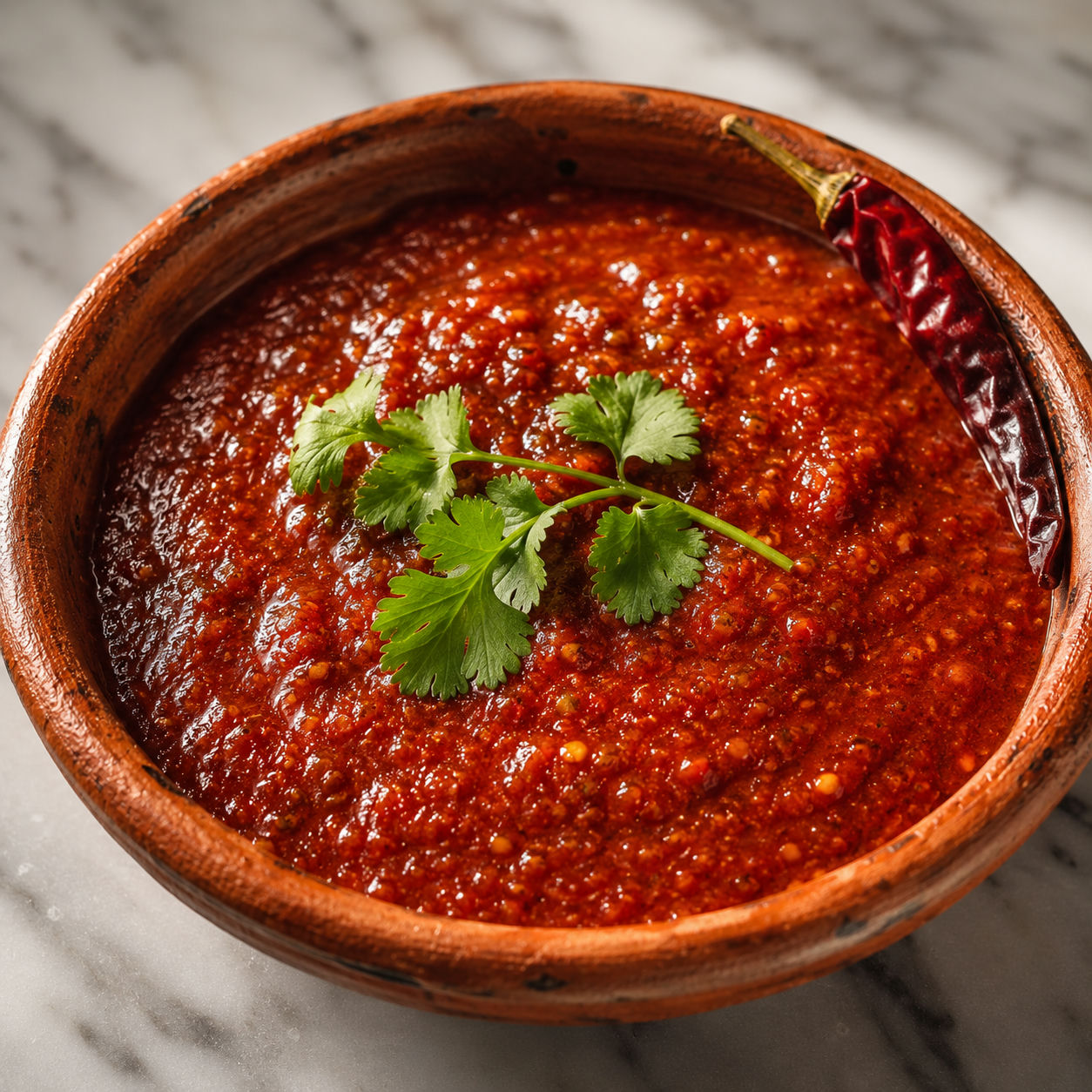
Every taqueria in Mexico has a salsa roja on the table. Not the jarred kind and not a fresh pico situation. A deep brick-red cooked sauce with real body, earthy heat, and a flavor that makes everything it touches taste better. This is the one that shows up over tacos in the morning, stirred into soups, and spooned over eggs without a second thought.
Two things set authentic salsa roja apart from everything else: dried chiles and the frying step. Dried guajillo brings an earthy depth and the characteristic brick-red color. Chile de árbol brings a clean, bright heat. Once you blend everything and cook the salsa down in hot oil, the flavor concentrates into something that fresh tomatoes and jalapeños simply cannot replicate. Thirty minutes from start to finish, and you will have a batch that transforms whatever you put it on.
The Chile Lineup Behind the Color
Two dried chiles carry this sauce. Guajillo provides the body, the earthy flavor, and that deep brick-red color that no fresh tomato can produce on its own. Chile de árbol is purely about heat, small and potent, and the quantity you add is the only variable that controls how spicy the final salsa is. Combined with tomatoes, onion, and garlic, these two chiles are all you need.
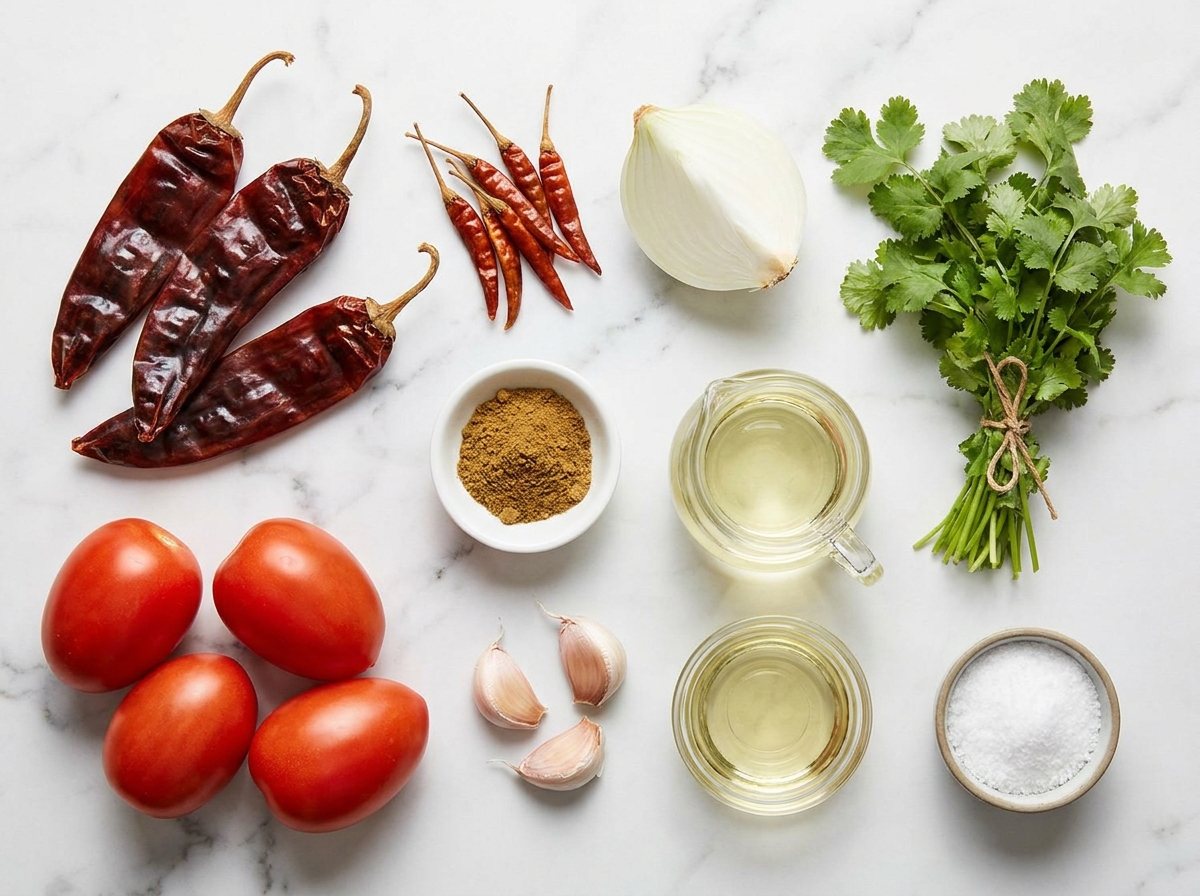
- Dried guajillo chiles. The backbone of the sauce. Guajillo chiles measure around 2,500 to 5,000 Scoville units, meaning they add far more flavor than fire. They give salsa roja its characteristic brick-red color and a slightly sweet, earthy depth.
- Dried chiles de árbol. The heat source. Start with 6 to 8 and adjust up or down on your next batch based on how your table handles spice.
- Roma tomatoes. Meaty and low in water, they break down into a rich sauce when boiled. Roma tomatoes give the salsa body without thinning it out.
- White onion. Standard in Mexican cooking. A quarter of a medium onion is enough, and the flavor mellows completely once it is cooked.
- Garlic. Three cloves. Boiling removes the raw bite so it blends in and deepens the sauce rather than dominating it.
- Ground cumin. Half a teaspoon rounds out the chile flavor without pushing the salsa toward chili-powder territory.
- Neutral oil. One tablespoon, used to fry the blended salsa. This is the step that concentrates everything.
Building Salsa Roja from Scratch
- Toast the chiles. Break the guajillo chiles into pieces and remove the seeds. Add them with the chiles de árbol to a dry skillet over medium heat. Press each piece flat and toast for 20 to 30 seconds per side until darkened and fragrant. Pull them the moment the smell turns rich and toasty. Burnt chiles are bitter with no fix.
- Soak the chiles. Transfer the toasted chiles to a bowl and cover with hot water. Let them soak for 15 minutes until completely soft and pliable. Drain and discard the soaking liquid.
- Boil the tomatoes. Combine the tomatoes, onion, and garlic in a small pot. Cover with water, bring to a boil, and simmer for 10 minutes until the tomato skins split and the flesh is fully soft. Drain.
- Blend until smooth. Add the drained tomatoes, onion, garlic, soaked chiles, cumin, and 1/3 cup of fresh water to a blender. Blend on high until completely smooth. Add water a tablespoon at a time if the blender struggles to pull the mixture down.
- Fry the salsa. Heat the oil in a medium saucepan over medium-high until shimmering. Pour in the blended salsa carefully. It will spit. Stir and cook uncovered for 8 to 10 minutes, stirring occasionally, until the color deepens and the salsa thickens slightly.
- Season and cool. Pull the pan off the heat. Season with salt. Stir in a handful of cilantro if you want a fresher note. Let it cool completely before transferring to a sealed glass jar.
Why Toasting the Chiles First Matters
You can skip the toasting and still get a functional salsa. But the toasting step wakes up the volatile oils trapped in the dried chile skin and adds a toasted, slightly nutty quality that the soaking water then pulls into the flesh. The finished sauce tastes more layered because of it. Watch for the color to deepen and a rich, almost caramel-like smell to appear. When that smell hits, the chiles are done. Another ten seconds toward black and the whole batch turns bitter.
The Step That Separates Real Salsa Roja
Most homemade salsa recipes stop at blending. Traditional Mexican cooking does not. Pouring the blended salsa into a pan of hot oil, a step called freír la salsa, drives off moisture and lets the tomato sugars caramelize against the hot surface. What comes out is darker, thicker, and richer than what you poured in. The raw, sharp edges disappear and the sauce tastes like it has been cooking for an hour even though it only takes ten minutes. Use medium-high heat, pour the salsa in all at once, and stir enough to keep the bottom from sticking. The sputtering calms down after the first minute.
Dialing the Heat Up or Down
Chile de árbol is small and genuinely spicy. Six chiles in this batch make a mild-medium sauce that most adults can eat comfortably. Eight gets you noticeably hot. Twelve is real heat and will be too much for many people. The guajillo chiles add almost no burn on their own, so the árbol count is the only dial you need to turn.
If you want the flavor of árbol without the full fire, remove the seeds before soaking them. The seeds carry a significant portion of the capsaicin. You can also add one extra roma tomato to the blender to dilute the heat without losing the chile flavor. Always taste after frying rather than before, because the cooking step concentrates the heat along with everything else.
Storing a Batch the Right Way
Let the salsa cool completely before sealing it in a glass jar. Cooked salsa roja keeps for up to 7 days in the refrigerator, stored at or below 40°F per USDA cold storage guidelines. For longer storage, freeze it in half-cup portions. It thaws overnight in the fridge and tastes exactly as it did when you made it.
How to Put This Salsa to Work
The obvious answer is tacos. This sauce belongs on carne asada street tacos the way hot sauce belongs on eggs. But one batch in the fridge goes much further. Thin it with a cup of chicken or vegetable broth and you have an enchilada sauce that takes chicken enchiladas to another level. Stir a few spoonfuls into broth-based dishes like Mexican albondigas soup and the whole pot deepens without extra work. It also goes over scrambled eggs, into rice while it cooks, or alongside chips as a dipping sauce. Make a batch on Sunday and you will find something to pour it on every day of the week.
FAQs
- What chiles are used in authentic Mexican salsa roja?
The most common combination is guajillo and chile de árbol. Guajillo gives the sauce its characteristic brick-red color and an earthy, slightly fruity flavor. Chile de árbol contributes sharp, bright heat. Some regional versions include ancho or mulato chiles for added sweetness and depth, but guajillo plus árbol is the reliable classic base that works every time.
- Can I substitute fresh chiles if I can't find dried ones?
Fresh chiles will give you a very different result, closer to a fresh salsa verde or a pico situation. Dried chiles are what give salsa roja its depth and color, and there is no real workaround. Check the Latin or international aisle of a well-stocked grocery store, or a Mexican market. Once you have them, dried chiles keep in a sealed bag for months at room temperature.
- How spicy is this salsa roja?
With 8 chiles de árbol it lands at a solid medium heat. Use 5 to 6 for a milder result that most people can eat freely. Go to 12 or more if you want serious fire. The guajillo chiles add flavor far more than heat, so the árbol count is the only dial you need to adjust.
- How long does homemade salsa roja keep?
Up to 7 days in a clean, sealed glass jar stored in the refrigerator at or below 40°F, in line with USDA cold storage guidelines for cooked tomato-based sauces. For longer storage, freeze in small portions for up to 3 months. Thaw overnight in the fridge and stir well before using.
- Can I make salsa roja without a blender?
A food processor works and gives a slightly chunkier texture. Traditionally, a molcajete (stone mortar and pestle) produces a rustic salsa with real body. Grind the softened soaked chiles first, then work in the tomatoes and aromatics in stages. It takes more effort but the texture is genuinely different in a satisfying way.
- What is the difference between salsa roja and salsa quemada?
Both are red salsas but the technique is different. Salsa roja can be made by boiling or lightly roasting the base ingredients. Salsa quemada means "burnt salsa" and uses chiles and tomatoes charred directly on a dry pan until deeply blackened, building a smokier character. You can see that technique up close in the salsa quemada recipe for a direct comparison.
- What can I use salsa roja for?
More than you might expect. The obvious answer is tacos, but this sauce also goes over scrambled eggs and into chilaquiles, works thinned with broth as an enchilada sauce, deepens soups and braised meats, and doubles as a dipping sauce alongside chips or quesadillas. Make a batch on Sunday and you will find something to use it on every day of the week.
