 Pin it
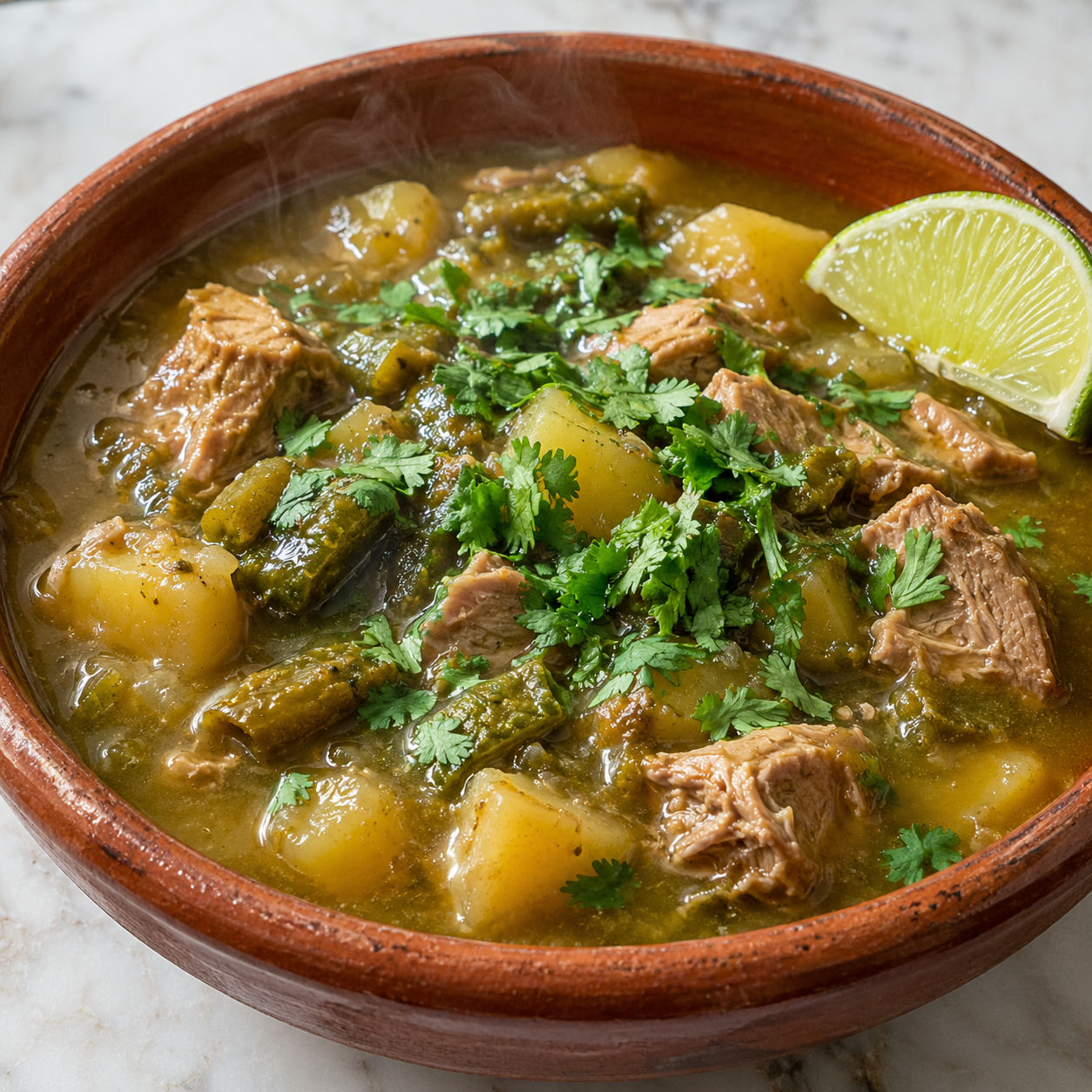
This stew is made the way it has been made across New Mexico and northern Mexico for generations. Pork shoulder braised low and slow with a generous amount of roasted Hatch green chiles, a few potatoes, and warm spices that lean into the flavor of the chile instead of drowning it out. Simple, and that simplicity is exactly the point.
Hatch chiles are the key ingredient here. They have a sweet, earthy heat that sets them apart from other green chiles, and roasting them first deepens that flavor considerably. If you have had green chile stew in New Mexico, this is the version closest to what you get from someone's grandmother's kitchen.
The stew takes about two hours of simmering, most of which is hands-off time. Make it on a Saturday afternoon and it will taste even better reheated on Sunday. The leftovers hold up for days.
Eight ingredients doing all the work
Every ingredient in this stew earns its place. Pork shoulder is the right cut because the fat and connective tissue melt during the long braise, keeping the meat juicy and adding body to the broth. The chiles need to be roasted before they go in, not raw, to get that deep smoky character that defines the dish.
- Pork shoulder. Stays juicy through the long simmer and releases collagen that thickens the broth naturally as it cooks.
- Roasted Hatch green chiles. The soul of the stew. They bring sweet, smoky heat that builds slowly with each spoonful.
- White onion. Softens into the base and adds mild sweetness that balances the chile heat without competing with it.
- Garlic. Five cloves, added after the onion cooks down, for savory depth that stays in the background where it belongs.
- Roma tomatoes. A little acidity to brighten the broth and keep it from tasting flat.
- Yukon Gold potatoes. They hold their shape through the simmer but also release starch that naturally thickens the stew.
- Chicken broth. The liquid backbone. Low-sodium broth lets you control the final salt level yourself.
- Cumin and Mexican oregano. The two spices this stew actually needs. Mexican oregano is more citrusy than the Italian kind and belongs here.
Building the stew from the ground up
- Brown the pork. Season pork chunks generously with salt and pepper. Heat lard or oil in a Dutch oven over medium-high heat. Working in two batches, brown the pork on all sides, 3 to 4 minutes per side, until a deep golden crust forms. Do not crowd the pan. Remove to a plate and set aside.
- Soften the aromatics. Reduce heat to medium. Add the diced onion to the same pot and cook for 5 to 6 minutes, scraping up the browned bits from the bottom as it softens. Add garlic and cook for 1 minute until fragrant.
- Add the chiles and spices. Stir in the chopped roasted Hatch chiles, tomatoes, cumin, and Mexican oregano. Cook for 2 to 3 minutes, stirring once or twice, to let the aromatics open up.
- Bring it together. Return the pork and any resting juices to the pot. Pour in the chicken broth and bring to a boil. Reduce to a low simmer, partially cover, and cook for 1 hour.
- Add the potatoes. Stir in the diced potatoes and continue simmering uncovered for 30 to 40 minutes, until the pork is fork-tender and the potatoes are fully soft. The stew thickens naturally as the potatoes cook down.
- Taste and serve. Adjust salt as needed. Ladle into bowls, top with fresh cilantro, and squeeze a little lime over each bowl. Serve with warm flour tortillas.
Roasting Hatch chiles the right way
Fresh Hatch chiles are worth roasting yourself when you can find them. Place whole chiles under a broiler set to high, turning every 3 to 4 minutes until the skin is charred and blistered all over. Transfer them to a sealed bag or covered bowl to steam for 10 minutes. The skin peels away cleanly after that. Remove stems, seeds, and as much membrane as you want to dial in the heat level.
During Hatch chile season in August and September, many Southwest grocery stores roast them fresh right on the premises. Outside that window, frozen roasted Hatch chiles are the best substitute by far. The NMSU Chile Pepper Institute is the go-to academic resource on Hatch chile varieties and heat ratings if you want to understand the full range before you buy.
Why the sear on the pork changes everything
Browning creates flavor that simmering cannot replicate. When pork hits a very hot pan, the surface caramelizes and develops savory compounds that carry all the way through the long cook. Those browned bits stuck to the bottom of the pot dissolve into the onions as they cook and become part of the broth base.
Two practical rules: pat the pork very dry before it goes in, and cook it in batches. A crowded pan drops the temperature fast and causes the meat to steam instead of sear. The long braise in this recipe far exceeds the USDA safe internal temperature for pork, so once the stew has simmered properly there is no concern there.
Swaps and variations worth trying
If Hatch chiles are not available, a mix of roasted Anaheim chiles with one or two roasted jalapeños gets you close. Poblanos bring a different earthiness but also work well in the pot. For a lighter version, bone-in chicken thighs replace pork with very little adjustment, just cut the simmer time to about 45 minutes. If you want to skip the potatoes, cooked pinto beans stirred in near the end add bulk without changing the chile flavor much, which is exactly what makes this green chile papas and beans with chicos such a satisfying bowl using a similar pantry.
Storing leftovers and reheating right
This stew genuinely improves overnight. The pork soaks up more chile flavor, the broth deepens, and the spices settle into something more rounded. Keep it in an airtight container in the refrigerator for up to four days. Reheat on the stovetop over medium-low heat, adding a splash of chicken broth if it has thickened too much while sitting.
For longer storage, freeze for up to three months. Potatoes turn watery after freezing, so remove them before you freeze a batch if you want the best texture on reheat. If you enjoy slow-simmered Mexican soups like this one, the authentic Mexican albondigas follows the same patient low-and-slow philosophy. And for another deeply flavored green chile bowl in the same tradition, the caldillo de chile verde is worth making on your next cold afternoon.
FAQs
- Can I use canned green chiles instead of fresh roasted Hatch chiles?
You can, though the flavor will be milder and less complex. Use two to three 4-ounce cans of chopped green chiles as a substitute for 1 pound of fresh roasted chiles. If you can find frozen roasted Hatch chiles from New Mexico, those are far closer to fresh and worth seeking out over canned.
- How do I roast Hatch chiles at home?
Place whole chiles on a baking sheet under the broiler at high heat, turning every 3 to 4 minutes, until the skin is charred and blistered all over. Transfer to a sealed bag or covered bowl and let them steam for 10 minutes. The skins slip off cleanly after that. Remove stems, seeds, and membranes, then chop.
- Can I substitute a different protein for the pork?
Chicken thighs work well. Reduce the simmer time to about 45 minutes to 1 hour since thighs cook faster than pork shoulder. Beef chuck is also a solid option and follows roughly the same timing as pork. Both proteins still benefit from a proper browning step before the liquid goes in.
- Can I make this green chile stew in a slow cooker?
Yes. Brown the pork and cook the aromatics on the stovetop first, then transfer everything to the slow cooker with the chiles, tomatoes, broth, and spices. Cook on low for 7 to 8 hours or high for 4 to 5 hours. Add the potatoes during the last 2 hours so they hold their shape and don't turn to mush.
- How long does this stew keep and can I freeze it?
Stored in an airtight container, it keeps in the refrigerator for up to 4 days and actually tastes better on day two. For freezing, it holds well for up to 3 months. If possible, freeze without the potatoes because they turn watery after thawing. Reheat gently on the stovetop with a splash of extra chicken broth.
- What is the difference between Hatch chiles and regular green chiles?
Hatch chiles are grown specifically in the Hatch Valley of New Mexico and have a distinctive combination of sweetness, earthiness, and moderate heat. Regular green chiles like Anaheim or California chiles are milder and less layered in flavor. The NMSU Chile Pepper Institute tracks heat levels and variety breakdowns for anyone who wants to explore the full range.
- My stew is too thin. How do I thicken it?
The simplest fix is to simmer uncovered for an extra 15 to 20 minutes. The potatoes break down slightly and release starch that thickens the broth naturally. For a quicker result, mix 1 tablespoon of cornstarch with 2 tablespoons of cold water and stir it in during the last 10 minutes of simmering.
- What should I serve alongside green chile stew?
Warm flour tortillas are traditional and very much the right call. A side of Mexican red rice or a bowl of pinto beans turns it into a full meal. Some people serve the stew over rice when the broth is especially rich. Fresh lime wedges and a handful of chopped cilantro at the table round it out nicely.
