 Pin it
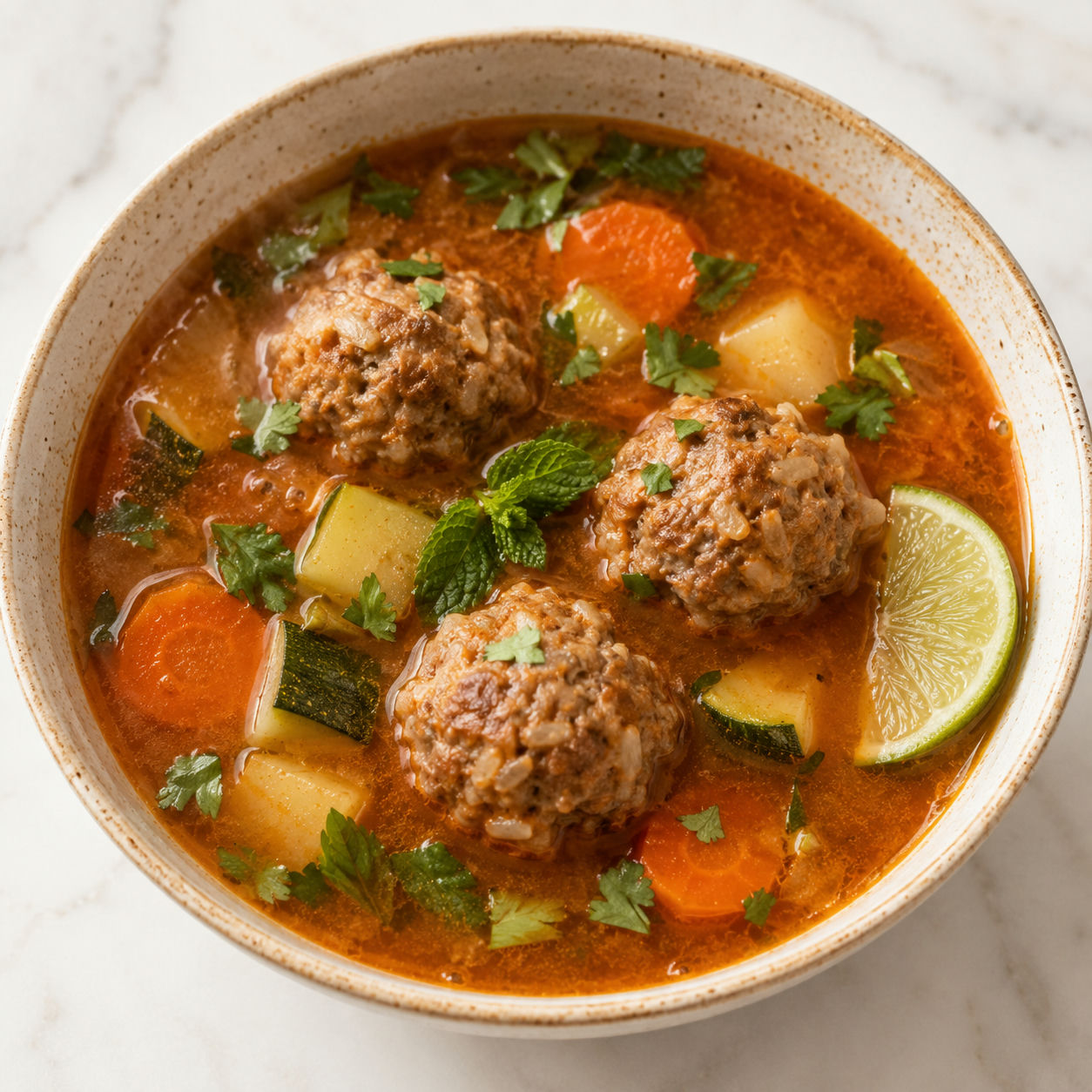
Authentic Mexican albondigas, or Mexican meatball soup, is the kind of pot that makes the whole kitchen smell like Sunday lunch. The broth is light and tomato-rich, but the meatballs make it filling enough for dinner.
The part that sets this soup apart is the meatball mix. A little soaked rice keeps the texture soft, and fresh mint gives the broth that unmistakable clean finish. It should taste cozy, not heavy.
Rice, Mint, and Caldo Basics
Use ground meat with a little fat and fresh vegetables that can simmer without turning mushy. The broth should be clear enough to sip, with tomato, onion, garlic, and herbs doing the quiet work.
- Ground beef and pork. The beef gives the meatballs body, while pork keeps them juicy and savory.
- Long-grain rice. Soaked rice softens inside the meatballs and gives albondigas their classic texture.
- Egg. It helps bind the meatballs so they hold together in the broth.
- Fresh mint. The small detail that makes the soup taste like albondigas instead of plain meatball soup.
- Mexican oregano and cumin. They add a warm, earthy flavor without making the broth muddy.
- Tomatoes, onion, and garlic. Blended and cooked down, they form the base of the caldo.
- Potatoes, carrots, and zucchini. These vegetables make the bowl hearty and soak up the tomato broth.
- Cilantro and lime. They brighten each bowl right before serving.
Build the Soup Gently
- Soak the rice. Cover the rice with hot water for 20 minutes, then drain it well so it softens inside the meatballs.
- Mix the albondigas. Combine the meats, rice, egg, mint, oregano, cumin, onion, garlic, salt, and pepper with a light hand. Shape into 18 to 20 meatballs.
- Cook the tomato base. Blend tomatoes, onion, and garlic, then simmer the puree in oil until it darkens slightly and smells sweet.
- Start the vegetables. Add broth, potatoes, and carrots, then simmer until the potatoes are just beginning to soften.
- Poach the meatballs. Lower the meatballs into the barely simmering broth one at a time. Cover and cook until firm and cooked through.
- Finish the pot. Add zucchini, cilantro, and extra mint for the last few minutes. Taste for salt and serve with lime.

Why the Rice Matters
Rice does more than stretch the meat. It keeps each meatball soft while the broth simmers. If you add dry rice straight from the bag, the grains can stay firm in the center. A short soak gives them a head start without making them mushy.
Mix the meat only until everything looks evenly speckled. Pressing and kneading makes tight meatballs. I like to shape them with damp hands, then set them on a plate while the broth comes to a simmer. If you enjoy brothy Mexican dinners, this sits in the same comfort zone as easy Mexican beef and rice soup.
Mint Makes It Albondigas
Fresh mint may sound surprising if you grew up with Italian-style meatballs, but it belongs here. It lightens the beef and pork, then perfumes the broth as the meatballs cook. Spearmint or yerba buena is best. Peppermint can taste sharp, so skip it if that is the only mint you have.
For a useful comparison, Mexico in My Kitchen notes how regional albondigas vary by household and available vegetables. That is true in practice. Some cooks add chayote, others add green beans, and some keep the broth very simple.
Vegetables That Hold Up
Potatoes and carrots need more time than zucchini, so they go into the broth first. Cut them small enough to fit on a spoon, about 1/2 inch. Zucchini goes in near the end so it stays tender instead of collapsing.
Jalapenos are optional. I like to slit them and simmer them whole, which adds a gentle green flavor without turning the pot fiery. If you want more heat, mince one chile and blend it into the tomato base. For another Mexican soup night, the deeper beef broth in traditional Mexican caldo de res is a good next pot to try.
Serving It Mexican Style
Ladle the soup into deep bowls with two or three albondigas per serving, plenty of broth, and a few pieces of each vegetable. Finish with cilantro, a squeeze of lime, and sliced avocado if you have it. Warm tortillas on the side make it feel complete.
This soup is filling, but it is not greasy when cooked gently. If fat rises to the top, skim a little off with a spoon before serving. For meatball lovers, it is fun to compare this with Italian meatball soup, where the herbs and broth point in a totally different direction.
Storage Without Tough Meatballs
Cool the soup, then refrigerate it in airtight containers for up to 4 days. Reheat it on the stove over low heat until the broth is steaming. Avoid a strong boil after the meatballs are cooked, since that can make them bouncy.
You can freeze albondigas soup for up to 3 months. Potatoes soften after freezing, but the flavor holds up well. If you are cooking ahead on purpose, freeze the broth and meatballs before adding zucchini, then add fresh zucchini when you reheat.
Summary
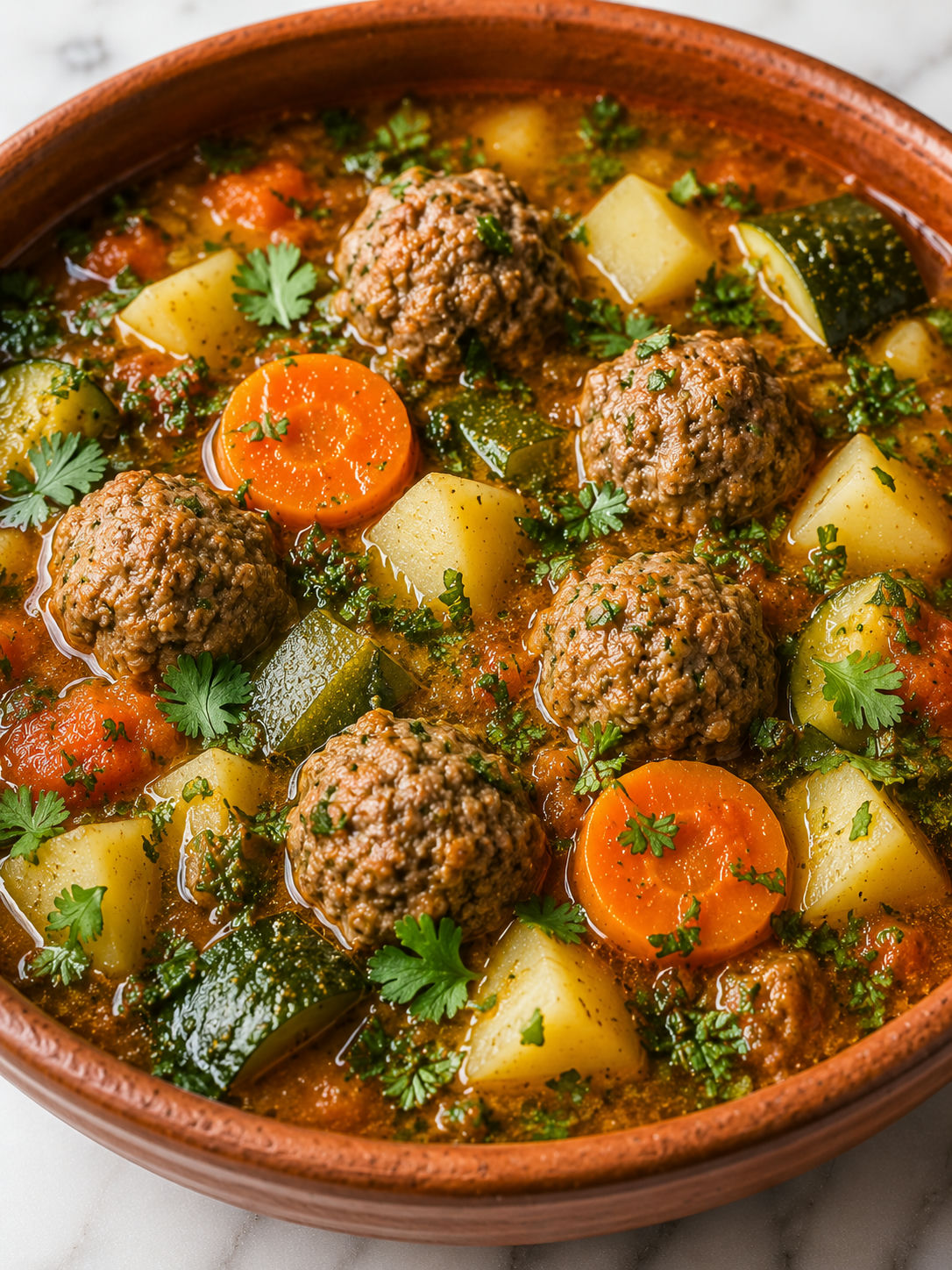
Serve hot with lime, cilantro, warm tortillas, and a spoonful of broth in every bite.
FAQs
- What does albondigas mean?
Albondigas means meatballs in Spanish. In Mexican cooking, sopa de albondigas usually means meatballs simmered in a tomato-based broth with vegetables and herbs.
- Why do you put rice in albondigas?
The rice swells as the meatballs cook, which keeps them tender and gives them a gentle bite. Soaking the rice first helps it cook through before the meat gets firm.
- Can I make albondigas with only beef?
Yes. Use 1 1/2 pounds of ground beef if you prefer. A little pork adds richness, but beef alone still works if you handle the mixture lightly and avoid overcooking.
- How do I keep the meatballs from falling apart?
Use egg, soaked rice, and finely minced onion so the mixture binds evenly. Drop the meatballs into a gentle simmer, not a rolling boil, and do not stir hard for the first 10 minutes.
- Can I make Mexican albondigas ahead?
Yes. You can shape the meatballs up to one day ahead and keep them covered in the fridge. The finished soup also reheats well, but use low heat so the meatballs stay tender.
- What do you serve with albondigas soup?
Warm corn tortillas, lime wedges, cilantro, sliced avocado, and Mexican rice are all good choices. For a fuller table, pair it with a simple side like easy Mexican style rice.
