 Pin it
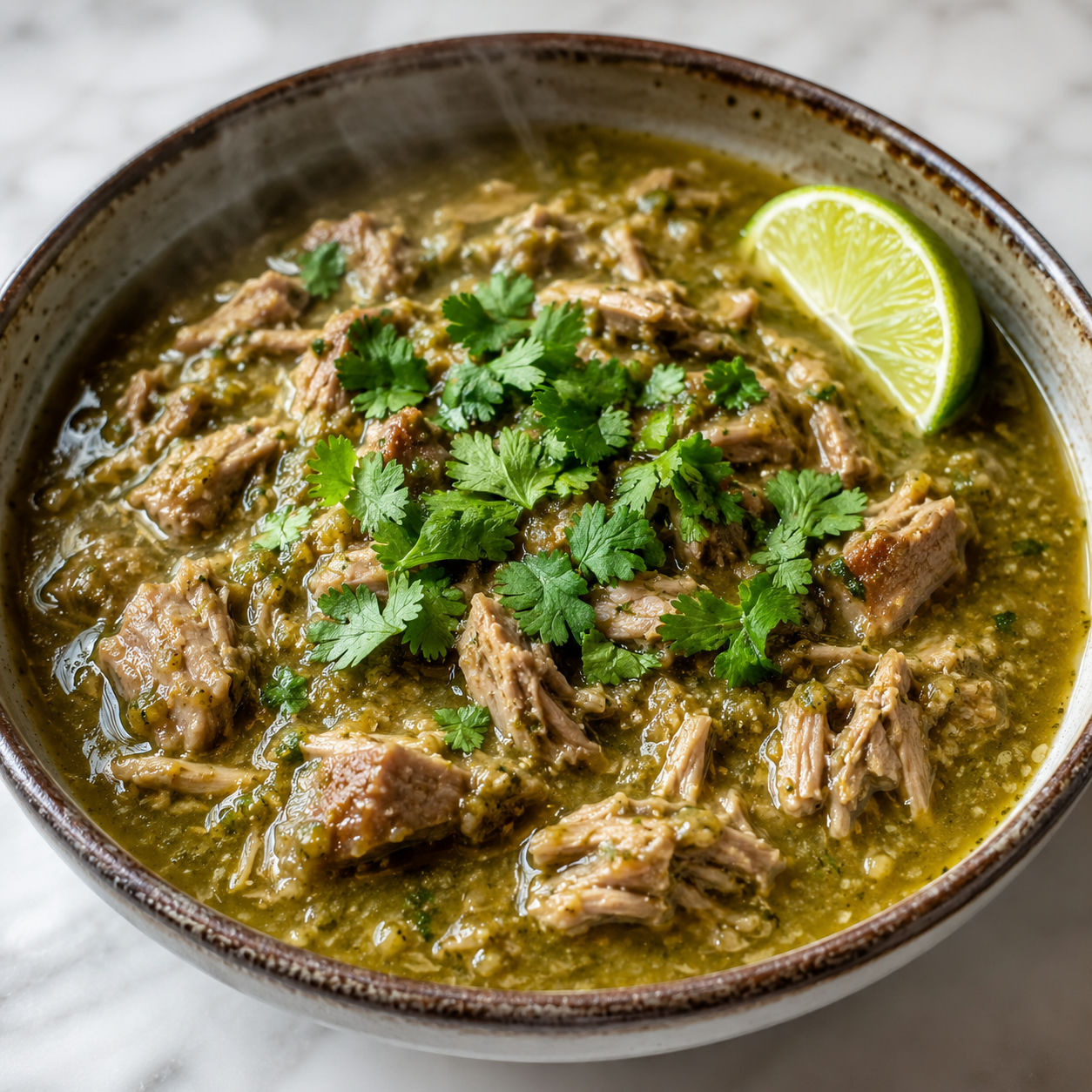
Chili verde is one of those dishes that gets better the longer you let it go. The pork turns tender in the green sauce, and the sauce picks up a smokiness from charred tomatillos and peppers that you cannot replicate with a shortcut. This version earns the word "authentic" because the technique matches what you find in real Mexican home kitchens.
Simple ingredients, mostly hands-off cooking, and a long quiet simmer. That is it.
The Chiles, Pork, and Tomatillos
A short list that rewards quality. Look for firm tomatillos with papery husks still on, and choose pork shoulder with visible fat running through it since that fat keeps the meat moist through the long cook.
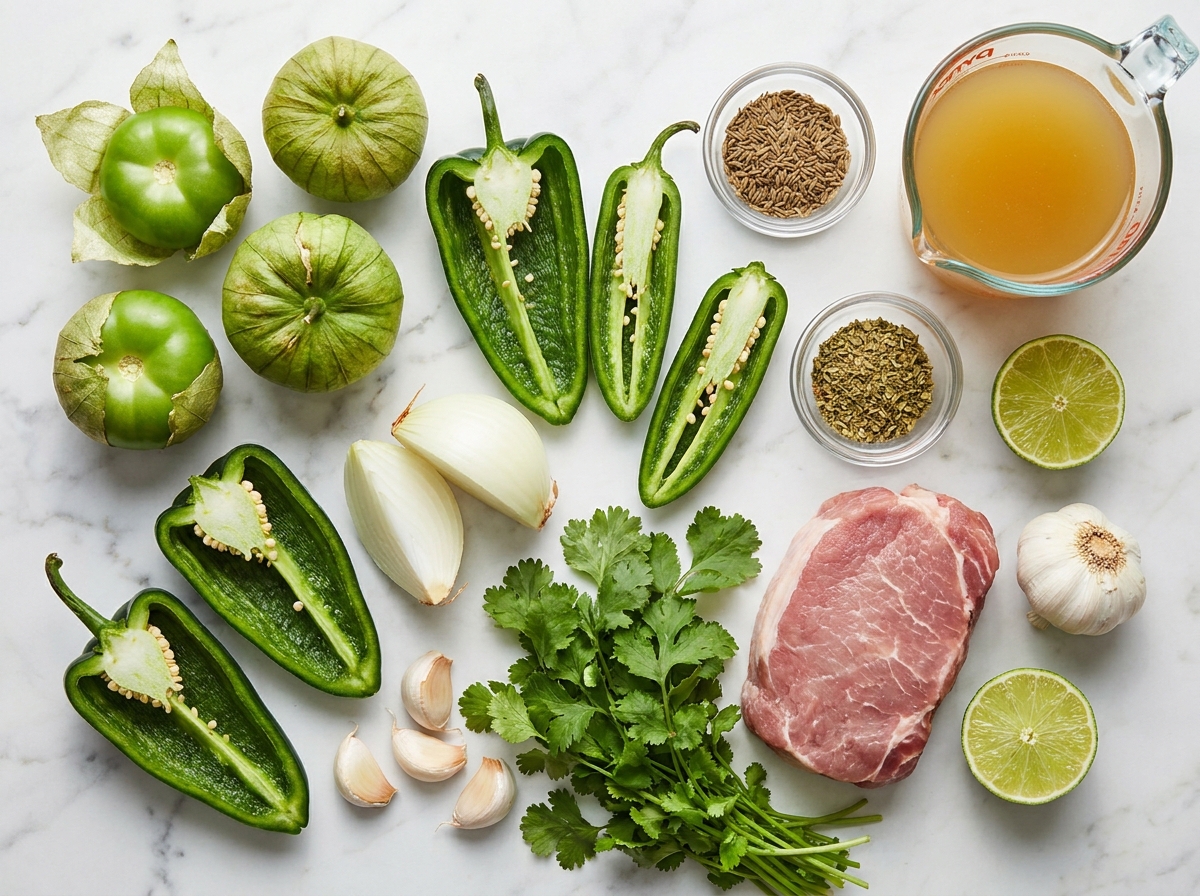
- Tomatillos. The backbone of the sauce, tangy and slightly fruity, they char beautifully under the broiler for a smoky depth you cannot get any other way.
- Poblano peppers. Mild and earthy, they add body and gentle heat without overwhelming the other flavors.
- Jalapeño peppers. Sharper and brighter than poblanos. Remove seeds for moderate heat or leave them in for more fire.
- White onion. Charred wedges develop a sweetness that rounds out the sauce naturally.
- Garlic. Broiled unpeeled alongside the vegetables, it comes out roasted and deep rather than sharp and raw.
- Cilantro. Blended into the sauce for color and stirred in fresh at the end to keep the dish bright.
- Pork shoulder. The marbling keeps it juicy through a long simmer and the meat shreds apart with almost no effort at the end.
- Chicken broth. Adds savory depth to the braising liquid. Low-sodium gives you better control over the final seasoning.
- Cumin. Warm and earthy. Toast the seeds in a dry pan and grind them fresh for the best result.
- Mexican oregano. Slightly more citrusy than Italian oregano and worth seeking out for an authentic flavor.
From Fire to Pot, Step by Step
- Char the vegetables. Set your broiler to high. Place tomatillos, onion wedges, and unpeeled garlic on a foil-lined baking sheet. Lay poblano and jalapeño halves cut side down. Broil 6 to 8 minutes until skins are blistered and blackened in spots.
- Blend the sauce. Transfer everything from the baking sheet to a blender, peeling the garlic first. Add 1 cup of cilantro and blend until smooth. Set aside.
- Brown the pork. Season pork cubes with salt and pepper. Heat oil in a large Dutch oven over medium-high heat. Brown in uncrowded batches, 3 to 4 minutes per batch, until well-seared on all sides. Remove to a plate.
- Build the braise. Pour the green sauce into the same pot, scraping up any browned bits. Add chicken broth, cumin, and oregano. Return all the pork and bring to a boil.
- Simmer low and slow. Reduce heat to the lowest setting, cover, and cook for 2 to 3 hours, stirring every 30 minutes, until the pork falls apart easily when pressed.
- Finish and serve. Adjust salt. Stir in lime juice and chopped cilantro. Serve hot.
Why the Char Makes All the Difference
The step that separates real chili verde from a thin green stew is the broiler. Tomatillos and chiles blended raw give you a watery, grassy sauce. Broiled until blistered and blackened, those same vegetables develop caramelized sugars and a smokiness that transforms the sauce entirely. It takes 8 minutes and costs nothing extra. Do not skip it.
The same logic applies to the garlic. Leave the cloves unpeeled on the baking sheet, let them get dark and soft, then pop them out before blending. Roasted garlic is sweeter and richer than anything raw garlic brings to a sauce.
Choosing the Right Pork Cut
Pork shoulder (also sold as pork butt or Boston butt) is the right cut for this stew. It has enough intramuscular fat to stay moist through 2 to 3 hours of braising and enough collagen to thicken the sauce naturally as it cooks down. A lean cut like pork loin will dry out and turn stringy long before it becomes tender.
Pat the cubes very dry before they go into the pan. Dry surface means fast browning. Wet surface means steaming, and you will not get the sear that builds the flavor base. The USDA recommends 145°F for pork, and in a long braise the meat easily clears that and becomes pull-apart tender.
Stovetop, Oven, or Slow Cooker
This recipe works in all three. The stovetop simmer is the default. Use the lowest heat setting with the lid on for 2 to 3 hours. For the oven, transfer the covered Dutch oven to 325°F and braise for the same duration. Oven heat comes from all sides with no risk of the bottom scorching.
For the slow cooker, pour everything in after step 4 and cook on low for 8 to 10 hours or on high for 4 to 5 hours. If you enjoy other low-and-slow green chile dishes, the Comforting Caldillo de Chile Verde Stew is a natural companion. The Slow-Simmered Chili Verde with Spanish Rice is also the perfect spread to build around this stew.
Adjusting Heat and Easy Swaps
With seeds removed from both chiles, this recipe lands at mild to medium. To add heat, keep a few jalapeño seeds in the blender or add one serrano to the baking sheet. For a very mild version, swap both jalapeños for Anaheim peppers.
If fresh tomatillos are unavailable, drained canned tomatillos work. They are softer and won't char as aggressively, so roast them as long as possible to develop flavor. You can also use bone-in beef chuck instead of pork for a heartier variation, though it will need the full 3 hours.
Serving and Storing the Stew
Ladle chili verde into bowls and serve with warm corn or flour tortillas. Sour cream or cotija cheese on top is optional but very good. For a fuller table, add authentic pinto beans and Mexican red rice alongside. Leftovers keep in the fridge for up to 4 days and freeze well for 3 months. The stew tastes noticeably better on day two.
FAQs
- What is chili verde made of?
Chili verde is a Mexican pork stew built on a green sauce of charred tomatillos, poblano peppers, jalapeños, onion, garlic, and cilantro. The pork shoulder is browned first then slow-cooked in that sauce until fall-apart tender. Cumin, oregano, and chicken broth round out the flavor.
- Can I use chicken instead of pork?
Yes. Bone-in chicken thighs work well here. Reduce cook time to 45 minutes to 1 hour on the stovetop since chicken tenderizes much faster than pork shoulder. The green sauce will taste just as good.
- How spicy is authentic chili verde?
With seeds removed from the poblanos and jalapeños this recipe is mild to medium. Add a serrano or leave some jalapeño seeds in the blender to push the heat up. Swap both jalapeños for Anaheim peppers for a very mild version.
- Can I make chili verde in a slow cooker?
Yes. After browning the pork and blending the green sauce, transfer everything to your slow cooker and cook on low for 8 to 10 hours or on high for 4 to 5 hours. The result is nearly identical to the stovetop version.
- How do I store and reheat chili verde?
Refrigerate leftovers in an airtight container for up to 4 days. It also freezes well for up to 3 months. Reheat on the stovetop over low heat, adding a splash of broth if the sauce has thickened during storage.
- What do you serve with chili verde?
Warm tortillas are the classic pairing. A pot of homemade pinto beans and Mexican red rice make it a complete meal. Sour cream and cotija cheese on top are optional but excellent.
- Does chili verde taste better the next day?
It really does. The pork absorbs more of the green sauce overnight and the flavors deepen noticeably. Make it a day ahead, refrigerate, and reheat gently before serving. It is one of the best make-ahead dishes you can keep in your rotation.
