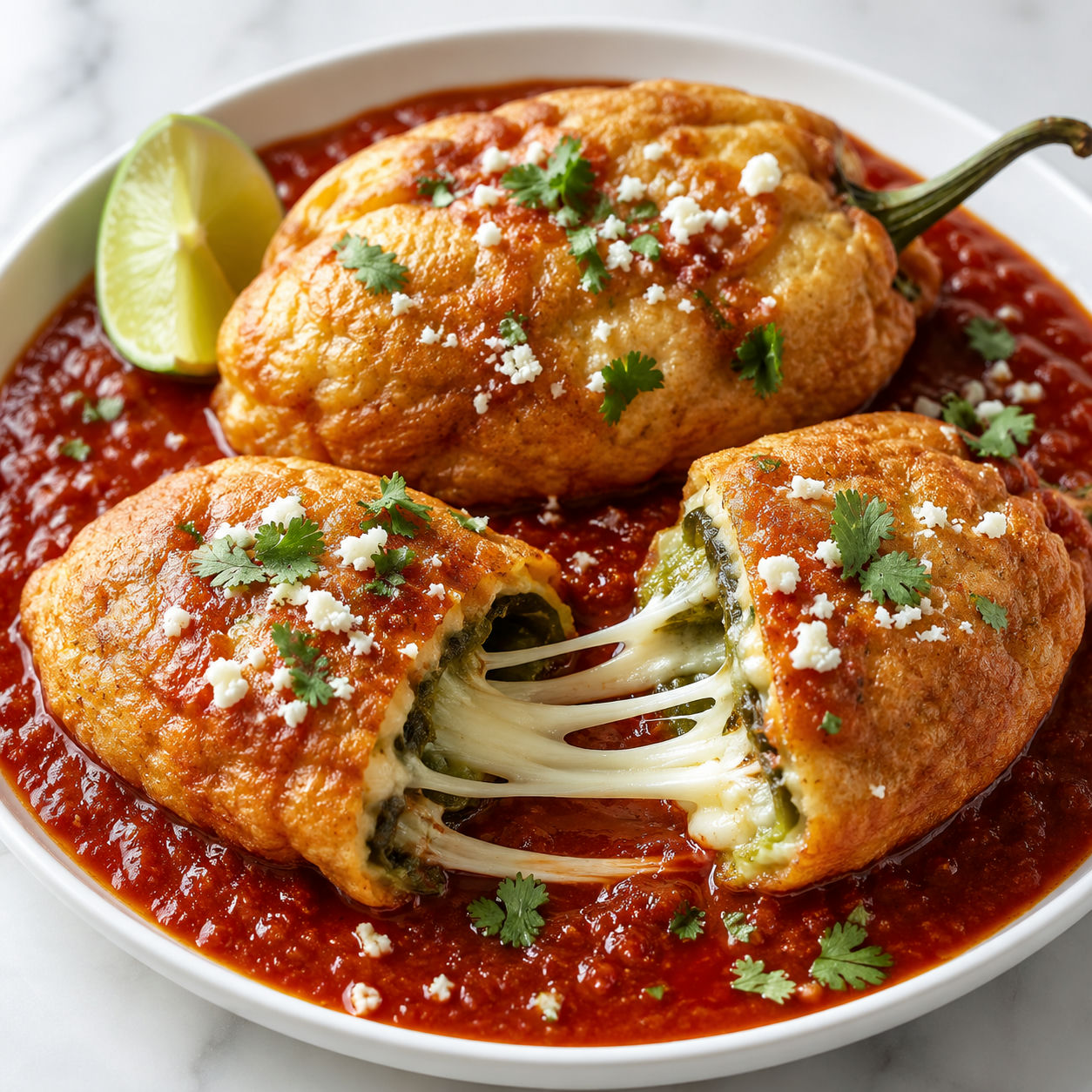
 Pin it
Hatch chiles have a short season and a loyal following for good reason. They carry a sweetness and a mild, earthy heat that poblanos don't quite match, and when you roast them fresh, the skins blister and char in a way that fills the kitchen with something close to summer.
These chile rellenos follow the method home cooks across New Mexico use: stuff with cheese, coat in a light egg batter called capeado, and fry until the outside puffs and browns while the cheese inside melts completely. It takes some patience with the egg whites, but nothing about it is actually difficult.
This is the kind of recipe worth making when Hatch chile season hits in late summer. If you can't find fresh ones, frozen whole roasted Hatch chiles work nearly as well.
Inside the Stuffed Hatch Chile
The ingredient list is short, and quality carries more weight than variety here. Look for large, firm Hatch chiles with unbroken skin so the filling stays sealed, and choose a cheese that melts cleanly without turning oily.
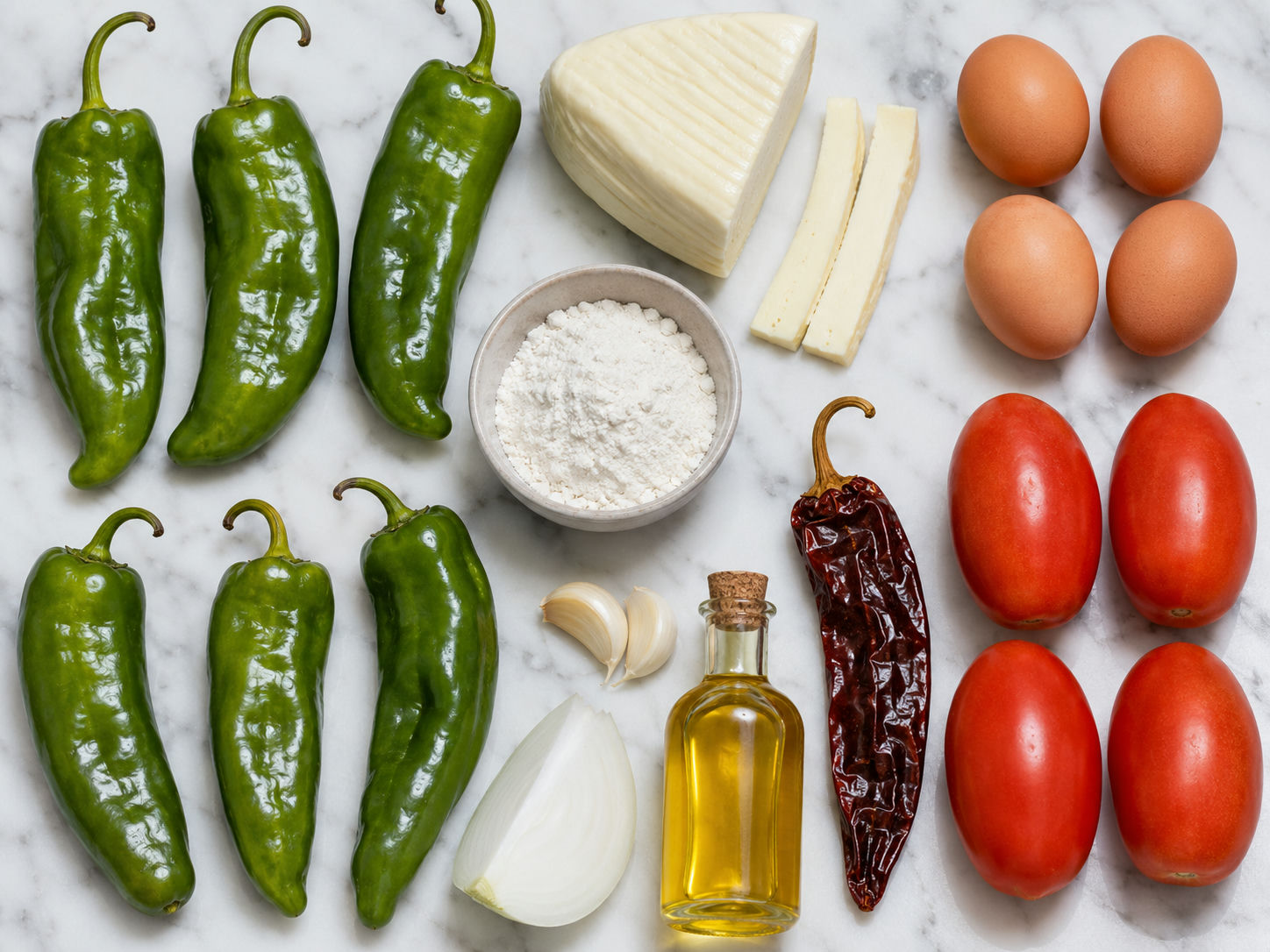
- Hatch green chiles. The reason to make this recipe. Large, uniform chiles hold the filling better and seal around the egg batter more evenly during frying.
- Oaxaca or Monterey Jack cheese. Both melt smoothly and pull cleanly. Cut them into fingers that fit the length of each chile without overstuffing the cavity.
- Eggs. The batter depends on separated eggs. Beaten whites give the coating its lift and puffy texture. Yolks add richness and help the batter set around the chile.
- All-purpose flour. Used twice: as a light dusting on the outside of each chile, and as a small addition folded into the batter to strengthen the beaten whites.
- Vegetable oil. You need enough depth for the chiles to float and turn. A neutral oil held at the right temperature keeps the batter from absorbing grease.
- Salsa roja. A quick tomato and chile sauce spooned underneath each relleno. It adds a bright, slightly acidic contrast to the rich batter and ties the plate together.
How the Batter and Fry Work
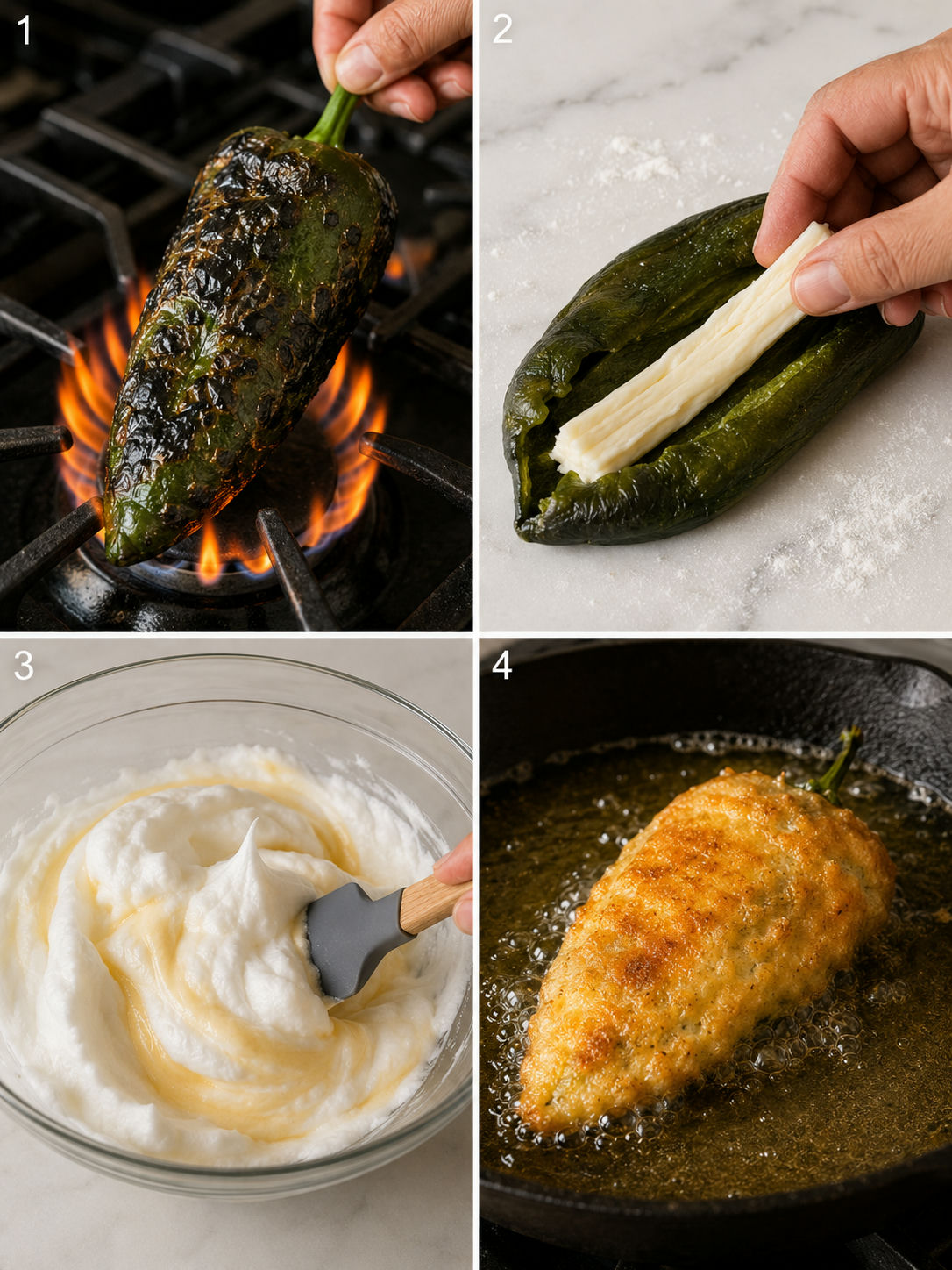
- Roast the chiles. Place whole Hatch chiles directly over a gas flame or under a high broiler. Turn every couple of minutes until the skin is blistered and charred all over, about 8 to 10 minutes total. Transfer to a bowl, cover tightly with plastic wrap, and let them steam for 10 minutes.
- Peel and seed. Rub the charred skin off under cold running water. Cut a small slit near the stem and remove seeds and veins through it, keeping the stem intact if you can. Pat each chile very dry with paper towels.
- Make the salsa roja. Blend 4 roma tomatoes, 2 cloves garlic, a quarter white onion, and 1 stemmed dried guajillo chile with a pinch of cumin and salt until smooth. Fry the blended sauce in a small saucepan with a teaspoon of oil until it darkens and thickens, about 5 minutes. Keep warm on low heat.
- Stuff each chile. Slide one or two strips of cheese into each chile through the slit. Press the opening gently closed. Dust each stuffed chile lightly all over with flour and set them on a plate.
- Beat the egg batter. Separate 4 eggs. Beat the whites with a pinch of salt until stiff peaks form. In a small bowl, whisk the yolks with a quarter cup of flour and a pinch of salt, then fold that mixture gently into the whites with a spatula using broad, slow strokes. Use the batter immediately.
- Heat the oil. Pour about 2 inches of vegetable oil into a deep heavy skillet and heat to 350°F (175°C). A drop of batter should sizzle and float right away when the oil is ready.
- Fry the rellenos. Dip each floured chile into the egg batter, coating it completely. Lower carefully into the hot oil and fry 2 to 3 minutes per side until golden and puffy. Fry two at a time at most. Drain on paper towels.
- Plate and serve. Spoon warm salsa roja onto each plate, set the rellenos on top, and garnish with crumbled Cotija, fresh cilantro, and a lime wedge. Serve right away.
Getting the Egg Batter Right
The batter is called capeado, and it's the one part of this recipe that trips people up the first time. You need stiff peaks on the egg whites before anything else goes in. Use a clean, completely dry bowl and beaters with no trace of yolk, because fat breaks foam and you won't get the lift you need.
Once the whites are stiff, fold in the yolk mixture with a spatula using broad, slow strokes. You're trying to preserve the air you just worked in. Then use the batter immediately. If it sits even five minutes, it deflates and fries flat instead of puffy.
What Makes Hatch Chiles Different
Hatch chiles come from the Hatch Valley in southern New Mexico, where high altitude, warm days, and cool nights produce a pepper with distinctive earthy sweetness and mild to medium heat. They're not interchangeable with poblanos, which are thicker and earthier without the same brightness.
The Chile Pepper Institute at New Mexico State University tracks dozens of Hatch varieties from the mild Big Jim to the considerably hotter Barker. Most grocery store frozen Hatch chiles are Big Jim or a labeled-mild blend, which makes them easy to work with for most palates. Fresh chiles peak in August and September. Outside that window, frozen whole roasted Hatch chiles work nearly as well. If you have extra chiles from a batch, the Southwest Hatch Chile Cheese Cornbread is one of the best ways to use them.
Filling Options Beyond Just Cheese
Cheese alone is the classic version and the best place to start. Oaxaca melts into long strings that pull out when you cut in. Monterey Jack is creamier and a bit richer.
If you want a heartier relleno, mix the cheese with a few tablespoons of shredded pork carnitas or seasoned ground beef. Keep the filling compact so it doesn't push through the slit when you press the chile closed. A small spoonful of cream cheese mixed into shredded meat adds cohesion and keeps the filling from leaking into the oil during frying.
If you want to skip frying entirely, the Baked Chile Rellenos Casserole uses the same stuffed chiles layered in a cheesy egg custard and baked. Less crispy, but much more hands-off.
Why Oil Temperature Decides Everything
Oil that's too cool soaks into the batter before it can set. You get a heavy crust that sometimes slides right off the chile. Oil that's too hot burns the outside while the cheese inside is still cold. 350°F (175°C) is the right target, and a kitchen thermometer removes the guesswork completely.
Fry two chiles at a time at most. Adding too many drops the temperature quickly, and the batter goes pale and soft instead of puffing right away. Give each one room to float and turn it once with tongs, gently enough that the batter doesn't tear.
What to Serve Alongside
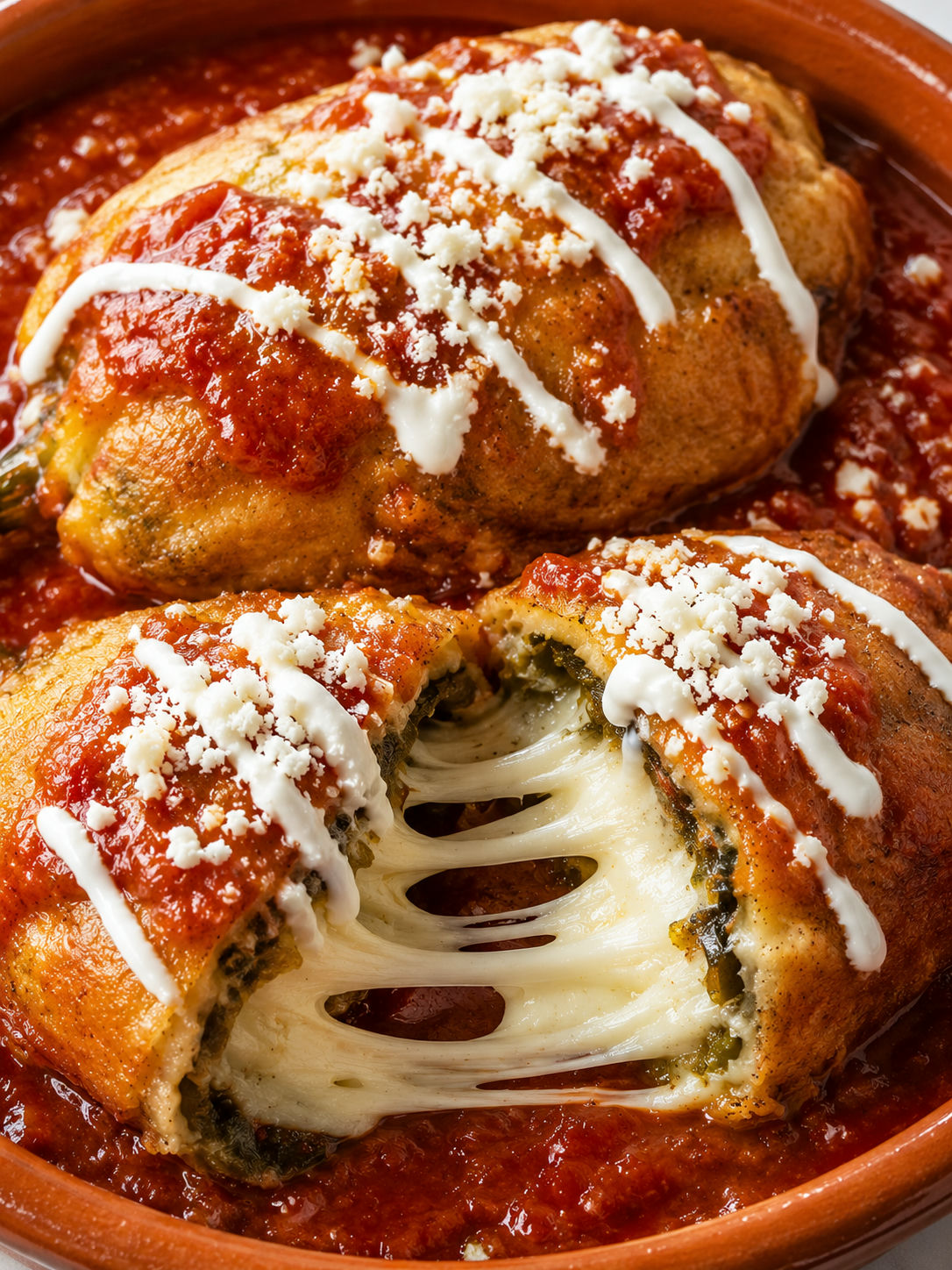
Salsa roja is the traditional base, but a smoky Chimayo red chile sauce spooned underneath takes it further if you have it on hand. A drizzle of Mexican crema, a few crumbles of Cotija, and a wedge of lime complete the plate without competing with the chile itself.
For a full New Mexican spread, rice and refried beans are the obvious choice. A pot of green chile papas and beans on the table alongside this rounds out the meal.
Keeping and Reheating Rellenos
Freshly fried is always the best way to eat these. Leftovers are still good the next day, but the batter softens as it sits. Let them cool completely, then store in a single layer in an airtight container in the refrigerator for up to two days.
To reheat, set them on a wire rack over a baking sheet and warm at 375°F (190°C) for 10 to 12 minutes. The oven brings some of the crispness back. A microwave steams them and makes the batter collapse, so skip it. Don't wrap warm rellenos in plastic wrap either, because the trapped steam does the same thing.
FAQs
- Can I use poblano chiles instead of Hatch chiles?
Yes, poblanos are the most common substitute and work with the same batter and technique. They're slightly thicker and earthier in flavor, but the method is identical. Outside of Hatch season, frozen whole roasted Hatch chiles sold at most major grocery stores are the better swap if you want the real flavor.
- Why does my egg batter slide off the chile?
Two things cause this: the chile wasn't dry enough, or the oil wasn't hot enough. Pat the chiles very dry after peeling, then dust them thoroughly in flour before dipping. The flour gives the wet batter something to grab. If the oil is below 340°F, the batter absorbs grease before it sets and slips right off.
- Can I make chiles rellenos ahead of time?
You can roast and stuff the chiles a full day ahead, store them covered in the refrigerator, and fry right before serving. The batter must be made fresh every time. Once you beat egg whites, they deflate within minutes, so mix the capeado only when you're ready to start frying.
- What cheese works best for chile rellenos?
Oaxaca cheese is the traditional choice and melts into long, stringy pulls with a mild, milky flavor that lets the chile come through. Monterey Jack is an easy substitute. Skip aged cheddar since it melts differently and tends to turn oily and grainy inside the hot batter.
- How spicy are Hatch chiles?
Hatch chiles range from mild to medium-hot depending on the variety. Big Jim is the mildest and most widely available. Sandia and Barker varieties run hotter. Most frozen Hatch chiles at grocery stores are labeled mild or medium. Removing all seeds and veins brings the heat down significantly if you're cooking for anyone sensitive to spice.
- Can I freeze leftover chile rellenos?
Yes, though the batter loses some of its puff. Freeze them on a baking sheet until solid, then transfer to a freezer bag. Reheat from frozen at 375°F on a wire rack for 15 to 18 minutes. The texture won't be as light as fresh, but the flavor holds well.
- What sauce goes best with chiles rellenos?
Salsa roja made from roasted tomatoes is the most traditional pairing. A red chile enchilada sauce gives the plate a deeper, smokier base. Some home cooks serve them sitting in a thin tomato broth rather than a thick sauce, which keeps the batter on the bottom from going soft. All three options work.
