 Pin it
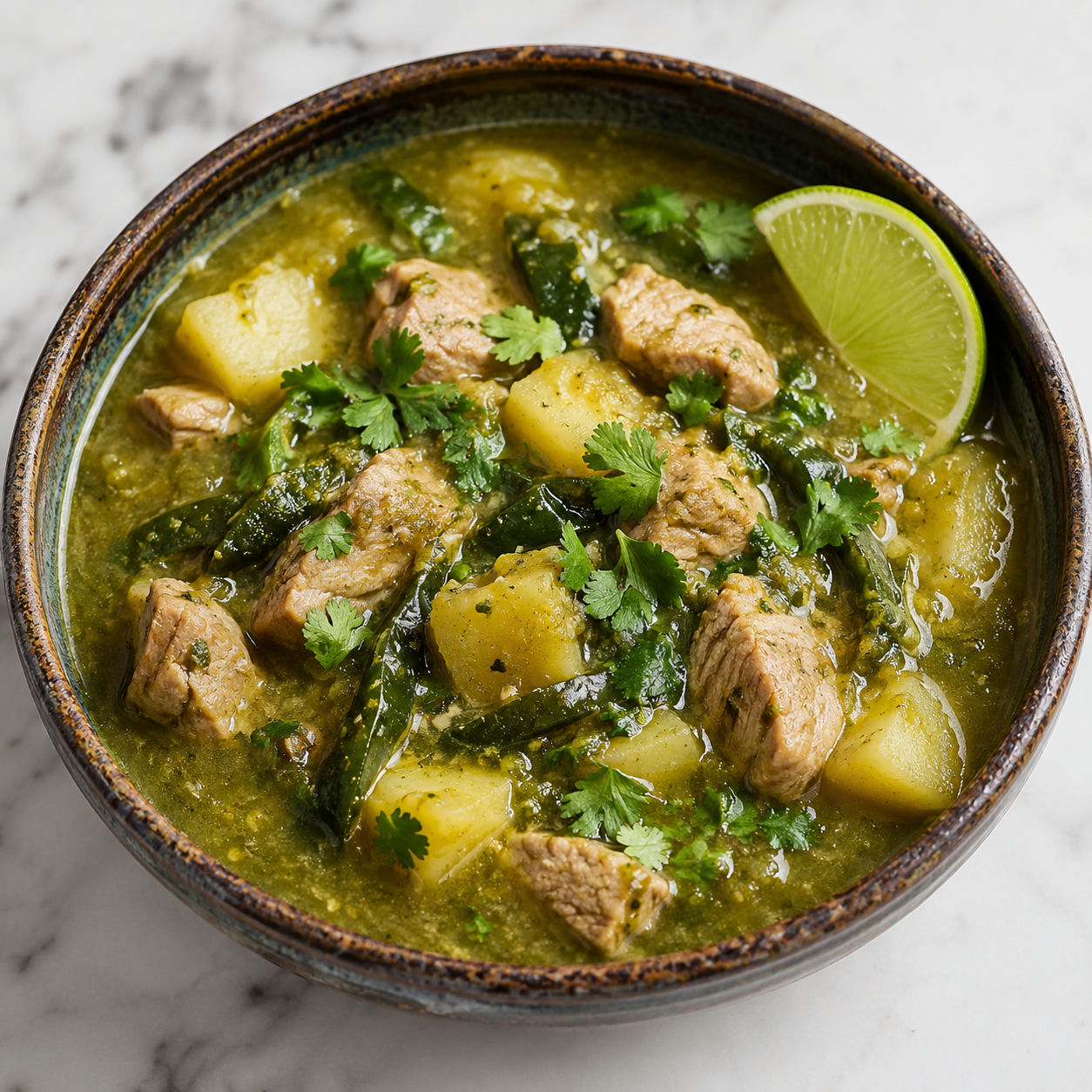
This is the stew New Mexican home cooks make when they want something that actually holds up. Pork shoulder braised low and slow in a sauce built from fire-roasted Anaheim chiles, charred tomatillos, and a full head of garlic. The heat is real but layered, not one-note.
The potatoes go in near the end, fried first so they hold their shape and soak up the chile flavor without falling apart. Most of the time is hands-off. The result feeds eight comfortably and tastes even better the next day.
The chiles behind the green sauce
This recipe uses three types of fresh green chiles, each one doing something different. Firm Anaheim peppers with good color and tomatillos that feel tight inside their papery husks will give you the best sauce.
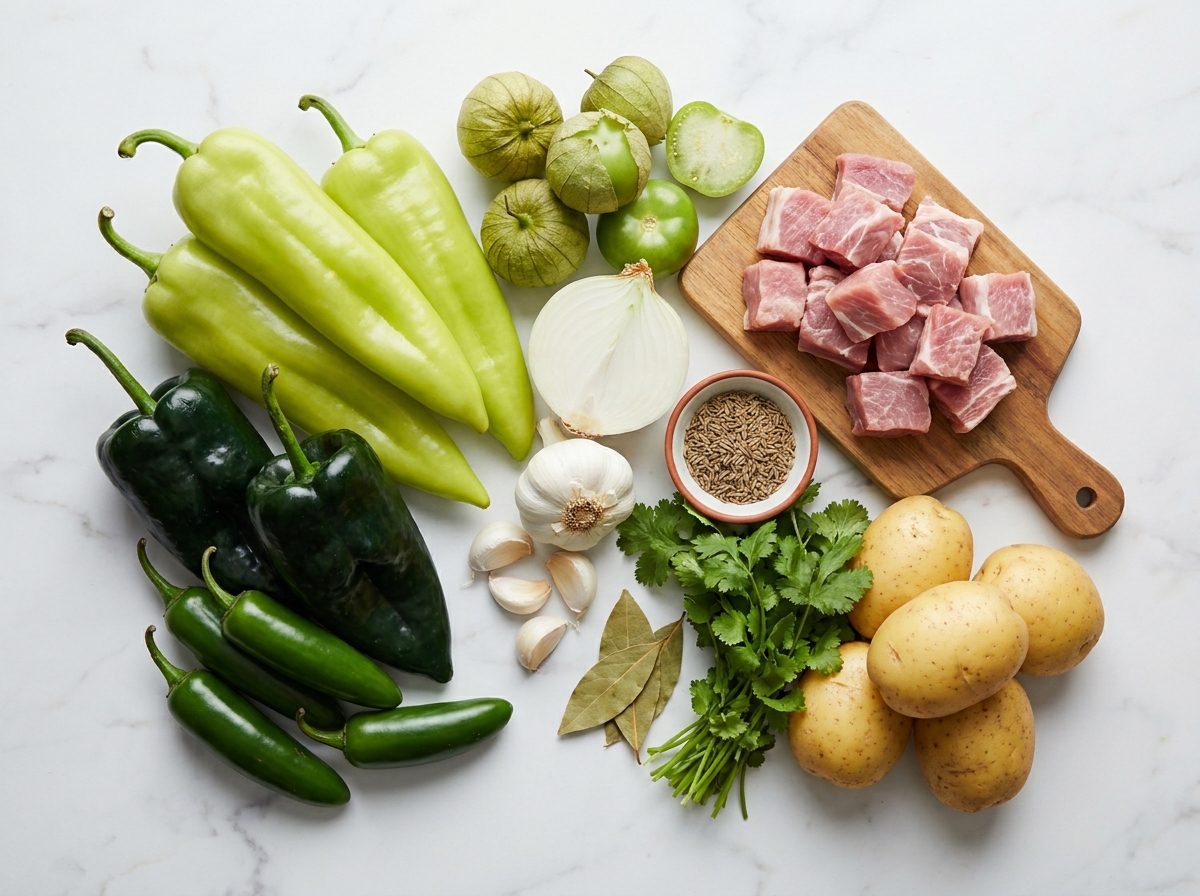
- Pork shoulder or butt. Enough fat and connective tissue to melt during the braise and keep the meat moist throughout.
- Anaheim chiles. The backbone of the sauce. Mild heat and grassy sweetness in enough volume to give the stew its color and body.
- Poblano peppers. Earthy and slightly smoky. Half go into the blender; the other half get sliced and folded in whole at the end.
- Jalapeños. Forward heat. Leave the seeds in for a spicy stew or remove them for moderate warmth.
- Tomatillos. Charred under the broiler until blackened in spots. They bring tartness and structure to the blended sauce.
- Garlic. Half roasted whole with the tomatillos for sweetness; half sautéed fresh with the onion for a sharper layer.
- Yukon Gold potatoes. Pan-fried until golden before going into the stew so they hold their shape instead of dissolving.
- Cumin seeds and Mexican oregano. Ground fresh in a mortar right before they go into the pot for the brightest flavor.
How the braise comes together
- Season the pork. Combine salt, granulated garlic, and black pepper. Toss the pork cubes in the seasoning and set aside while you prep the chiles.
- Broil the chiles and tomatillos. Place peppers on a wire rack over a baking sheet. On a second sheet, place tomatillos cut-side down with the thickly sliced half-onion and 6 unpeeled garlic cloves. Broil on high. Pull the tomatillo sheet at 10 minutes when charred in spots. Flip the chiles and remove at 15 minutes total. Cover chiles with a kitchen towel and steam for 10 minutes.
- Sear the pork in batches. Heat lard or oil in a large heavy pot over medium-high. Brown the pork in batches for about 6 minutes per round without crowding. Transfer each batch to a bowl.
- Start the braise. Return all pork to the pot. Add diced raw onion and minced raw garlic and sauté for 5 minutes. Pour in 3 cups water, partially cover, and simmer gently for 45 minutes.
- Blend the green chile sauce. Peel the blistered skins off the rested chiles. Slice the poblanos into strips and set aside. Blend the remaining chiles with the roasted tomatillos, roasted onion, peeled roasted garlic, cilantro, and 2 cups water until smooth. Season with salt.
- Simmer with the sauce. Pour the sauce into the pot and stir. Crush cumin seeds and oregano in a mortar, add 1/4 cup water, and stir that into the pot too. Add bay leaves, partially cover, and simmer 40 minutes until the pork is fall-apart tender.
- Fry the potatoes. Heat oil in a skillet over medium. Fry potato cubes for about 10 minutes until golden on most sides. Season with salt and pepper.
- Finish and serve. Fold the fried potatoes and reserved poblano strips into the stew. Cook 15 more minutes. Discard bay leaves, taste for salt, and serve hot with warm tortillas, rice, and beans.
Why the broiler step is non-negotiable
You could add the chiles raw and save twenty minutes. The stew will cook through, but it tastes flat compared to what the broiler does. High heat blisters the skin, concentrates the natural sugars, and introduces a charred quality that runs through the entire finished sauce.
After the chiles come out, cover them and leave them alone for ten minutes. That steam loosens the skins so they pull off cleanly. Do not rinse the chiles under water to speed up peeling. The roasted oils clinging to the flesh are most of the flavor. Pull the skins off dry.
Why you sear the pork before braising
Adding seasoned pork directly to water works technically. The meat cooks through. But it tastes like boiled pork. The crust that forms when each cube hits a hot, fat-coated pan adds a savory depth that no amount of chile or seasoning can replicate after the fact.
Two things make this step work. Pat the pork dry before it goes in. Wet meat steams instead of sears and produces no color. Work in two or three rounds with real space between pieces so the pan stays hot throughout.
Hatch chiles and smart swaps
Hatch green chiles are the traditional New Mexican choice and make this stew exceptional during the late-summer harvest season. Swap them in for the Anaheim chiles one-to-one. The Chile Pepper Institute at NMSU has solid background on heat levels and varietals worth reading before you shop.
For a vegetable variation, hominy works well alongside or instead of the potatoes. It adds a pleasant chew and holds up beautifully in the sauce. This green chile papas and beans with chicos is a natural pairing from the same green chile family.
Why frying the potatoes matters
Adding raw potato cubes directly to the braise sounds simpler. They cook through eventually, but they go soft and start to fall apart in a long-simmered stew, turning the sauce muddy and starchy. Frying them separately first for ten minutes gives them a golden crust that holds up through the final 15 minutes in the pot.
Keep them in only for that last stretch. Any longer and even the fried crust gives up. You want a potato that absorbed the green chile flavor but still has real texture when you bite it.
Serving, storing, and reheating
The classic plate is warm flour tortillas, Mexican red rice, and refried beans. A lime wedge on the side is not traditional but it brightens the bowl. Caldillo also makes an excellent burrito filling the next day, similar to this slow-simmered chili verde with Spanish rice and pork.
Store leftovers in an airtight container in the refrigerator for up to four days. Reheat over medium-low with a splash of water. The USDA food safety guidelines recommend keeping cooked pork at 40°F or below and consuming within 3 to 4 days. Freeze the pork and sauce without the potatoes for up to three months.
FAQs
- Which pork cut works best for caldillo de chile verde?
Pork shoulder and pork butt are the right choices. They have enough fat and connective tissue to break down during a long braise without drying out. Pork loin turns dry and chewy and is not suitable. Cut the shoulder or butt into 1-inch cubes for even cooking.
- Can I use canned green chiles instead of fresh?
You can substitute canned whole green chiles for the Anaheim portion when fresh are unavailable. Drain them well and skip the roasting step for those. The stew will have less smoky depth but still turns out good. Keep fresh jalapeños and roast the poblanos and tomatillos regardless.
- How do I reduce the heat level?
Remove the seeds from the jalapeños before broiling. The seeds and inner membranes carry most of the capsaicin. Using two jalapeños instead of four also helps. The Anaheim and poblano chiles are mild on their own and add flavor without serious heat.
- Can I make this a day ahead?
Yes, and it is genuinely better the next day. Make the stew through the final simmer and refrigerate overnight. Fry a fresh batch of potatoes when you reheat and fold them in for 15 minutes. The pork absorbs more of the green chile sauce as it rests.
- Can I freeze caldillo de chile verde?
Freeze the pork and sauce without the potatoes. Fried potato texture suffers badly in the freezer. Store in airtight containers for up to three months. Thaw overnight in the refrigerator, reheat gently, and fry a fresh batch of potatoes to fold in at the end.
- What can I substitute for lard?
Avocado oil is the best substitute. It has a high smoke point and neutral flavor that works well for both the searing and potato-frying steps. Avoid extra-virgin olive oil for the high-heat sear, as it smokes and turns bitter before pork can properly brown.
- What does caldillo de chile verde mean?
Caldillo is a diminutive of caldo, the Spanish word for broth or soup, translating roughly to small broth or light stew. Chile verde means green chile. In New Mexican cooking the name refers specifically to this pork and green chile stew, distinct from the thicker preparations found in other regions.
