 Pin it
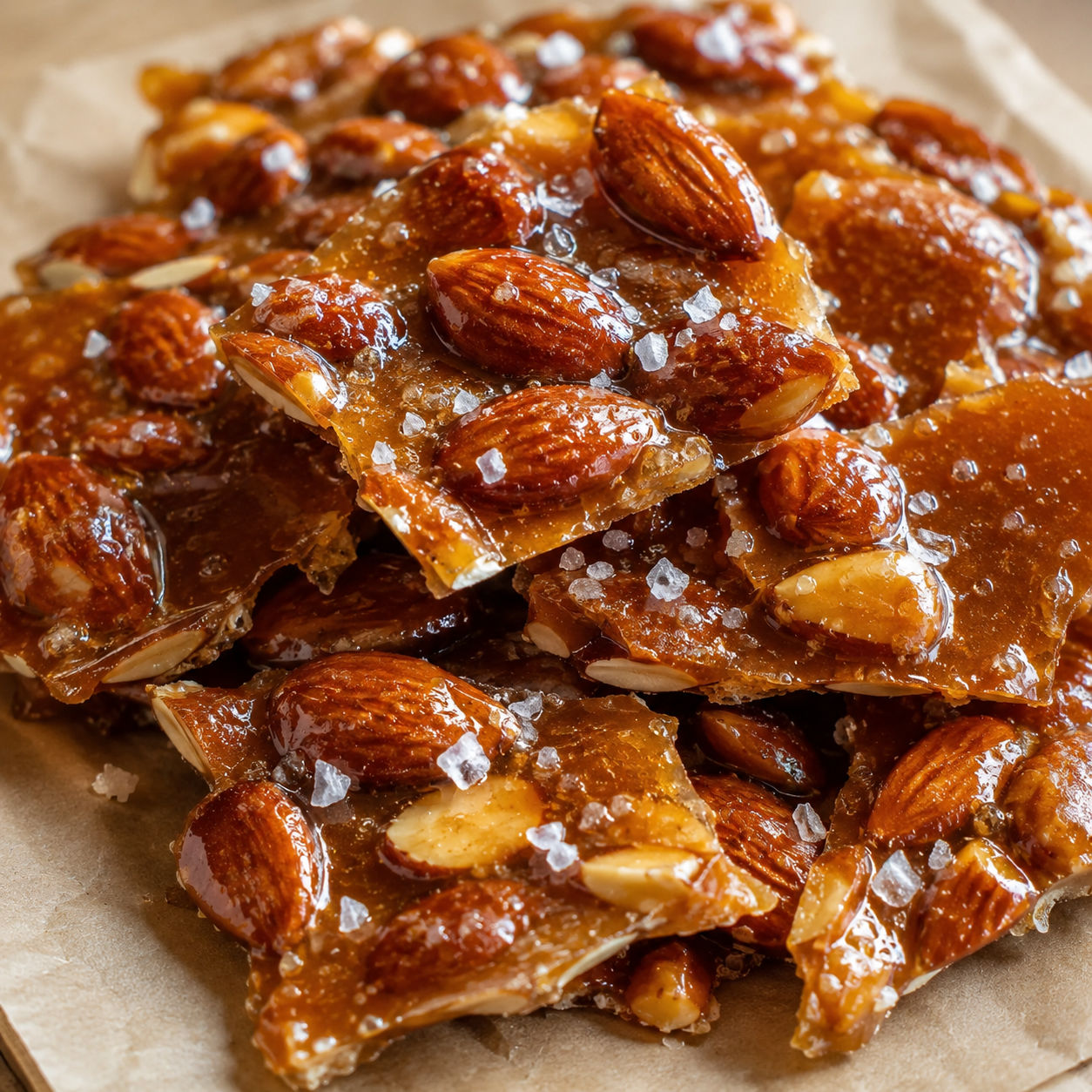
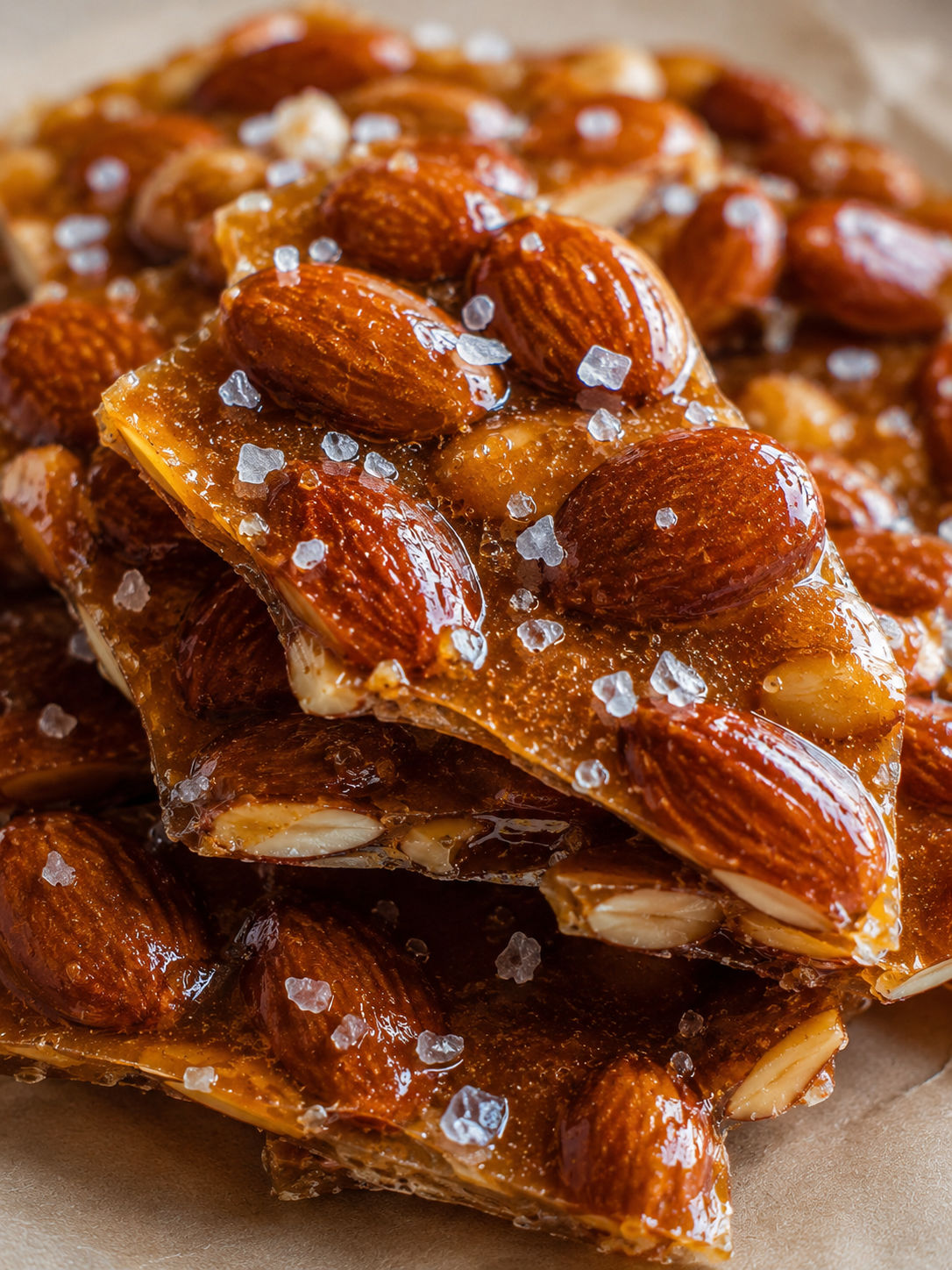
This is the candy I make when I want a homemade gift that looks impressive but costs almost nothing. A batch of almond brittle comes together in half an hour from basic pantry ingredients. The result is thin, glassy, and shatters with a satisfying crack. A heavy pinch of flaky salt on top keeps it from being too sweet.
You do need a candy thermometer for this one, but the method is simple. Once the sugar hits the right temperature, everything else happens in about ninety seconds.
What you need for the batch
Quality matters with so few ingredients. Use whole roasted almonds with their skins on for the best crunch and a slightly bitter edge that balances the sugar. A heavy-bottomed saucepan is non-negotiable here. Thin pots scorch the caramel before the center is ready.
- Granulated sugar. The base of the caramel. It melts into a clear syrup and cooks to a deep amber that tastes like toffee.
- Light corn syrup. Keeps the sugar from crystallizing while it boils so the brittle stays smooth and glassy.
- Roasted almonds. Whole nuts give the best visual and the most satisfying crunch. Raw almonds work but will taste milder.
- Unsalted butter. Adds a faint dairy richness and helps the mixture spread thinly before it sets.
- Baking soda. Creates thousands of tiny air bubbles when it hits the hot caramel. That is what gives brittle its light, snapping texture instead of a hard candy density.
- Flaky sea salt. Maldon or another coarse flake salt scattered over the top while the candy is hot. It sticks and delivers little bursts of salinity.
How the sugar transforms
- Prep everything first. Line a rimmed baking sheet with parchment paper. Measure the almonds, butter, baking soda, and flaky salt into small bowls. Once the caramel hits temperature you will not have time to measure.
- Dissolve and boil. Stir sugar, corn syrup, water, and fine salt together in a heavy 2-quart saucepan over medium heat until the sugar disappears. Clip on a candy thermometer and stop stirring. Let it boil until it reaches 300°F (150°C), the hard crack stage. This takes 8-12 minutes.
- Add the almonds and butter. As soon as the thermometer hits 300°F, pull the pan off the heat. Stir in the almonds and butter. The butter melts instantly and the almonds get coated in bubbling amber syrup. Work fast.
- Foam it with baking soda. Add the baking soda and stir vigorously for about five seconds. The mixture will foam up and turn pale. This reaction is what creates the brittle texture.
- Pour and salt. Scrape the mixture onto the prepared sheet. Use an offset spatula or two forks to push it into a thin, even layer. Sprinkle the flaky salt over the surface immediately so it adheres.
- Cool and break. Let the brittle sit at room temperature until it is completely hard, about 1 hour. Lift the sheet of candy off the parchment and break it into irregular shards with your hands.
Reading the thermometer right
The difference between chewy toffee and true brittle is about ten degrees. Pull the pan off the heat at 300°F (150°C), which is the hard crack stage. If you stop at 280°F the candy will be pliable and sticky. A few degrees past 310°F and the sugar starts to burn and taste bitter.
Why baking soda changes everything
Without baking soda this would be a hard, tooth-threatening slab of caramel. When baking soda meets the hot acidic caramel, it releases carbon dioxide that puffs the sugar into a honeycomb-like matrix. The result is a candy that looks solid but shatters easily. Do not skip it and do not double it. Too much soda leaves a soapy aftertaste.
Swaps and flavor twists
You can swap half the almonds for cashews or pistachios. Add a pinch of cinnamon or cayenne with the baking soda for a warm kick. A drizzle of melted dark chocolate over the cooled brittle is excellent. If you like almond desserts, the nutty flavor here pairs well with cherry almond maple crisp or a simple almond cake.
Storing and gifting
Layer shards between pieces of parchment in an airtight tin. Keep the tin at cool room temperature and the brittle will stay crisp for up to two weeks. Do not refrigerate it. Moisture is the enemy of brittle and the fridge introduces condensation that makes it tacky.
Ways to serve the shards
Brittle is obvious on a dessert board, but it also crushes beautifully over vanilla ice cream or stirred into whipped cream. For a party spread, set it out next to peanut brittle and salted caramel ganache tart so guests can choose their sweetness level. You can also blitz leftover shards into a coarse praline powder and fold it through buttercream.

FAQs
- Can I make almond brittle without a candy thermometer?
You can test the sugar stage by dropping a little into ice water. At hard crack it should separate into threads that break cleanly. However, a thermometer is far more reliable and costs only a few dollars.
- Why is my brittle chewy instead of crisp?
The sugar did not reach 300°F. Undercooked caramel stays pliable and will bend rather than snap. Next time let it boil a little longer and test the thermometer in boiling water to confirm it reads 212°F.
- Can I use other nuts?
Yes. Cashews, pistachios, pecans, or macadamia nuts all work. Keep the total nut volume around 1 1/2 cups and make sure they are roasted for the best flavor.
- Is this recipe gluten-free and dairy-free?
The brittle is naturally gluten-free. It does contain butter, so it is not dairy-free. You could try coconut oil as a substitute, though the flavor will change.
- How long does almond brittle last?
Stored in an airtight container at cool room temperature, it stays fresh and crisp for about two weeks. Keep it away from heat and humidity.
- Can I add chocolate?
Yes. Once the brittle is fully cool, spread or drizzle melted dark chocolate over the back and let it set. The contrast of bitter chocolate and salty sweet caramel is excellent.
