 Pin it
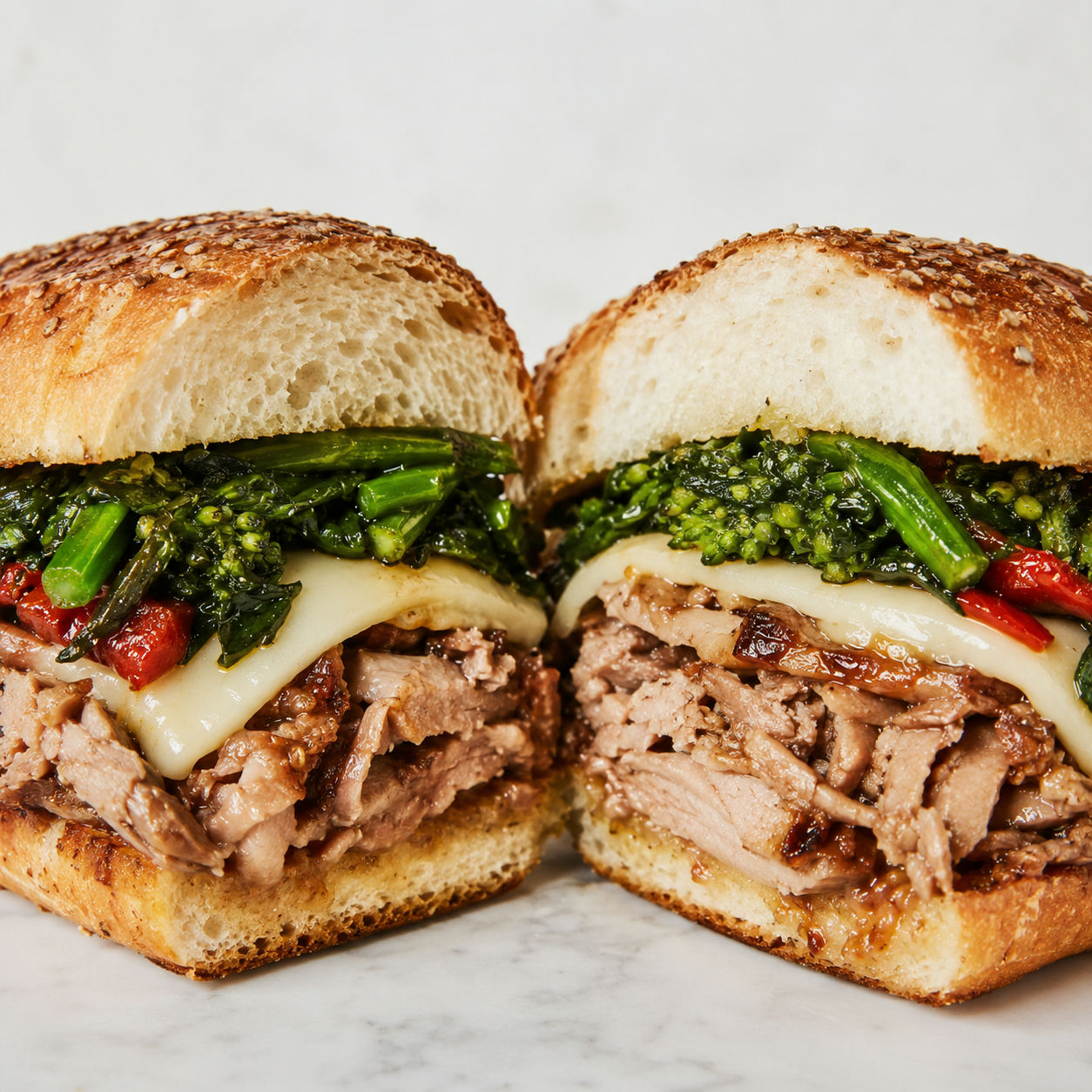
A good Roast Pork Sandwich should be juicy enough to need a napkin, but not so wet that the roll gives up. This version uses pork shoulder roasted with garlic, rosemary, fennel, and a little vinegar so the meat slices or pulls into tender pieces with its own savory jus.
The classic Philly-style pairing is sharp provolone and broccoli rabe. The cheese brings bite, the greens bring a little bitterness, and the bread holds it all together. It is a big sandwich, but every part has a job.
The sandwich stack
Start with pork shoulder that has good marbling and a crusty roll that can handle warm juices. Broccoli rabe should look bright and firm, with leaves that are not yellow or limp.
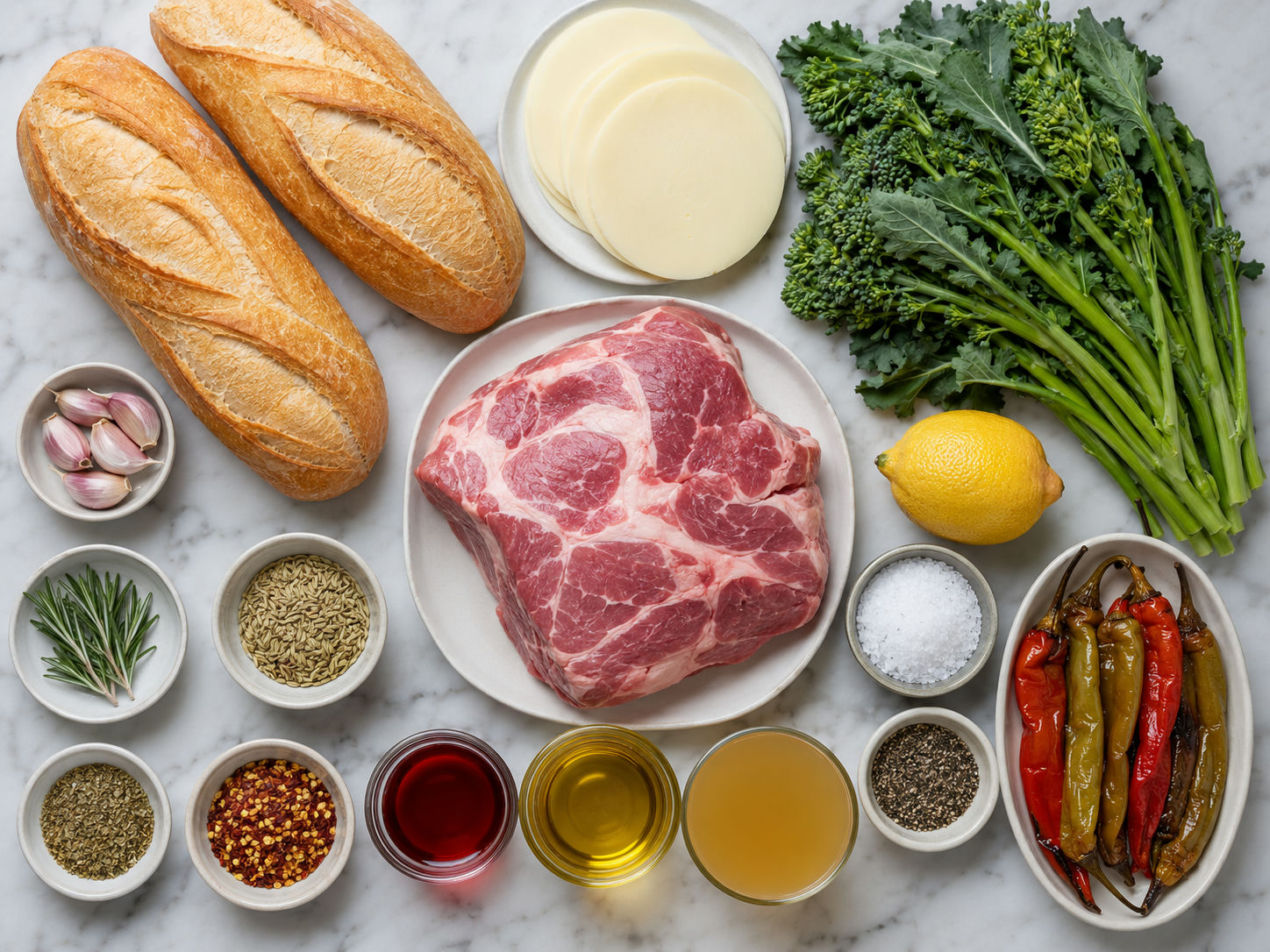
- Pork shoulder. The rich cut that turns tender and juicy after a slow roast.
- Garlic. Roasts into the pork juices and gives the sandwich its deep savory base.
- Rosemary and fennel. Add the Italian-style aroma that makes the pork taste like more than plain roast meat.
- Red wine vinegar. Cuts through the richness and brightens the jus.
- Broccoli rabe. Brings a slightly bitter, garlicky bite that balances the pork and cheese.
- Sharp provolone. Melts just enough and adds a salty, tangy edge.
- Crusty hoagie rolls. Hold the juicy pork without falling apart too quickly.
- Lemon and chili flakes. Wake up the greens and keep the sandwich from tasting heavy.
Roast, slice, and stack
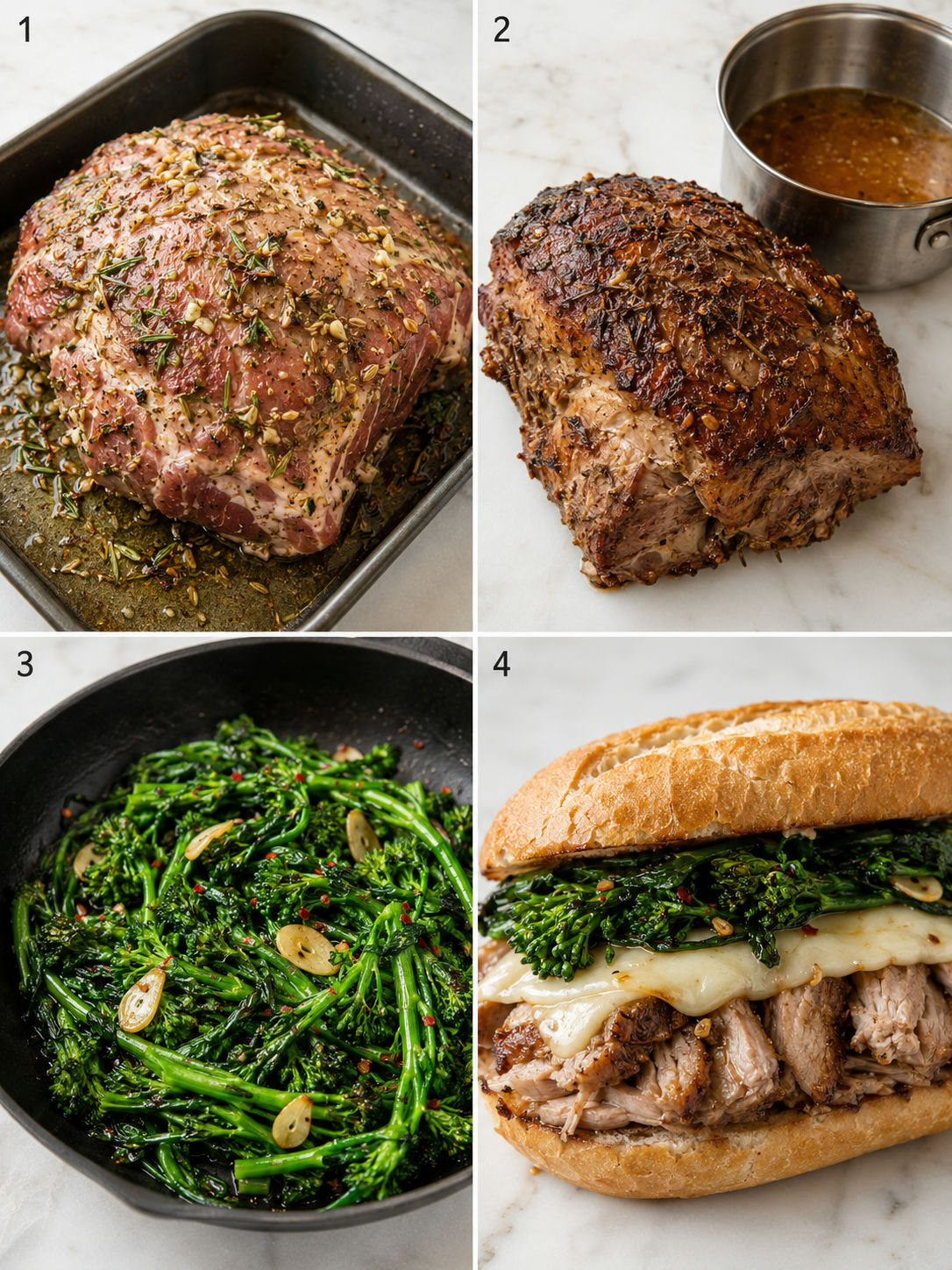
- Season the pork. Rub the pork shoulder with oil, vinegar, garlic, rosemary, fennel, chili flakes, salt, and pepper so the outside is well coated.
- Roast until tender. Cook it covered at 325 F until a fork slides in easily, then uncover briefly so the edges darken.
- Reduce the jus. Strain the pan juices and simmer them until they taste rich and savory, skimming off extra fat as needed.
- Cook the greens. Blanch broccoli rabe, then saute it with olive oil, garlic, chili flakes, and lemon until tender with a few crisp edges.
- Build the sandwiches. Warm the rolls, layer in provolone, pork, and broccoli rabe, then spoon a little jus over the meat before closing.
Why the jus matters
The jus is what separates a plain pork sandwich from a real Roast Pork Sandwich. As the pork cooks, the garlic, herbs, vinegar, and meat juices collect in the pan. Straining and simmering that liquid concentrates the flavor. Spoon just enough over the pork to make it glossy. Put the rest in a small bowl for dipping.
If you enjoy saucy, slow-cooked meat, the same comfort shows up in Mississippi pot roast and pulled pork sliders, but this sandwich leans brighter because of the greens and vinegar.
Getting tender pork
Pork shoulder needs time. It may look cooked long before it is tender, so use a fork test rather than the clock alone. When the fork twists easily and the meat separates in thick strands, it is ready. The USDA notes that whole cuts of pork are safe at 145 F with rest time, but shoulder for sandwiches tastes best cooked far beyond that until the connective tissue softens. You can read more at the USDA pork cooking guide.
Broccoli rabe without bitterness
Broccoli rabe should taste bold, not harsh. Blanching it for a minute or two tames the sharp edge and sets the color. After that, a hot skillet with olive oil, garlic, and chili flakes gives it flavor. Finish with lemon right before assembly. The lemon is small, but it makes the pork taste richer and the greens taste cleaner.
Cheese and roll choices
Sharp provolone is traditional because it has real bite. If your crowd prefers a milder sandwich, use half sharp provolone and half mild provolone. For the roll, choose a seeded hoagie, Italian roll, or sturdy sub roll with a crisp crust and soft center. Avoid soft burger buns here. They collapse under the pork juices.
For more sandwich-night ideas, try a steak sandwich with horseradish sauce or a classic muffaletta sandwich.
Make-ahead and leftovers
The pork is even better after a night in the fridge. Chill the meat and jus separately if you want cleaner slices, or store them together if you plan to pull the pork. Reheat gently in a covered skillet with a splash of jus. Leftover broccoli rabe keeps for 2 days, but it is best refreshed in a hot pan rather than the microwave.
A slow-cooker version from Bon Appetit follows the same Philly idea with pork, provolone, broccoli rabe, and plenty of juices.
Summary
Roast the pork until tender, reduce the juices, saute the broccoli rabe, then stack everything on warm rolls with provolone. Serve extra jus on the side for dipping.
FAQs
- What cut of pork is best for a Roast Pork Sandwich?
Boneless pork shoulder is the best choice because it has enough fat and connective tissue to stay juicy during a long roast. Pork loin is leaner and can work if sliced thin, but it will not give you the same rich jus.
- Can I make the roast pork ahead?
Yes. Roast the pork, strain and save the juices, then chill both for up to 3 days. Reheat sliced or pulled pork gently in the jus so it stays moist.
- What can I use instead of broccoli rabe?
Use broccolini, escarole, kale, or even sauteed spinach if broccoli rabe is hard to find. Broccoli rabe has a pleasant bitterness, so add a squeeze of lemon if your substitute tastes too mild.
- Do I have to use sharp provolone?
Sharp provolone gives the sandwich its bold, slightly tangy flavor. Mild provolone melts well but tastes softer. Mozzarella works too, but the sandwich will be less punchy.
- How do I keep the roll from getting soggy?
Toast the roll lightly and spoon the jus over the pork, not directly onto the bread. Serve extra jus on the side so each person can dip as they eat.
- What should I serve with roast pork sandwiches?
Serve them with roasted potatoes, kettle chips, a crisp green salad, or pickled peppers. For a hearty dinner spread, they pair well with Greek roast potatoes with lemon and feta.
