 Pin it
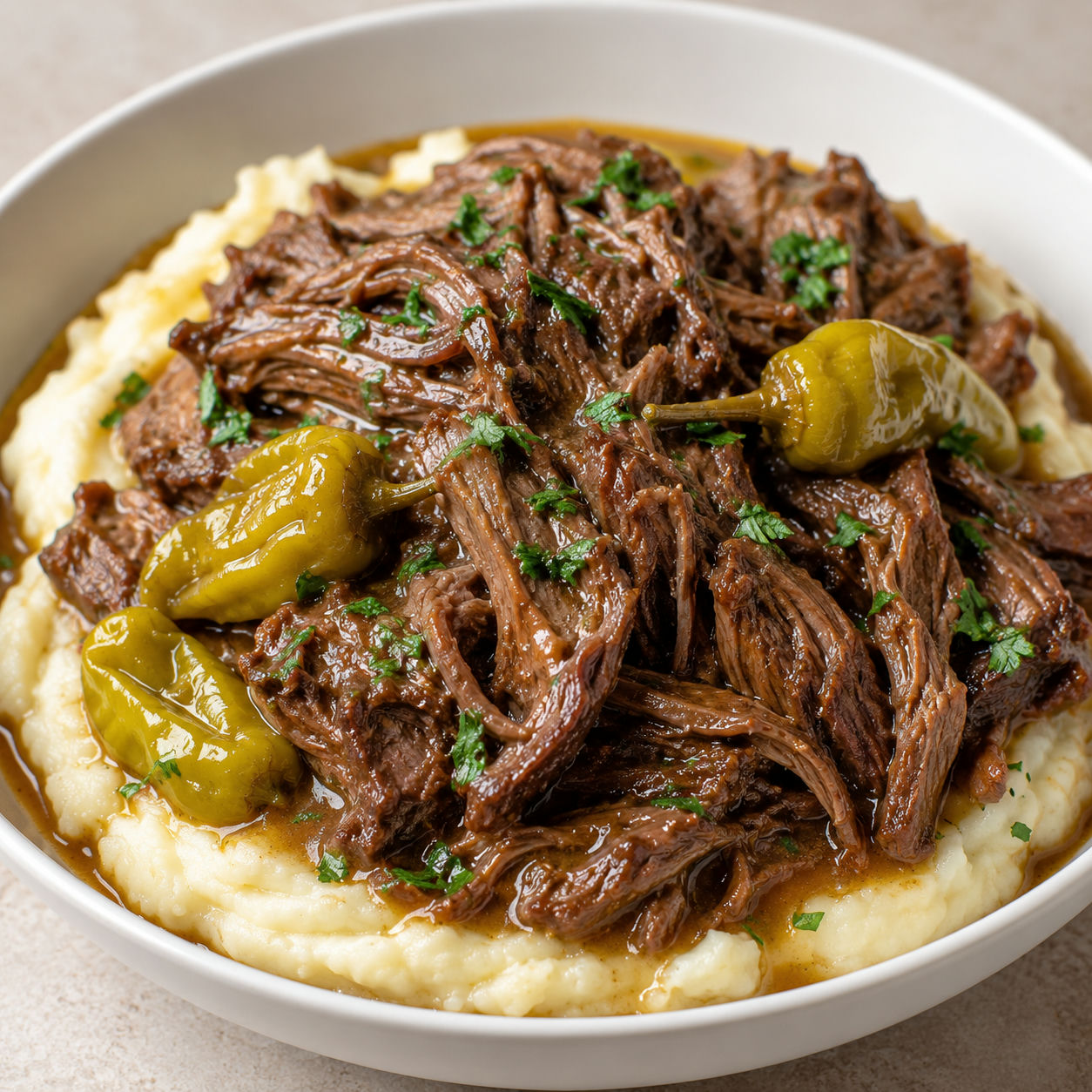
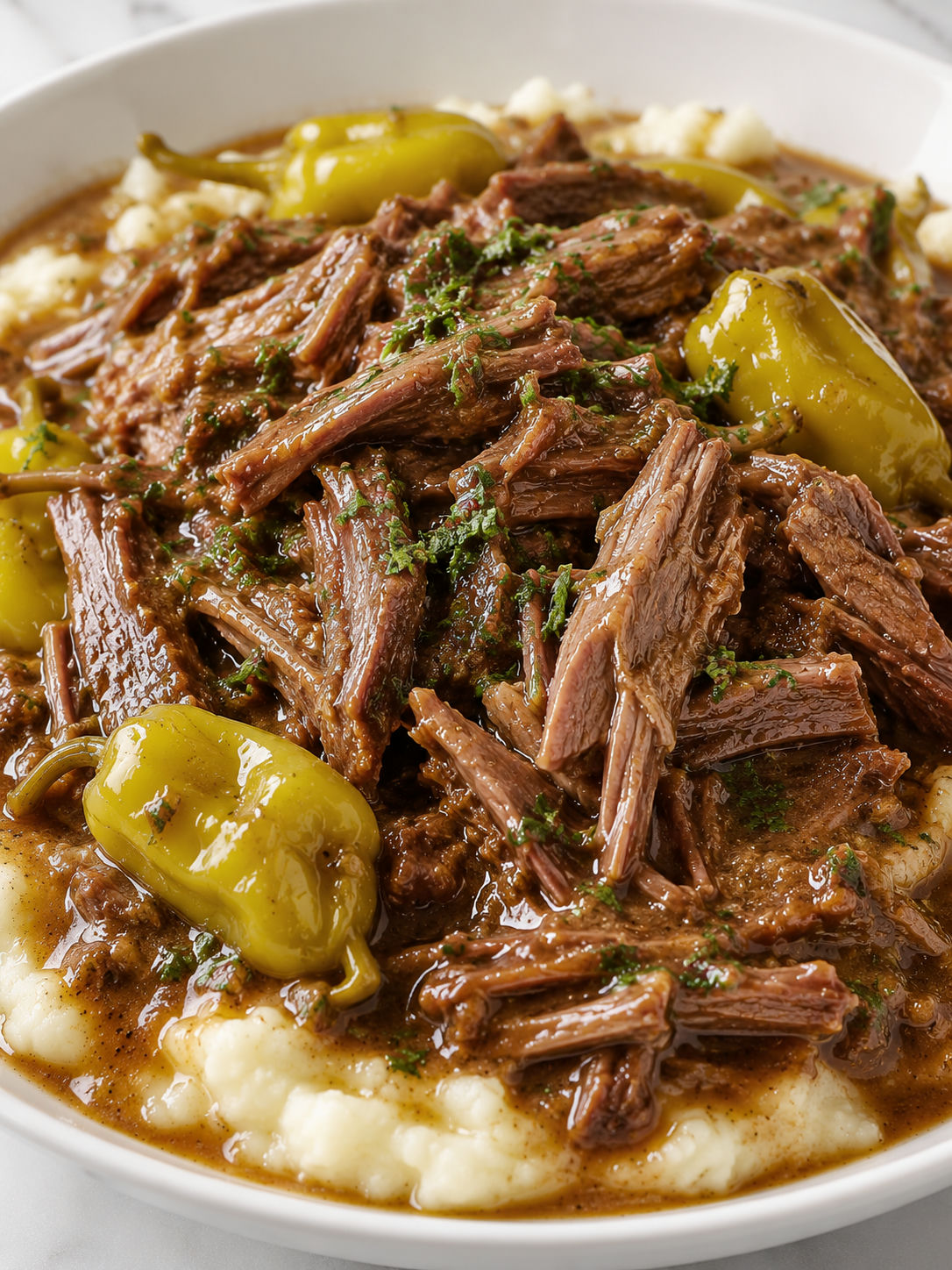
Mississippi Pot Roast is the kind of slow cooker dinner that smells better every hour. The beef turns soft enough to pull apart with a fork, and the pepperoncini give the rich gravy a bright little kick without making it harsh.
I like a quick sear first because browned beef gives the juices more depth. After that, the slow cooker does the work. You get tender shredded roast for mashed potatoes, buttered noodles, rice, or toasted sandwich rolls.
The Tangy Roast Lineup
This recipe leans on a few bold pantry ingredients, so the roast matters. Choose a well-marbled chuck roast and use pepperoncini brine from the jar rather than plain vinegar.
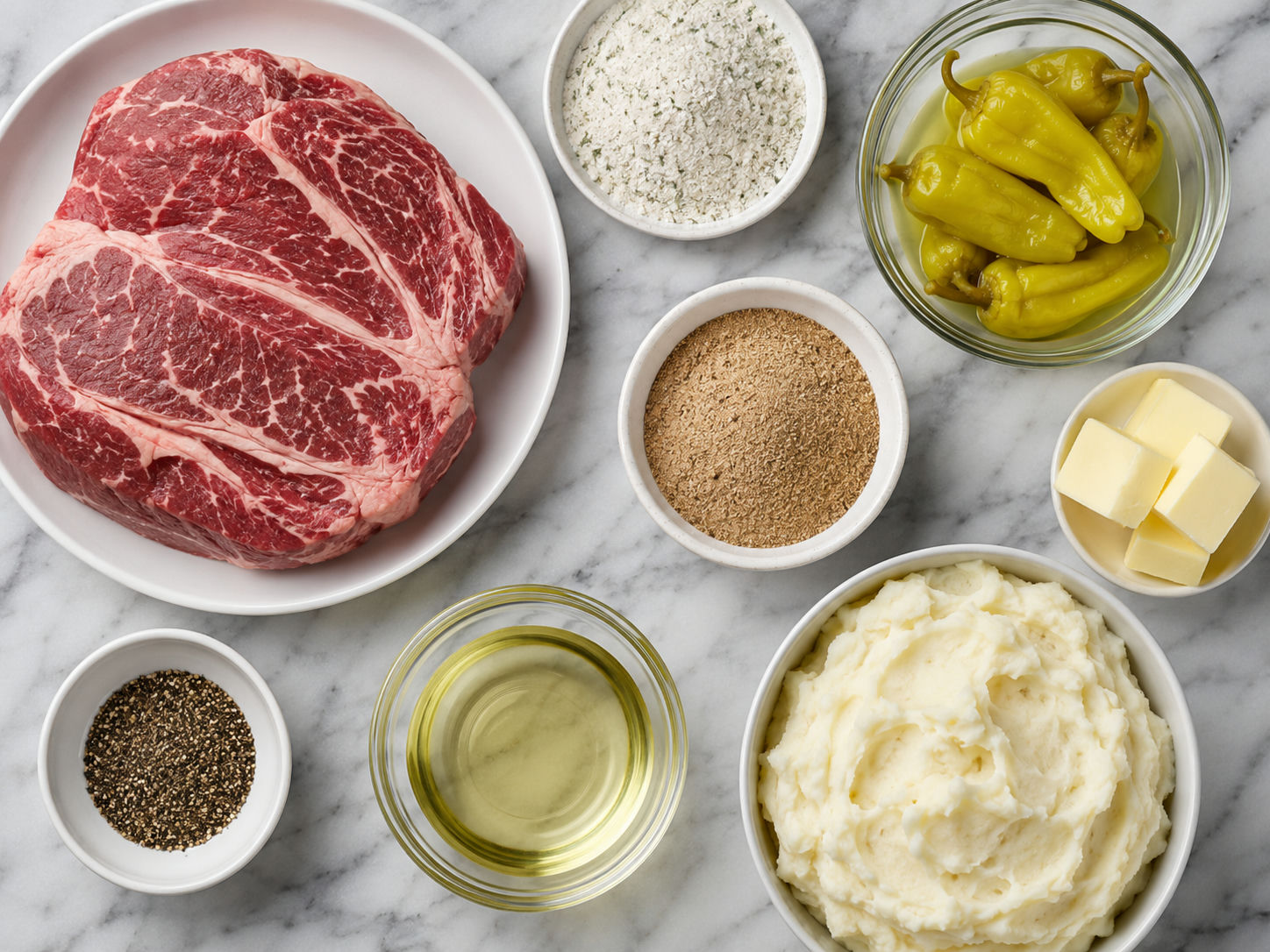
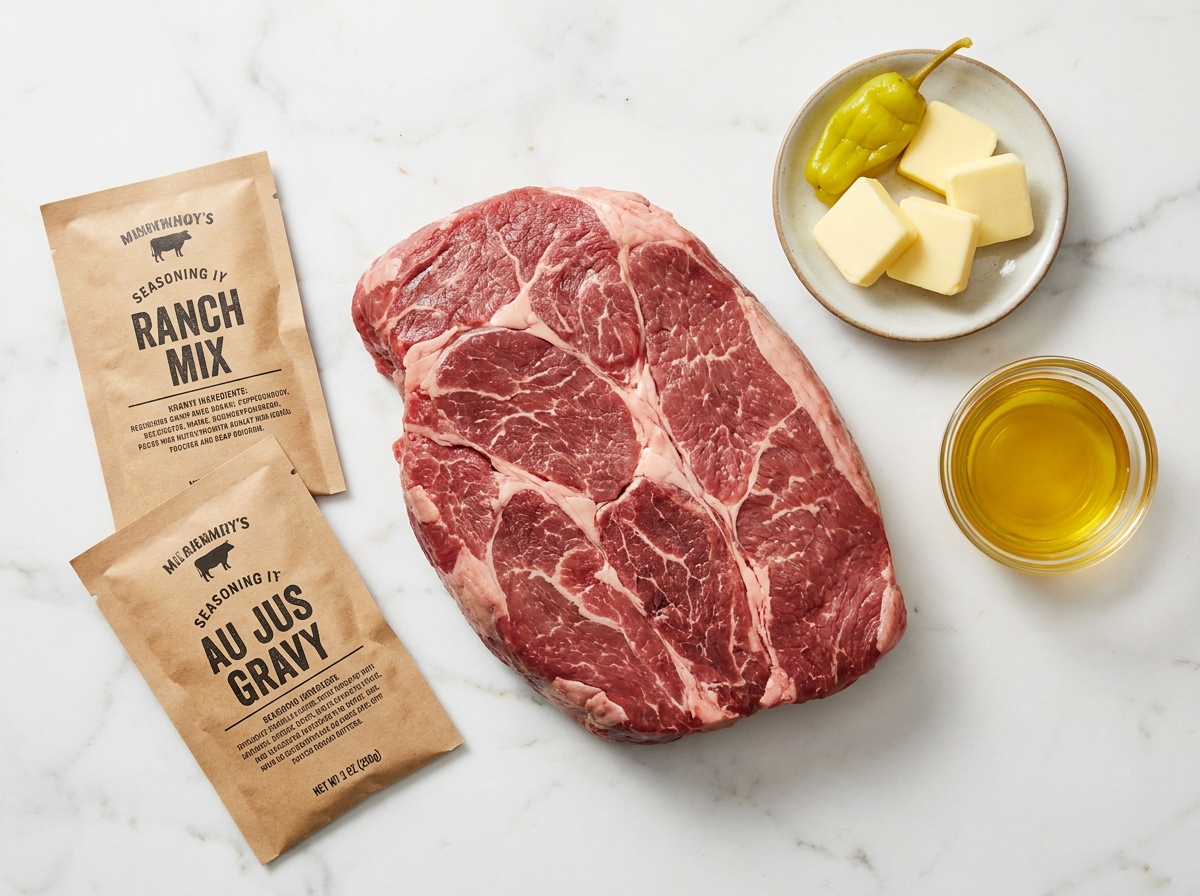
- Chuck roast. A tough, marbled cut that becomes tender and juicy after hours of slow cooking.
- Ranch seasoning. Brings garlic, herbs, salt, and a creamy background flavor to the cooking juices.
- Au jus gravy mix. Adds beefy depth and helps the pan juices taste rounded.
- Pepperoncini peppers. Give the roast its signature tang and a mild peppery bite.
- Pepperoncini brine. Cuts through the richness and seasons the beef from the bottom of the cooker.
- Butter. Softens the sharp edges of the seasoning packets and makes the juices glossy.
- Black pepper and oil. Help season and brown the outside of the roast before slow cooking.
How Mississippi Pot Roast Cooks
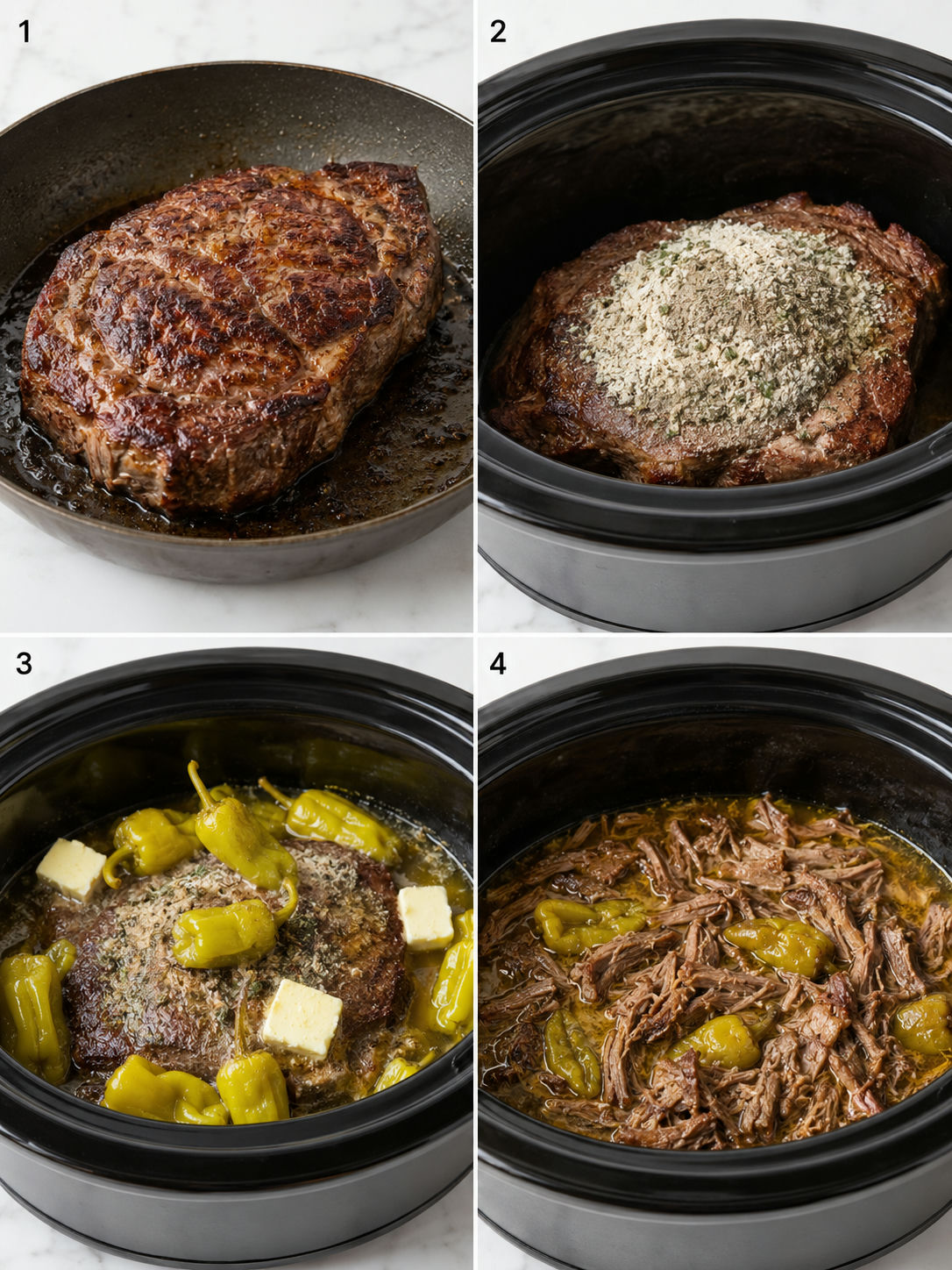
- Season the beef. Pat the chuck roast dry and rub it with black pepper. Go light on extra salt because the seasoning packets are salty.
- Sear the roast. Brown it in a hot skillet with oil for 3-4 minutes per side. This step gives the finished juices a deeper, roasted flavor.
- Load the slow cooker. Set the roast in the cooker. Sprinkle ranch and au jus over the top, then add pepperoncini, brine, and butter.
- Cook until tender. Cover and cook on low for 8-9 hours, or on high for 4-5 hours. The roast is ready when a fork slides in with almost no resistance.
- Shred and rest. Pull the beef into large pieces, discard any big fatty bits, and let it sit in the juices for 10 minutes before serving.
Why The Pepperoncini Matters
Mississippi Pot Roast works because the pepperoncini brine balances the rich beef and butter. Without it, the gravy tastes heavy and flat. With it, the meat has a gentle tang that keeps you going back for another bite.
The original style of this roast is often traced to Robin Chapman of Mississippi, and Southern Living has a helpful overview of how the dish spread from a home recipe to a slow cooker favorite. If you already love this flavor profile, try the same peppery idea in Crock Pot Mississippi Meatloaf.
Searing Is Worth The Pan
You can skip the skillet and still get dinner. I sear when I can because chuck roast loves browning. The outside gets crusty, the rendered fat smells nutty, and all of that flavor follows the meat into the slow cooker.
Do not crowd the pan or move the roast too soon. Let each side sit until it releases cleanly. If you want a more classic roast dinner with vegetables, Classic Pot Roast with Slow Cooker has that familiar carrots-and-potatoes feel.
How To Keep It Balanced
The only real risk here is salt. Ranch mix, au jus mix, butter, and pepper brine all bring seasoning. Use unsalted butter if possible and do not add extra salt until the roast is finished.
If the juices taste too punchy, stir in 1/4 cup low-sodium beef broth after shredding. If they taste thin, leave the lid off on high for 15-20 minutes. Slow cookers should heat food steadily and safely, and the USDA slow cooker safety guide is a good reference for handling large roasts.
Easy Ways To Serve It
Mashed potatoes are my first choice because the buttery pepperoncini gravy soaks right in. You can also spoon the beef over rice, egg noodles, or roasted potatoes. For sandwiches, pile the shredded roast onto toasted rolls and add provolone or Swiss.
If you are planning a bigger comfort-food dinner, Pot Roast Over Mashed Potatoes is a natural match for serving ideas. For another beef roast with a deeper tomato-herb sauce, save Italian Pot Roast.
Leftovers That Stay Juicy
Store the beef in its cooking liquid. That one move keeps it from drying out in the fridge. Chill it in a shallow container, then skim off any firm fat from the top before reheating if you want a cleaner gravy.
Leftovers make excellent sliders, quesadillas, baked potatoes, and quick rice bowls. Warm only what you need and keep the heat gentle. Hard boiling the shredded beef can make it stringy.
Summary
Serve this roast hot with plenty of its peppery juices, or shred it for sandwiches the next day.
FAQs
- What cut of beef is best for Mississippi Pot Roast?
Chuck roast is the best choice because it has enough marbling and connective tissue to turn tender during a long cook. Rump roast or bottom round can work, but they are leaner and may not shred as easily.
- Can I make Mississippi Pot Roast without ranch seasoning?
Yes. Use a homemade mix of dried parsley, dried dill, garlic powder, onion powder, salt, pepper, and a little dried chive. The flavor will be less salty than the packet version, so taste the juices at the end and adjust.
- Do I have to sear the roast first?
No, the recipe still works if you place the roast straight into the slow cooker. Searing adds a deeper browned flavor, so I do it when I have ten extra minutes.
- How spicy is Mississippi Pot Roast?
It is usually tangy more than spicy. Pepperoncini peppers are mild, and most of their heat softens as they cook. For a gentler version, use fewer peppers and only 2 tablespoons of the brine.
- How do I store and reheat leftovers?
Store the shredded beef with its juices in an airtight container for up to 4 days. Reheat it gently in a covered skillet or saucepan with a splash of broth if the gravy looks too thick.
- Can I freeze Mississippi Pot Roast?
Yes. Freeze cooled beef and juices together for up to 3 months. Thaw overnight in the refrigerator, then warm slowly so the meat stays moist.
- What should I serve with it?
Mashed potatoes are the classic choice because they catch the gravy. It is also good over egg noodles, rice, roasted potatoes, or tucked into toasted rolls with provolone.
