 Pin it
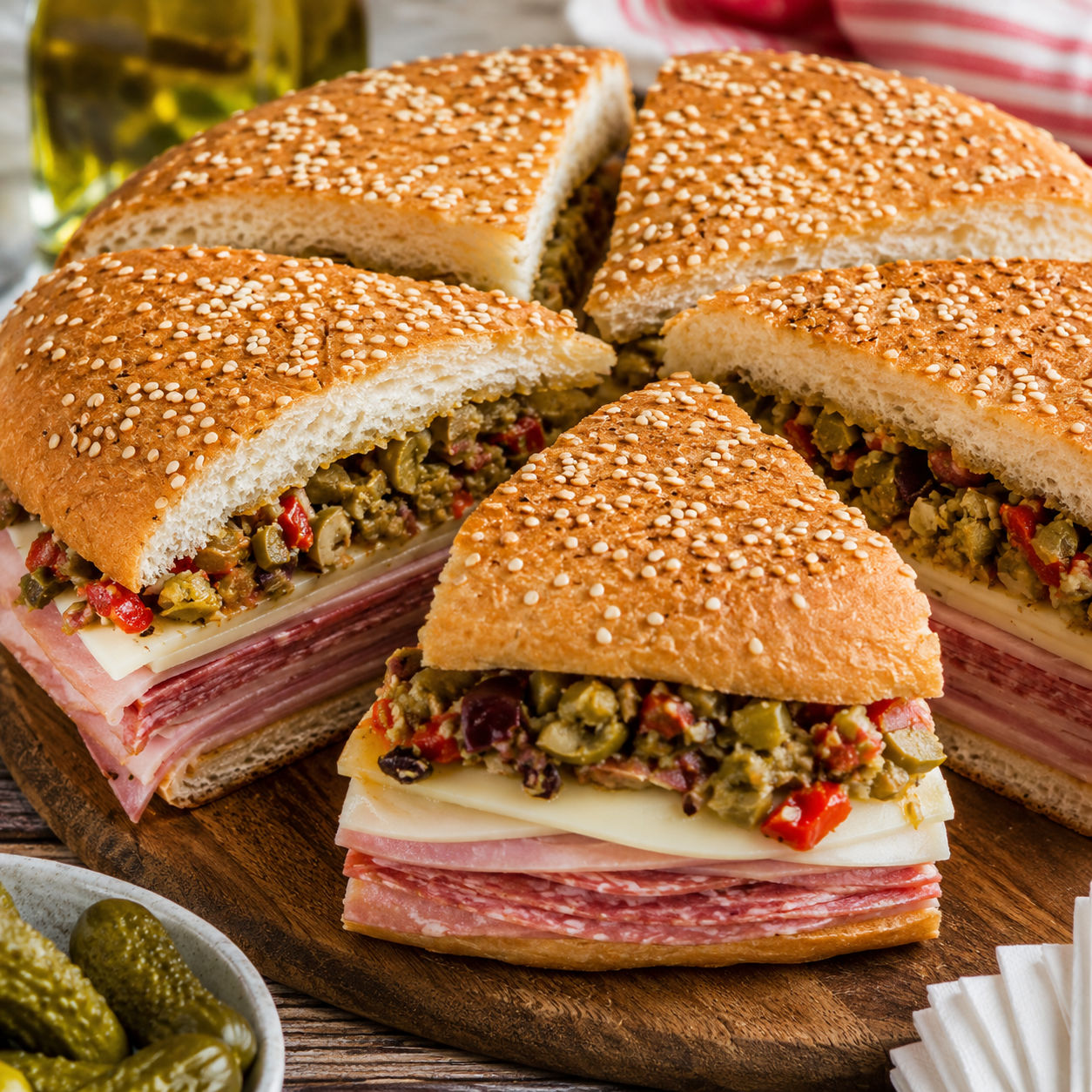
A Classic Muffaletta Sandwich is the kind of meal that rewards patience more than fuss. The olive salad does the heavy lifting, soaking into the sesame bread and seasoning every layer of meat and cheese.
I like this sandwich for picnics, game days, and make-ahead dinners because it slices cleanly and tastes better after it sits. Serve it at room temperature, cut into wedges, with plenty of napkins nearby.
Classic Muffaletta Sandwich Layers
The best muffaletta starts with bold ingredients that can stand up to each other. Choose thinly sliced deli meats, a sturdy sesame loaf, and olives with enough bite to keep the sandwich from tasting flat.
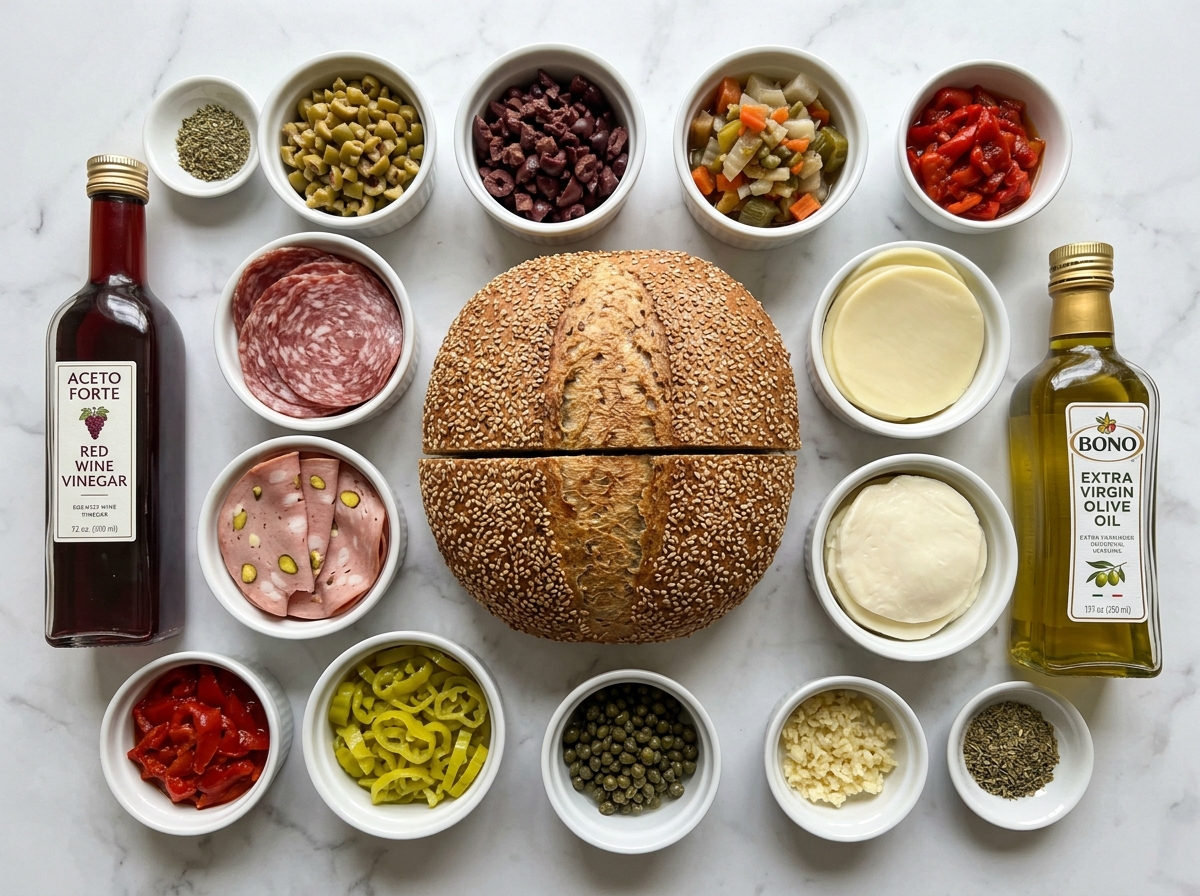
- Round sesame bread. Gives the sandwich its shape and holds the olive oil without crumbling.
- Green and kalamata olives. Bring the salty, briny base that defines the sandwich.
- Giardiniera and roasted peppers. Add crunch, tang, and a little sweetness to the olive salad.
- Capers and garlic. Give the spread a sharper edge so it cuts through the rich meats.
- Genoa salami. Adds peppery cured flavor and a firm bite.
- Mortadella and ham. Keep the filling tender and savory without making it too chewy.
- Provolone and mozzarella. Add creaminess and help the layers settle together.
- Olive oil and red wine vinegar. Turn the chopped vegetables into a juicy salad that seasons the bread.
Press, Rest, Slice
- Make the olive salad. Chop the olives, giardiniera, peppers, capers, and garlic until coarse, then stir in olive oil, vinegar, oregano, and black pepper.
- Let it marinate. Rest the olive salad for at least 30 minutes, or refrigerate it overnight for a deeper briny flavor.
- Prepare the bread. Slice the round loaf through the middle and remove a little soft bread from each half so the filling has room.
- Build the layers. Spoon olive salad onto the bottom half, then layer salami, mortadella, ham, provolone, and mozzarella.
- Finish and press. Add more olive salad, close the sandwich, wrap it tightly, and weigh it down for at least 1 hour.
- Cut into wedges. Slice with a serrated knife and serve at room temperature while the bread is seasoned but still sturdy.
Why The Rest Matters
A muffaletta eaten right after assembly tastes like a stacked deli sandwich. Good, but not the same. The rest gives the olive salad time to season the bread, soften the cheese edges, and pull the layers into one clean wedge. Saveur notes the Central Grocery style is best after the filling has time to marinate the sandwich, which tracks with how this behaves at home. You can read their version in this Saveur muffuletta recipe.
Do not crush it flat. A sheet pan, a skillet, or a cutting board with a few cans on top is enough weight. The goal is contact, not compression. If you press too hard, the bread can split and the olive oil will run out before it has a chance to soak in.
Bread That Holds Up
The classic loaf is round, broad, and topped with sesame seeds. It is tender enough to bite through but dense enough to handle oil, vinegar, meats, and cheese. If your bakery does not sell muffuletta bread, choose a round Italian loaf or a sturdy focaccia with a pale, soft interior. Very crusty boule-style bread is harder to slice and can make the sandwich messy to eat.
Hollowing out a little of the crumb helps. You only need to remove a shallow handful from each side. Leave enough bread to absorb flavor. If you enjoy big layered sandwiches, this same bread logic helps with the Ultimate Italian Sandwich and the Stanley Tucci's Italian Grilled Sandwich.
Smart Swaps That Work
Genoa salami, mortadella, and ham make a balanced filling, but you have room to adjust. Capicola can replace ham if you want more spice. Swiss can stand in for mozzarella if that is what your deli carries. Keep provolone if you can because its sharp, milky flavor belongs here.
The olive salad is less flexible. You can change the exact olive blend, but keep the mix briny, chunky, and bright. Green olives bring snap. Kalamata olives add depth. Pickled vegetables give crunch. If you want heat, add chopped pepperoncini or a pinch of red pepper flakes. For a lighter plate, serve smaller wedges next to a crisp salad or something brothy like Classic New Orleans Creole Gumbo.
Storage And Serving
A wrapped muffaletta can sit in the fridge for up to 24 hours before serving. After that, the bread softens more than I like, though the flavor is still good. Keep leftovers refrigerated and use them within 3 days. The USDA has clear cold-storage guidance in its refrigeration safety guide.
For serving, let the sandwich stand at room temperature for 20-30 minutes so the oil loosens and the cheese tastes creamy again. Cut it into quarters for a meal or smaller wedges for appetizers. A serrated knife is your friend here. Saw gently and keep one hand on top so the layers stay lined up.

Summary
This muffaletta keeps the classic New Orleans idea intact with a chunky olive salad, sturdy round bread, and generous Italian deli layers.

FAQs
- What is the difference between muffaletta and muffuletta?
Both spellings are used for the same New Orleans sandwich. Muffuletta is often used for the Sicilian-style round bread, while muffaletta is a common American spelling for the sandwich.
- Can I make a muffaletta sandwich ahead?
Yes. Wrap it tightly and chill it for 2-8 hours, then let it sit at room temperature for 20-30 minutes before slicing. The olive oil and vinegar soak into the bread during that rest.
- What bread should I use if I cannot find muffaletta bread?
Use a round Italian sesame loaf or a sturdy round focaccia. Avoid very airy bread because the olive salad can make it collapse and turn soggy.
- Can I use store-bought olive salad?
Yes. A good jarred muffaletta olive salad works well and saves time. If it tastes very salty, use a little less on the first layer and add more after tasting.
- Should a muffaletta be served hot or cold?
The classic sandwich is usually served at room temperature. You can warm it gently if you like melted cheese, but high heat changes the texture of the cured meats and bread.
- How do I keep the sandwich from getting soggy?
Use sturdy bread, drain the olive salad lightly, and do not pour all the oil into one spot. Pressing helps the filling settle evenly instead of soaking one side.
