 Pin it
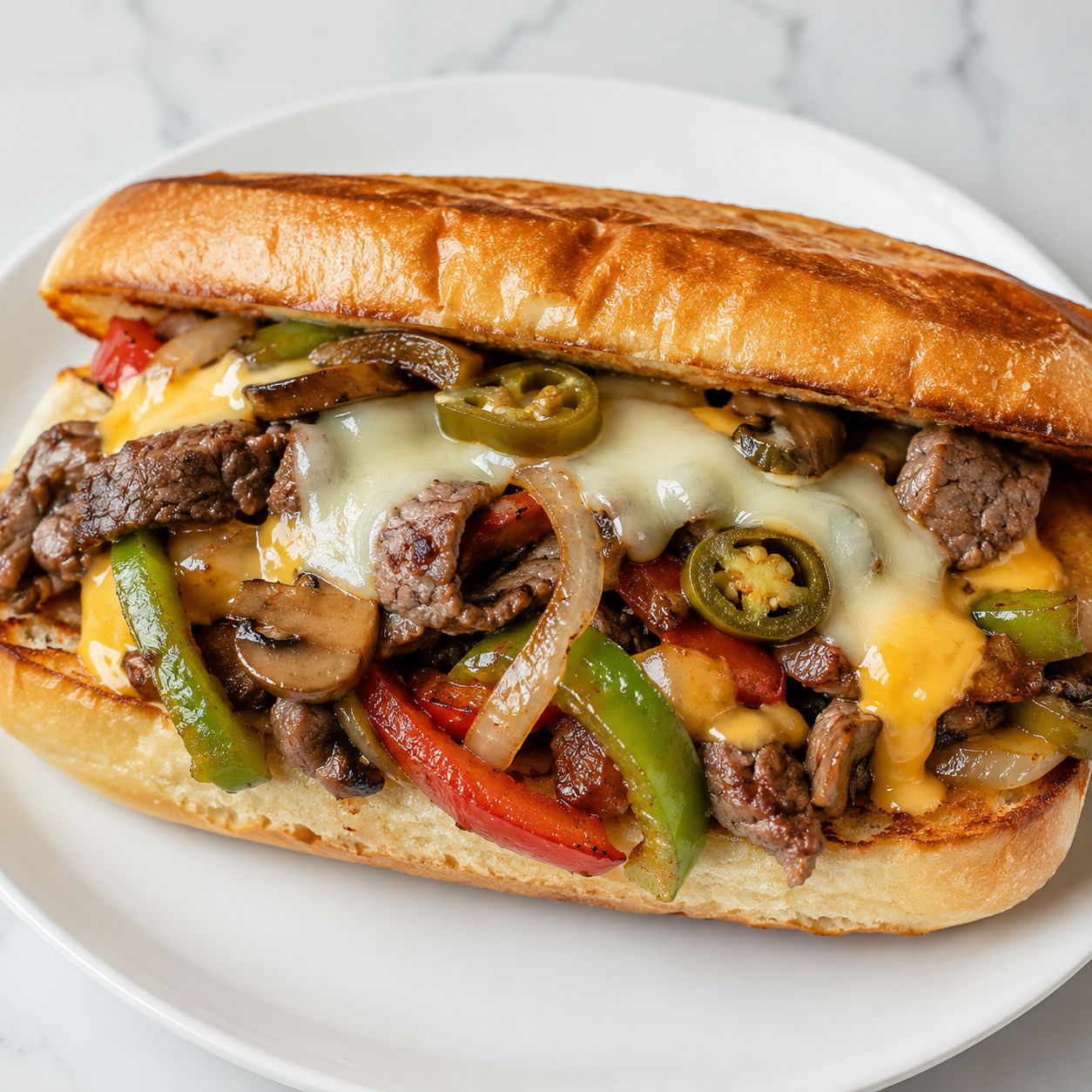
A fully loaded cheesesteak is the sandwich you make when a plain steak and cheese is not enough. This one has shaved beef, soft onions, peppers, mushrooms, provolone, and a warm cheese sauce that drips into the roll instead of sitting on top.
The key is cooking the vegetables first and the steak last. The pan picks up flavor from the onions and mushrooms, then the thin beef browns fast without drying out.
The Loaded Sandwich Lineup
Good steak and sturdy rolls matter most here. Choose rolls that are soft inside but strong enough to hold hot beef, vegetables, and melted cheese without falling apart.
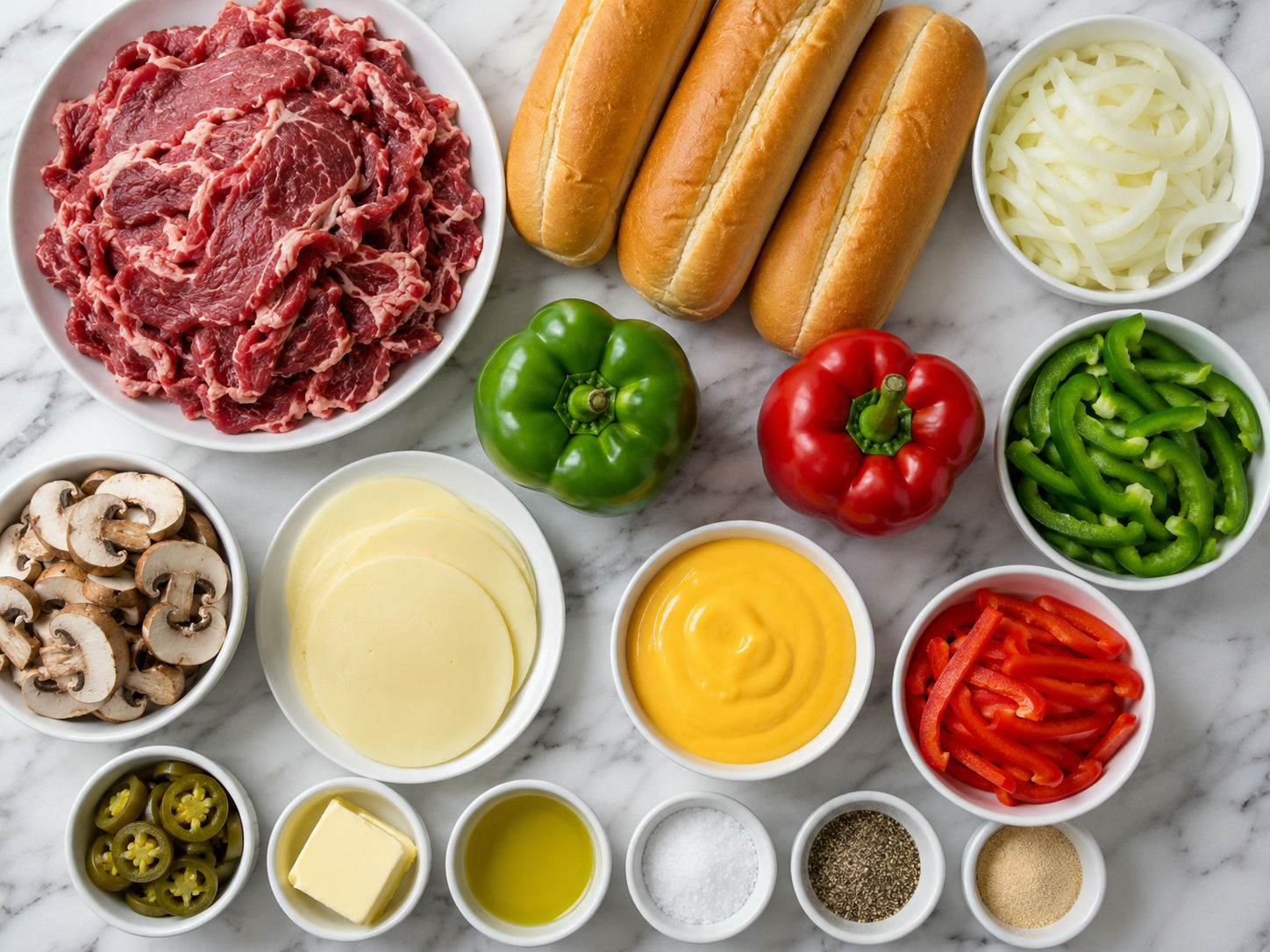
- Ribeye or sirloin. Thin slices cook quickly and stay tender when seared over high heat.
- Hoagie rolls. A split roll with a soft center catches the cheese and juices.
- Onion. Cooked until sweet and browned, it gives the sandwich its backbone.
- Bell peppers. Green and red peppers add color, sweetness, and a little bite.
- Mushrooms. They bring a savory, browned flavor that makes the sandwich feel extra loaded.
- Provolone. Mild slices melt into the hot steak and help hold the filling together.
- Cheese sauce. A spoonful over the top makes the sandwich messy in the right way.
- Pickled jalapenos. Optional, but great if you want heat and tang.
Build A Fully Loaded Cheesesteak
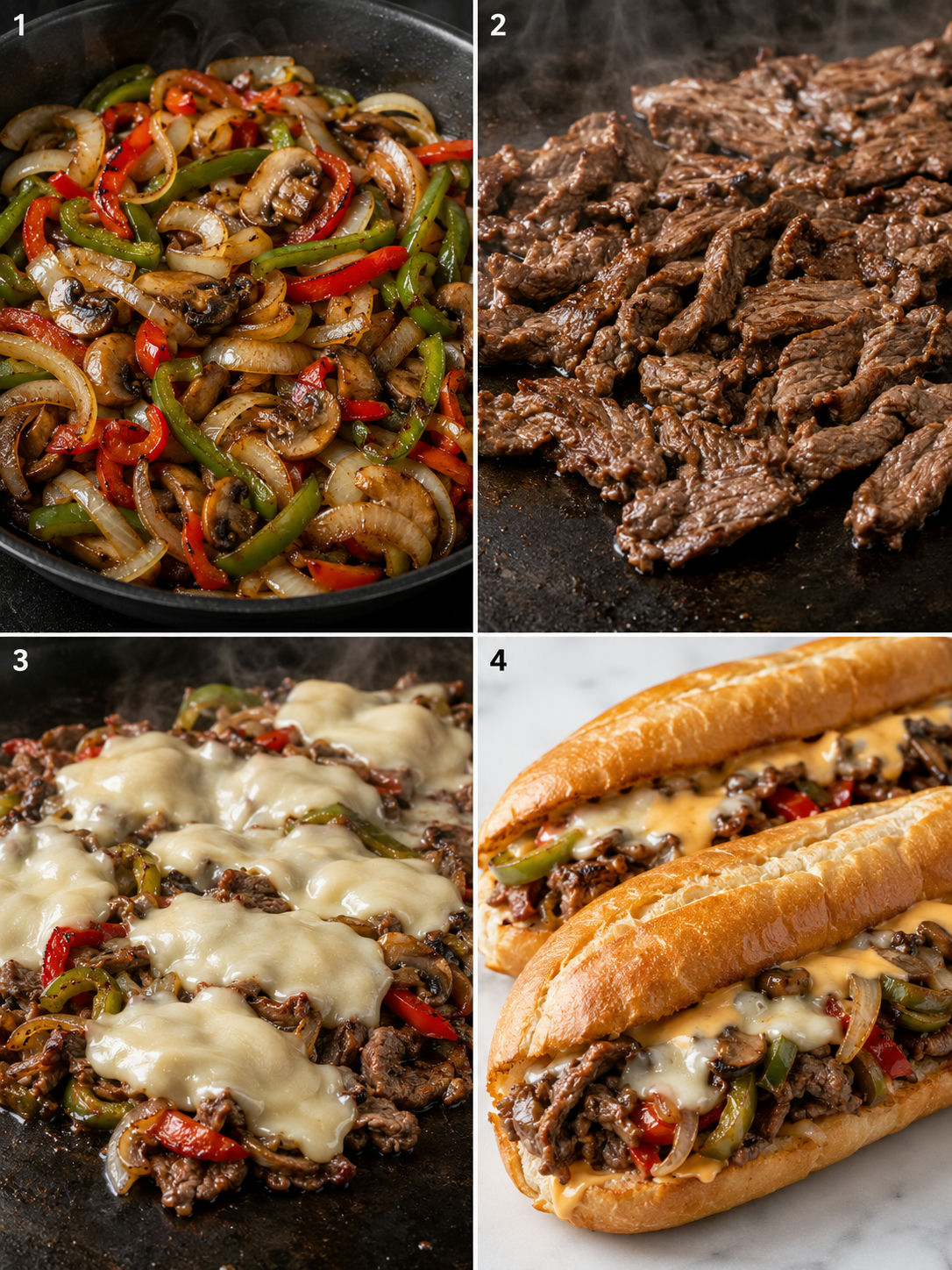
- Chill and slice the steak. Put the steak in the freezer for 25-30 minutes so it firms up. Slice it as thin as you can across the grain.
- Brown the vegetables. Cook onions, peppers, and mushrooms in a hot skillet until the mushrooms lose their water and the onions soften at the edges.
- Sear the beef fast. Add a little oil, spread the steak in the skillet, and cook until browned in spots. Chop lightly with a spatula as it cooks.
- Melt in the cheese. Mix the vegetables back in, lay provolone over the hot filling, and cover the pan for a minute so the cheese softens.
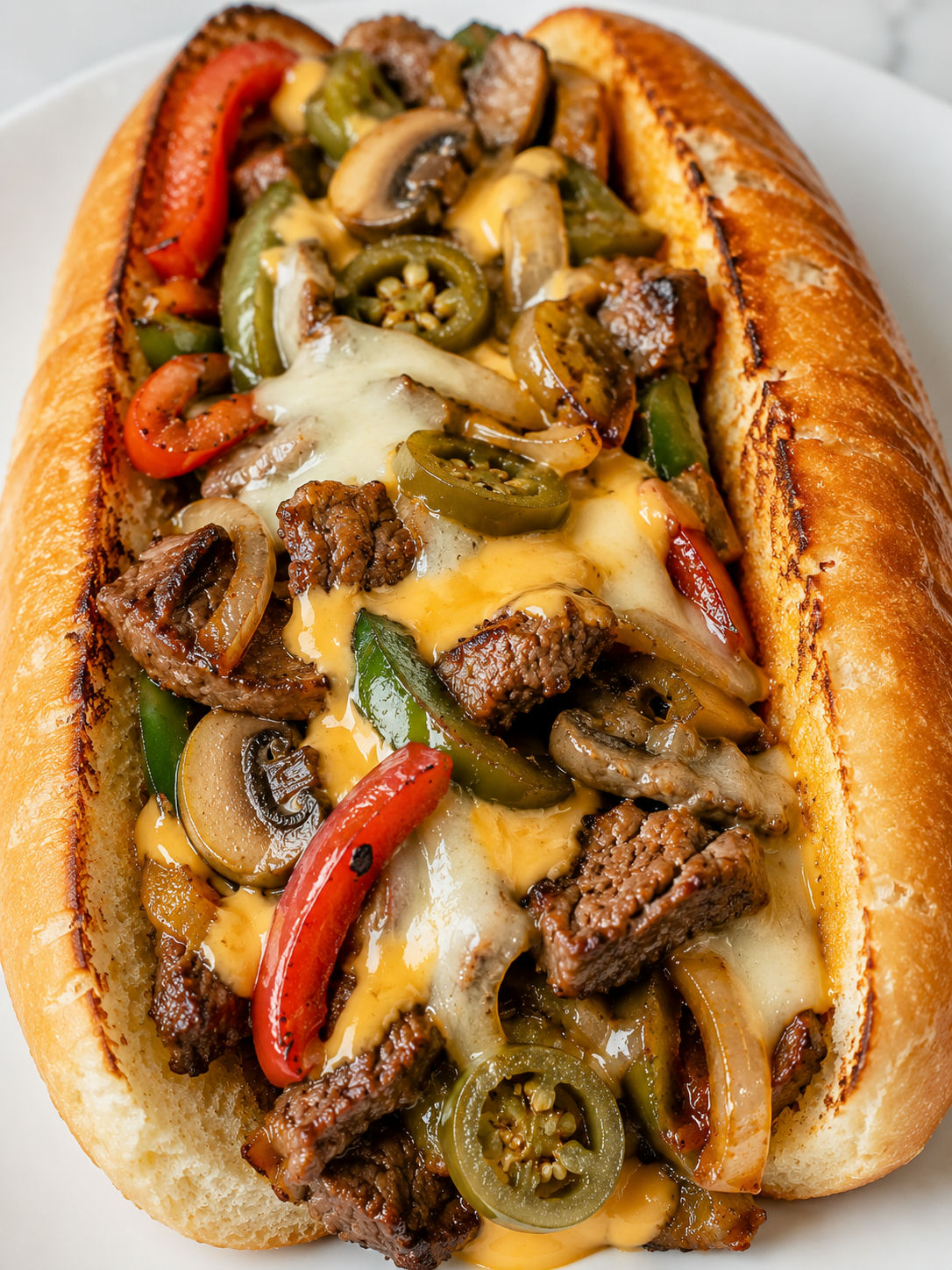
- Load the rolls. Toast the rolls, scoop in the cheesy steak mixture, and spoon warm cheese sauce over the top.
Fully Loaded Cheesesteak Timing
The vegetables need more time than the steak. Start them first and let the mushrooms actually brown. If you rush them, they drop water into the pan and the steak ends up gray.
The beef should be thin enough to cook in minutes. A short rest in the freezer makes slicing easier, which is the same practical trick many cooks use for a classic Philly cheesesteak sandwich. If your butcher sells shaved ribeye, use it and save yourself the knife work.
The Cheese Move Matters
Provolone gives you that stretchy layer, while the cheese sauce makes the sandwich feel fully loaded. I like both because they do different jobs. The slices hold the filling together. The sauce runs into the bread and coats the steak.
If you want a simpler sandwich, skip the sauce and use extra provolone or American cheese. For another cheesy steak idea, try Philly cheesesteak cheesy bread when you want something sliced for sharing.
Smart Swaps And Add-Ons
Sirloin works well if ribeye is not in the budget. Slice it very thin and cook it quickly. Chicken breast or thighs can turn this into a loaded chicken cheesesteak, but keep the pieces thin so they cook evenly.
For toppings, use pickled jalapenos, banana peppers, crispy bacon, or a few spoonfuls of sauteed cherry peppers. If you like the loaded sandwich style, the massive chopped cheese hero has a similar big-sandwich feel with ground beef instead of steak.
Keeping The Bread Together
Toast the roll cut-side down for a minute, but do not turn it into a cracker. You want the inside sturdy and the outside still tender. Keep the hinge attached if you can. It makes the sandwich easier to fill and easier to eat.
For a party tray, make the filling and hold it warm on low heat. Toast the rolls right before serving. If you need a smaller appetizer version, crispy Philly cheesesteak egg rolls carry the same flavors in a crunchy package.
Leftovers Without Dry Steak
Store the steak and vegetables separately from the rolls for up to three days. Reheat the filling in a skillet over medium-low heat with a tiny splash of water. Cover for a minute so the cheese softens again.
Avoid microwaving a fully assembled sandwich if you can. The roll gets chewy and the steak tightens. If the sandwich is already built, wrap it in foil and warm it in a 325°F oven until heated through.
FAQs
- What cut of beef is best for a fully loaded cheesesteak?
Ribeye gives the richest flavor because it has enough fat to stay tender during quick cooking. Sirloin also works if you slice it very thin and avoid overcooking it.
- Can I use frozen shaved steak?
Yes. Cook it from mostly thawed, not rock solid, so the pieces separate in the pan. Pat away extra moisture first or it will steam instead of brown.
- What cheese works best?
Provolone melts well and gives a mild, creamy pull. American cheese or Cheez Whiz-style sauce also works, and this recipe uses both provolone and a quick cheese sauce for a loaded finish.
- Can I make these ahead?
You can cook the peppers, onions, and mushrooms a day ahead. Reheat them in the skillet, then cook the steak fresh so it stays juicy.
- How do I keep the rolls from getting soggy?
Toast the rolls lightly and keep the hinge intact. Add the cheese first so it creates a thin barrier before the juicy steak and vegetables go in.
- What should I serve with loaded cheesesteaks?
Fries, potato wedges, pickles, or a crunchy salad all work. Since the sandwich is rich, something sharp or crisp on the side helps balance it.
