 Pin it
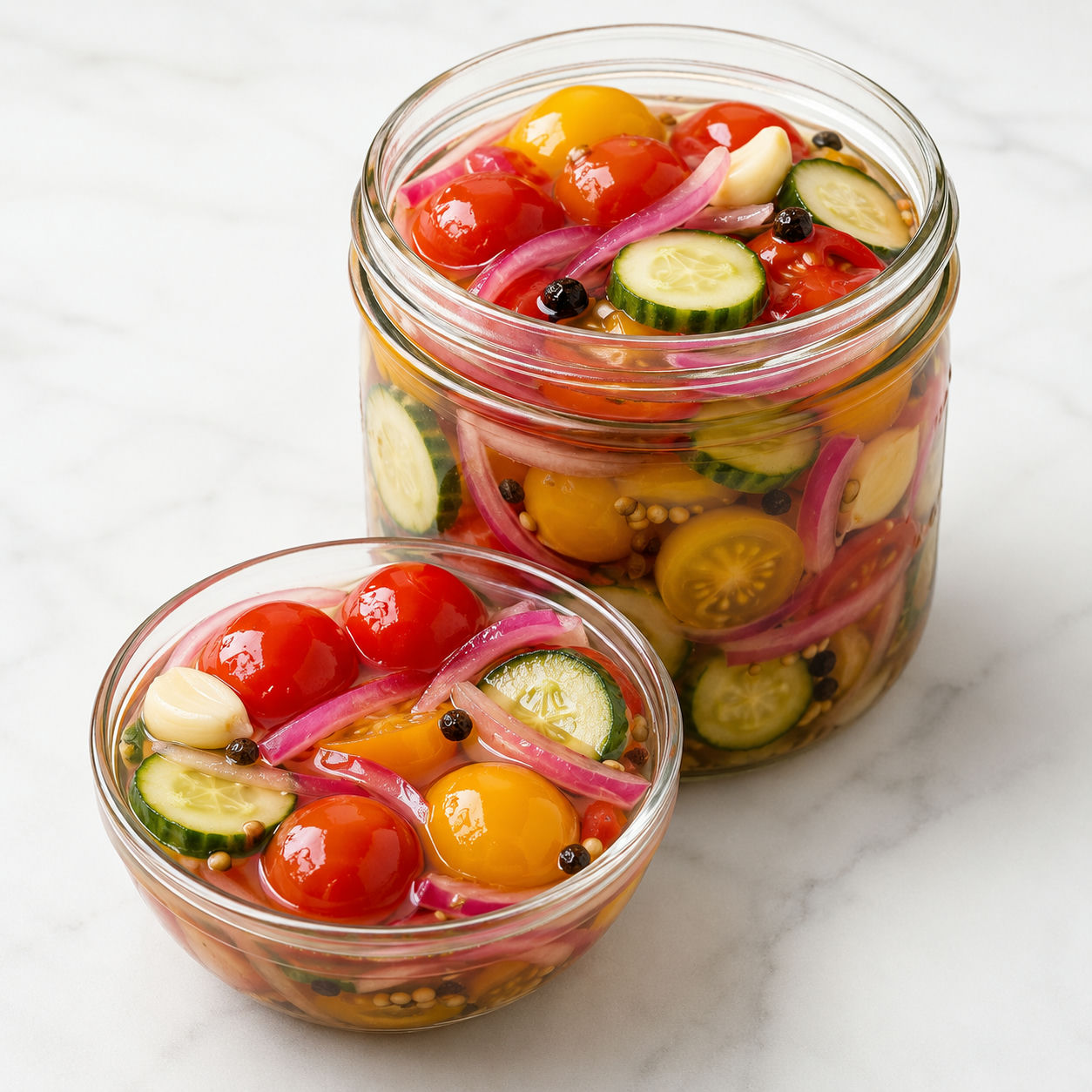
Yall gotta try these refrigerator pickled cherry tomatoes, red onions, and cucumbers if your fridge needs one jar that makes plain meals taste awake. The cucumbers stay snappy, the tomatoes turn juicy and tart, and the onions soften just enough to lose their raw bite.
This is a quick pickle, not a canning project. You heat the brine, pour it over the vegetables, cool the jars, and let the refrigerator do the rest.
The crisp colorful jar
Choose firm cucumbers, taut cherry tomatoes, and a red onion that feels heavy for its size. The vegetables are simple, so freshness matters more than fancy vinegar.
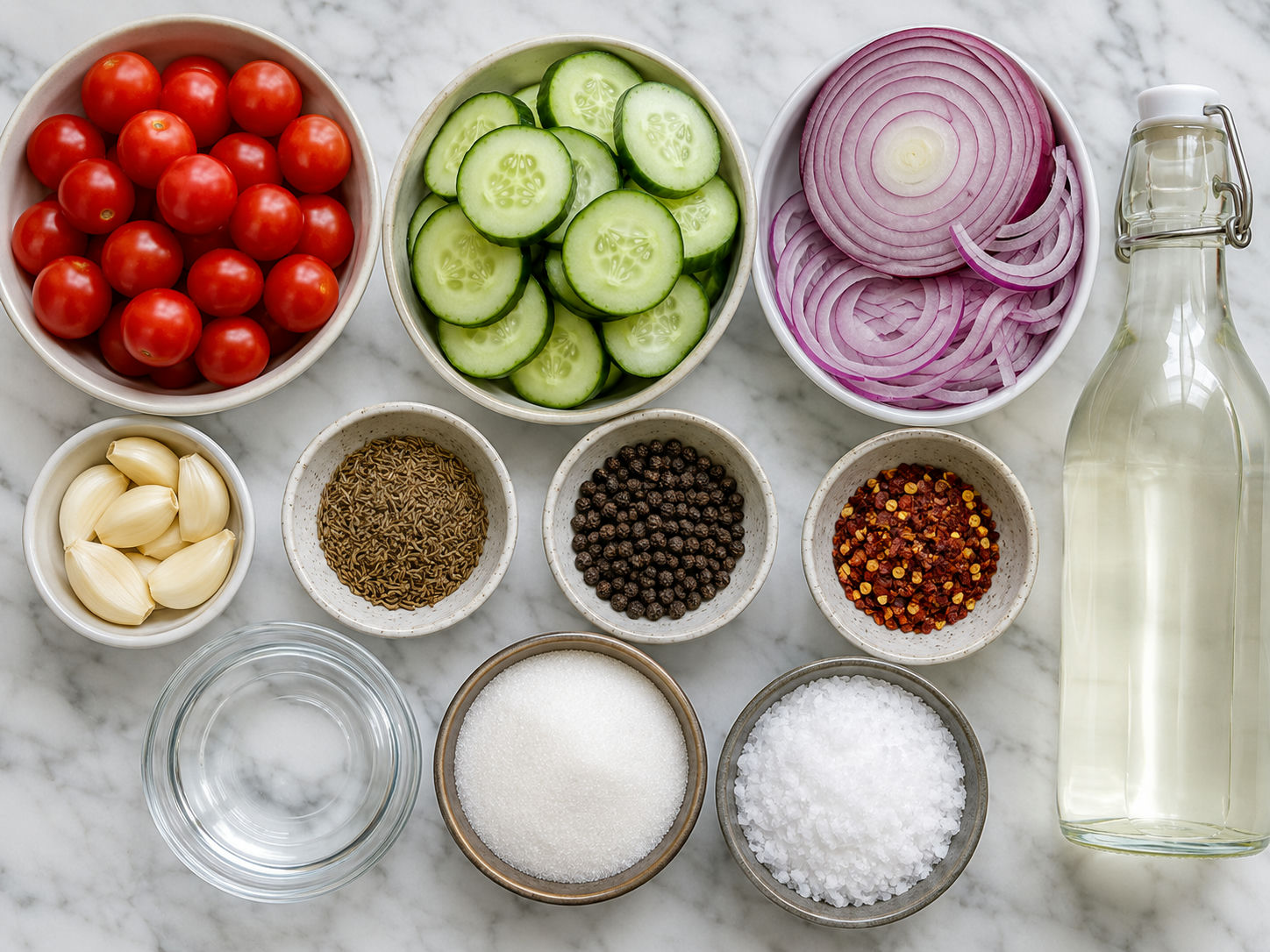
- Cherry tomatoes. They bring juicy sweetness and turn tangy without losing their round shape.
- English cucumber. Thin skin and fewer seeds keep the slices crisp in the brine.
- Red onion. It colors the jar pink and adds a sharp bite that softens as it chills.
- White vinegar. Clean acidity makes the vegetables taste bright and pickle-like.
- Water. It keeps the brine from tasting harsh while still staying sharp.
- Garlic. One clove per jar gives savory depth without taking over.
- Dill seed and peppercorns. They add classic pickle flavor and a little warmth.
- Sugar and salt. Sugar rounds the vinegar, and salt seasons the vegetables all the way through.
Pack, brine, and chill
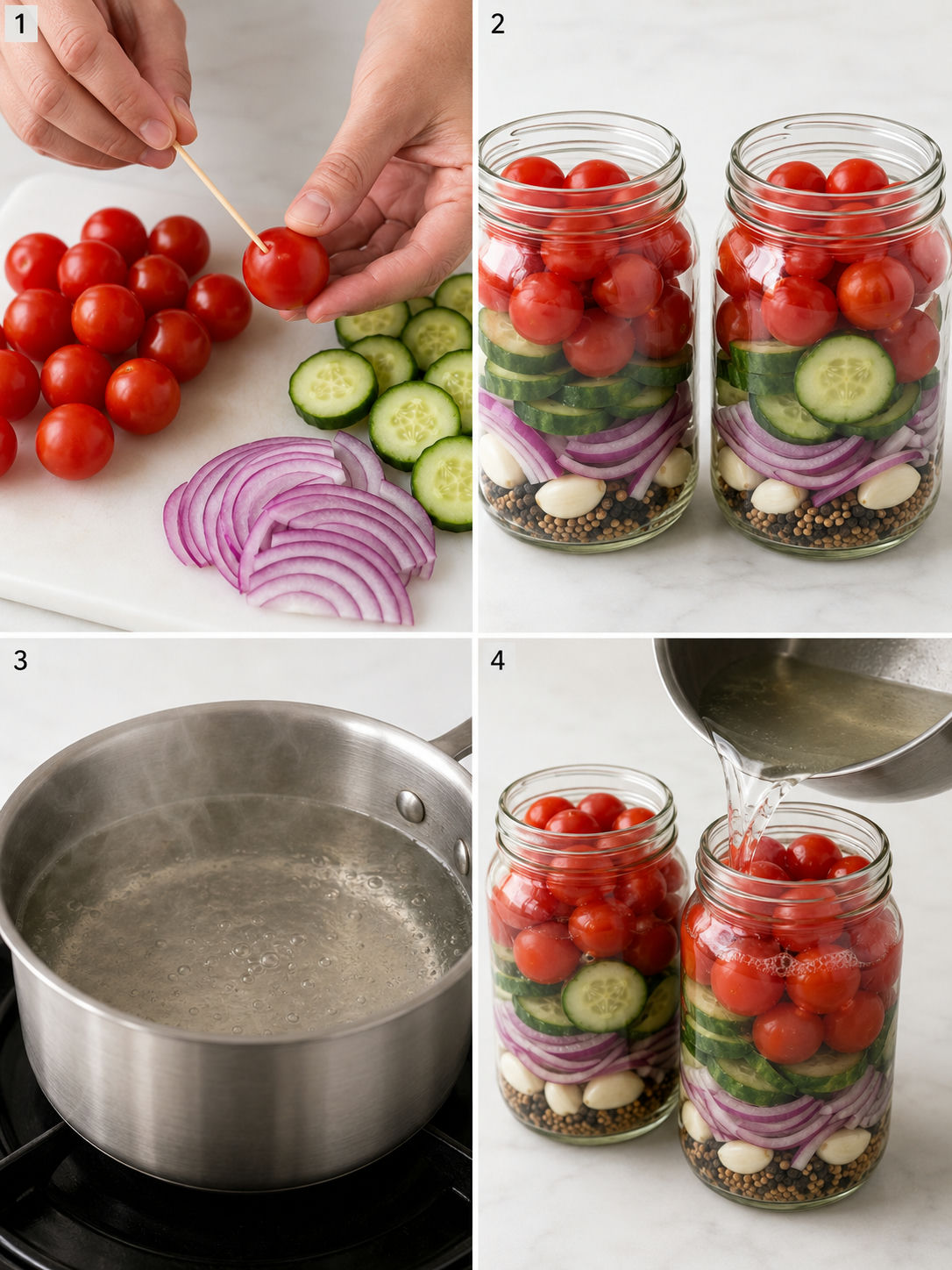
- Prep the vegetables. Wash and dry the produce, then slice the cucumber, thinly slice the onion, and prick each cherry tomato once.
- Fill the jars. Divide the garlic, dill seed, peppercorns, cucumbers, tomatoes, and onion between two clean pint jars.
- Heat the brine. Simmer vinegar, water, sugar, and salt just until dissolved. A hot brine helps the onions soften and pulls flavor into the tomatoes.
- Cover the vegetables. Pour the brine over the jars until everything is submerged, leaving a little space at the top.
- Cool and refrigerate. Let the jars cool at room temperature for 30 minutes, then seal and refrigerate for at least 4 hours before eating.
Why the brine works
This brine is built for refrigerator pickles, with equal parts vinegar and water for a clean tang that does not taste harsh. EatingWell uses the same basic balance in its quick pickling guide, and it is a reliable starting point for crisp vegetables that stay in the fridge.
The hot brine matters here. It slightly relaxes the red onion, wakes up the spices, and helps the tomato skins take in flavor. It should not boil hard after it hits the vegetables. You want bright pickles, not cooked salad. If you already love this combo, the site has another take on pickled tomato cucumber onion with a similar quick-fridge spirit.
The tomato texture trick
Cherry tomatoes can be stubborn in a pickle jar because their skins protect the sweet centers. Give each tomato one tiny poke with a skewer or the tip of a paring knife. That small opening lets the brine sneak in while the tomato still stays plump. Cut tomatoes work too, but they release more juice and make the brine cloudy faster.
Use firm red, yellow, or orange cherry tomatoes. Very ripe tomatoes taste good on day one, then soften quickly. Grape tomatoes are firmer and last a bit longer, though they are usually less sweet. For a cooked tomato side with a different texture, try fried red tomatoes and save this jar for cold, crunchy meals.
Onions without the harsh bite
Red onion is the loudest ingredient when it first goes into the jar. After a few hours, the vinegar tames it and the slices turn bright pink. Bon Appetit notes that quick-pickled onions mellow as they sit in brine in its pickled red onion recipe, and that same change happens here.
Slice the onion thin so it bends around the tomatoes and cucumbers. Thick wedges stay crunchy, but they can taste sharp in a cold pickle. If you want more peppery heat in the fridge, pair this jar with pickled sweet peppers and onions or spoon pickled pepper and onion relish onto sandwiches.
Serving ideas that make sense
These pickles are sharp, juicy, and salty enough to act like a condiment. Put them beside grilled chicken, pulled pork, burgers, hot dogs, or fried eggs. Chop a few spoonfuls and stir them into potato salad. Add them to tuna salad when you want crunch without adding another dressing.
They also make a good cold salad topper. Drain a spoonful, toss it over lettuce, and use a little of the brine with olive oil for a fast dressing. The same cucumber-and-acid combination works beautifully in watermelon feta cucumber salad, especially when the weather is hot and dinner needs to feel lighter.
Storage and safe handling
Refrigerator pickles stay in the fridge from the start. Let the jars cool for about 30 minutes after filling, then move them to the refrigerator. The FDA recommends washing fresh produce under running water and scrubbing firm produce such as cucumbers with a clean brush, as noted in its produce safety guidance.
For the best texture, eat these within 2 weeks. The cucumbers are crispest during the first week, while the onions and tomatoes keep getting tangier. Use a clean fork each time. If the jar smells yeasty, grows mold, or turns fizzy, throw it out.
Summary
Use these quick pickled vegetables anywhere you want crunch and acidity, from burgers and tacos to grilled chicken, potato salad, and snack plates.
FAQs
- How long do refrigerator pickled cherry tomatoes, red onions, and cucumbers need to sit?
They are lightly pickled after about 4 hours, but the flavor is better after 24 hours. The onions mellow, the cucumbers take on more brine, and the tomatoes taste brighter without falling apart.
- Do I have to pierce the cherry tomatoes?
Yes, it helps. A tiny poke with a skewer or knife lets the brine reach the inside without making the tomatoes collapse. Leave them whole if you want a firmer texture, but they will taste milder.
- Can I use regular tomatoes instead of cherry tomatoes?
You can use firm grape tomatoes or small wedges of Roma tomatoes. Avoid very ripe slicing tomatoes because they release too much juice and can turn soft in the jar.
- How long do these refrigerator pickles last?
Keep them covered in brine in the refrigerator and use them within 2 weeks for the best crunch. Always use a clean fork, and discard the jar if the brine smells off, fizzes, or shows mold.
- Can I make the brine sweeter or less sweet?
Yes. Two tablespoons of sugar gives a balanced tang. Use one tablespoon for sharper pickles, or three tablespoons if you like a bread-and-butter style sweetness.
- What should I serve them with?
They are great with burgers, grilled sausage, tacos, rice bowls, tuna salad, and deviled eggs. I also spoon them over cottage cheese or add them to a quick green salad when lunch needs more bite.
