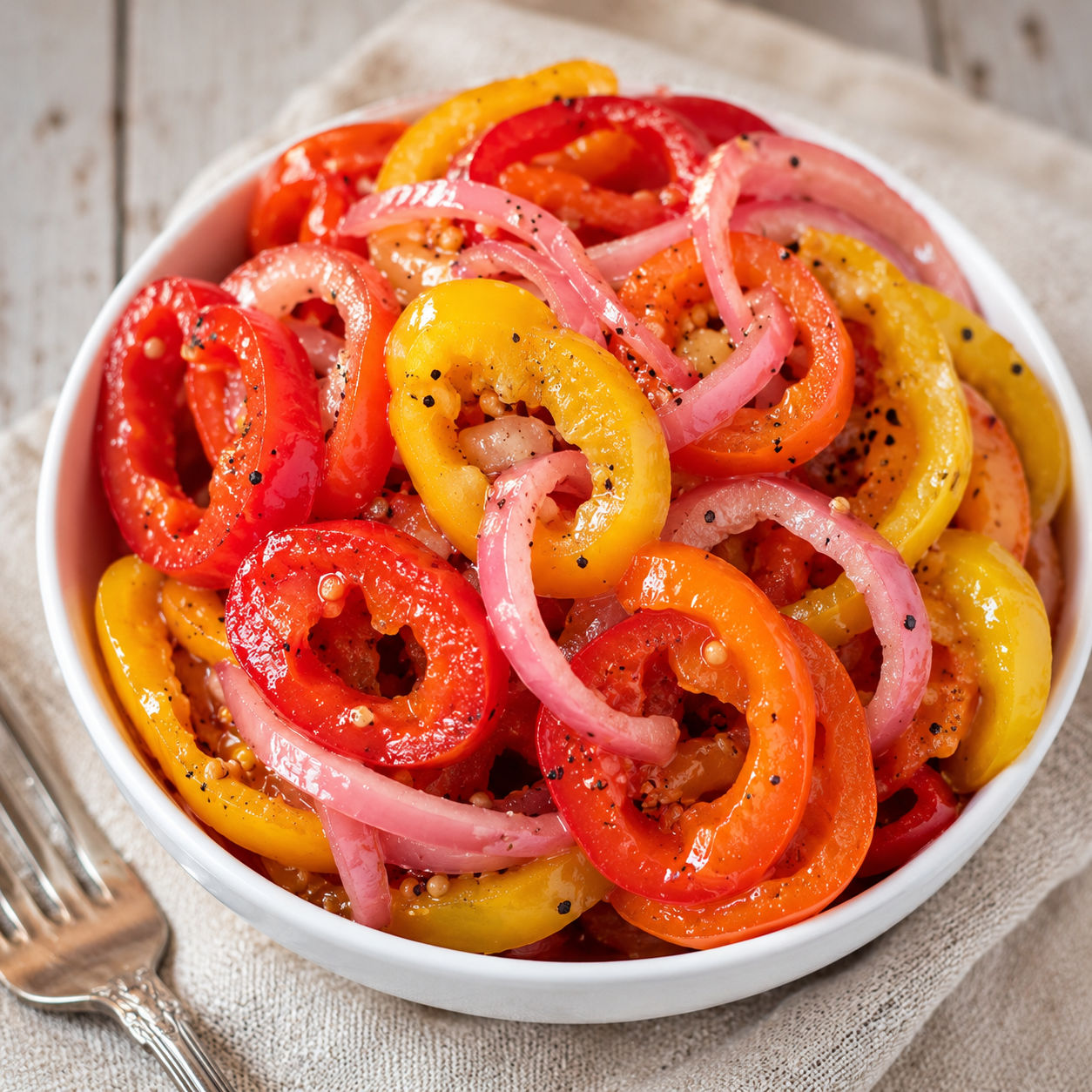
 Pin it
I make these pickles almost every summer when the pepper bin at the market looks too good to pass up. They are crisp, tangy, and just spicy enough to wake up a plain sandwich. Best of all, they do not require canning equipment or a free afternoon.
The secret is a simple warm brine poured over raw vegetables. In about thirty minutes you have something worth eating, and after a day in the fridge the flavor deepens into something even better. Keep a jar on hand and you will find excuses to add them to everything.
The pepper and onion lineup
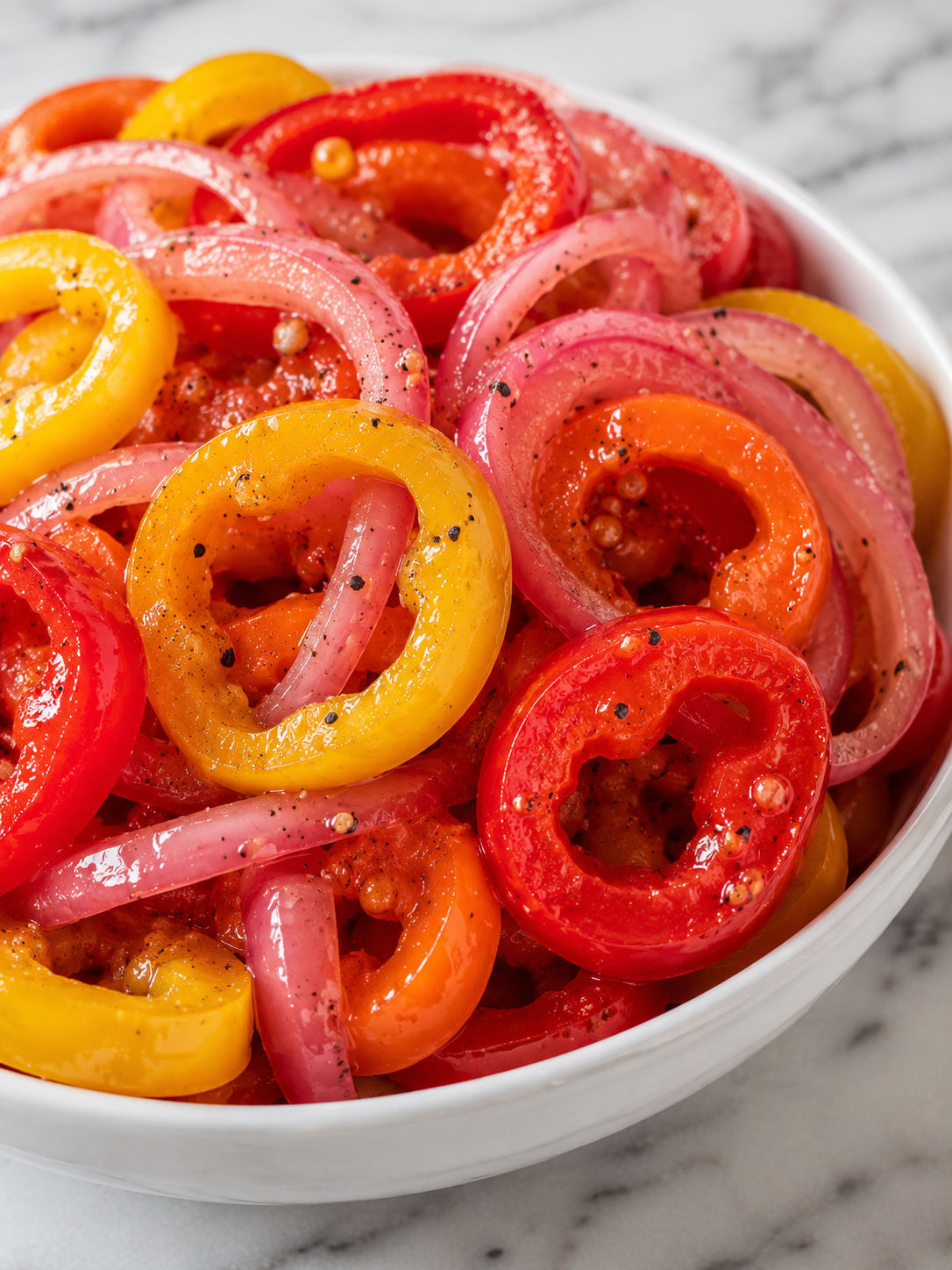
Look for firm, glossy mini sweet peppers in red, yellow, and orange. A single large red onion adds bite and that beautiful magenta tint to the brine. Use a decent apple cider vinegar and fresh garlic cloves for the cleanest flavor.
- Mini sweet peppers. About one pound of firm, colorful peppers gives the pickle its sweetness and crunch. Slice them into quarter-inch rings.
- Red onion. One large onion, thinly sliced, adds sharpness and turns a vivid pink in the brine.
- Apple cider vinegar. Equal parts vinegar and water creates a bright, tangy base without overwhelming the vegetables.
- Granulated sugar. Three tablespoons balance the acidity and help the peppers keep their snap.
- Kosher salt. Draws moisture from the vegetables and seasons the brine evenly.
- Garlic, peppercorns, and mustard seeds. These three add the zesty backbone. A pinch of red pepper flakes brings gentle heat.
Build the brine and pack
- Prep the vegetables. Wash the peppers, remove the stems, and slice into rings about a quarter inch thick. Peel the onion and slice it into thin half-moons.
- Make the brine. Combine the vinegar, water, sugar, salt, smashed garlic, peppercorns, mustard seeds, and red pepper flakes in a saucepan. Warm over medium heat, stirring, until the sugar and salt fully dissolve. Do not let it boil.
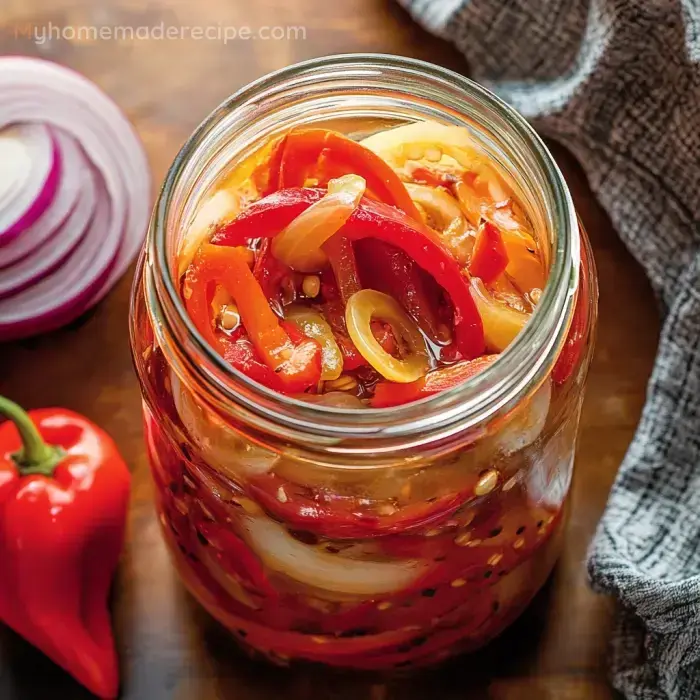
- Pack the jars. Divide the peppers and onions between two clean pint jars, packing them fairly tight but not crushed. Tuck the garlic pieces down among the vegetables.
- Pour and seal. Ladle the warm brine over the vegetables until they are fully submerged, leaving about half an inch of headspace. Tap the jars gently to release air bubbles and seal the lids.
- Cool and chill. Let the jars cool to room temperature, then refrigerate. They are edible after one hour and reach peak flavor after twenty-four hours.
Why the brine ratio matters
A one-to-one mix of vinegar and water gives enough acid to preserve the vegetables safely in the refrigerator without making them taste like straight vinegar. Too much water and the pickles soften faster and taste flat. Too much vinegar and the sharpness drowns out the natural sweetness of the peppers.
The sugar does more than sweeten the brine. It helps the vegetables stay crisp by balancing the harshness of the acid. Salt does the same while drawing out a little moisture so the peppers stay crunchy rather than rubbery. If you want to understand how acid preserves food, the National Center for Home Food Preservation explains the science clearly.
Make it your own
You can swap apple cider vinegar for white distilled vinegar if you prefer a cleaner bite, or use rice vinegar for a milder, slightly sweet edge. Fresh dill, coriander seeds, or a bay leaf all work well in the brine. If you like more heat, double the red pepper flakes or add a sliced jalapeno to each jar.
For a sweeter pickle, increase the sugar by a tablespoon. For a saltier, more savory version, cut the sugar in half and add a splash of soy sauce. These pickles are a close cousin to our Easy Pickled Peppers and Onions and pair beautifully with a jar of Pickled Pepper and Onion Relish on a grilled sausage.
How to use them
Pile them onto tacos, nachos, or burrito bowls for instant crunch and acidity. They also liven up a simple green salad, tuck neatly into a turkey sandwich, and sit proudly on a charcuterie board next to sharp cheese and cured meat. I often chop them into egg salad or tuna salad for color and zip.
They are also a fast upgrade for grain bowls and wraps. The brine itself makes a great addition to salad dressing or a quick marinade. If you enjoy quick condiments, try our Quick Pickled Garden Vegetables for a mixed-vegetable version.
Keep them crisp
Store the jars in the coldest part of your refrigerator and use a clean fork each time you reach in. They keep well for two to three weeks. If the brine ever turns cloudy or smells off, discard the batch. The FDA safe food handling guidelines recommend keeping refrigerator pickles at forty degrees Fahrenheit or below.
For the crunchiest texture, use the freshest peppers you can find and do not pour boiling brine over them. Warm brine softens them just enough to start the pickling process without cooking them.
FAQs
- How long do quick pickled peppers and onions last?
They stay crisp and flavorful in the refrigerator for two to three weeks when stored at forty degrees Fahrenheit or below. Always use a clean utensil and discard the batch if the brine turns cloudy or smells off.
- Can I use a different vinegar?
Yes. White distilled vinegar gives a sharper bite, while rice vinegar is milder and slightly sweet. Apple cider vinegar is my favorite for its subtle fruitiness, but any standard five percent acidity pickling vinegar works.
- Do I need to sterilize the jars?
For refrigerator pickles, washing the jars thoroughly in hot soapy water is enough. Sterilization is only necessary if you plan to process the jars in a boiling water bath for shelf-stable storage.
- Can I make these without sugar?
You can reduce the sugar, but a small amount helps balance the acid and keeps the texture pleasant. If you omit it entirely, expect a much sharper and more aggressive pickle.
- What is the best way to keep them crunchy?
Start with very fresh peppers, slice them evenly, and pour warm rather than boiling brine over them. Storing them in the coldest part of the fridge also slows softening.
- Are these pickles spicy?
They are mildly zesty. The red pepper flakes add a gentle background heat. For spicier pickles, add sliced fresh jalapenos or double the red pepper flakes.
- Can I pickle other vegetables with the same brine?
Absolutely. Cauliflower florets, carrot coins, and cucumber slices all work well. Just keep the pieces roughly the same size so they pickle evenly.
- How soon can I eat them?
They are safe to eat after about one hour in the refrigerator, though the flavor will be mild. After twenty-four hours the brine fully penetrates the vegetables and the taste becomes much more rounded.
