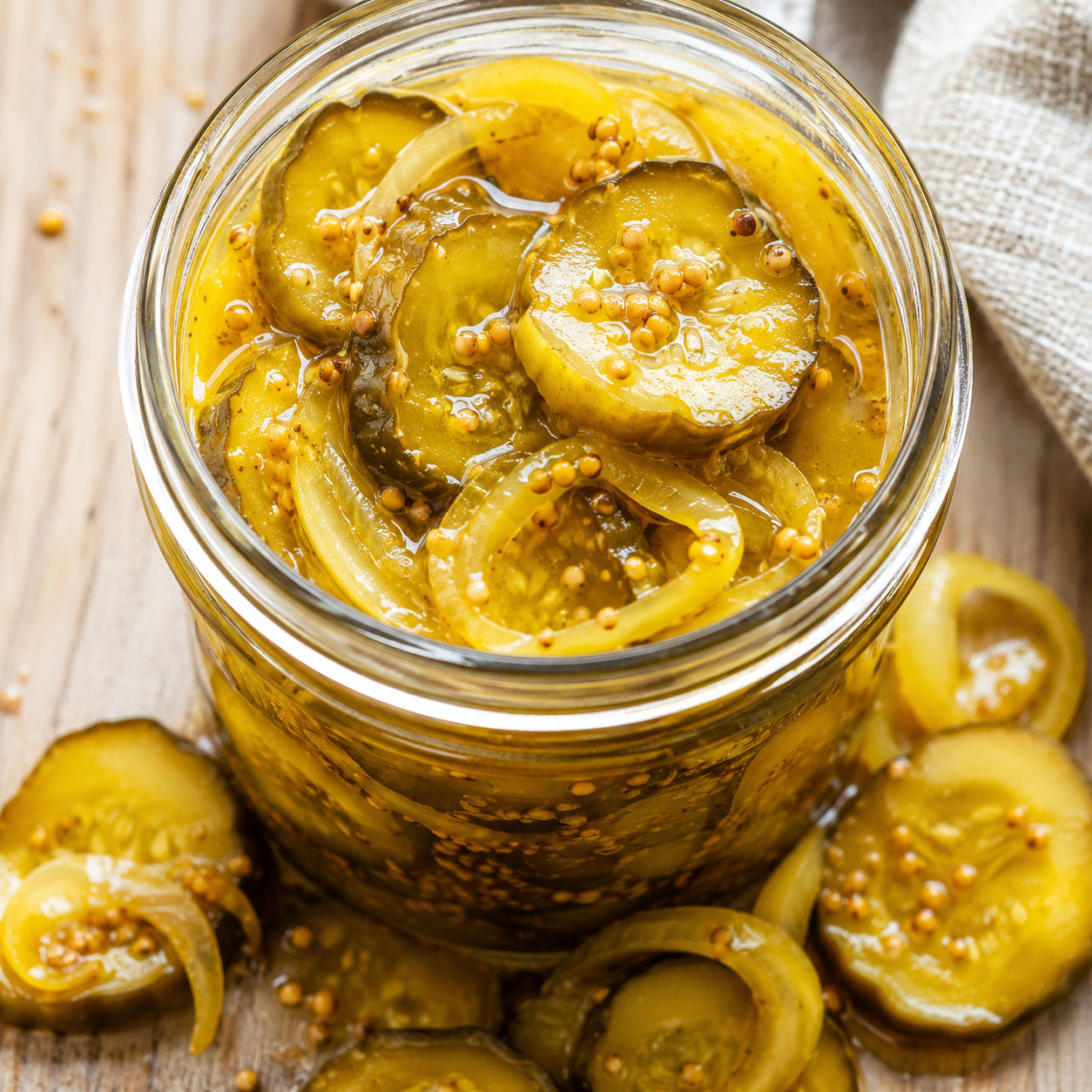
 Pin it
There is a reason bread and butter pickles never go out of style. They hit that ideal midpoint between sweet and sharp, and they keep their crunch even after a soak in brine. I make a batch every summer when the pickling cucumbers start piling up, but this refrigerator version works just as well with a good English cucumber from the store.
The method is simple. You salt the slices to draw out excess water, simmer a quick vinegar syrup with mustard seed and turmeric, then pour it all into jars. A couple of hours in the fridge is all it takes before you have pickles worth stacking on a burger or eating straight from the jar with a fork.
The crunch behind the pickle
Good pickles start with firm, small cucumbers. Pickling or Persian varieties work best, but a crisp English cucumber will do in a pinch. The rest is pantry stuff you probably already have.
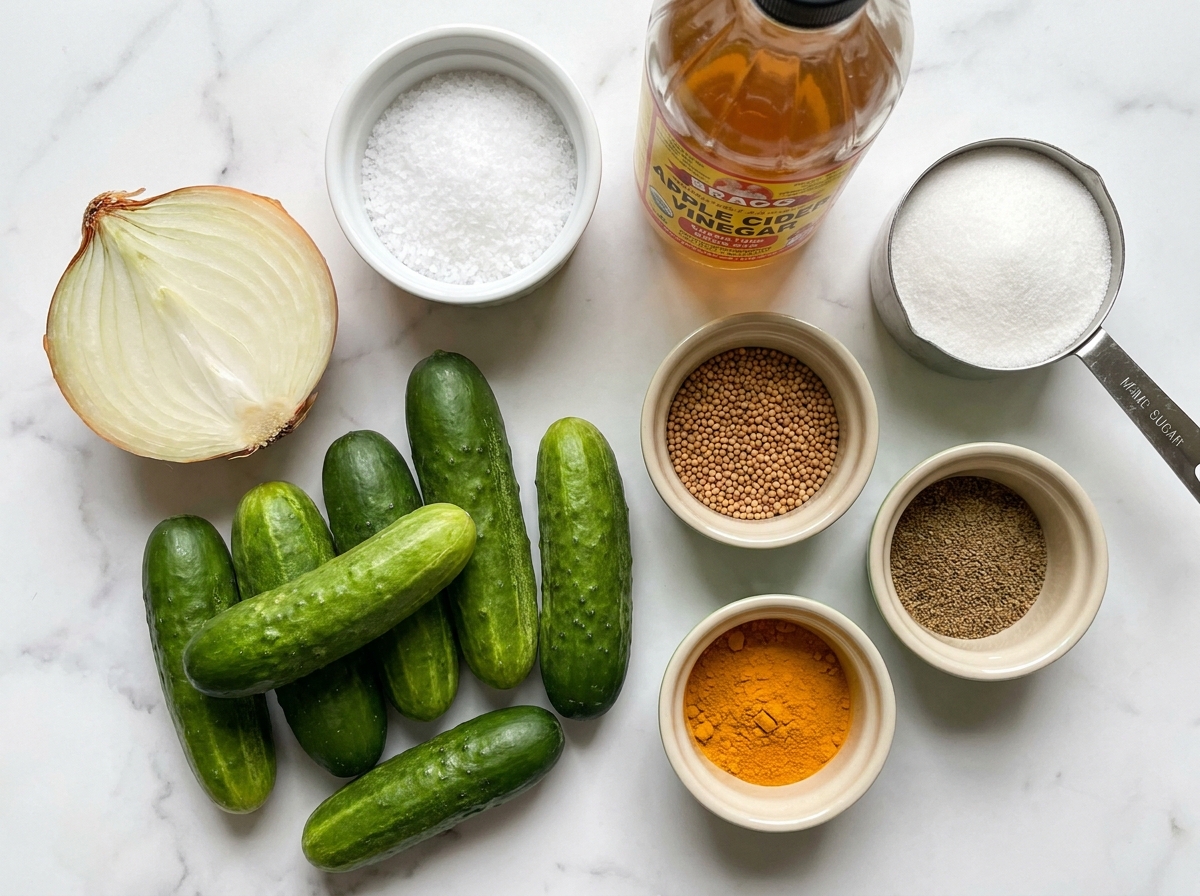
- Pickling cucumbers. Small and firm, they hold their snap better than slicing cucumbers. English or Persian cucumbers are solid substitutes.
- Yellow onion. Adds a mild bite that sweetens in the brine. Slice it thin so it pickles through.
- Kosher salt. Draws water out of the vegetables and seasons them evenly without the iodine aftertaste of table salt.
- Apple cider vinegar. The 5 percent acidity gives the pickles their safe, sharp backbone and a subtle fruity note.
- Granulated sugar. Balances the vinegar and creates that classic bread-and-butter glaze.
- Mustard and celery seeds. Warm, earthy spice that makes the brine taste like actual pickles instead of just sweet vinegar.
- Ground turmeric. Adds color and a gentle earthiness. A little goes a long way.
From salt to seal
- Salt the vegetables. Toss the cucumber and onion slices with kosher salt in a large bowl. Let them sit for one to two hours so the salt can pull out excess moisture. Drain and rinse well.
- Simmer the brine. Combine apple cider vinegar, sugar, water, mustard seeds, celery seeds, and turmeric in a medium saucepan. Bring to a boil, then reduce the heat and stir until the sugar fully dissolves, about two minutes.
- Pack the jars. Divide the drained vegetables among clean glass jars, packing them loosely but with no large gaps.
- Pour and chill. Ladle the hot brine over the vegetables, making sure everything is submerged. Let the jars cool to room temperature, then refrigerate for at least two hours before eating.
Why salt draws out water
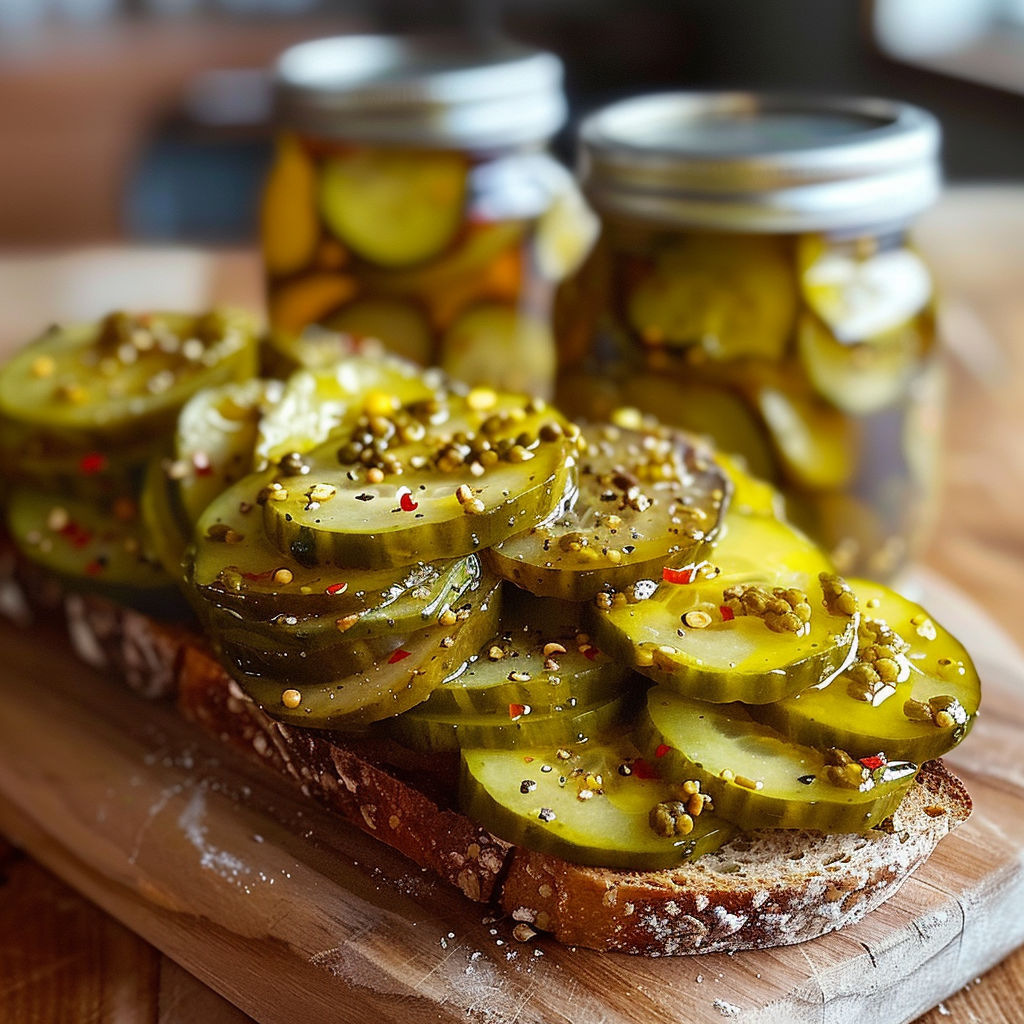
Salting is not just for flavor. It pulls water from the cucumber cells through osmosis, which keeps the slices firm once they hit the brine. If you skip this step, the vegetables release moisture into the jar and dilute the vinegar, leading to soggy pickles and a weaker punch. Rinse the salt off thoroughly after draining or the final product will be too salty. I usually let them sit in a colander for a few minutes to make sure every grain washes away.
The sugar-vinegar balance
Bread and butter pickles are meant to be sweet, but they should still taste like pickles. I use a ratio that leans tangy so the sugar acts as a counterweight, not a mask. If you like them sweeter, you can add a quarter cup more sugar, but taste the brine before you pour. It should be sharp and bright, not syrupy. For a deeper look at how acid preserves vegetables safely, the FDA food-safety guidelines explain why 5 percent acidity matters.
Keeping that snap
Crunch comes down to two things: the cucumber you choose and how you prep it. Small pickling cucumbers have the least developed seeds and the tightest flesh. If you only have larger cucumbers, scoop out the seedy center before slicing. Salting and draining is the second non-negotiable. It removes the water that would otherwise turn the slices limp in the jar. For another recipe that celebrates crisp cucumber texture, try our watermelon feta cucumber salad.
Jazz them up
Once you have the base brine down, the variations are endless. Add a few thin rings of fresh jalapeno for gentle heat, or a coin of ginger for warmth. A pinch of red pepper flakes stirred into the brine gives the pickles a slow burn that works well on pulled pork. If you are looking for a complementary condiment with a different kind of tang, our sweet tangy rhubarb butter is excellent on toast next to these pickles.
Storing and serving
These are refrigerator pickles, so keep them cold. They will last about one month in the fridge and actually improve after a day or two as the flavors meld. Stack them on burgers, chop them into chicken salad, or serve them alongside classic bread and butter pickles for a pickle board at your next cookout. If you want to process them for shelf storage, use a proper boiling water bath and follow current canning guidelines from a reliable source like the food science team at Serious Eats.
FAQs
- What kind of cucumber is best for bread and butter pickles?
Small pickling cucumbers are ideal because they have firm flesh and tiny seeds. Persian and English cucumbers are good alternatives if you want a reliable crunch from the grocery store.
- Can I reduce the sugar in this recipe?
Yes, though the pickles will be more tart. You can cut the sugar by up to one third without affecting safety. Taste the brine while it simmers and adjust to your preference.
- How long do refrigerator bread and butter pickles last?
Stored in airtight jars in the fridge, they keep well for about one month. The flavor actually deepens after the first twenty-four hours.
- Can I use white vinegar instead of apple cider vinegar?
Yes. White vinegar keeps the pickles a brighter yellow-green, while apple cider vinegar adds a slightly fruity depth. Both are safe as long as they are 5 percent acidity.
- Why are my pickles soft instead of crunchy?
Soft pickles usually mean the cucumbers were overripe, under-salted, or sliced too thick. Always salt and drain them before brining, and choose the firmest cucumbers you can find.
- Can I can these for shelf storage?
You can, but you will need to follow a tested canning process with proper headspace and processing time in a boiling water bath. This recipe as written is intended for refrigerator storage.
- What do I serve bread and butter pickles with?
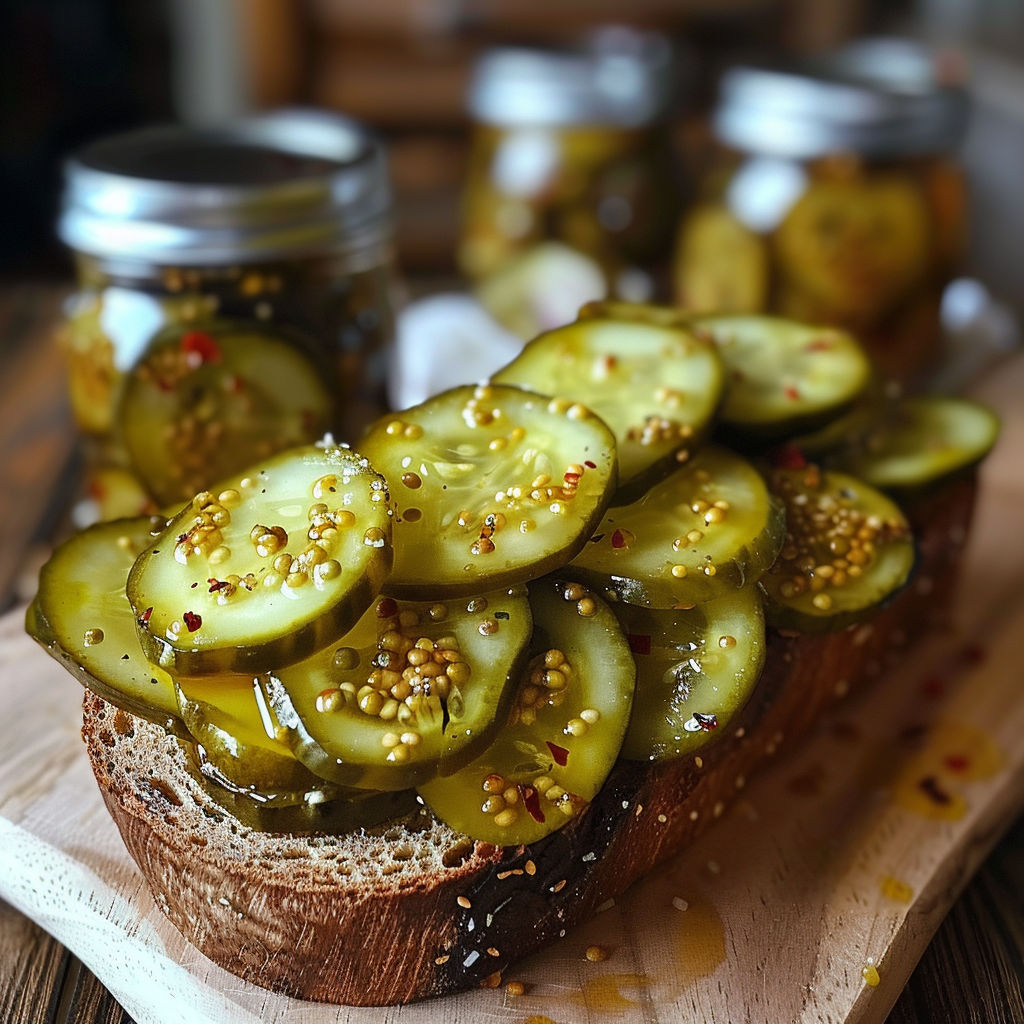
They are classic on burgers and deli sandwiches. You can also chop them into potato salad, pair them with sharp cheddar, or eat them straight from the jar as a snack.
