 Pin it
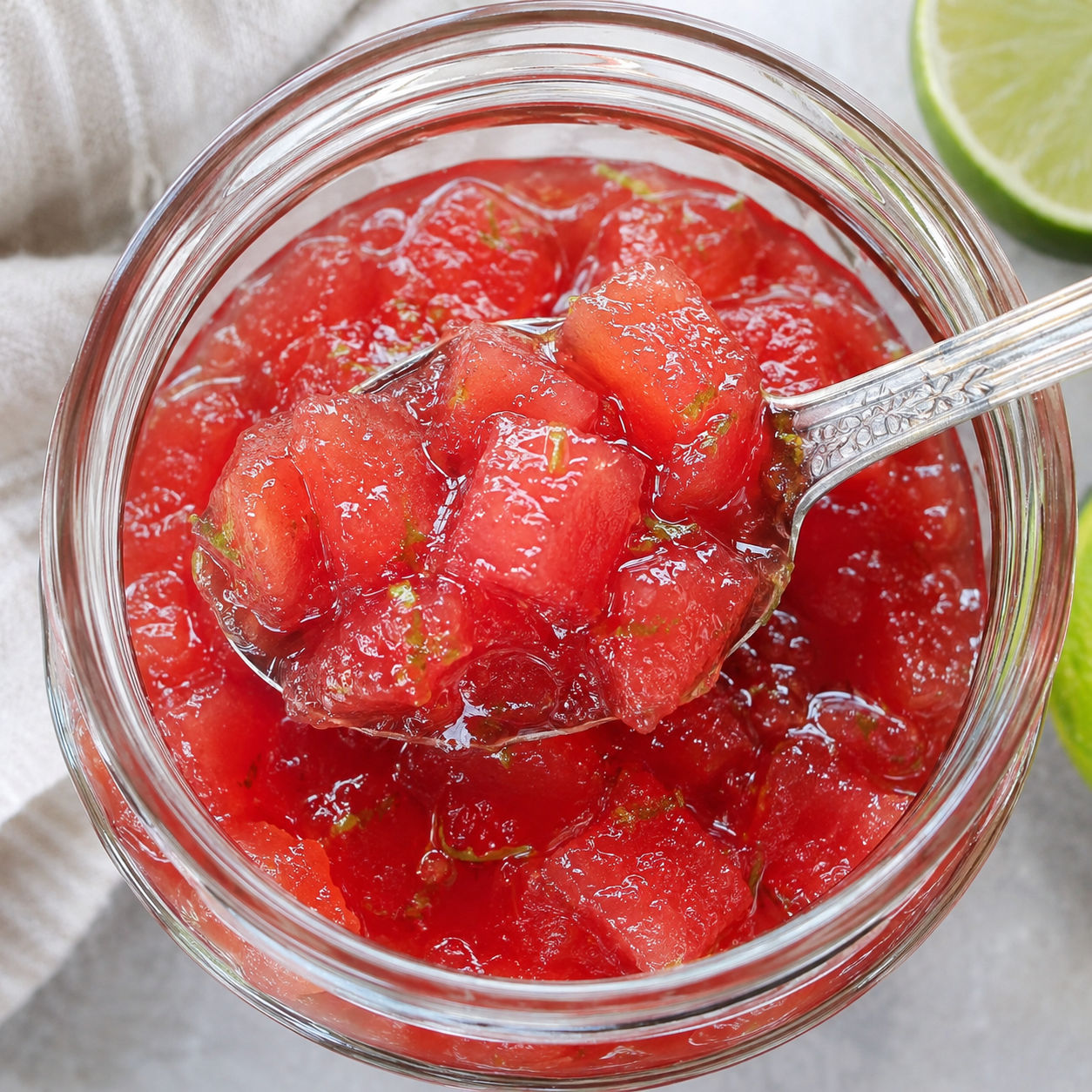
When the counter is crowded with watermelon and the thought of another slice feels tired, this is the move. Turning melon into preserves captures that peak-summer sweetness in a jar you can open long after the season ends. The lime keeps it bright and stops the sugar from taking over, so the finished spread tastes like watermelon actually tastes, not candy.
I make this in a single pot with no water bath, which means it lives in the fridge and comes together in under an hour. The color stays gorgeous, the set is reliable thanks to powdered pectin, and the hardest part is waiting for it to cool.
What goes into the pot
You only need a handful of staples and one ripe melon. Go for seedless watermelon with firm, dense flesh. The drier the cubes, the less time you spend boiling off excess liquid.
- Seedless watermelon. The base of the preserve. Firm, ripe cubes hold their shape better than overripe melon that turns mushy.
- Granulated sugar. Feeds the pectin and helps the set. Do not cut the amount unless you switch to a low-sugar pectin formulated for smaller batches.
- Fresh lime juice and zest. The acid helps the pectin gel and adds a sharp, citrus backbone that balances the sweetness.
- Powdered fruit pectin. Standard boxed pectin gives a reliable gel without an all-day cook-down.
- Fine sea salt. A small pinch wakes up the fruit and keeps the flavor from falling flat.
- Vanilla extract. Optional, but a half teaspoon at the end adds a warm undertone that plays well with lime.
How it sets up
- Prep the melon. Remove the rind and cut the flesh into uniform 1/2-inch cubes until you have 8 cups. Discard any seeds and blot the cubes lightly with a towel to remove surface moisture.
- Mix fruit and pectin. Place the watermelon, lime juice, lime zest, and powdered pectin into a large, heavy pot. Stir for about 1 minute so the pectin fully dissolves and coats the fruit.
- Bring to a rolling boil. Set the pot over medium-high heat and cook, stirring constantly, until the mixture reaches a full rolling boil that cannot be stirred down.
- Add sugar and boil. Pour in the sugar and salt all at once. Return to a full rolling boil and boil hard for exactly 1 minute. Remove from heat, skim off any foam, and stir in the vanilla if using.
- Jar and cool. Ladle the hot preserves into clean half-pint jars, leaving 1/4 inch of headspace. Let them cool to room temperature uncovered, then seal and refrigerate.
The cut that controls texture
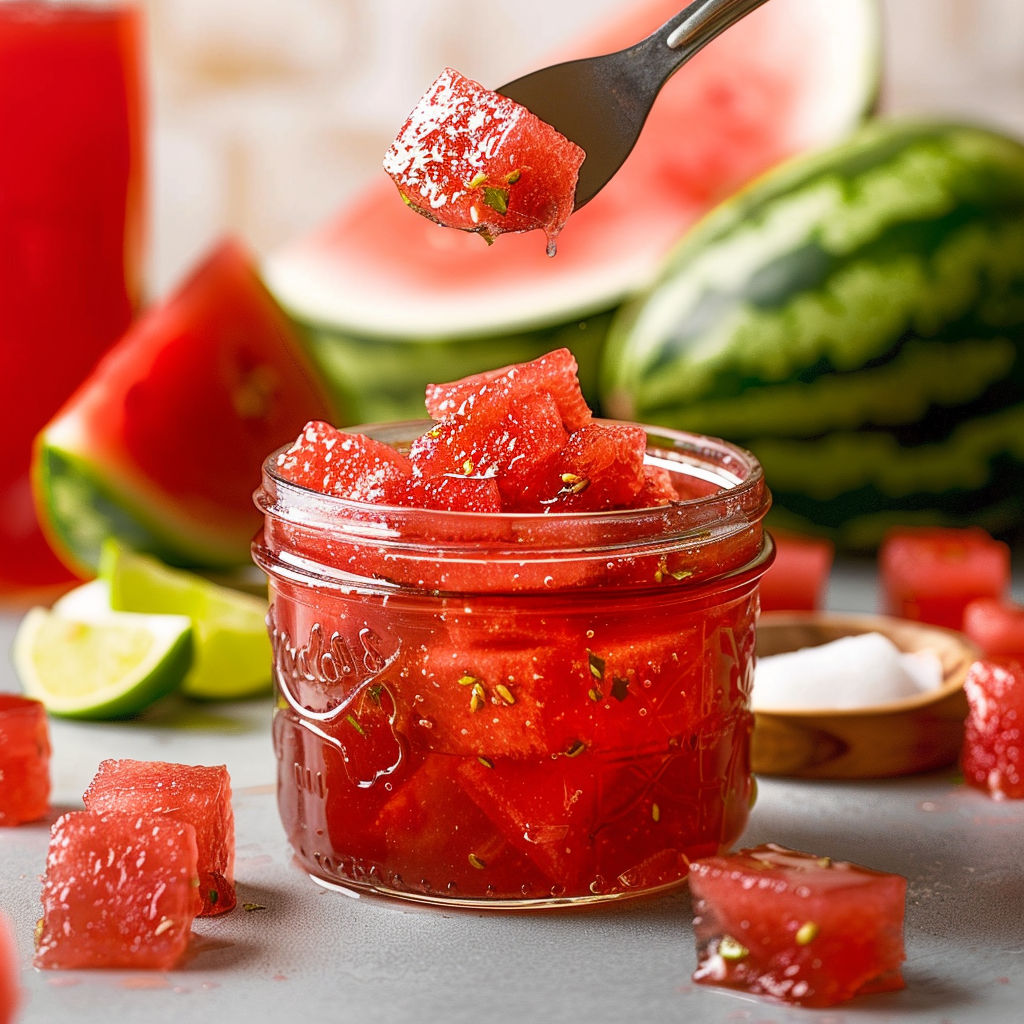
Watermelon is mostly water, so the size of your dice matters more than you think. Half-inch cubes are small enough to break down slightly and suspend in the gel, but large enough to keep a real bite. If you chop too fine, the fruit dissolves into a thin jam. Too large and the pieces float while the syrup sinks. A sharp chef's knife and a stable cutting board make quick work of it. I usually set the watermelon on its side, slice off the rind in strips, then cube from there.
Why lime does more than flavor
Lime juice does three jobs here. It brightens the palate, it provides the acid pectin needs to form a gel, and it keeps the color from oxidizing into a dull pink-brown. Fresh-squeezed juice is worth the extra minute. Bottled lime juice works in a pinch, but check that it is pure juice and not a sweetened cocktail blend. For a deeper citrus hit, try our lime marmalade recipe without pectin next.
Refrigerator keeps it simple
This is a refrigerator preserve, which means no pressure canner or water bath. The jars stay good for up to three weeks chilled, or you can freeze them for up to six months. If you want shelf-stable jars, you will need to process them in a boiling water bath following tested guidelines. The National Center for Home Food Preservation has the safest instructions at nchfp.uga.edu. For a clearer, more jelly-like result, our watermelon lime jelly preserves take a slightly different path.
Serve it beyond toast
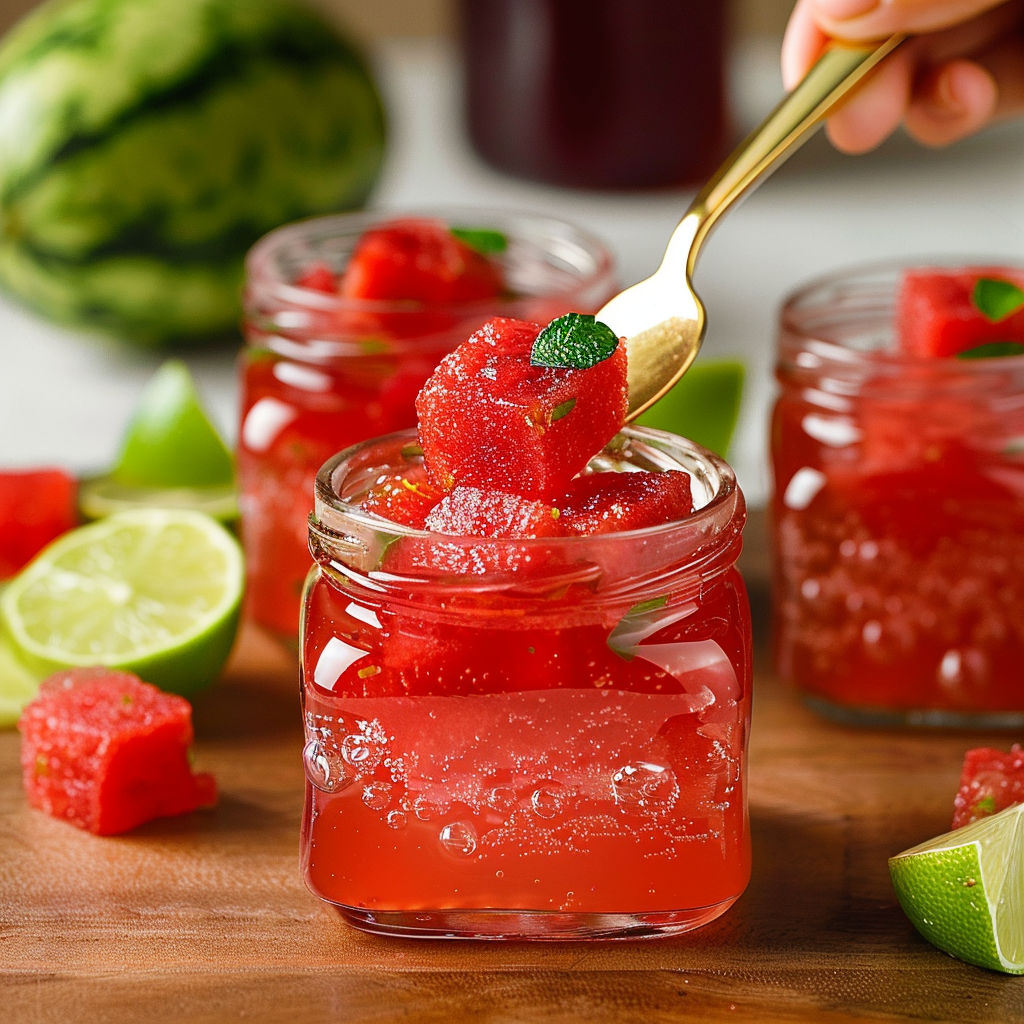
A jar of this stuff is more versatile than breakfast. Spoon it over thick Greek yogurt, swirl it into vanilla ice cream, or pair it with soft goat cheese and crackers. It also makes a quick glaze for grilled chicken when thinned with a little extra lime juice. On hot afternoons, I like to drop a spoonful into sparkling water and top it with mint for an instant refresher alongside a watermelon lime and mint mocktail.
Flavor riffs that work
Swap the lime for Meyer lemon if you want a softer citrus note. A few torn mint leaves stirred in off the heat are excellent, or a pinch of red chili flakes if you like heat with your sweet. If you prefer a smoother spread without chunks, our homemade sweet watermelon jam is a close cousin. Just remember that any added liquid or fresh herbs can affect the final set, so keep extras minimal.
FAQs
- Can I make this without pectin?
You can, but watermelon is extremely low in natural pectin. Without it, you will need to cook the fruit and sugar for a very long time to reach a gel, and the result is often closer to a thick syrup than a true preserve.
- How long do refrigerator preserves last?
Keep the jars sealed and chilled, and they will stay fresh for up to three weeks. For longer storage, freeze the preserves in straight-sided jars with at least an inch of headspace for up to six months.
- Can I use bottled lime juice?
Fresh lime juice gives the best flavor and reliable acidity, but bottled pure lime juice will work in a pinch. Avoid sweetened lime cordial or cocktail mixes, which throw off both the sugar balance and the set.
- Can I water-bath can this for shelf storage?
Yes, but only if you follow a tested canning process for your altitude. Process half-pint jars in a boiling water bath for 10 minutes, adjusting for elevation. Refer to the National Center for Home Food Preservation for current guidelines.
- Why is my preserve runny?
Runny preserves usually mean the mixture was not boiled hard enough after adding sugar, the pectin was outdated, or the fruit ratio was off. You can re-cook it within 24 hours. Return it to the pot, bring to a full boil, and boil hard for another minute.
- What watermelon works best?
Choose a seedless watermelon with firm, bright red flesh and a creamy yellow field spot. Overripe or mealy melon releases too much water and breaks down into mush instead of holding its shape.
