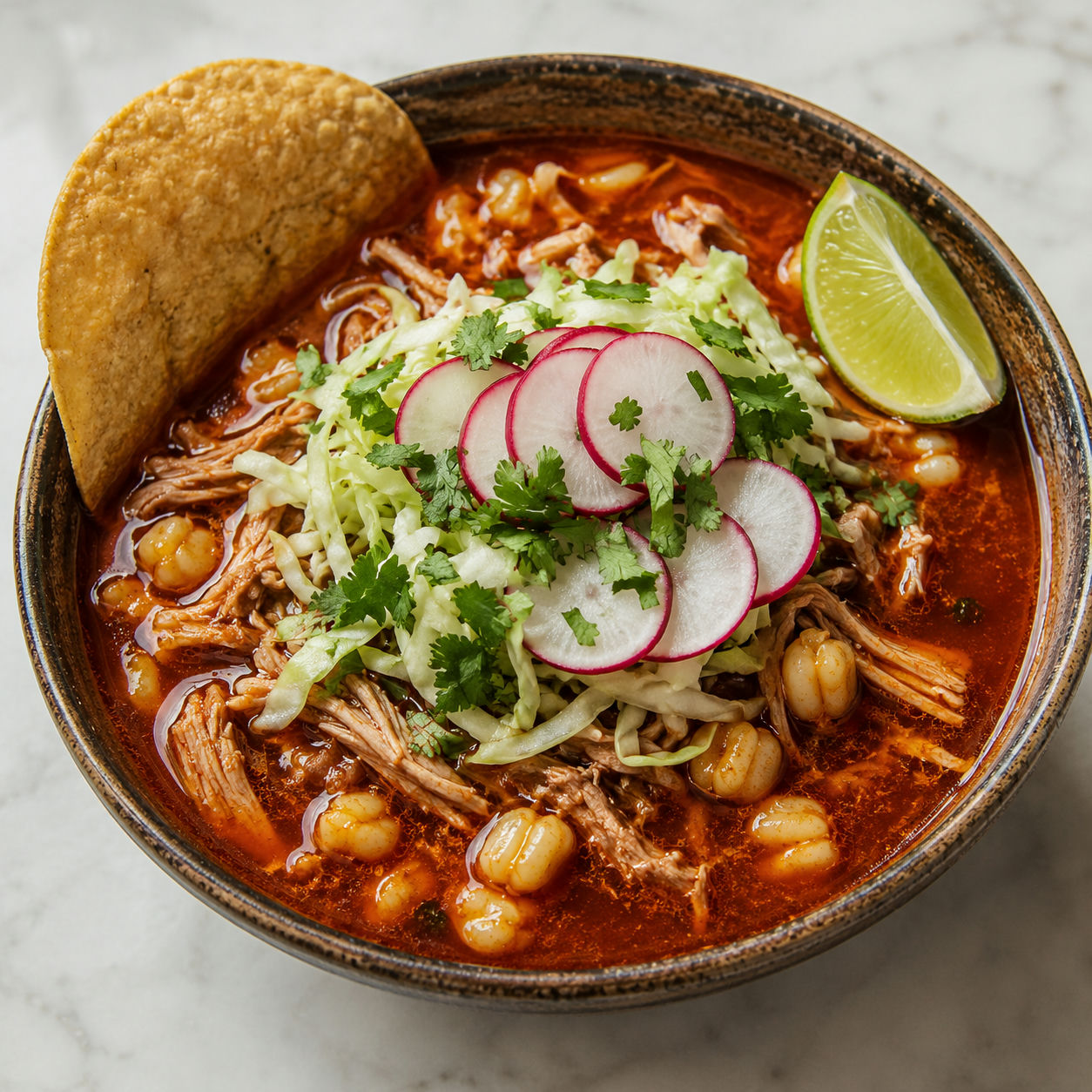
 Pin it
Pozole rojo earns its place at the table. The broth turns that deep brick-red color from a handful of dried chiles, the pork pulls apart after a long unhurried simmer, and the hominy swells up chewy and starchy in all that richness. It is a soup built for cold evenings and big gatherings, traditional at Mexican celebrations but honest enough for any weeknight that needs something substantial.
This version layers two kinds of dried chiles. Guajillo brings a bright fruity heat. Ancho adds a darker earthy sweetness that rounds out the broth without piling on more fire. Bone-in pork shoulder plus a few neck bones make the liquid gelatinous and full. You will be at the stove for about three hours, but most of that time the pot is doing its own thing.
The toppings matter as much as the soup itself. Line them up on the table and let everyone build their own bowl. That is the point of pozole.
Dried Chiles, Pork, and Hominy
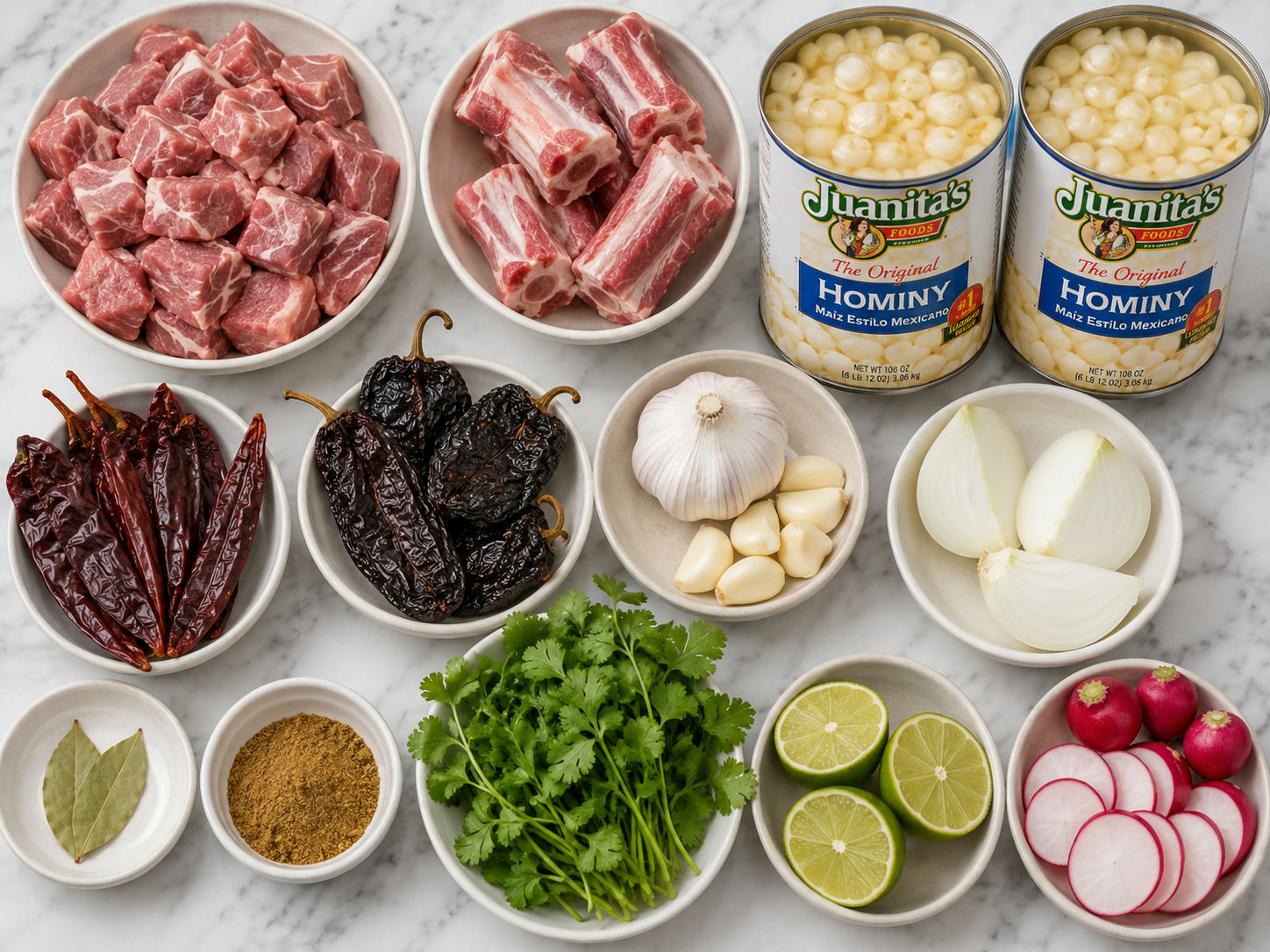
Two kinds of dried chiles do the heavy lifting in the red sauce. Look for guajillos that are still pliable when you bend them, not crumbly and brittle. The same goes for anchos. They should smell faintly fruity and earthy, not dusty. Both are widely available at Latin grocery stores and many regular supermarkets.
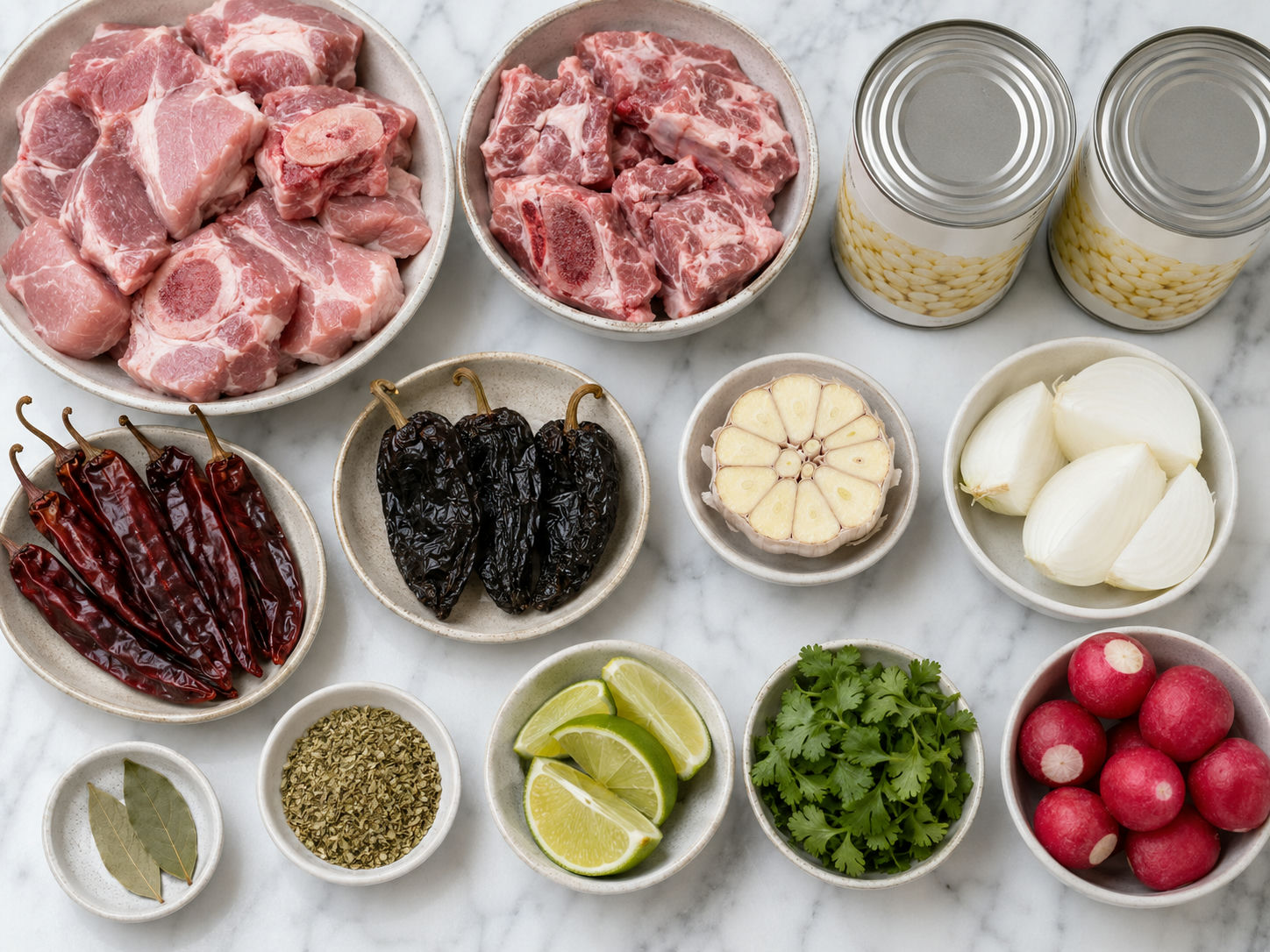
- Bone-in pork shoulder. Fat marbled through the meat keeps it moist during the long simmer and it falls apart into tender, pullable shreds.
- Pork neck bones. Collagen from the bones gives the broth a glossy, almost silky body that water alone cannot produce.
- Guajillo chiles. The base of the red sauce. They bring a bright, slightly tangy heat with hints of dried cherry and paprika.
- Ancho chiles. Dried poblanos that add a dark, raisiny sweetness and body to the sauce without piling on much more heat.
- White onion. One half goes into the broth whole while it simmers. The other half is diced raw and served at the table as a topping.
- Garlic. Crushed cloves simmer with the pork, and fresh garlic goes into the chile sauce for a sharper note.
- Canned white hominy. Large, chewy corn kernels that absorb the broth and give pozole its signature texture and identity.
- Mexican dried oregano. More floral and citrusy than Italian oregano. Crumble it between your fingers before adding it.
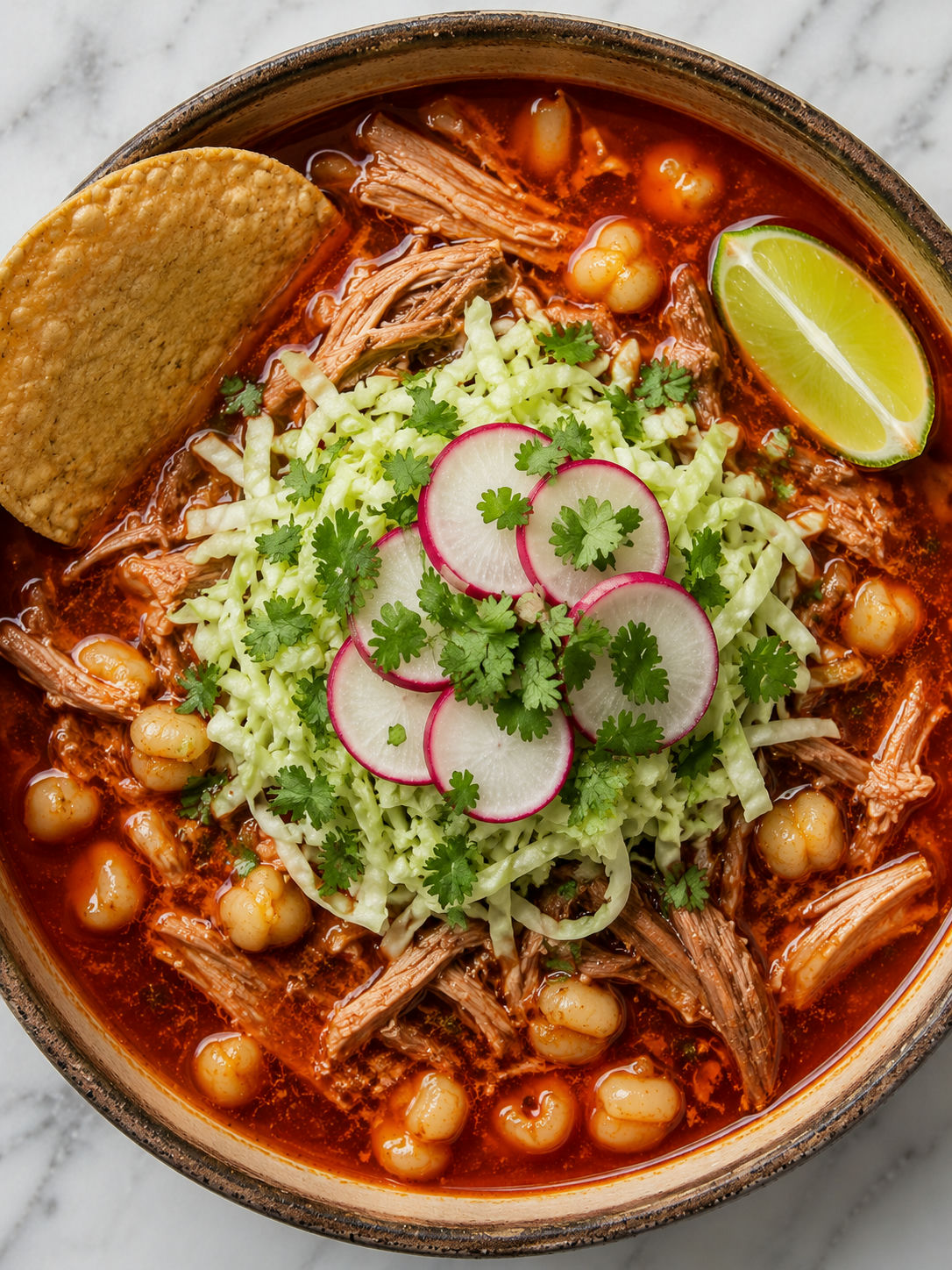
- Toppings. Shredded cabbage, radishes, lime, cilantro, and tostadas are served fresh at the table, not cooked into the soup.
Simmer Long, Finish Bright
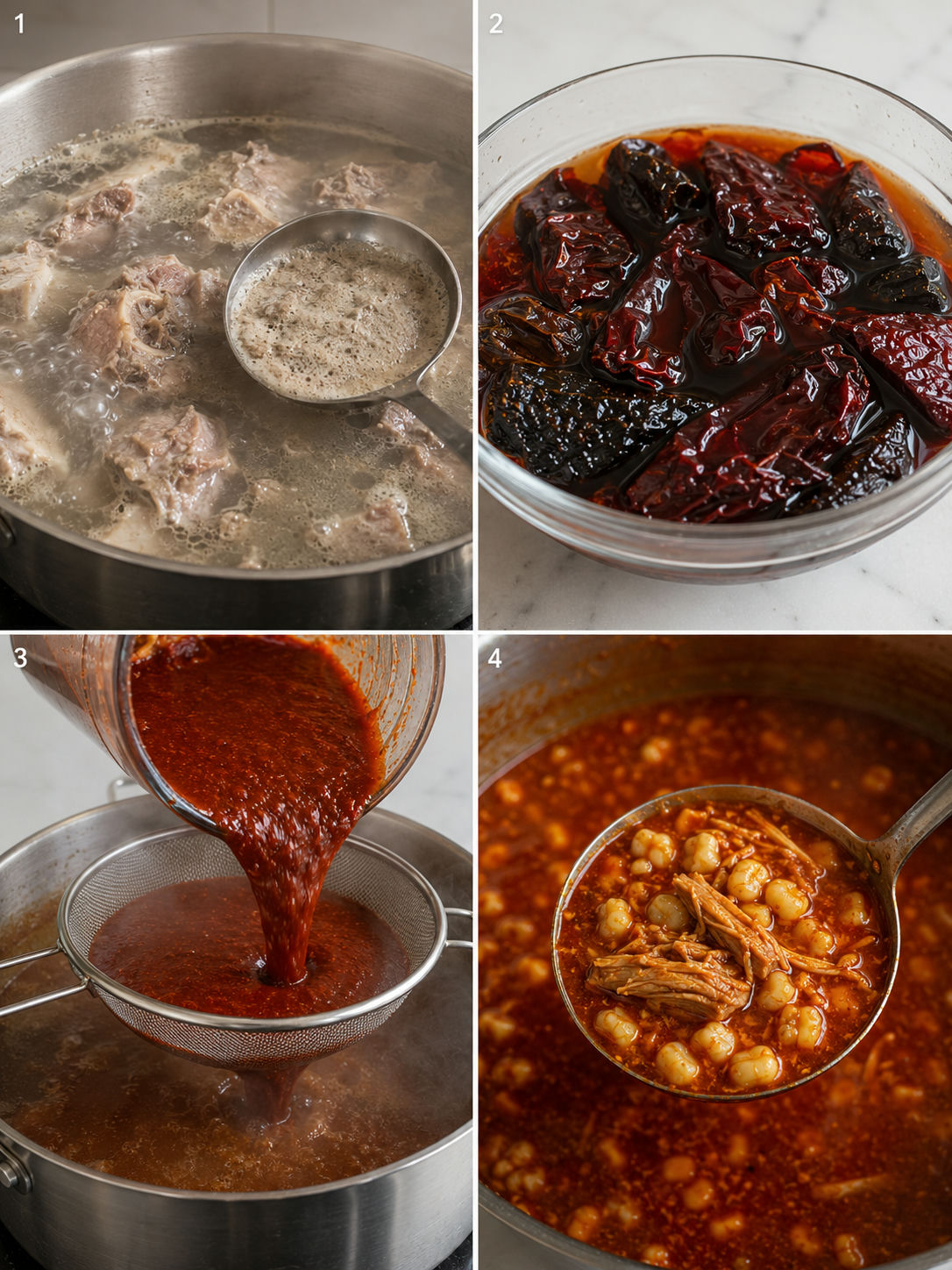
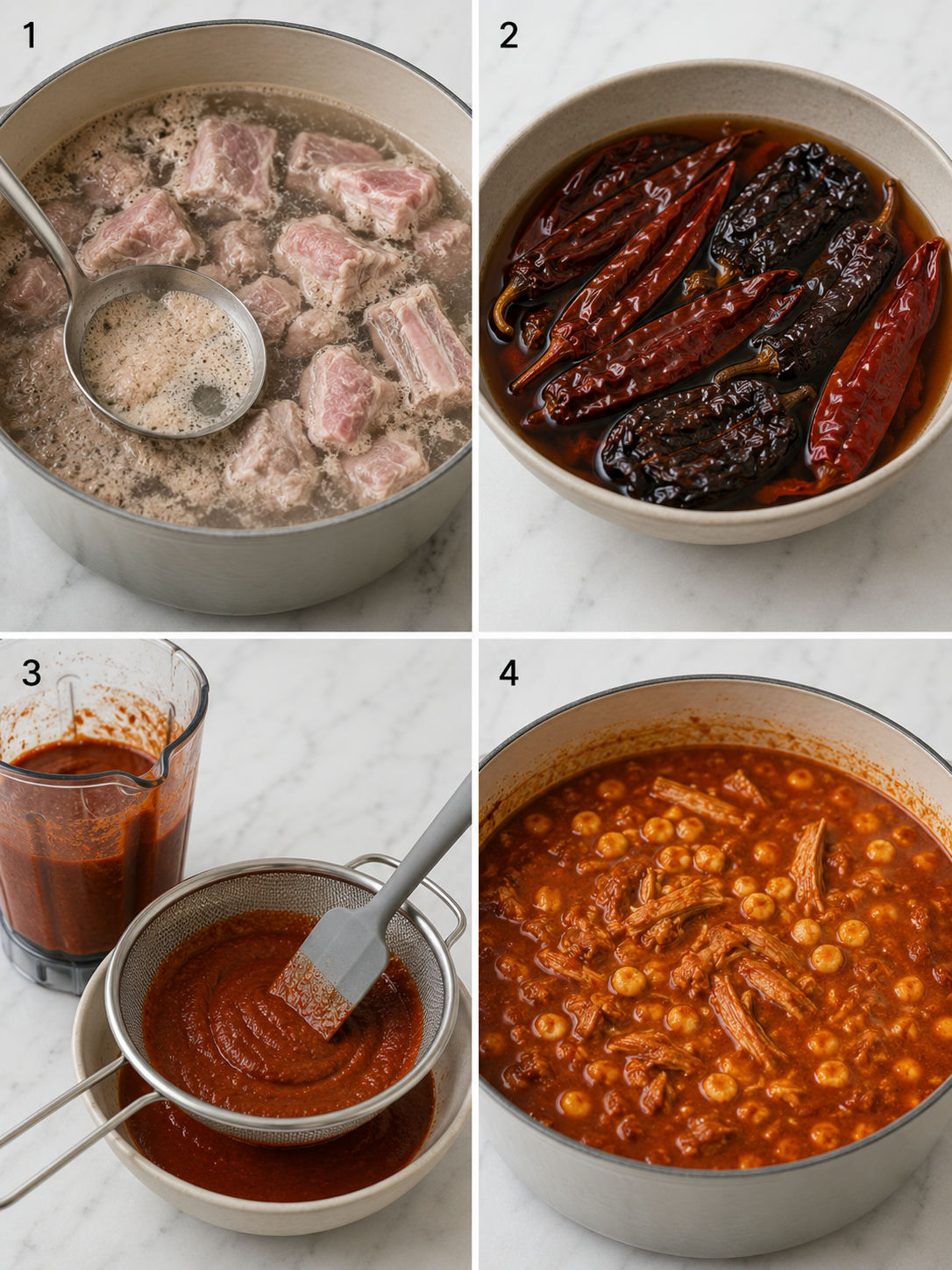
- Start the broth. Place pork shoulder pieces and neck bones in a large pot and cover with 4 quarts of cold water. Bring to a boil over high heat.
- Skim and season. As the water heats, grey foam rises from the proteins in the bones. Skim it off until the broth runs clear, then add the halved onion, halved garlic head, bay leaves, and 1 tablespoon of salt. Lower to a steady simmer, cover loosely, and cook for 1.5 hours. Add water in cup increments if the level drops below the meat.
- Soak the chiles. While the pork simmers, tear the guajillo and ancho chiles into flat pieces, removing stems and seeds. Place them in a bowl, pour hot water over to submerge, weigh them down with a small plate, and soak for 25 to 30 minutes until fully softened.
- Blend the red sauce. Transfer the softened chiles to a blender with 4 garlic cloves and 1 cup of the soaking liquid. Add one ladleful of warm pork broth and blend on high until completely smooth, about 2 minutes.
- Strain into the pot. Set a fine-mesh strainer over the simmering pot and pour the red sauce through it, pressing the solids with a spoon to extract all the liquid. Stir in the Mexican oregano and cumin. Discard the solids in the strainer.
- Add the hominy. Drain and rinse the canned hominy and stir it into the pot. Cover and continue simmering over low heat for 45 minutes to 1 hour until the pork is completely fork-tender and the broth is a deep, glossy red.
- Shred the pork. Remove the pork shoulder pieces and neck bones. Pull the meat from the bones and shred into large chunks with two forks. Return the shredded pork to the pot and discard the bones. Taste and adjust salt.
- Serve immediately. Ladle into deep bowls and bring the full toppings spread to the table with tostadas and lime wedges.
Why Bone-In Pork Makes a Better Broth
Pork shoulder is the right cut but bone-in matters. The collagen in the bones dissolves into the liquid as it simmers, which is what gives a proper pozole broth that glossy, almost coating texture when it runs off a spoon. Neck bones are worth the small extra cost for the same reason. If you cannot find them, a few pork ribs added to the pot will do a similar job.
This same patient low-and-slow approach is what gives dishes like slow-simmered chili verde with pork that deep, layered flavor that cannot be rushed. The USDA sets 145°F as the safe internal temperature for whole cuts of pork, but the long pozole simmer takes the meat well past that point. See the USDA FSIS food safety site for specifics on pork handling.
Getting the Chile Sauce Right
The red sauce is the soul of this dish. Three things make the difference between a sauce that tastes flat and one that tastes alive. First, soak the chiles until they are genuinely soft all the way through. You want them pliable enough to blend completely smooth, not leathery in spots. Second, use part of the soaking liquid in the blender rather than plain water. It carries a concentrated layer of flavor that would otherwise go down the drain. Third, strain the blended sauce through a fine-mesh strainer before it goes into the pot. The skins of dried chiles can leave a slightly gritty, bitter edge if you skip this step. Two extra minutes of straining makes a real difference in the finished broth.
Hominy: What It Is and What to Buy
Hominy is field corn treated with an alkaline solution in a process called nixtamalization. That treatment unlocks nutrients and creates the distinctive chewy, slightly earthy flavor that makes pozole taste like itself and not just pork soup with corn in it.
For this recipe, canned white hominy works perfectly. Look for the large-kernel variety rather than a sweet corn style. Drain it well and rinse it before it goes into the pot. Dried hominy (labeled maiz cacahuazintle at Latin markets) gives a slightly more textured, traditional result but needs an overnight soak and an extra hour of cooking to fully bloom open. Canned is the practical choice for most home cooks and the difference in the bowl is minimal.
The Toppings Table Makes the Bowl
Toppings in pozole are not decoration. They are half the meal. The contrast between the hot, rich broth and the cool, crunchy garnishes is intentional and is part of what makes this dish so satisfying. Shredded cabbage keeps the bowl from feeling heavy. Radishes add crunch and a peppery bite. Raw onion and cilantro cut through the fat in the broth. Lime juice brightens every sip.
Set them all out in small bowls and let people layer as they like. Tostadas on the side are the standard move, both for scooping garnishes and for dipping into the broth. If you are building a larger Mexican spread, this pozole pairs naturally alongside authentic Mexican albondigas, which uses a lighter tomato broth and comes together in about half the time. A pot of homemade picadillo also rounds out the table well if you are feeding a crowd.
Storing and Reheating Leftovers
Pozole gets better the next day. The hominy continues to absorb the broth overnight and the chile flavor deepens and mellows. Store it covered in the refrigerator for up to four days. When you reheat it, add a splash of water or extra broth because the hominy keeps drinking the liquid even when cold. Warm it gently over medium-low heat rather than blasting it in the microwave.
For longer storage, pozole freezes well for up to three months. Leave all the toppings out of the freezer. Shredded cabbage, raw onion, and radishes do not survive freezing. Keep them fresh and add them at the table when you serve.
FAQs
- What cut of pork works best for pozole rojo?
Bone-in pork shoulder is the classic choice. The fat and connective tissue melt into the broth as it cooks, giving it a rich, slightly sticky body. Adding a pound of neck bones alongside the shoulder deepens the gelatin further. Pork butt is an equally good substitute. Both benefit from being left bone-in while they simmer.
- Can I use canned hominy instead of dried?
Yes, canned hominy is the practical choice and it works perfectly here. Drain and rinse it before adding it to the pot. Dried hominy (labeled maiz cacahuazintle at Latin markets) is more traditional and has a slightly chewier bite, but it needs an overnight soak and an extra hour or two of cooking to bloom open. Canned saves hours without any meaningful difference in the final bowl.
- How do I know when the pork is fully cooked?
It should be fork-tender, meaning you can pull it apart easily with two forks or it slides off the bone with a gentle tug. This usually takes 1.5 to 2 hours after you add the chile sauce. If the meat still feels tight, keep the heat low and give it another 20 to 30 minutes. Rushing this step produces chewy, stringy pork instead of the soft pulled texture you are after.
- How long does pork pozole keep in the refrigerator?
Up to 4 days in a covered container. The broth thickens as it cools because of the gelatin from the bones. Reheat gently on the stovetop over medium-low heat with a splash of water to loosen it back up. Pozole also freezes well for up to 3 months. Store the toppings separately and add them fresh when serving.
- What are the traditional toppings for pozole rojo?
The classic lineup is shredded green cabbage, thinly sliced radishes, diced white onion, fresh cilantro leaves, dried Mexican oregano crumbled over the top, and a good squeeze of lime. Tostadas on the side for dipping are standard in most households. Sliced jalapeño and a pinch of crushed chili flakes are optional if you want extra heat.
- What is the difference between pozole rojo, blanco, and verde?
The color tells you the chile. Rojo uses dried red chiles like guajillo and ancho for a deep, earthy broth. Blanco skips the chile sauce entirely and relies on the clean pork broth alone. Verde builds its sauce from tomatillos and fresh green chiles like poblano or serrano. All three use the same hominy base. Rojo is the richest and most deeply flavored of the three.
