 Pin it
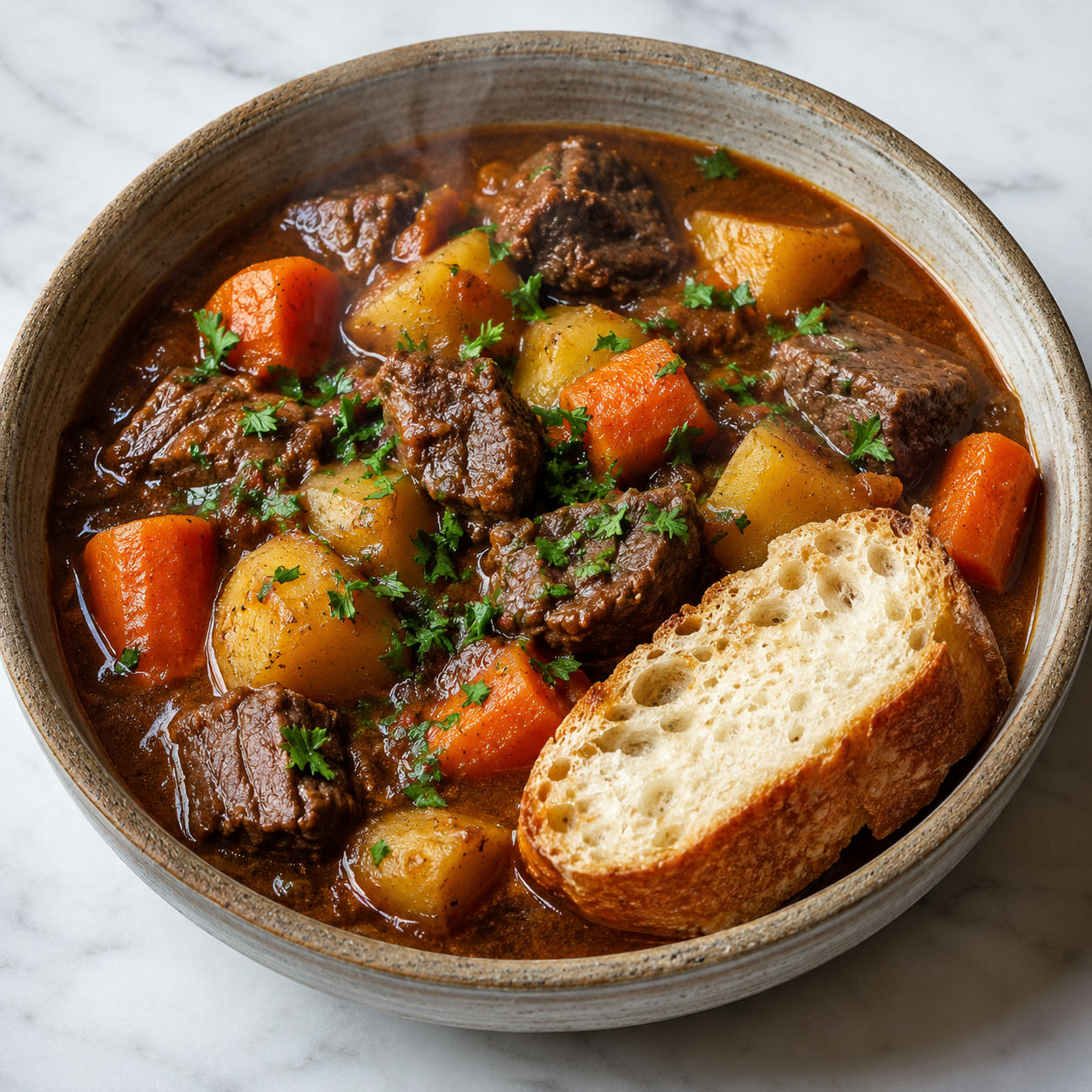
Some recipes don't come from books. They come from watching someone cook at the stove so many times you eventually absorb them. This beef stew is that kind of recipe. My mom made it every fall when the weather started to turn, and it always meant the same thing. Slow Sunday, full table, second bowl.
The method is simple but not fast. Chuck roast gets browned hard and proper, the broth builds slowly on top of that fond, and the vegetables go in only at the end so they don't turn to mush. That patience is the whole point. It's what separates a stew that tastes good from one that tastes like something.
No shortcuts here. Just the real thing.
Everything That Goes in the Pot
Chuck roast is the backbone here and the rest of the list is pantry staples. Look for a roast with visible marbling running through it. That fat is what gives the broth its body after a long simmer.
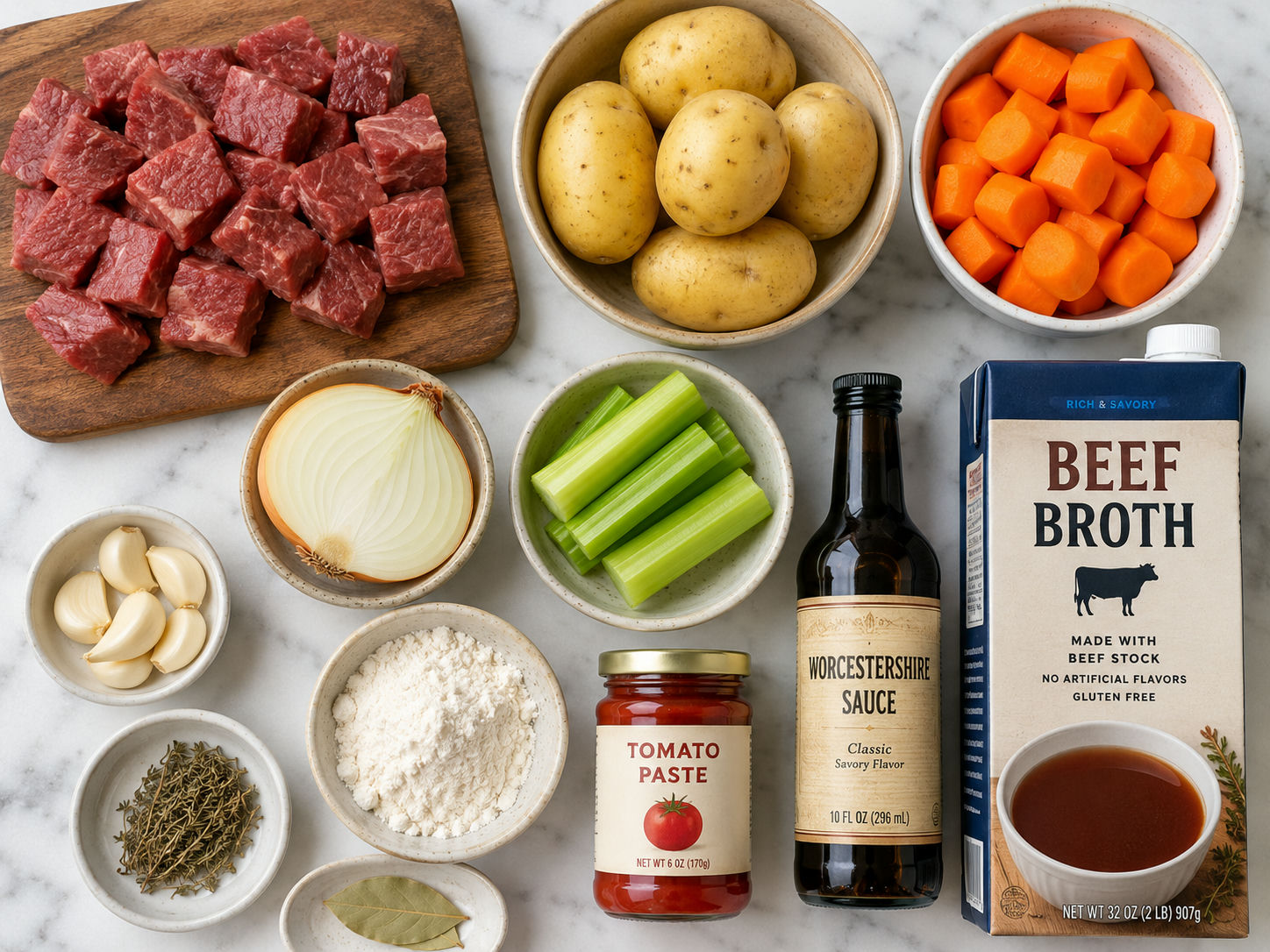
- Chuck roast. Cut into 2-inch cubes, it breaks down into tender, almost pull-apart pieces during the long braise.
- Yukon Gold potatoes. Hold their shape better than russets and add a natural creaminess to the broth as they cook.
- Carrots. Cut thick so they stay firm and contribute sweetness and color to the finished stew.
- Celery. Builds the aromatic base alongside onion and garlic.
- Onion and garlic. Cooked first to draw out their sweetness before the liquid goes in.
- Beef broth. The cooking liquid. Use a full-sodium broth and hold back on added salt until the very end.
- Tomato paste. Adds depth and richness that doesn't taste like tomato by the time the stew is done.
- Worcestershire sauce. The umami backbone of the broth. Two tablespoons change the whole flavor.
- All-purpose flour. Coats the beef before searing and slowly thickens the broth as it cooks.
- Bay leaves and dried thyme. Classic herb pairing. Pull the bay leaves before serving.
How to Build a Proper Beef Stew
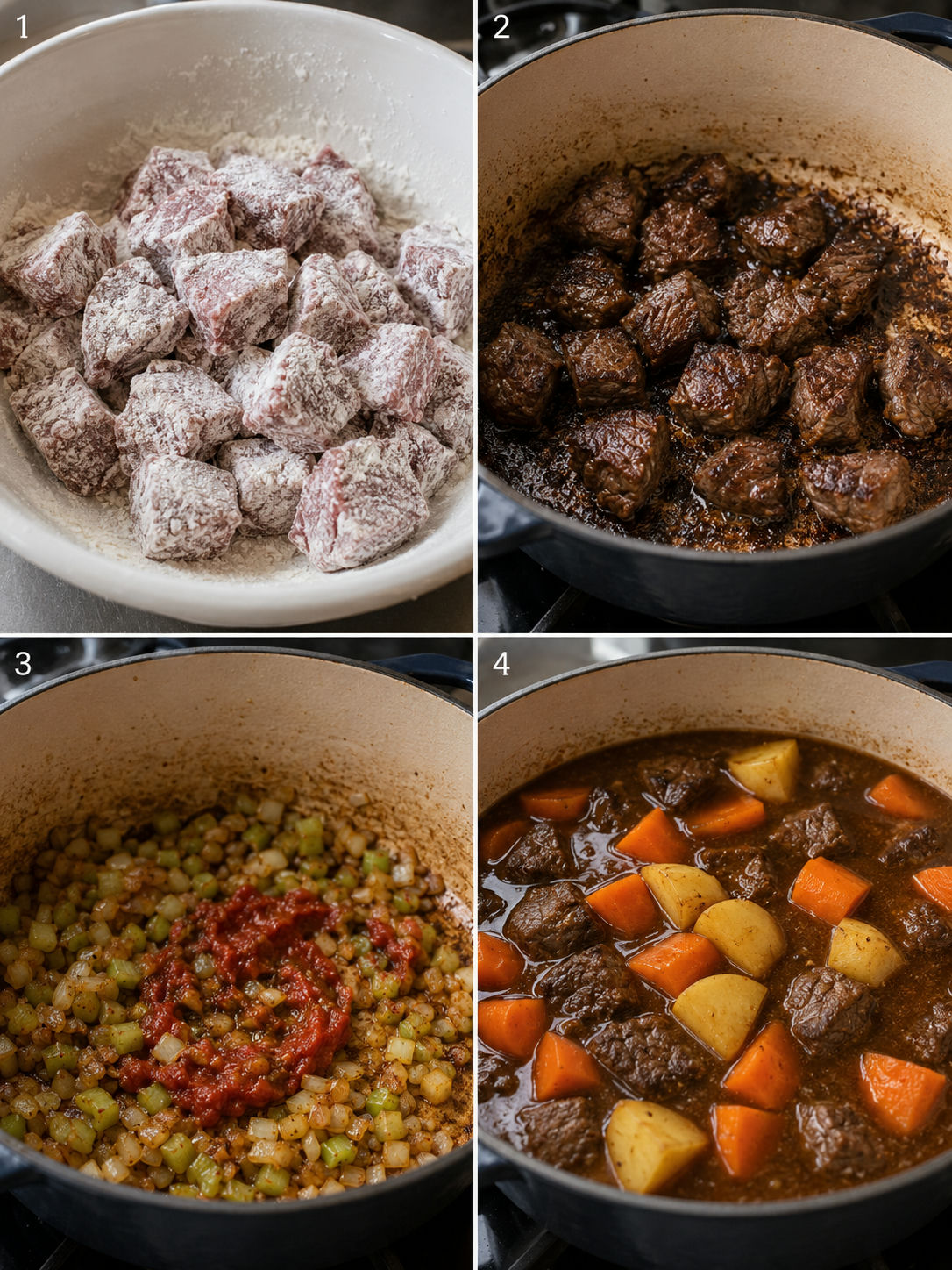
- Season and flour the beef. Pat the chuck cubes completely dry with paper towels. Season generously with salt and pepper, then toss in flour until lightly coated on all sides. Dry meat browns. Wet meat steams.
- Sear in batches. Heat oil in a large Dutch oven over medium-high heat until shimmering. Sear the beef in two or three batches, leaving space between the cubes, until deeply browned on at least two sides, about 3 to 4 minutes per side. Pull the beef out and set it aside. Don't rush this step.
- Build the aromatic base. Lower the heat to medium. Add the diced onion and celery to the same pot and cook for 4 to 5 minutes until softened. Add the garlic and cook for 1 minute more.
- Add paste and liquid. Stir in the tomato paste and cook for 2 minutes until it darkens slightly. Add the Worcestershire sauce, then pour in the beef broth, scraping up all the browned bits from the bottom of the pot.
- Return the beef and simmer low. Add the browned beef back along with the bay leaves and thyme. Bring to a gentle boil, then reduce heat to low. Cover and simmer for 1 hour and 30 minutes, stirring once or twice.
- Add the vegetables. Stir in the potatoes and carrots. Re-cover and cook for 30 more minutes until the vegetables are fork-tender and the beef pulls apart easily.
- Taste and finish. Remove the bay leaves. Taste the broth and adjust salt. If the stew looks thinner than you like, simmer uncovered for 10 minutes. Serve hot in deep bowls.
Why You Can't Skip Browning the Beef
Browning is not cosmetic. When beef hits a hot dry pan, the Maillard reaction creates hundreds of new flavor compounds on the surface of the meat. Those compounds dissolve into the broth as the stew simmers and that's where the deep, dark flavor comes from. Skip the sear and you get broth that tastes thin and pale no matter how long it cooks.
Work in small batches with dry meat, hot oil, and enough space between pieces. Crowd the pan and the meat steams instead of browns. It takes an extra 10 minutes but the difference in the finished stew is not subtle. If you love building big flavor with straightforward techniques, the same approach drives the Italian meatloaf with marinara and cheese in the oven.
Add Vegetables at the Right Time
This is the most common mistake with beef stew. Vegetables go in during the last 30 minutes only. Add them too early and they dissolve into the broth before the beef is even tender.
Carrots and potatoes need 25 to 30 minutes in simmering liquid to cook through without falling apart. Yukon Golds hold their shape better than russets, which soften faster and can start to disappear into the broth by the time the beef is done. Cut carrots into chunks no smaller than an inch and potatoes no smaller than 1.5 inches so they survive the simmer.
Swaps and Variations That Actually Work
No chuck roast? Bone-in short ribs give you a richer, more gelatinous broth but cost more and take a little longer. Beef stew meat from the butcher case is usually chuck or round already cut up. Chuck gives the best texture.
The method translates well to a slow cooker too. Brown the beef and build the base on the stove, then transfer everything to the slow cooker for 7 to 8 hours on low. For another effortless slow-cooker family dinner, try these slow cooker chicken tacos on a busy weeknight.
To make it gluten-free, skip the flour dredge and thicken with cornstarch slurry at the end instead. Everything else in the recipe stays exactly the same.
Storing, Reheating, and Serving
Beef stew keeps for 3 days in the refrigerator and up to 3 months in the freezer. Cool it completely before storing. When you reheat it, the broth will have thickened and the fat will have set as a pale solid layer on top. Skim it off or stir it back in, then warm gently over medium-low with a splash of broth to loosen things back up.
For a complete meal, serve with something to soak up the broth. The hatch chile cheese cornbread is outstanding alongside a bowl of this stew. Crusty bread works too. A simple green salad rounds things out without competing with the richness.
FAQs
- What cut of beef is best for beef stew?
Chuck roast is the right cut. It has enough fat and connective tissue to break down over a long simmer, turning tender and almost pull-apart by the time it's done. Leaner cuts like sirloin or bottom round tighten up and stay tough no matter how long you cook them. Look for a roast with visible marbling running through it.
- Can I make beef stew in a slow cooker?
Yes, with one caveat: still brown the beef and cook the aromatics on the stove first. Those steps build flavor the slow cooker can't replicate on its own. Transfer everything to the slow cooker and cook on low for 7 to 8 hours, adding the potatoes and carrots halfway through so they don't go too soft and fall apart.
- How do I thicken beef stew if the broth is too thin?
The flour coating on the beef does most of the work as it simmers. If the broth still looks thin toward the end, mix one tablespoon of flour or cornstarch with two tablespoons of cold water, stir it into the pot, and let it cook uncovered for another 10 minutes. A Yukon Gold potato that has partly dissolved into the broth also thickens things naturally.
- Can I make beef stew the day before?
It's actually better that way. The flavors meld and deepen overnight. Cool it to room temperature, then refrigerate for up to 3 days in an airtight container. The fat from the beef will solidify on top as a pale layer. Skim it off or stir it back in before reheating. Warm gently on the stove over medium-low with a splash of broth to loosen the gravy back up.
- What vegetables go in beef stew?
The classics are carrots, potatoes, celery, and onion. Parsnips, turnips, or mushrooms work well too. Avoid soft vegetables like zucchini or peas unless you add them in the last 5 to 10 minutes or they'll dissolve entirely. Yukon Gold potatoes hold their shape much better than russets, which tend to fall apart during a long simmer.
- How long does beef stew keep?
Stored in an airtight container, beef stew keeps for 3 days in the refrigerator and up to 3 months in the freezer. Let it cool completely before storing. It thickens considerably as it sits, so add a little beef broth when reheating to bring it back to the right consistency.
- Can I make this stew gluten-free?
Yes. Skip the flour coating on the beef before searing and instead stir one tablespoon of cornstarch dissolved in two tablespoons of cold water into the simmering stew during the final 15 minutes. Everything else in the recipe is naturally gluten-free. The stew will thicken a little more slowly but the flavor stays exactly the same.
