 Pin it
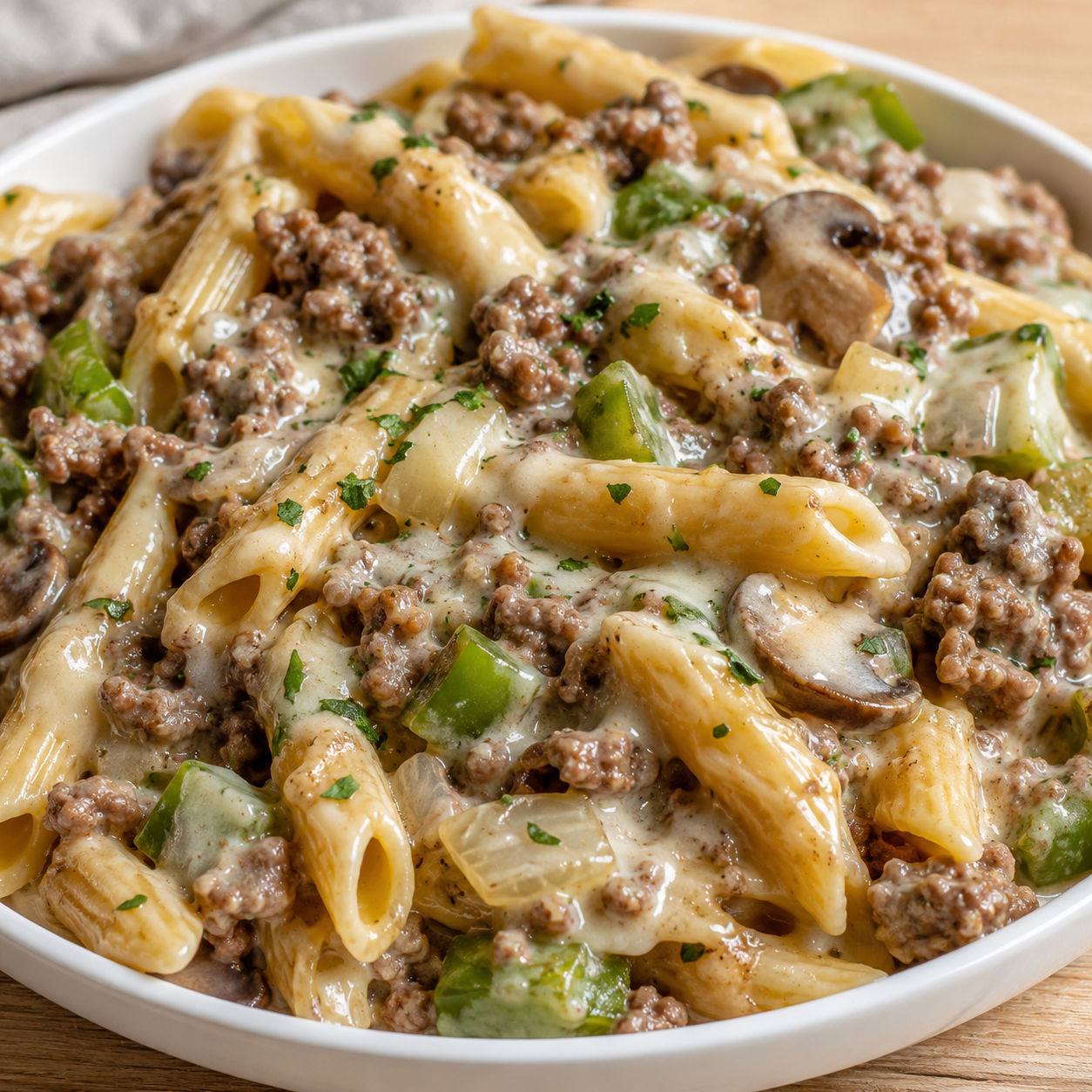
Easy Philly Cheesesteak Pasta is what I make when cheesesteak sounds good but sandwich rolls are not in the kitchen. It has the browned beef, soft peppers and onions, mushrooms, and melted provolone, all wrapped around tender pasta.
The skillet does most of the work. The pasta cooks in the broth with the beef and vegetables, so the sauce tastes savory before the cheese even goes in.
Use ground beef for speed or thin shaved steak if you want it closer to the sandwich. Either way, keep the cheese off the heat once it starts melting so the sauce stays smooth.
Cheesesteak Pasta Lineup
The best version starts with vegetables that have time to soften and beef that gets real browning. Provolone gives the dish its cheesesteak flavor, while cream cheese keeps the sauce creamy without needing a separate roux.
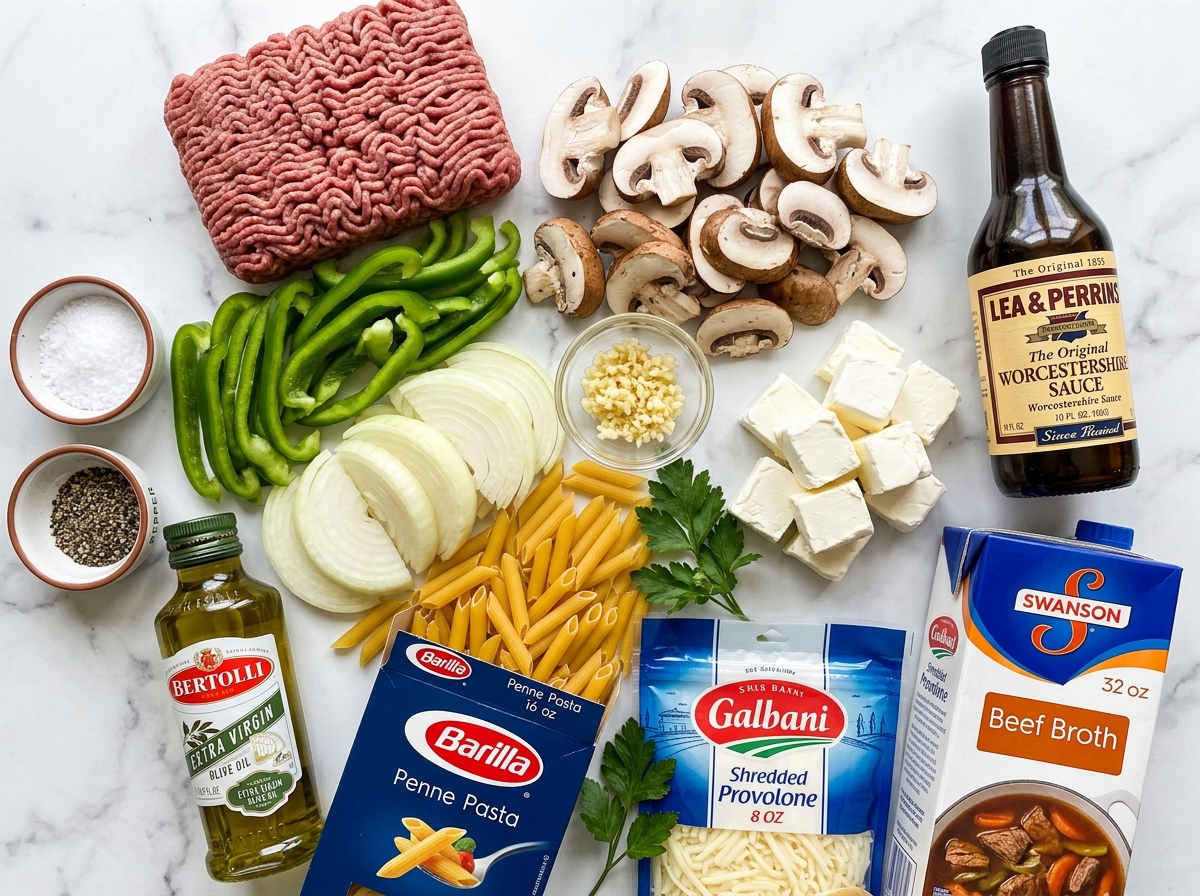
- Ground beef. Browns quickly and gives the pasta a hearty, savory base.
- Onion. Softens into the sauce and adds the sweet edge you expect from a cheesesteak.
- Green bell pepper. Brings the familiar pepper flavor and a little color.
- Mushrooms. Add browned, meaty depth and help stretch the skillet.
- Garlic. Rounds out the beef and cheese without taking over.
- Worcestershire sauce. Adds salty, tangy depth that makes the beef taste fuller.
- Beef broth. Cooks the pasta and becomes the base of the sauce.
- Penne pasta. Holds up well in a one-pot simmer and catches the cheese sauce.
- Cream cheese. Melts into the broth and gives the sauce body.
- Provolone. Adds the melty, slightly sharp cheesesteak finish.
Easy Philly Cheesesteak Pasta Method
- Brown the beef. Heat the oil in a deep skillet, add the beef, and cook until no pink remains. Break it up as it cooks and let a few browned bits form on the pan.
- Soften the vegetables. Add the onion, bell pepper, mushrooms, salt, and pepper. Cook until the mushrooms release their moisture and the peppers are tender.
- Build the simmer. Stir in the garlic and Worcestershire sauce for about 30 seconds, then add the broth, water, and dry pasta.
- Cook the pasta. Simmer covered, stirring often, until the pasta is just tender and most of the liquid has thickened around it.
- Melt the cheese. Lower the heat and stir in the cream cheese. Add provolone a handful at a time until the sauce is glossy.
- Rest before serving. Let the skillet sit for 3 minutes so the sauce settles and clings to the pasta.
Keep The Beef Juicy
Ground beef makes this dinner fast, but it still needs a little patience. Let it sit in the hot skillet for a minute before you start breaking it apart. That contact gives you browned flavor instead of gray, steamed meat.
If there is more than a spoonful or two of grease in the pan, drain the extra before adding the vegetables. Leave a little behind because the onions and mushrooms cook better in it. For food safety, ground beef should reach 160°F. The USDA safe temperature chart is a good reference if you cook by thermometer.
Cheese That Melts Smoothly
Provolone is the cheese that makes this taste like a cheesesteak, but it can tighten up if it boils. Turn the heat low before adding it, and stir in small handfuls. Cream cheese acts like a helper here. It gives the sauce body and keeps the provolone from separating into oily strings.
Buy sliced provolone and chop it, or shred a block by hand. Pre-shredded cheese often has starches that can make the sauce feel dusty. If you like extra stretch, add a small handful of mozzarella with the provolone. For a sandwich-style dinner another night, try these Easy Philly Cheesesteak Sandwiches.
Skillet Timing Matters
The pasta keeps absorbing liquid after the heat is off, so stop cooking when it is just tender. If the skillet looks loose at first, give it a short rest. Three minutes can turn a thin sauce into one that hugs every piece of penne.
Stir often while the pasta simmers, especially near the end. Short pasta likes to settle on the bottom of the pan. If it needs another minute but the skillet looks dry, add a splash of water or broth. If you enjoy cheesesteak flavors in different shapes, the Philly Cheesesteak Tortellini Dish is another rich option.
Swaps For Busy Nights
This recipe is flexible as long as you keep the liquid and pasta close to the same. Rotini, shells, or cavatappi can replace penne. Use red bell pepper for a sweeter skillet or leave the mushrooms out if your table is split on them.
For a lighter sauce, use half the cream cheese and add a little extra broth. For more heat, stir in sliced pepperoncini or a pinch of red pepper flakes right before serving. If you want the same beef-and-cheese comfort with a different feel, Philly Cheesesteak Sloppy Joes are quick and messy in the best way.
Leftovers Without Dry Pasta
Cheesy pasta thickens in the fridge. That is normal. Pack leftovers in a shallow airtight container and use them within 3 days. A skillet is the best way to reheat because you can add moisture slowly and stop as soon as everything is hot.
Add a splash of broth, milk, or even water to the pan. Warm it over low heat and stir until the sauce loosens. The microwave works for lunch, but cover the bowl and pause to stir halfway through. For another beefy pasta skillet, Garlic Butter Steak Cajun Pasta brings a spicier take.
Summary
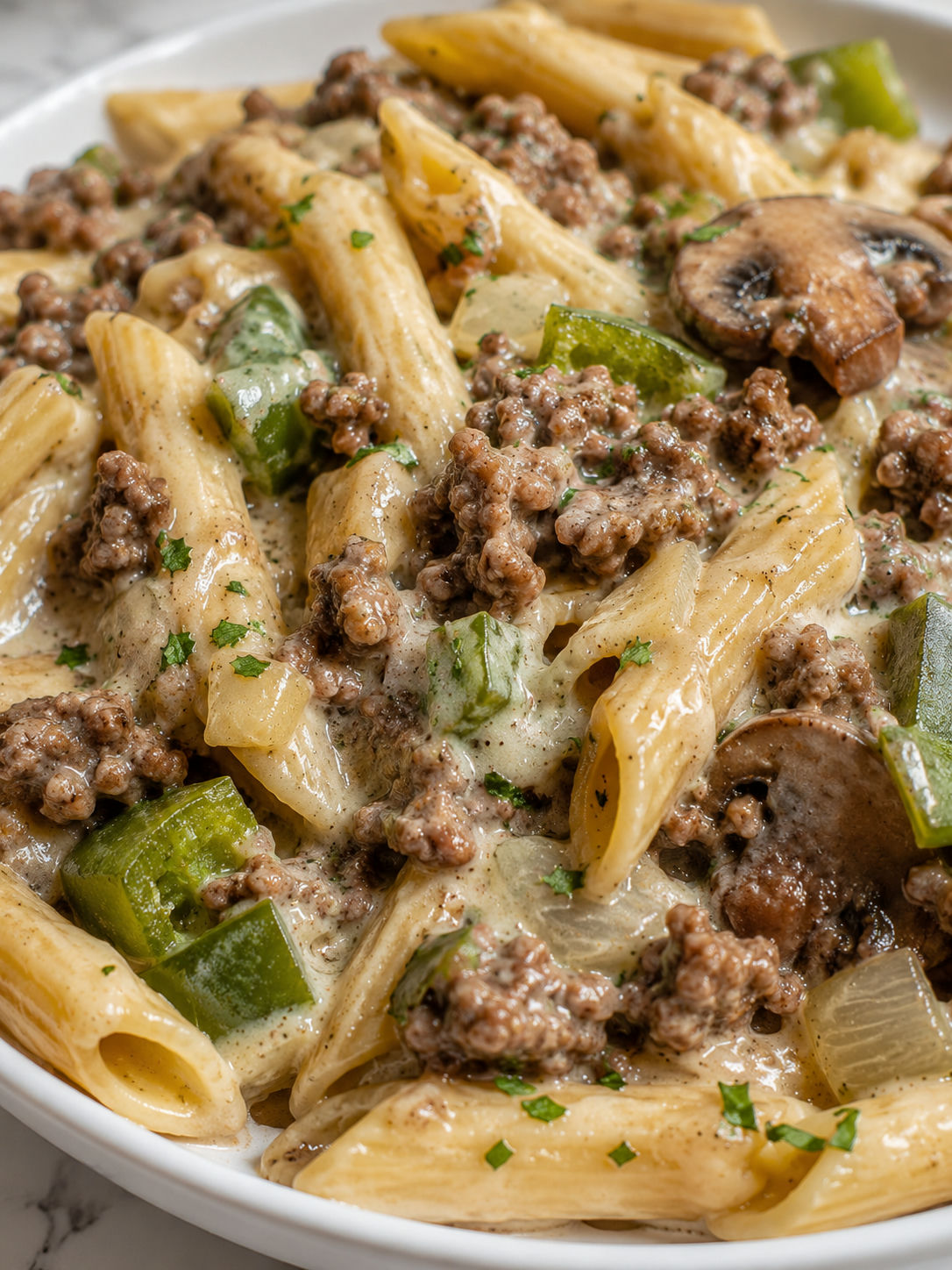
This one-pot pasta keeps the cheesesteak flavor simple with beef, peppers, mushrooms, Worcestershire, and provolone. The creamy sauce comes together in the same skillet as the pasta.
FAQs
- Can I make Philly cheesesteak pasta with shaved steak instead of ground beef?
Yes. Cook thin shaved steak quickly in a hot skillet, then move it to a plate while the vegetables and pasta cook. Stir it back in with the cheese so it stays tender.
- What pasta shape works best for this recipe?
Penne, rotini, cavatappi, and medium shells all work well. Choose a short shape with ridges or curves so the creamy provolone sauce has something to cling to.
- Can I skip the mushrooms?
Yes. Leave them out and add another bell pepper or a little extra onion. Mushrooms add deep savory flavor, but the dish still tastes like cheesesteak pasta without them.
- How do I store and reheat leftovers?
Store leftovers in an airtight container in the fridge for up to 3 days. Reheat gently in a skillet with a splash of broth or milk, stirring until the sauce loosens again.
- Can this be made gluten-free?
Yes, use a sturdy gluten-free short pasta and check that your Worcestershire sauce is gluten-free. Stir often because gluten-free pasta can stick more as it simmers.
- Why did my cheese sauce turn grainy?
The skillet was probably too hot when the cheese went in. Lower the heat before adding cream cheese and provolone, then stir slowly until melted. Shredding your own provolone also helps it melt better.
