 Pin it
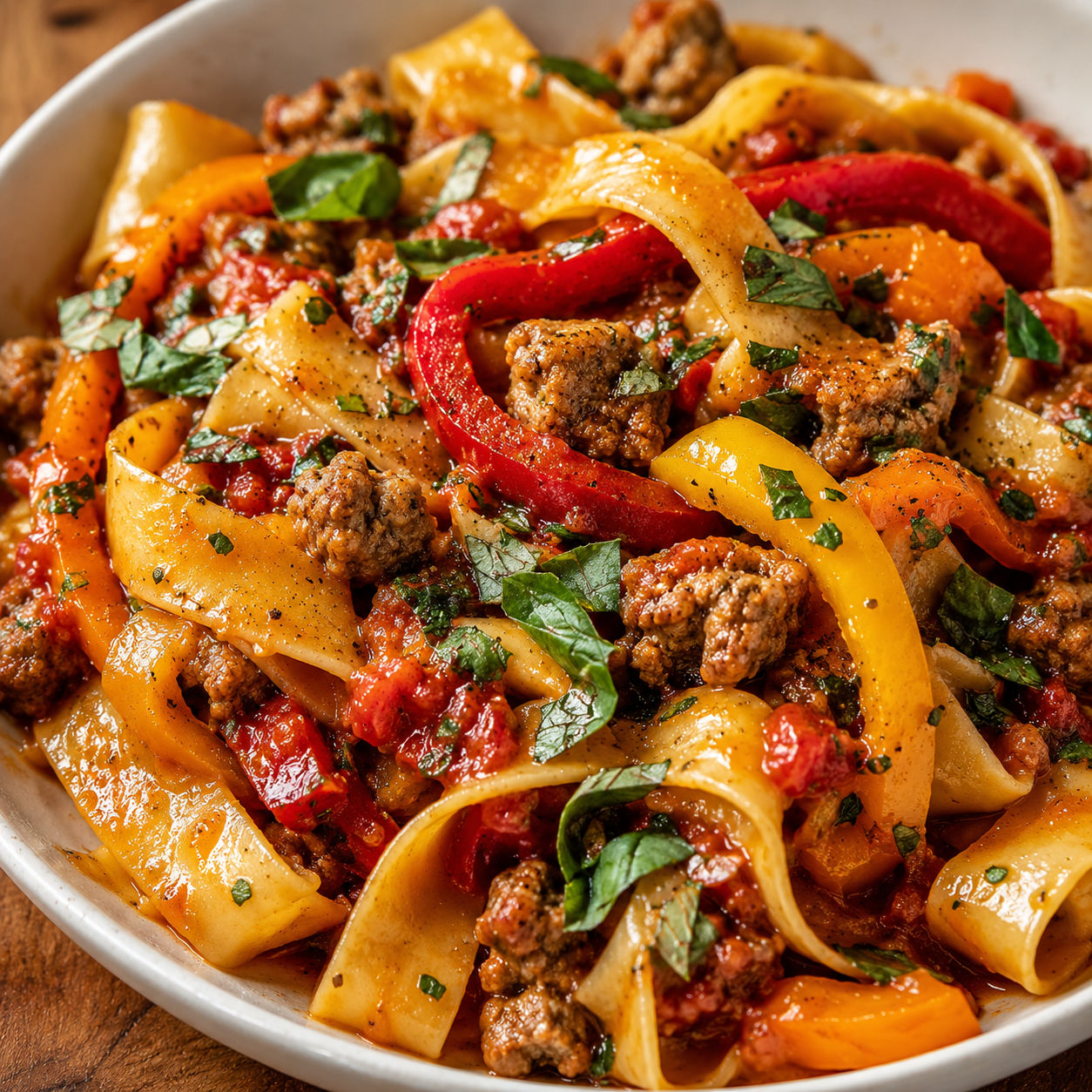
Italian Drunken Noodles with Sausage and Bell Peppers is the kind of pasta I make when I want sausage and peppers but need it to feel like a full dinner. Wide ribbons of pappardelle catch the tomato-wine sauce, and the peppers stay sweet enough to balance the spicy sausage.
The name comes from the wine in the sauce. It cooks down in the pan with garlic, tomatoes, and sausage drippings, leaving the noodles glossy instead of boozy.
The sausage and pepper lineup
Use wide pasta, colorful peppers, and sausage with enough seasoning to carry the sauce. Hot Italian sausage gives the most character, but sweet sausage is just as good for a family table.
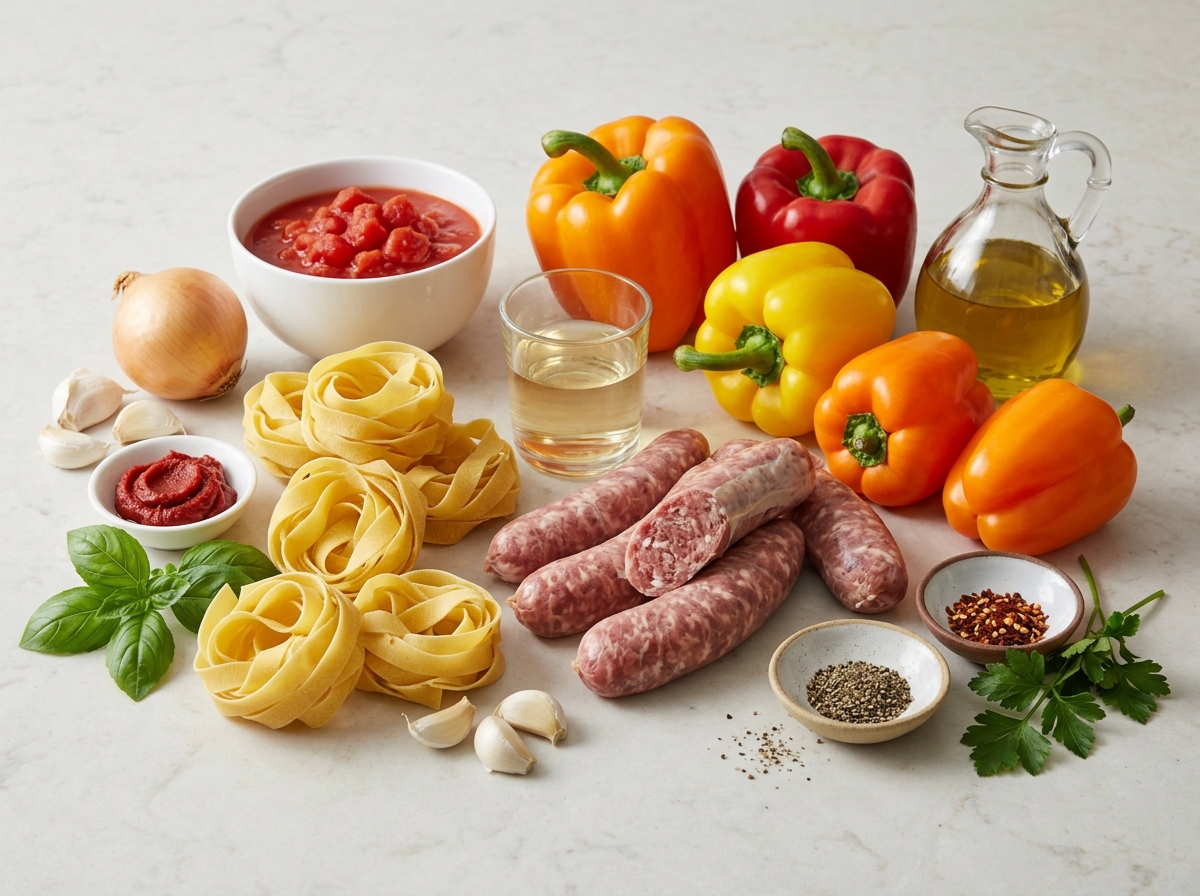
- Pappardelle. Wide ribbons hold the chunky sausage and cling to the wine-tomato sauce.
- Italian sausage. It browns into craggy pieces and leaves seasoned drippings in the pan.
- Bell peppers. Red, yellow, and orange peppers bring sweetness, color, and a soft bite.
- Onion and garlic. These build the base so the sauce tastes cooked, not canned.
- White wine. It lifts the browned bits from the pan and gives the sauce its drunken noodle flavor.
- Diced tomatoes. The juices simmer into a loose sauce that coats the noodles.
- Basil and parsley. Fresh herbs brighten the sausage and keep the finish from tasting heavy.
Cook the noodles like this
- Boil the pasta. Cook the pappardelle in salted water until just shy of al dente, then reserve a cup of the pasta water before draining.
- Brown the sausage. Heat olive oil in a large skillet and cook the sausage in rough pieces until browned and cooked through.
- Soften the peppers. Move the sausage out of the pan, then cook the onion and peppers until glossy and tender at the edges.
- Add garlic and seasoning. Stir in garlic, Italian seasoning, black pepper, and chili flakes just until fragrant.
- Deglaze with wine. Pour in the white wine and scrape the skillet well, then let it reduce for a minute or two.
- Finish the sauce. Add tomatoes and sausage back to the skillet, simmer briefly, then toss with pasta, herbs, and enough pasta water to make it glossy.
Italian Drunken Noodles, sausage style
The best part of this dish is the pan sauce. Brown the sausage first and let it sit still long enough to form deep color. Those browned spots are seasoning. When the wine hits the hot skillet, scrape firmly with a wooden spoon so every bit dissolves into the sauce. That is where the dish gets its savory, slightly sweet backbone.
Keep the wine dry. Pinot grigio, sauvignon blanc, or a simple dry white blend all work. Avoid sweet wine because the peppers and tomatoes already bring plenty of sweetness. For another sausage pasta with a different shape and texture, try Italian sausage with bow tie pasta.
Keep the peppers lively
Bell peppers should soften, but they should not collapse into the sauce. Slice them about 1/4 inch thick so they cook quickly and still keep some shape. Add a small pinch of salt when they hit the pan. It draws out moisture and helps them turn glossy without scorching.
If your skillet looks dry after the sausage comes out, add another teaspoon of olive oil before the peppers go in. Crowding matters here. A large skillet gives the vegetables room to soften instead of steam. If peppers are your thing, classic stuffed bell peppers make a good next dinner.
Simple swaps that fit
Use sweet sausage for a mild version, or use half hot and half sweet for balance. Turkey Italian sausage works too, but add a little extra olive oil because it is leaner. If you skip wine, use chicken broth plus a small splash of lemon juice.
For pasta, pappardelle is my first choice because it feels hearty with the sausage. Fettuccine and tagliatelle are easy substitutes. Gluten-free wide noodles can work, but cook them carefully and toss gently because they break more easily. The USDA safe temperature chart is a useful reference if you are checking sausage doneness.
Make it dinner-ready
This pasta is filling on its own, so I usually serve it with a green salad or garlic bread and call it done. A little parmesan is nice at the table, but the recipe does not need it. Fresh basil and parsley are more important because they cut through the sausage.
For a bigger spread, pair it with something lighter and bright. corn salad with bell pepper keeps the pepper theme going without adding more richness. If you want a creamier sausage pasta another night, garlic butter sausage parmesan pasta is a stronger, cheesier option.
Leftovers that still taste good
Leftovers keep well for up to 3 days in the fridge. The noodles will absorb some sauce as they sit, so do not reheat them dry. Add a splash of water or broth to a skillet, warm it over medium-low heat, then stir gently until the sauce loosens.
I do not love freezing this dish because cooked pappardelle can turn soft after thawing. If you want to prep ahead, make the sausage and pepper sauce only. Chill it for up to 3 days, then boil fresh noodles and toss everything together when you are ready to eat.
Summary
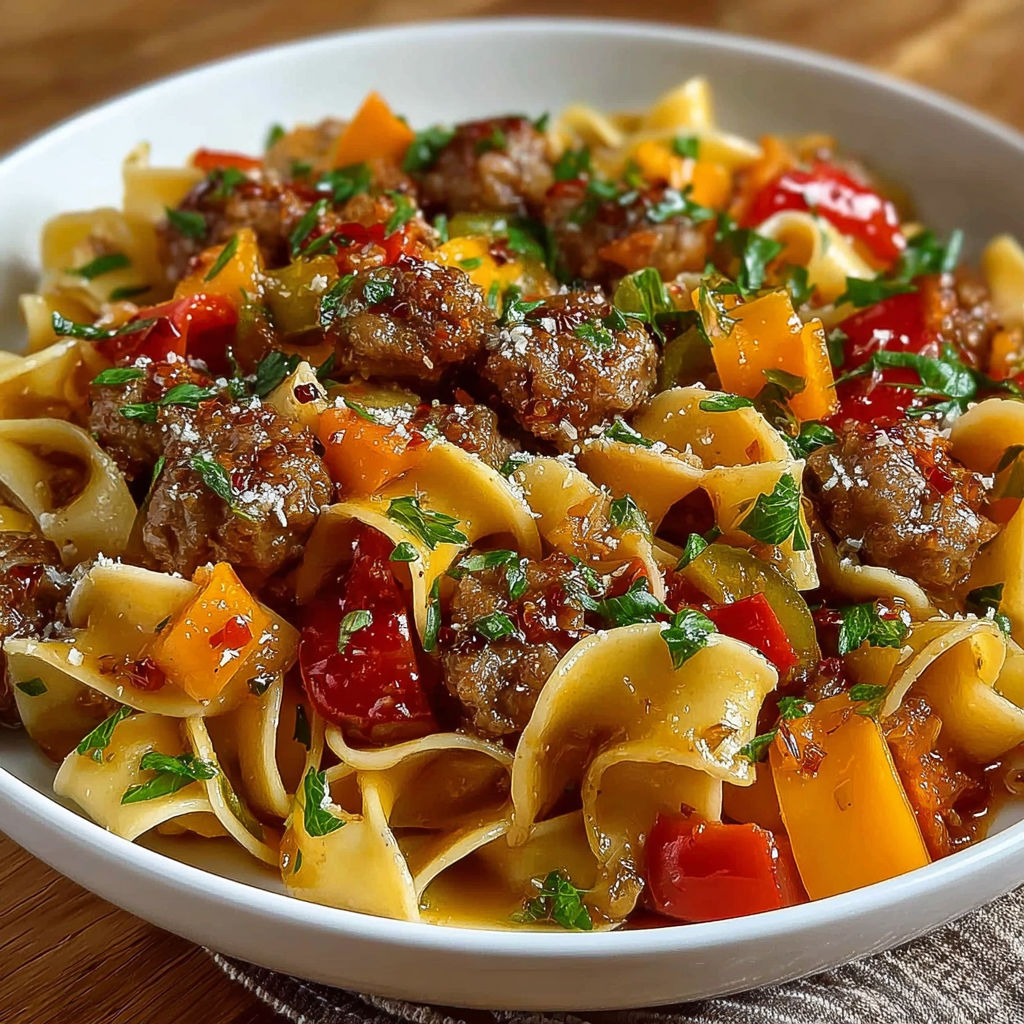
Serve this pasta hot from the skillet with fresh basil, parsley, and a little extra black pepper. Leftovers reheat best in a pan with a splash of water.
FAQs
- Why are they called drunken noodles?
The name comes from the splash of wine used to deglaze the pan. The alcohol cooks down as the sauce simmers, leaving a savory depth that tastes richer than plain tomato sauce.
- Can I use sweet Italian sausage instead of spicy?
Yes. Sweet Italian sausage works well if you want a milder pasta. Add a pinch of red pepper flakes with the garlic if you still want a little heat.
- What pasta can replace pappardelle?
Fettuccine, tagliatelle, or wide egg noodles are the closest swaps. Short pasta like rigatoni also works, but the dish feels less like classic drunken noodles.
- Can I make this without wine?
Yes. Use low-sodium chicken broth with a teaspoon of lemon juice or white wine vinegar. It will not taste quite as deep, but it will still loosen the browned bits from the pan.
- How do I store leftovers?
Store leftovers in an airtight container in the fridge for up to 3 days. Reheat gently in a skillet with a splash of water so the sauce loosens and the pasta does not dry out.
- Can I add more vegetables?
Yes. Mushrooms, zucchini, or spinach fit nicely here. Add mushrooms with the peppers, zucchini near the end of the pepper cooking time, and spinach just before tossing in the pasta.
