 Pin it
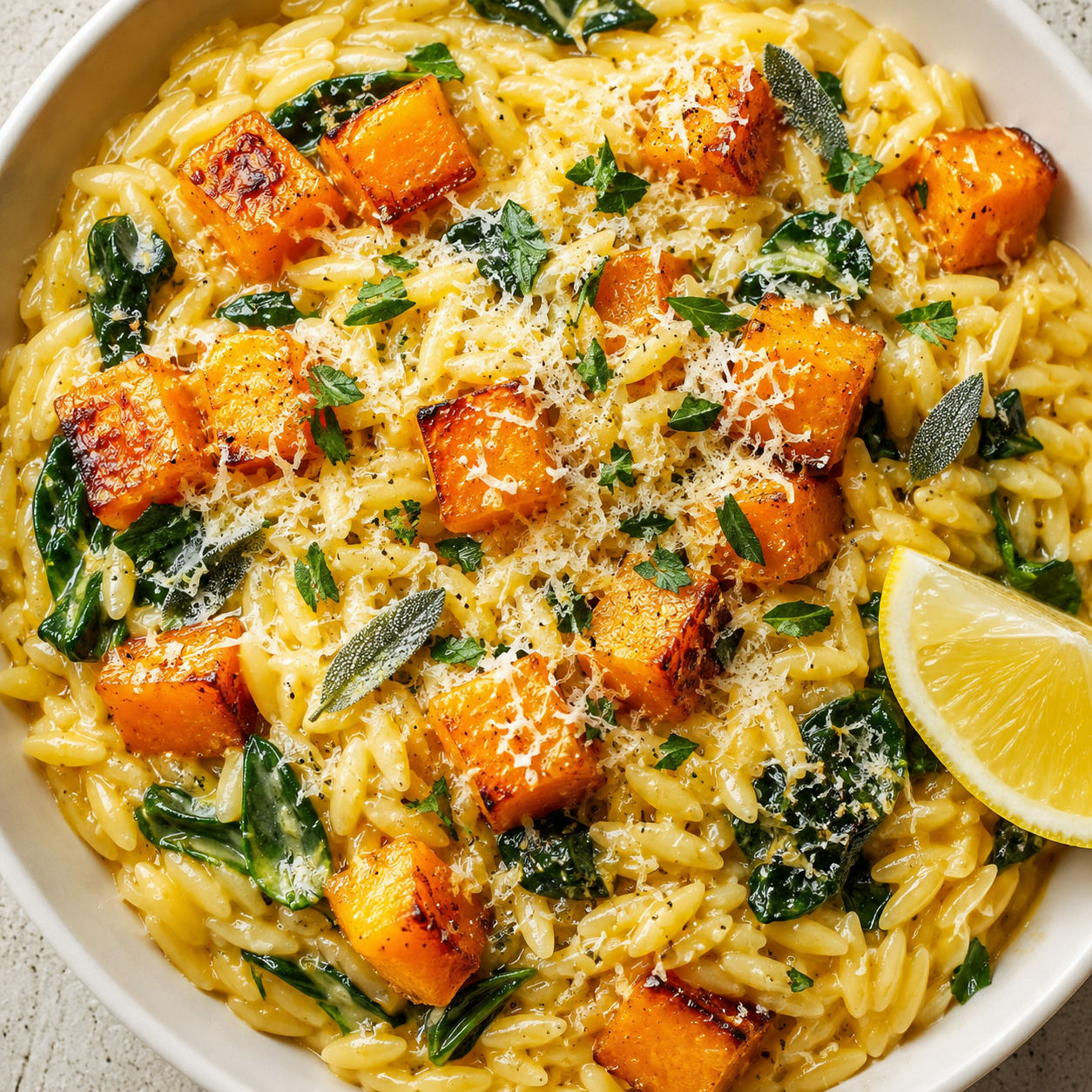
This Orzo with Roasted Butternut Squash and Spinach is the kind of pasta I want when the kitchen is cool and dinner needs to feel calm. The squash roasts until the edges turn sweet and browned, then it gets folded into creamy orzo with garlicky greens.
The trick is keeping the textures separate until the end. Roast the squash instead of simmering it into mush, let the orzo release its starch in the pan, and add the spinach just long enough to wilt.
The Cozy Fall Lineup
Choose a firm butternut squash with a matte skin and no soft spots. Baby spinach works best here because it wilts quickly and stays tender without taking over the pan.
- Butternut squash. Roasting brings out sweetness and gives the pasta browned edges to catch in every spoonful.
- Orzo. This tiny pasta releases starch as it simmers, which makes the dish creamy without needing heavy cream.
- Baby spinach. It softens right at the end and adds color, freshness, and a gentle earthy note.
- Garlic and shallot. They give the broth a savory base before the orzo goes in.
- Vegetable broth. It cooks the pasta and turns into the sauce as the orzo absorbs it.
- Parmesan. A small amount adds salt, body, and a nutty finish.
- Lemon. A squeeze at the end keeps the squash from tasting too sweet.
- Sage. It matches the roasted squash and makes the dish smell like fall dinner.
Cook It In One Pan
- Roast the squash. Toss the squash with olive oil, salt, pepper, and sage, then roast at 425 degrees F until tender and browned at the edges.
- Start the aromatics. Cook the shallot in olive oil until soft, then stir in the garlic just until fragrant so it does not scorch.
- Toast the orzo. Add the orzo and stir for a minute. This helps it taste nutty and keeps the sauce from feeling flat.
- Simmer until creamy. Add vegetable broth and cook, stirring often, until the orzo is tender and the liquid looks glossy.
- Wilt the spinach. Stir in the spinach by handfuls. It should collapse into the hot orzo but stay bright green.
- Finish the bowl. Fold in the roasted squash, Parmesan, lemon juice, and a little butter if you want a richer finish.

Why The Squash Gets Roasted
Butternut squash can disappear into pasta if it is cooked in the same pot from the start. Roasting fixes that. The outside browns, the inside turns creamy, and the pieces hold their shape when you fold them through the orzo. Cut the squash into 3/4-inch cubes so the pieces cook through before the edges get too dark.
If you already like the sweet and savory side of squash, the same roasting logic works in roasted butternut squash with cranberries and pecans. For this pasta, keep the seasoning simple. Olive oil, salt, pepper, and sage are enough. The Parmesan and lemon come later, when the pasta is ready for balance.
The Creamy Orzo Move
Orzo behaves a little like risotto when you simmer it with just enough broth and stir as it cooks. The starch slips into the liquid and makes a sauce that clings to the pasta. That is why recipes like butternut squash orzo with sage and spinach orzotto lean on broth instead of a separate sauce.
Keep a little warm water nearby. If the orzo is still firm and the pan looks tight, add a splash and keep stirring. For a richer version with the same cozy base, try creamy orzo with roasted butternut squash.
Spinach Without Soggy Greens
Spinach only needs a minute or two in the hot orzo. Add it after the pasta is tender, not before. The leaves will wilt from the heat already in the pan, and they will keep a cleaner flavor. If you add spinach too early, it can dull in color and make the sauce watery.
Baby spinach is easiest because the stems are tender. If you use mature spinach, chop it and remove any tough stems first. The same late-add approach also helps in creamy pastas like spaghetti with spinach and sun-dried tomato cream sauce, where the greens should soften without becoming the whole sauce.
Swaps For Your Pantry
Feta can stand in for Parmesan if you want a tangier finish. Goat cheese melts in nicely, but use less because it makes the dish richer. Kale works in place of spinach if you slice it thin and cook it a few minutes longer. A handful of toasted walnuts or pepitas is good on top when you want crunch.
You can also change the herb. Sage is classic with squash, but rosemary or thyme both work. If asparagus is in season and you want a brighter orzo side, garlic butter asparagus orzo follows the same quick pasta comfort with a spring feel.
Serving And Leftover Rhythm
This orzo is filling enough for a meatless main, especially with a green salad or roasted vegetables on the side. It also works as a side dish for roast chicken, turkey, or salmon. For a fall spread, serve it with something crisp and acidic so the sweet squash has contrast.
Leftovers thicken in the fridge because orzo keeps absorbing liquid. Reheat gently in a skillet with a splash of broth or water, stirring until loose and creamy again. The squash will soften a little, but it still tastes good. Add a fresh squeeze of lemon after reheating to wake it back up.
Summary
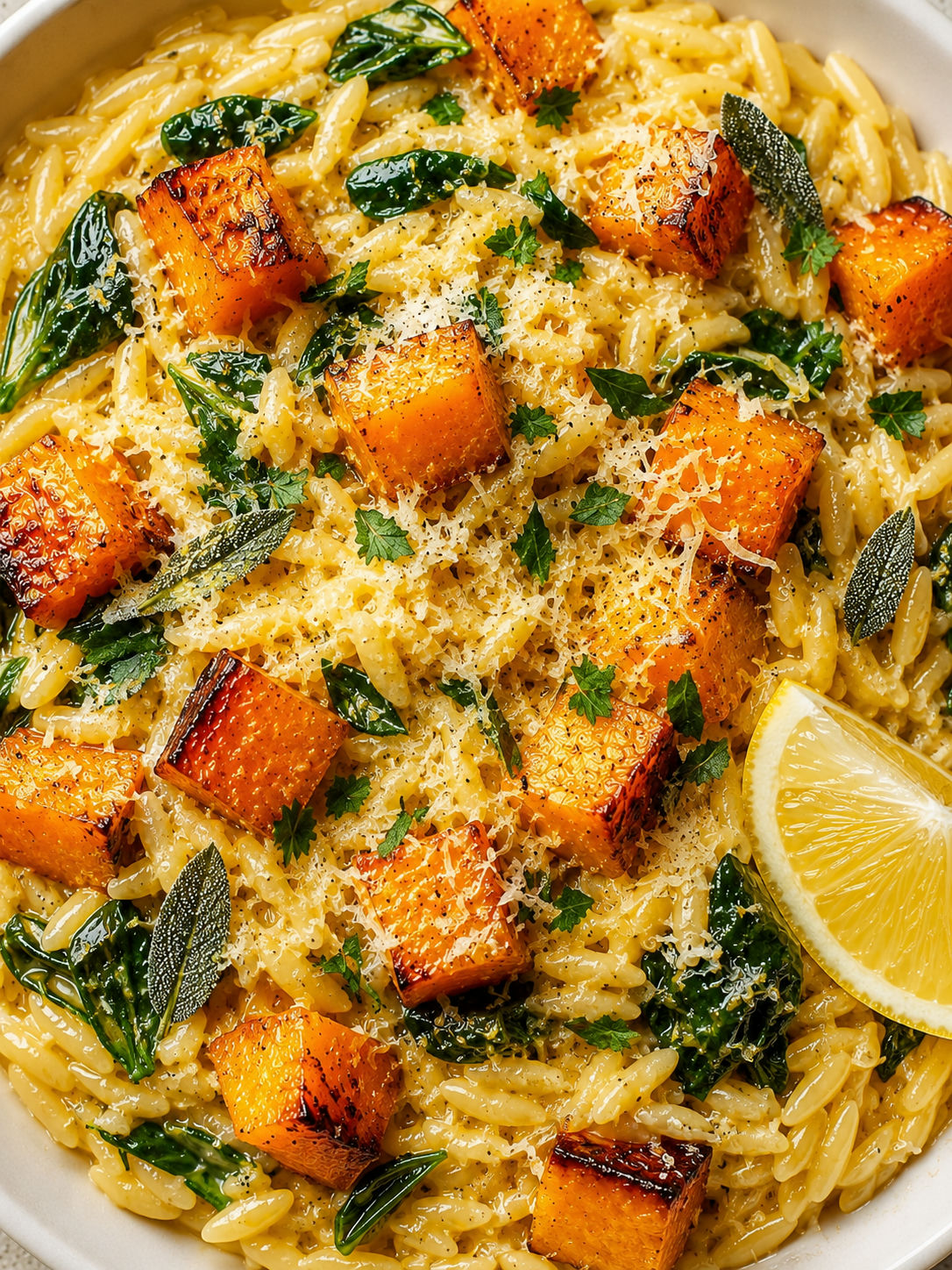
A warm vegetarian orzo dinner with roasted squash, spinach, Parmesan, sage, and lemon. Serve it as a main dish or a generous side for a fall meal.
FAQs
- Can I use frozen butternut squash?
Yes. Roast it straight from frozen on a hot sheet pan and give it a few extra minutes. Do not crowd the pan, or the squash will steam before it browns.
- Can I make this orzo without Parmesan?
You can leave it out and finish with extra olive oil, lemon, and a spoonful of nutritional yeast. The orzo will still be creamy from its own starch, but it will taste lighter and less savory.
- How do I keep orzo from sticking?
Stir often once the broth goes in, especially during the last few minutes. If the pan looks dry before the orzo is tender, add warm water a splash at a time.
- Can I make it ahead?
Roast the squash up to two days ahead and keep it covered in the fridge. Cook the orzo right before serving if you can, since it thickens as it sits.
- What can I serve with butternut squash orzo?
It works as a vegetarian main with a crisp salad or as a side with roast chicken or salmon. For a holiday table, serve smaller portions beside other roasted vegetables.
- Can I use kale instead of spinach?
Yes, but kale needs a little more time. Chop it small, remove the tough stems, and stir it into the orzo for 3-4 minutes before adding the squash.
